
Ankit 🇮🇳
253 posts


Q. Repo rate is the rate at which:
A) Banks lend to public
B) RBI lends to commercial banks
C) Government borrows from RBI
D) RBI lends to IMF
English


Filipino


Q.Which is the longest mountain range in the world?
A) Himalayas
B) Andes
C) Rockies
D) Alps
English
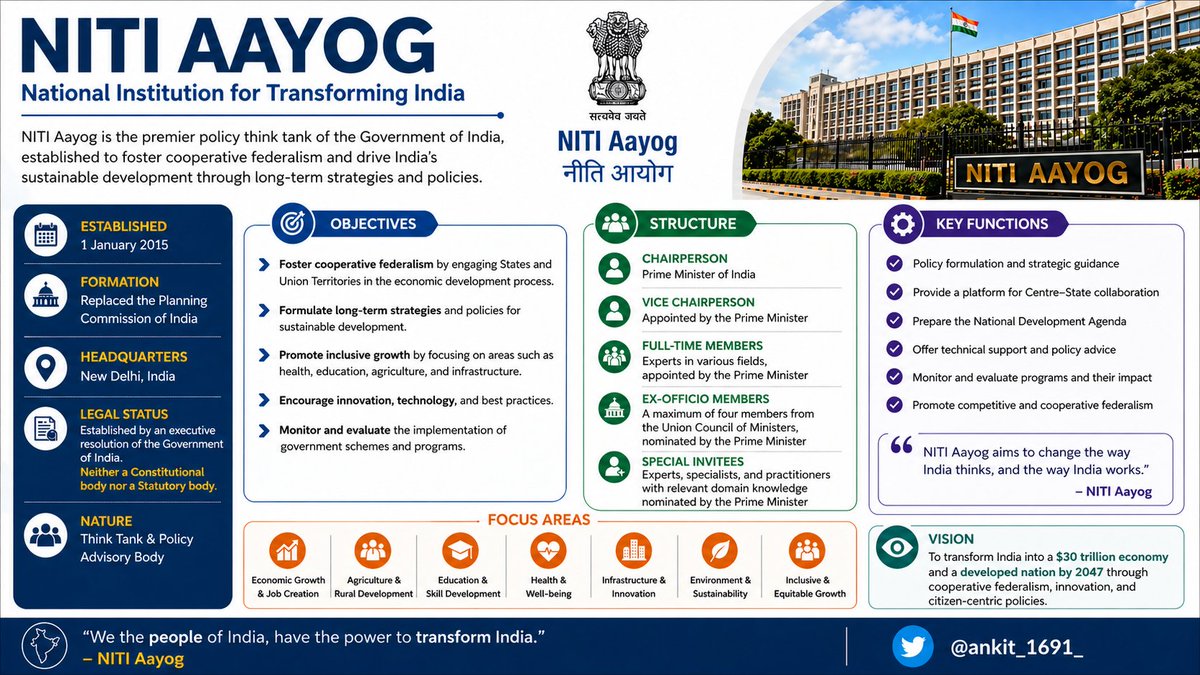

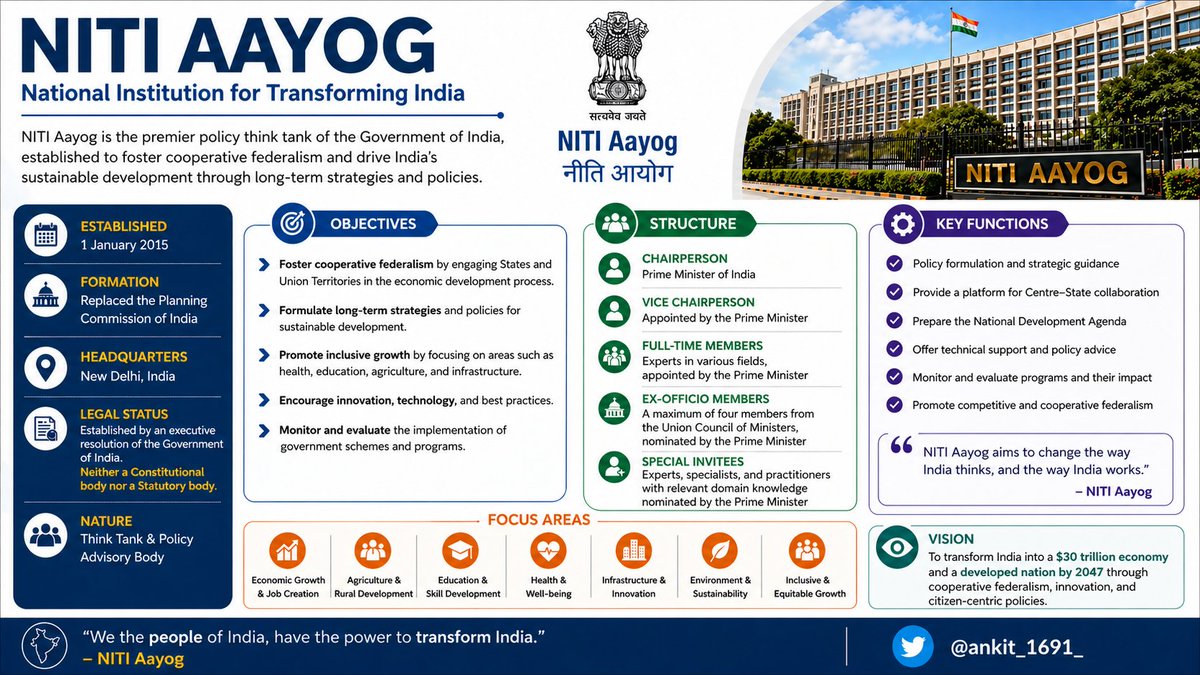
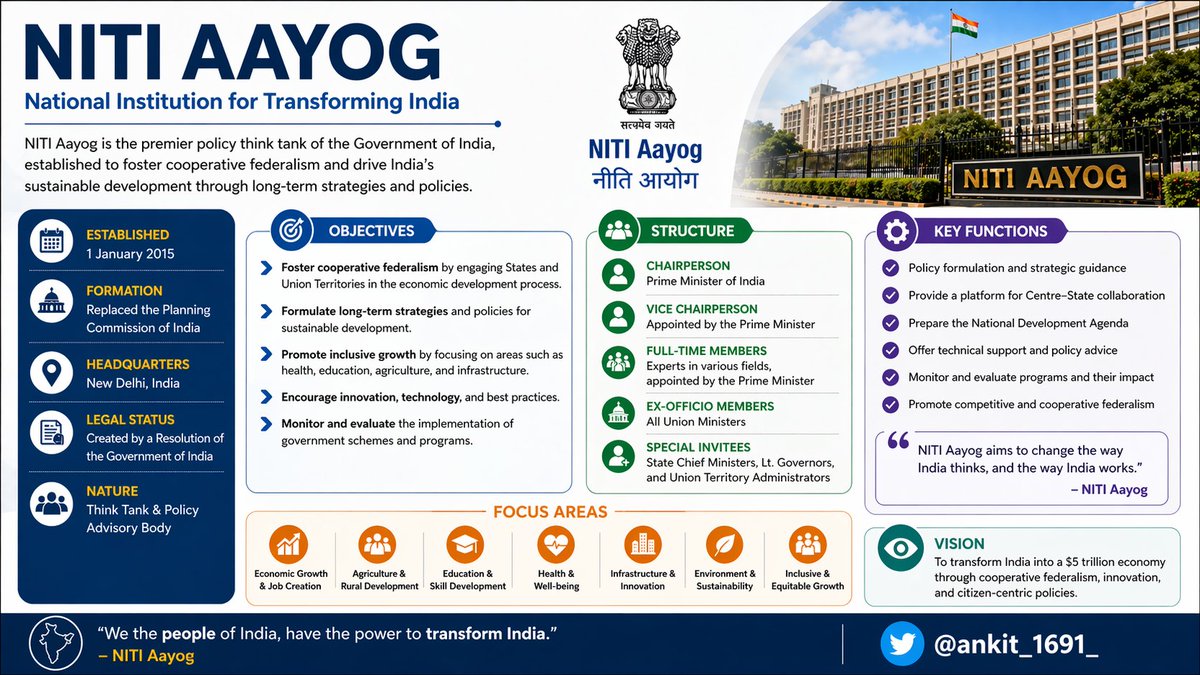
NITI Aayog has emerged as a vital pillar in India’s policy-making architecture, fostering cooperative federalism, furthering reforms and boosting ‘Ease of Living.’ It serves as a dynamic platform for innovation and long-term strategic thinking across sectors.
The Government has reconstituted the NITI Aayog. My best wishes to Shri Ashok Kumar Lahiri Ji on becoming the Vice Chairman. My best wishes also to Shri Rajiv Gauba Ji, Prof. K. V. Raju Ji, Prof. Gobardhan Das Ji, Prof. Abhay Karandikar Ji and Dr. M. Srinivas Ji on becoming Full Time Members of NITI Aayog.
Wishing all of them a productive and impactful tenure ahead.
@NITIAayog
English

Q. The main objective of NITI Aayog is:
A) Planning
B) Cooperative federalism
C) Tax collection
D) Banking
English

Q. Which is the highest peak in India?
A) K2
B) Kangchenjunga
C) Nanda Devi
D) Kamet
Indonesia
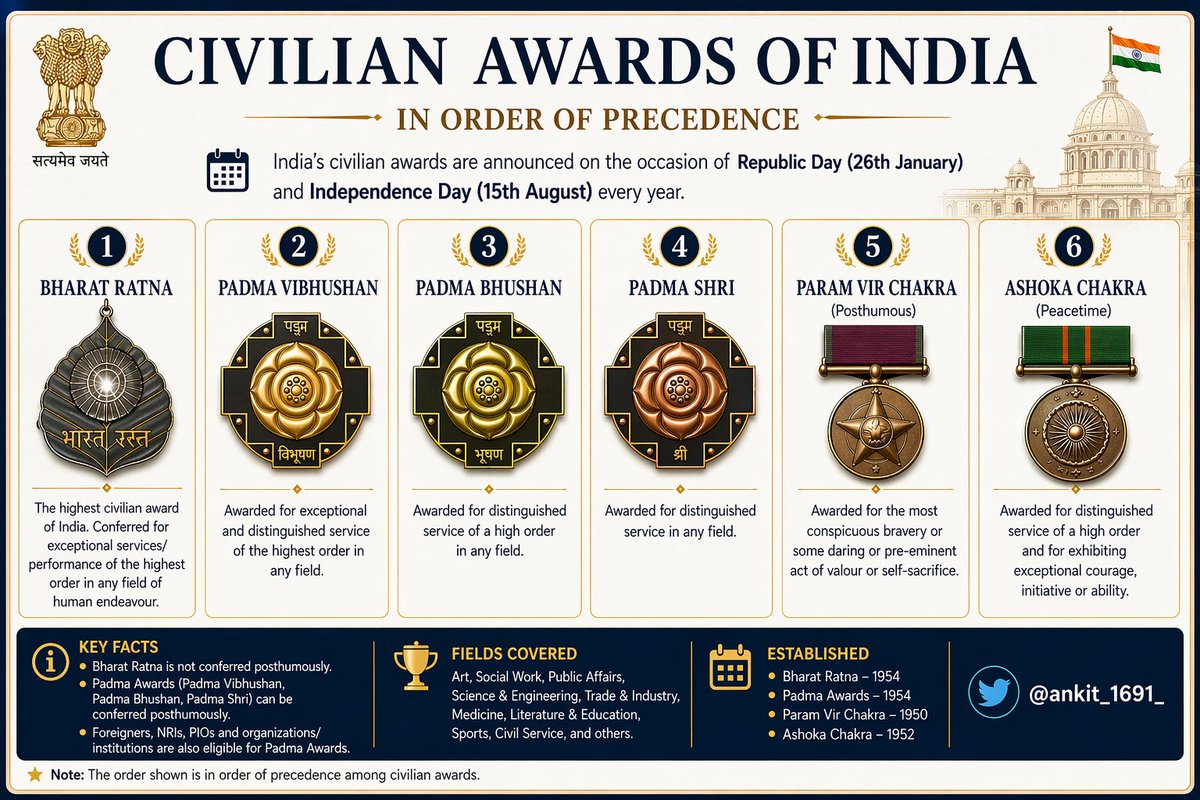
Q. Which is the highest civilian award in India?
A) Padma Shri
B) Padma Bhushan
C) Padma Vibhushan
D) Bharat Ratna
English
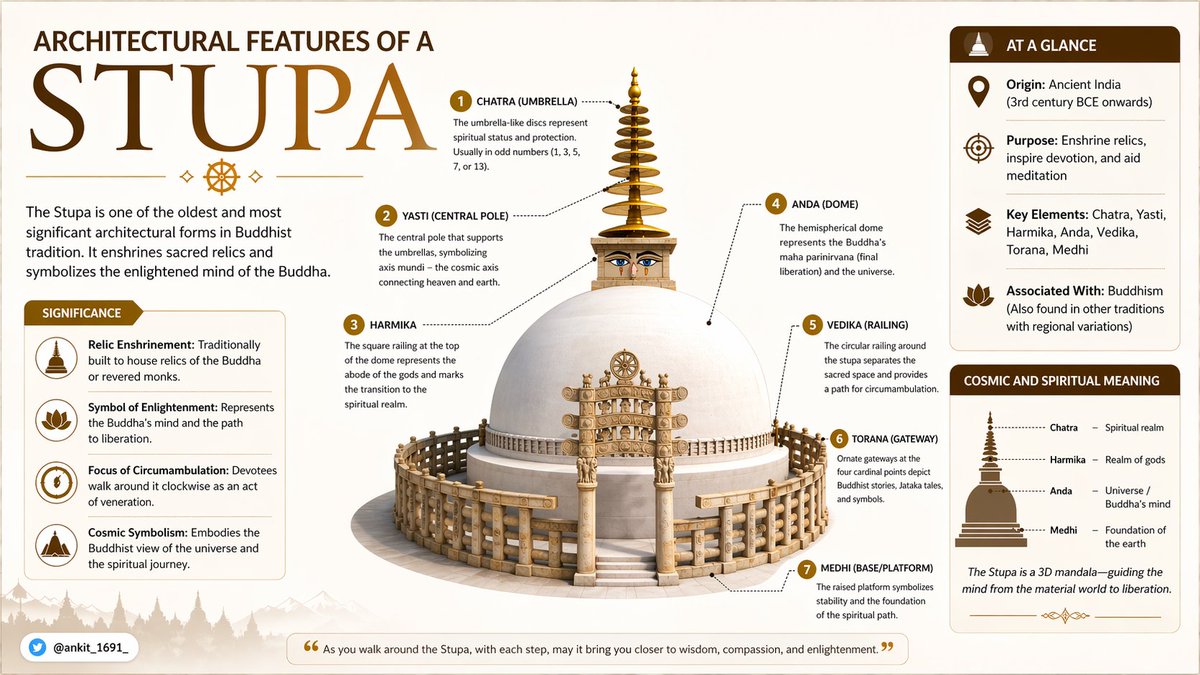


🚨 Important for UPSC
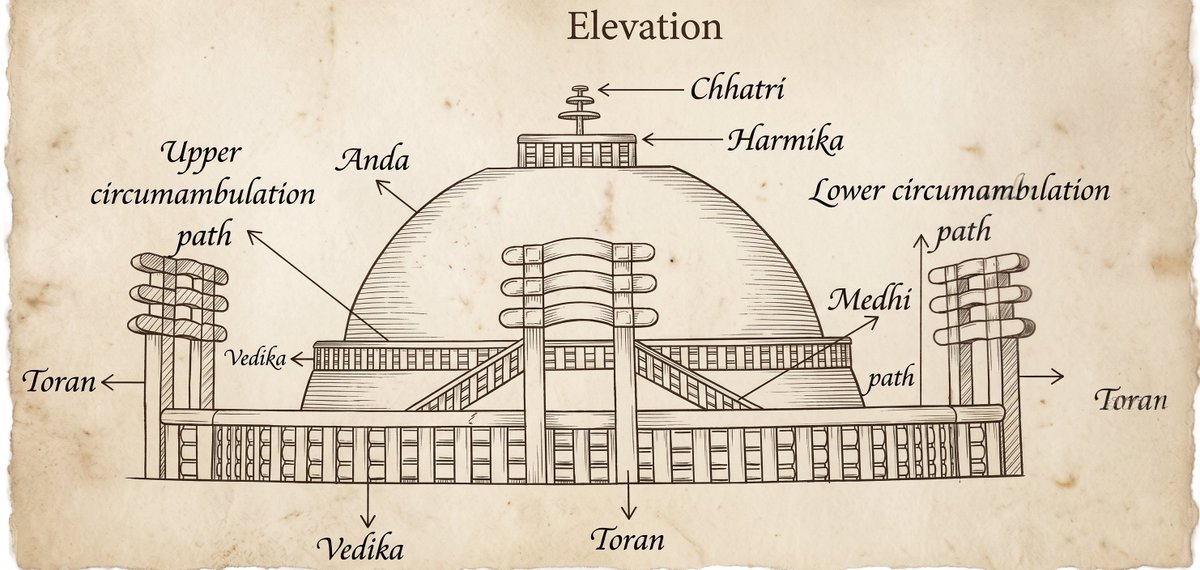
'Architectural Features of a Stupa'
• Anda: The massive dome representing the mound where the Buddha’s relics (ashes or remains) were buried.
• Harmika: The square, railing-like structure atop the dome that marks it as the sacred "abode of the gods."
• Chhatri: The three-layered umbrella symbolizing the Three Jewels: the Buddha, his teachings (Dharma), and the community (Sangha).
• Toran: The four stone gateways carved with stories from the Buddha's life and his previous births.
• Vedika: It is a railing structure that demarcates sacred from secular space.
• Medhi: A raised platform that lifts the structure, symbolizing the Buddha’s spiritual height and wisdom.
• Upper Path: An elevated walkway for followers to walk in circles, staying closer to the Buddha’s spirit.
• Lower Path: The ground-level passage where devotees walk clockwise to show respect and meditate on his journey.
English

The only double-landlocked country in Asia:
1. Uzbekistan 🇺🇿
English