TheDiplomatEye
6.6K posts

TheDiplomatEye
@Ankit_1918
Decoding global power, strategy, and shifts. #Geopolitics 🌍♟️Global affairs | Strategic insight | Real politics See beyond headlines.

🌎 Katılım Ağustos 2024
2.2K Takip Edilen2.4K Takipçiler

@unusual_whales A blockade of the Strait of Hormuz isn’t just pressure on Iran it’s pressure on the entire global economy. That’s escalation with worldwide consequences
English

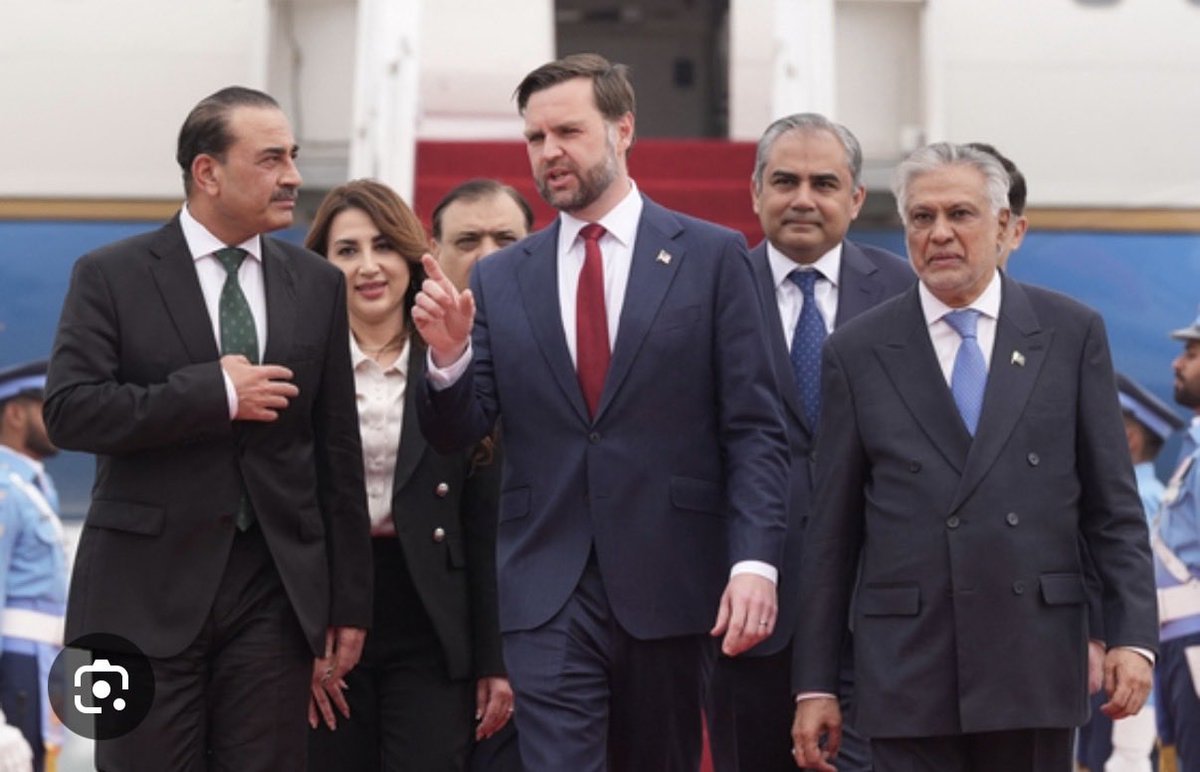
You can’t call it a failure when the core issue is that Washington and Tehran are still miles apart. Pakistan’s role was to open the door, not force a handshake. Getting both sides into the same room, while keeping ties with China and Saudi Arabia intact, is already a diplomatic win most countries couldn’t pull off.
English

I genuinely don’t understand how any reasonable person can interpret the failure of the U.S. and Iran to reach a deal in Islamabad as a failure of Pakistani diplomacy.
Consider what Pakistan achieved: 1. It got U.S. and Iranian negotiators in the same room at the highest level in 47 years. 2. It received public appreciation for its role from both warring parties. 3. It maintained the trust and tacit support of China and Saudi Arabia, important players in this drama. 4. It earned the goodwill of scores of nations that would like this conflict to end sooner rather than later.
Is Pakistan worse off than it would have been if the U.S. and Iran had thrashed out an agreement? Yes, obviously. The Pakistani economy is fragile and particularly dependent on both energy imports and remittances from the Gulf. And if Saudi Arabia is drawn into the war Pakistan could be forced to honor its defense pact with the Kingdom, which could trigger widespread domestic unrest.
But accepting that a deal is better than no deal for Pakistan (and many other countries) is not the same as claiming that the summit was a failure from Pakistan’s perspective. It most clearly was not. Pakistan has emerged, at least for now, as a prominent diplomatic actor on the world stage, and as the recipient of much international goodwill. I’m not sure how anyone can claim otherwise.

English
TheDiplomatEye retweetledi

@Mij_Europe A majority gives power, but a 2/3 supermajority gives control over the system itself. That’s the real battle now.
English

@NewsAlgebraIND Blocking the Strait of Hormuz means putting a chokehold on nearly 20% of the world’s oil supply overnight. Energy prices won’t just rise they could spike violently, hitting every economy from Asia to Europe.
English

Hello @grok, has there been any attack on Iran by Israel or the USA, or any attack on Israel or any Arab country by Iran in the last 24 hours?
English
TheDiplomatEye retweetledi

This is what strategic uncertainty looks like in real time. If the IAEA no longer has visibility, then the entire framework of monitoring and deterrence starts to erode. It’s no longer about how much uranium Iran has—it’s about the fact that no one can confidently track it. And in nuclear politics, uncertainty is often more dangerous than capability.
English

🇺🇸🇮🇷 The U.S. is acting like they’ve got the exact GPS pin on Iran’s entire uranium stockpile.
We're talking about 441 kg of highly enriched uranium plus another 8,000 kg of lower-enriched material.
Trump and Pete Hegseth basically said this week:
We know exactly where it is, it’s buried in those Isfahan tunnels… and if you don’t help us dig it out, we might just send special forces in to grab it ourselves.
But here’s the uncomfortable truth, the IAEA is quietly admitting: they haven’t physically seen or verified any of that material in 9 months.
Since the June 2025 strikes, zero access.
Iran warned the IAEA a year ago that they’d scatter the stuff to secret locations if attacked, and that’s exactly what looks like happened.
Diplomats in Vienna are saying the IAEA now believes at best half is still in Esfahan.
The rest? Could be anywhere, other known sites, or brand-new hidden ones we don’t even have on the map.
That’s the deep part that should worry everyone: the world’s top nuclear watchdog has basically gone blind on one of the most dangerous stockpiles on Earth.
No eyes on it. No fresh seals. No daily checks like they used to do.
So when Trump talks about “working with Iran to retrieve it,” and Hegseth floats boots-on-the-ground options, they’re not just flexing, they’re admitting the old inspection game is dead.
Even worse, the material is now a moving target.
This is why the current ceasefire talks feel so high-stakes.
If even half that HEU is missing or hidden, the clock on a potential Iranian breakout is ticking in the dark.
And nobody outside Tehran really knows where the lights went out.
Source: Bloomberg TV YT
Mario Nawfal@MarioNawfal
🇺🇸🇩🇪 At least 7 massive USAF C-17 cargo planes are in the air, shuttling nonstop between U.S. bases in Europe (mostly Ramstein, Germany) and the Middle East. Source: SpeedPlaneProductions YT

English

This reads less like a failed negotiation and more like a controlled exposure of reality. When both sides operate on fundamentally incompatible principles, no amount of dialogue can bridge that gap. The 21-hour talks didn’t collapse they clarified that the conflict isn’t tactical, it’s structural.
English

The negotiations in Islamabad were never meant to succeed, they were meant to prove that they couldn’t.
From the start, intelligence from the CIA and Mossad showed the divide with the Islamic Republic of Iran was not negotiable.
This was not a gap to close, but a clash of fundamentals tied to the regime’s survival.
The 21-hour talks only confirmed it. Long sessions, shifting positions, and no movement on core issues. The gap became clearer, not smaller.
Sending JD Vance was part of the strategy. As someone skeptical of war, sitting across the table and seeing it firsthand removes the argument that better diplomacy could have worked.
He said it plainly afterward. There were real discussions, but no agreement, and that is worse for Iran than for the United States.
This was not a failed negotiation. It was confirmation that no real deal was ever possible.
- @TheIranWatcher
English

@NewsAlgebraIND Canada just signaled strategic independence. This isn’t about money it’s about reducing reliance on the U.S. defense ecosystem.
English

🇺🇸YouTube just banned Explosive Media, the channel that’s been pumping out all those Iran Lego propaganda videos.
But let's call it what it is: selective enforcement in the attention economy.
I'm sure they will still find a home on other platforms, people were really getting a kick out of them.
Source: @marcowenjones
English

“Swarms of aircraft” is how it looks on radar but what matters is what it signals.
When the United States Department of Defense starts moving heavy assets toward the Middle East, it’s rarely just routine rotation. It’s messaging.
Message to Iran: escalation will be met with force.
Message to allies: you’re not alone.
Message to adversaries: the window for miscalculation is closing.
But here’s the real risk — movements like this don’t just deter, they compress timelines.
They reduce room for diplomacy and increase the chance that one wrong move, one misread signal, turns positioning into confrontation.
After failed talks, rising rhetoric, and now visible military buildup, the region is shifting from negotiation mode to deterrence mode.
And history shows that transition is where things often spiral. ⚠️
English
TheDiplomatEye retweetledi