NEW — The Virginia Court of Appeals has rejected the rezonings approving the world’s largest data center complex alongside Manassas National Battlefield Park, upholding a lower court ruling that found Prince William County had improperly fast-tracked the votes without properly advertising the proposal or making its text available to the public.
We won a battle, but the war is far from over. Even though the Appeals Court sided with us today, we fully expect the deep-pocketed developers to appeal to the Virginia Supreme Court -- and we'll be ready when they do. Just as we are ready to keep up the fight at Wilderness Crossing. battlefields.org/news/virginia-…
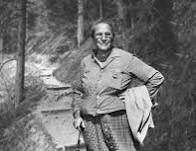
In the spring of 1955, a 67-year-old grandmother from Ohio told her children she was going for a walk.
She didn’t say how far. She didn’t say why. She simply kissed them goodbye, packed a cloth bag with the barest essentials, and vanished into the Georgia wilderness.
Her name was Emma Rowena Gatewood — and she was about to do something no woman had ever done before.
For three decades, Emma had endured unspeakable violence in her Ohio farmhouse. Beatings that broke her ribs, blackened her eyes, and nearly broke her spirit. She had raised eleven children on that farm. She had finally escaped her husband in 1941, but the invisible scars ran deeper than any wound.
Then one quiet afternoon, she read an article in National Geographic about the Appalachian Trail — more than 2,000 miles of rugged paths stretching from Georgia to Maine. The writer made it sound peaceful. Achievable. Beautiful.
Emma thought: If men can walk it, so can I.
But she knew what would happen if she told anyone. Her children would worry. Friends would call her foolish. A grandmother, alone in the wilderness? Impossible. Dangerous. So she kept her plan silent as a prayer.
She sewed a simple denim bag and filled it with the absolute basics: a blanket, a plastic shower curtain, a first-aid kit, bouillon cubes. No tent. No sleeping bag. No proper hiking boots — just a pair of Keds sneakers and a cotton dress.
On May 3, 1955, she boarded a bus to Georgia and began walking north from Mount Oglethorpe. Alone.
The trail was nothing like the magazine promised. It was merciless. Roots caught her feet. Rocks sliced through her thin shoes. Rain turned the path to mud. Insects swarmed relentlessly. At night, she slept on bare ground in abandoned shelters, sometimes shivering too violently to rest.
She got lost. She fell, twisting her ankle so severely she could barely stand. Sitting on that rock, pain shooting through her leg, she wondered if this was where her journey would end. But after catching her breath, she wrapped her ankle tight and kept moving. Always moving.
Hikers who passed her didn’t know what to make of the small, gray-haired woman in a dress and sneakers, carrying a homemade sack. Some thought she was lost. Others assumed she was crazy. A few offered food or shelter. She thanked them graciously, then continued on.
When strangers asked why she was walking, she’d smile softly and say she wanted to see the country. But anyone who looked into her eyes could see something deeper burning there. This wasn’t recreation. This was reclamation. Every mile was a mile farther from the life that had tried to destroy her. Every step was proof she was still here, still strong, still capable of extraordinary things.
Weeks became months. Her feet bled. Her back ached. The sun burned her skin raw. But she never stopped.
On September 25, 1955, Emma Gatewood stood on the summit of Mount Katahdin in Maine. She had walked 2,168 miles in 146 days. She was the first woman to hike the entire Appalachian Trail alone in a single season.
When word spread, reporters flooded in. Newspapers nationwide ran her story. Overnight, she became “Grandma Gatewood,” a household name. Everyone wanted to know how a 67-year-old woman with no training and minimal gear had accomplished what seasoned hikers failed to do.
Emma smiled and said it wasn’t that complicated. She mentioned the trail needed better maintenance — too many rocks, not enough signs. She spoke as casually as if discussing her garden, not surviving one of America’s most grueling challenges.
But she wasn’t finished. In 1957, she walked the trail again. Then in 1964, at 76 years old, she became the first person ever — man or woman — to complete the Appalachian Trail three times. Each journey with almost nothing. Each journey proving that true strength doesn’t come from equipment or training. It comes from refusing to surrender.