Arcanomy

299 posts

Arcanomy banner
Arcanomy

Arcanomy

@ArcanomyHQ

Why smart people make irrational money decisions. Wealth psychology, and the math that rules your life. New essay every week.

Los Angeles Katılım Aralık 2022
71 Takip Edilen265 Takipçiler
Sabitlenmiş Tweet
Arcanomy
Arcanomy@ArcanomyHQ·
Marcus and Dani crossed a million in net worth eight months ago. Neither of them noticed. Then Marcus's company restructured. Two friends on his floor were let go. That night Dani opened the savings app. $60,000 in real, spendable money. Their monthly burn, mortgage included, $9,200. About six months of runway. That is the number that decided whether they slept. The million did not. Full piece: arcanomy.com/perspectives/w…
English
0
1
20
30.9K
Arcanomy
Arcanomy@ArcanomyHQ·
@MoneyQuotesX The first dollar is hard because you're doing work with no proof it will compound. The first million is just running a system you already trust.
English
0
0
2
10
Money Quotes
Money Quotes@MoneyQuotesX·
The first dollar is the hardest. The first million is just repetition.
English
127
130
854
12.2K
Arcanomy
Arcanomy@ArcanomyHQ·
The first time the market dropped 30% on you, you'd been investing for about eighteen months. $400 a month, every month, into the S&P. You were proud of yourself. Your dad asked at Thanksgiving and you got to say the number out loud. Then the number went down. The next month it went down more. By March it was almost a third lower than the year before. You stared at the app on the bus and felt sick. After a while you stopped opening it. The thought crossed your mind that you should pull everything out before it went lower. You kept the auto-deposit on. A year later, the number had recovered. Two years later, it was higher than the original peak. The shares you bought during the drop turned out to be the most valuable shares you ever bought. Every future drop will feel exactly like that one did. The discipline you read about in books is the spreadsheet. The discipline that decides whether you make it is what you do on the bus.
English
0
0
16
800
Arcanomy
Arcanomy@ArcanomyHQ·
@TKopelman Retirement bracket math changes every year. Social Security timing, part-time work, RMDs all shift the conversion room. Most people get one accountant number and treat it as settled. The biggest Roth window is usually the year nobody re-ran the math.
English
0
0
1
21
Thomas Kopelman 💵
Thomas Kopelman 💵@TKopelman·
This is such a common misconception on Roth conversions Neither capital gains nor qualified dividends pushes you up income brackets But income pushes you up capital gains brackets, not the other way around This is actually the most ideal situation for Roth conversions Plenty of taxable assets to pay for conversions
Jason@basonrb

@TKopelman Not true. If your investments are high enough you will never be able to convert to a Roth because you will always have significant dividends and capital gains. Good problem to have but too many push Roth conversions that don’t really work.

English
3
1
38
11.5K
Arcanomy
Arcanomy@ArcanomyHQ·
@dollarsanddata The $3M person says yes to the lake house because the neighbor just bought one. Same month they were about to pay off the mortgage early. Comparison didn't just change how they felt. It changed where the money went.
English
0
0
9
2.6K
Nick Maggiulli
Nick Maggiulli@dollarsanddata·
This is the Upper Middle Class trap in a nutshell. Some of the most successful people in the world (net worth $1M - $10M) feel like they are behind simply because they can't stop comparing themselves to those with more. And there's only one way to escape the trap—don't play.
Deedy@deedydas

The vibes in SF feel pretty frenetic right now. The divide in outcomes is the worst I've ever seen. Over the last 5yrs, a group of ~10k people - employees at Anthropic, OpenAI, xAI, Nvidia, Meta TBD, founders - have hit retirement wealth of well above $20M (back of the envelope AI estimation). Everyone outside that group feels like they can work their well-paying (but <$500k) job for their whole life and never get there. Worse yet, layoffs are in full swing. Many software engineers feel like their life's skill is no longer useful. The day to day role of most jobs has changed overnight with AI. As a result, 1. The corporate ladder looks like the wrong building to climb. Everyone's trying to align with a new set of career "paths": should I be a founder? Is it too late to join Anthropic / OpenAI? should I get into AI? what company stock will 10x next? People are demanding higher salaries and switching jobs more and more. 2. There’s a deep malaise about work (and its future). Why even work at all for “peanuts”? Will my job even exist in a few years? Many feel helpless. You hear the “permanent underclass” conversation a lot, esp from young people. It's hard to focus on doing good work when you think "man, if I joined Anthropic 2yrs ago, I could retire" 3. The mid to late middle managers feel paralyzed. Many have families and don't feel like they have the energy or network to just "start a company". They don't particularly have any AI skills. They see the writing on the wall: middle management is being hollowed out in many companies. 4. The rich aren’t particularly happy either. No one is shedding tears for them (and rightfully so). But those who have "made it" experience a profound lack of purpose too. Some have gone from <$150k to >$50M in a few years with no ramp. It flips your life plans upside down. For some, comparison is the thief of joy. For some, they escape to NYC to "live life". For others still, they start companies "just cuz", often to win status points. They never imagined that by age 30, they'd be set. I once asked a post-economic founder friend why they didn't just sell the co and they said "and do what? right now, everyone wants to talk to me. if i sell, I will only have money." I understand that many reading this scoff at the champagne problems of the valley. Society is warped in this tech bubble. What is often well-off anywhere else in the world is bang average here. Unlike many other places, tenure, intelligence and hard work can be loosely correlated with outcomes in the Bay. Living through a societally transformative gold rush in that environment can be paralyzing. "Am I in the right place? Should I move? Is there time still left? Am I gonna make it?" It psychologically torments many who have moved here in search of "success". Ironically, a frequent side effect of this torment is to spin up the very products making everyone rich in hopes that you too can vibecode your path to economic enlightenment.


English
28
43
787
224.8K
Arcanomy
Arcanomy@ArcanomyHQ·
@The_MMW Debt breaks this list if the order is wrong. Investing early while you're paying 24% APR on credit cards is a net loss each month. Clear the bad debt first. Then compound.
English
0
0
0
33
Fiona | The Millennial Money Woman
What the rich don't want you to know: • Pay yourself first • Start a side hustle • Eliminate bad debt • Invest early & often • Don't drive your wealth • Buy assets, not liabilities • Spend less than you earn • Take advantage of the tax system This is how you get ahead.
English
22
26
159
4.6K
Arcanomy
Arcanomy@ArcanomyHQ·
@BStulberg Money chased for status leaves a specific kind of hole. You hit the number, buy the thing, and the benchmark moved. The people who quietly built real wealth were usually just trying to get excellent at something. The money came sideways.
English
0
0
0
39
Brad Stulberg
Brad Stulberg@BStulberg·
This is a key insight in my book—the top of the mountain is narrow all the life is on the sides. There’s a big difference between the pursuit of excellence and chasing money and status. Build a life around the former or else you will end up miserable. bit.ly/4uCzeQ7
Deedy@deedydas

The vibes in SF feel pretty frenetic right now. The divide in outcomes is the worst I've ever seen. Over the last 5yrs, a group of ~10k people - employees at Anthropic, OpenAI, xAI, Nvidia, Meta TBD, founders - have hit retirement wealth of well above $20M (back of the envelope AI estimation). Everyone outside that group feels like they can work their well-paying (but <$500k) job for their whole life and never get there. Worse yet, layoffs are in full swing. Many software engineers feel like their life's skill is no longer useful. The day to day role of most jobs has changed overnight with AI. As a result, 1. The corporate ladder looks like the wrong building to climb. Everyone's trying to align with a new set of career "paths": should I be a founder? Is it too late to join Anthropic / OpenAI? should I get into AI? what company stock will 10x next? People are demanding higher salaries and switching jobs more and more. 2. There’s a deep malaise about work (and its future). Why even work at all for “peanuts”? Will my job even exist in a few years? Many feel helpless. You hear the “permanent underclass” conversation a lot, esp from young people. It's hard to focus on doing good work when you think "man, if I joined Anthropic 2yrs ago, I could retire" 3. The mid to late middle managers feel paralyzed. Many have families and don't feel like they have the energy or network to just "start a company". They don't particularly have any AI skills. They see the writing on the wall: middle management is being hollowed out in many companies. 4. The rich aren’t particularly happy either. No one is shedding tears for them (and rightfully so). But those who have "made it" experience a profound lack of purpose too. Some have gone from <$150k to >$50M in a few years with no ramp. It flips your life plans upside down. For some, comparison is the thief of joy. For some, they escape to NYC to "live life". For others still, they start companies "just cuz", often to win status points. They never imagined that by age 30, they'd be set. I once asked a post-economic founder friend why they didn't just sell the co and they said "and do what? right now, everyone wants to talk to me. if i sell, I will only have money." I understand that many reading this scoff at the champagne problems of the valley. Society is warped in this tech bubble. What is often well-off anywhere else in the world is bang average here. Unlike many other places, tenure, intelligence and hard work can be loosely correlated with outcomes in the Bay. Living through a societally transformative gold rush in that environment can be paralyzing. "Am I in the right place? Should I move? Is there time still left? Am I gonna make it?" It psychologically torments many who have moved here in search of "success". Ironically, a frequent side effect of this torment is to spin up the very products making everyone rich in hopes that you too can vibecode your path to economic enlightenment.

English
3
3
23
6.6K
Arcanomy
Arcanomy@ArcanomyHQ·
Two people at the same conference table. She's a doctor. $400,000 salary, married, two kids, house in a good zip code. Her 401k has $90,000. She's 38. He's a teacher across the table. $74,000 salary. Same age, two kids. Roth IRA, brokerage, and 403(b) total $410,000. The income gap is 5x. The net worth gap is reversed. She's not bad with money. She's running a budget that scales with her income. Childcare, a renovation, two car payments, the vacation everyone in the practice takes, the property tax on the good zip code. He never had the option to scale up. The $74,000 budget held still. The 18% he didn't see in his check went somewhere else. Income is the speed you move at. Net worth is the distance you've traveled.
English
0
0
17
419
Arcanomy
Arcanomy@ArcanomyHQ·
@EricBalchunas The 401k tells the same story. Gen X hits 52 feeling 32, which means retirement has always been future-you's problem. But 52 to 62 is the decade where their money grows fastest. The 30-forever mindset has a cost.
English
0
0
1
217
Eric Balchunas
Eric Balchunas@EricBalchunas·
Best description of Gen X I’ve ever seen
Eric Balchunas tweet media
English
22
7
207
32.3K
Arcanomy
Arcanomy@ArcanomyHQ·
@Tim_Denning Urgency looks like reviewing the budget before the month starts. Moving the 401k contribution the day a raise hits. Setting the auto-transfer for the exact date the paycheck lands. Not dramatic. Not visible. Just not waiting for next month.
English
0
0
1
99
Tim Denning
Tim Denning@Tim_Denning·
Money loves people with a sense of urgency.
English
45
51
480
7.1K
Arcanomy
Arcanomy@ArcanomyHQ·
@cullenroche Same trap starts at $200K. Ahead of 90% of Americans. But the brother-in-law just hit $500K. The neighbor bought a lake house. The comparison clock never resets. The number that felt like enough five years ago is always $50K short of whatever someone nearby has.
English
5
3
56
9.1K
Cullen Roche
Cullen Roche@cullenroche·
Something terrible happens to people with a net worth of about 2-10MM. They are very rich, but they aren't rich enough to fly private, buy the house of their dreams or put it all in Tbills and Chill. The trap is not realizing your absolute AND relative living standards are phenomenal against everyone except the upper echelon people you irrationally compare yourself to. Don't fall into that trap.
Deedy@deedydas

The vibes in SF feel pretty frenetic right now. The divide in outcomes is the worst I've ever seen. Over the last 5yrs, a group of ~10k people - employees at Anthropic, OpenAI, xAI, Nvidia, Meta TBD, founders - have hit retirement wealth of well above $20M (back of the envelope AI estimation). Everyone outside that group feels like they can work their well-paying (but <$500k) job for their whole life and never get there. Worse yet, layoffs are in full swing. Many software engineers feel like their life's skill is no longer useful. The day to day role of most jobs has changed overnight with AI. As a result, 1. The corporate ladder looks like the wrong building to climb. Everyone's trying to align with a new set of career "paths": should I be a founder? Is it too late to join Anthropic / OpenAI? should I get into AI? what company stock will 10x next? People are demanding higher salaries and switching jobs more and more. 2. There’s a deep malaise about work (and its future). Why even work at all for “peanuts”? Will my job even exist in a few years? Many feel helpless. You hear the “permanent underclass” conversation a lot, esp from young people. It's hard to focus on doing good work when you think "man, if I joined Anthropic 2yrs ago, I could retire" 3. The mid to late middle managers feel paralyzed. Many have families and don't feel like they have the energy or network to just "start a company". They don't particularly have any AI skills. They see the writing on the wall: middle management is being hollowed out in many companies. 4. The rich aren’t particularly happy either. No one is shedding tears for them (and rightfully so). But those who have "made it" experience a profound lack of purpose too. Some have gone from <$150k to >$50M in a few years with no ramp. It flips your life plans upside down. For some, comparison is the thief of joy. For some, they escape to NYC to "live life". For others still, they start companies "just cuz", often to win status points. They never imagined that by age 30, they'd be set. I once asked a post-economic founder friend why they didn't just sell the co and they said "and do what? right now, everyone wants to talk to me. if i sell, I will only have money." I understand that many reading this scoff at the champagne problems of the valley. Society is warped in this tech bubble. What is often well-off anywhere else in the world is bang average here. Unlike many other places, tenure, intelligence and hard work can be loosely correlated with outcomes in the Bay. Living through a societally transformative gold rush in that environment can be paralyzing. "Am I in the right place? Should I move? Is there time still left? Am I gonna make it?" It psychologically torments many who have moved here in search of "success". Ironically, a frequent side effect of this torment is to spin up the very products making everyone rich in hopes that you too can vibecode your path to economic enlightenment.

English
159
85
2.4K
650.2K
Arcanomy
Arcanomy@ArcanomyHQ·
You skipped 2024's 401k contribution because the budget was tight. $7,000 you didn't put in. You think you lost $7,000. That $7,000, contributed at 27 and compounding at 7% until 65, would have become roughly $90,000 by retirement. The number you didn't deposit was $7,000. The number that didn't compound for the next 38 years was $90,000. You can put the same $7,000 in next year. It then grows for 37 years instead of 38. The one missing year shows up as a $6,000 hole at 65 that no future contribution can fix. The 401k won't notice you skipped a year. Your retirement balance will.
English
0
0
14
579
Arcanomy
Arcanomy@ArcanomyHQ·
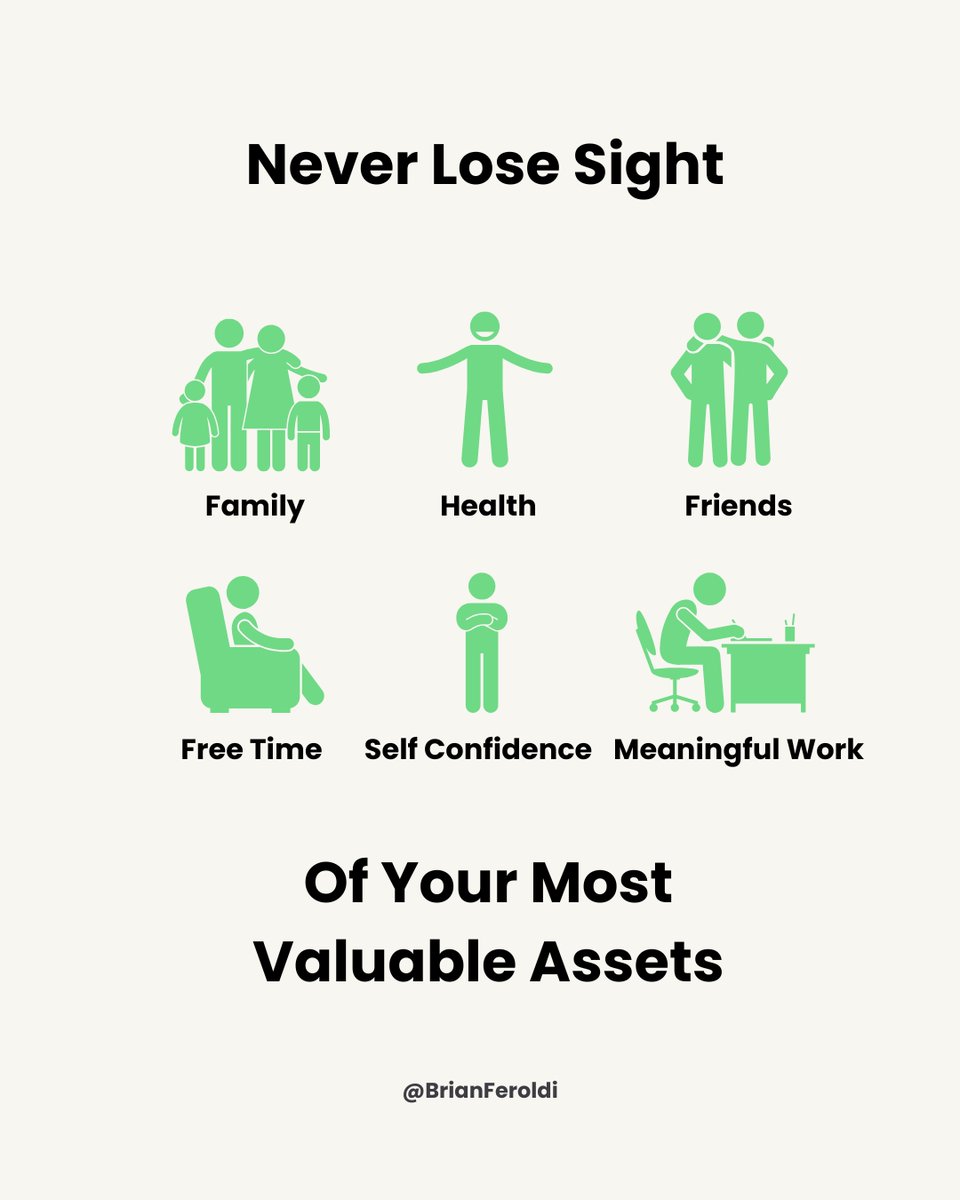
@BrianFeroldi Money is how you protect the six. Emergency fund buys back Free Time when a bad month hits. Low debt means you say yes to Family without running the math first. The financial foundation is invisible until the month it saves everything.
English
0
0
1
14
Arcanomy
Arcanomy@ArcanomyHQ·
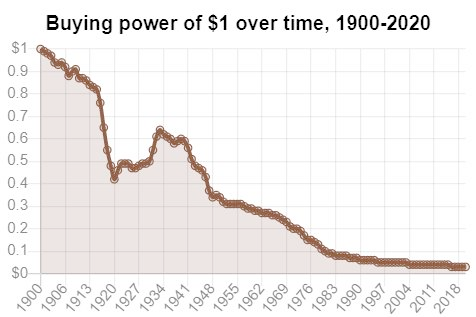
@QCompounding Cash feels safe. The chart says otherwise. That $10,000 in your savings account bought 3% less last year. Quietly. No notification. No red number. Just things costing a little more than they used to while your balance sat still.
English
0
0
2
691
Compounding Quality
Compounding Quality@QCompounding·
15 timeless investing principles, visualized: 1. Not investing is risky:
Compounding Quality tweet media
English
12
44
180
38.9K
Arcanomy
Arcanomy@ArcanomyHQ·
The 401(k) is a fortress. A thirty year wall. A 10 percent toll for anyone who tries to climb out early. That is a feature. It protects retirement-you from emergency-you. It also means today-you cannot count on it for this month's rent. Track two numbers. Net worth on the left. Runway on the right. The right column decides whether you can walk away from a bad job. The left column decides what the headline says.
English
0
0
18
576
Arcanomy
Arcanomy@ArcanomyHQ·
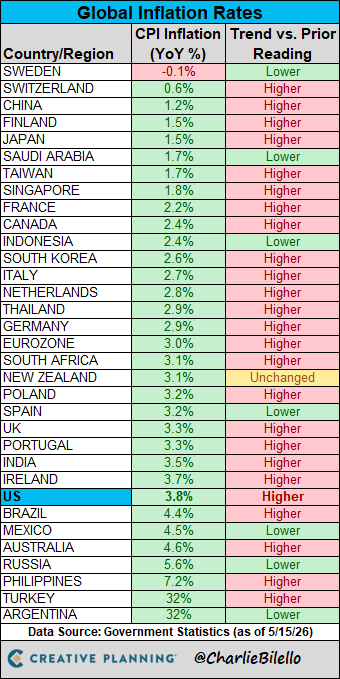
@charliebilello Your HYSA won't move the day the Fed hikes. Banks lag weeks behind, then pass only a fraction of the increase. The gap between the hike and your balance update is where most people leave $300 a year behind, sitting in a 0.01% checking account.
English
1
0
1
318
Charlie Bilello
Charlie Bilello@charliebilello·
Global Inflation Rates are on the RISE... Australia and Norway have already started hiking rates to attack higher prices. The ECB is expected to join them and hike rates in June. The Fed should do the same. They are once again behind the curve.
Charlie Bilello tweet media
English
55
141
457
71.6K
Arcanomy
Arcanomy@ArcanomyHQ·
@morganhousel The ones who handle it better usually set up their money before the uncertainty hit. Auto-transfer running. Emergency cushion in place. Debt low enough that a bad month isn't a crisis. Not because they predicted what was coming. Because they built for what they couldn't.
English
0
0
4
219
Morgan Housel
Morgan Housel@morganhousel·
You don’t need to know exactly what the future holds to know that some people will handle it better than others.
English
25
28
298
23.1K
Arcanomy
Arcanomy@ArcanomyHQ·
@cullenroche The lesson from every fund collapse gets filed correctly: I will not do that again. The money going into the next one on day 1 says: this one is different. Both are true. In the same person. The only gap worth closing is the one between those two sentences.
English
0
0
2
302
Cullen Roche
Cullen Roche@cullenroche·
There’s always a valuable lesson and a positive takeaway in every fund collapse. I’m no volatility expert, and I hope someone does a thorough autopsy of what happened, but here are my immediate takeaways: 1) Tail risk hedging is really, really hard. There’s a reason the classic 60/40 stock/bond portfolio remains the most popular allocation in the world: the 40% in bonds is still the simplest, most reliable positively asymmetric long-term hedge most investors can implement. It’s not perfect, but it’s “good enough” for the vast majority of people who just want durable diversification without needing to be geniuses. 2) Shorting (and short vol strategies) is also really, really hard. You’re fighting the long-term upward drift of markets, dealing with asymmetric payoffs that require big moves to pay off, and battling time decay plus carrying costs. What looks elegant on a backtest becomes brutally difficult in live markets. At the end of the day, the clearest lesson is this: investing is hard. You don't need to make it harder. If you decide to actively trade, time the market, or run sophisticated strategies, understand that you’re voluntarily making an already difficult game even tougher. You might capture more upside along the way, but the margin for error shrinks. I hope everyone finds some positivity in all of this.
English
21
4
115
63.5K
Arcanomy
Arcanomy@ArcanomyHQ·
@MoneyQuotesX "Paid myself first" is where savings habits survive or die. Most people set the 20%. The slip is the first month they quietly move it back down. It was going to be temporary. Then it stayed. The 20% holds only when lowering it starts to feel worse than keeping it.
English
0
0
1
22
Money Quotes
Money Quotes@MoneyQuotesX·
5 money habits that changed my life: - Paid myself first (20% before anything) - Stopped checking prices, started checking budgets - Automated every bill so I never paid late fees - Deleted shopping apps off my phone - Read 1 finance book per month
English
79
44
362
7.6K
Arcanomy
Arcanomy@ArcanomyHQ·
At twelve, your parents seemed boring with money. They kept the same car for fourteen years. They paused at the menu before ordering. They didn't take the vacation everyone else took the summer after eighth grade. At thirty-five, you read those same moves differently. The car was paid off. The pause at the menu was the difference between buying the car and not. The summer they skipped was the year the roof needed redoing and the older one needed braces. You're doing the same math now. Mostly invisibly. Mostly without explaining it to anyone. There's a kid in your house watching you skip something this summer. They'll know what it meant in twenty years.
English
0
0
26
1.1K
Arcanomy
Arcanomy@ArcanomyHQ·
@theficouple The right wealth number depends on your spend rate. $850K at $30K/year = 28x. Comfortable. $850K at $85K/year = 10x. Still working. Same number. Different life. The dollar is the wrong scoreboard. Your multiplier is the right one.
English
0
0
2
577
theficouple
theficouple@theficouple·
The levels of wealth as we see them: $850,000- Comfortable $1.1 million-Pretty rich $1.65 million- Semi wealthy $2.3 million- Wealthy ...Do you agree?
English
102
3
220
75.6K