ari(❖,❖)

176 posts

ari(❖,❖) banner
ari(❖,❖)

ari(❖,❖)

@Ari25air

고로롱짭짭 우는 검은 고양이

Katılım Temmuz 2025
94 Takip Edilen70 Takipçiler
Sabitlenmiş Tweet
ari(❖,❖)
ari(❖,❖)@Ari25air·
[Ritual Series 5/10] The Smart Conductor: Symphony Consensus Algorithm Hi there, I’m ari! In our last session, we talked about how Ritual has "built-in brains" through Native AI Execution. But how does the blockchain handle all that heavy thinking without crashing or slowing to a crawl? Building on what we’ve discussed so far, today we’re diving into the Symphony Consensus Algorithm. Think of it as the "Smart Work-Sharing System" that keeps the Ritual network running smoothly even when the AI tasks get incredibly complex. Here are the three core points to help you understand why Symphony is a game-changer: 1. Custom-Built for AI (Handling Non-Determinism) Standard blockchains are like strict accountants; they require every single computer to produce the exact same result to reach an agreement. However, AI calculations can be "non-deterministic," meaning results might vary slightly across different machines. Symphony is designed from the ground up to understand and accommodate these unique AI traits, preventing the errors that would break a traditional chain. 2. 'Dual-Track' Processing If you process everything in a single line, heavy AI math would cause a massive traffic jam. Symphony solves this by splitting the workload. It handles "basic ledger records" on a high-speed track while delegating "heavy AI computations" to specialized nodes. By processing these asynchronously, Ritual achieves incredible speed and efficiency without sacrificing performance. 3. Trust Through Mathematical Proofs How do we know the AI results processed elsewhere are actually correct? Ritual uses Zero-Knowledge (ZK) proofs and TEEs (Trusted Execution Environments). When a node finishes a task, it submits a mathematical "certificate of proof." The chain then verifies this certificate to finalize the record securely. It’s trust you can verify, not just hope for. *The Bottom Line Thanks to Symphony, Ritual can execute complex AI operations without losing the security and transparency that makes blockchain so powerful. It’s this sophisticated consensus process that keeps every agent’s data safe and sound. I hope this helps you see how Ritual manages its "brainpower" so effectively! Next time, we’ll be exploring the 'Cryptographic Privacy Stack' and how Ritual keeps your data truly private. You won’t want to miss it! - 안녕하세요, 아리입니다! 지난 시간에는 리추얼이 '네이티브 AI 실행'을 통해 어떻게 블록체인 내부에 똑똑한 두뇌를 갖게 되었는지 알아보았죠. 하지만 그 무겁고 복잡한 AI 계산을 처리하면서도 블록체인이 멈추거나 느려지지 않으려면 어떻게 해야 할까요? 그 해답을 찾기 위해, 오늘은 리추얼의 핵심 기술인 '심포니(Symphony) 합의 알고리즘'을 파헤쳐 보려고 합니다. 심포니는 리추얼 네트워크가 복잡한 AI 작업 중에도 원활하게 돌아가도록 관리해 주는 '스마트한 업무 분담 시스템'이라고 생각하시면 쉬워요. 왜 심포니가 게임 체인저인지, 세 가지 핵심 포인트로 정리해 드릴게요! 1. AI를 위해 태어난 맞춤형 설계 (비결정성 해결) 일반적인 블록체인은 아주 깐깐한 회계사 같아요. 모든 컴퓨터가 토씨 하나 틀리지 않고 똑같은 계산 결과를 내놓아야만 합의가 이뤄지죠. 하지만 AI 계산은 컴퓨터마다 결과가 미세하게 다를 수 있는 '비결정성(Non-Determinism)'이라는 특징이 있습니다. 심포니는 설계 단계부터 이러한 AI의 특성을 이해하고 수용하도록 만들어졌기 때문에, 기존 체인에서 발생할 수 있는 오류 없이 안정적으로 운영됩니다. 2. '이중 트랙' 업무 처리 모든 일을 한 줄로 서서 처리하면 무거운 AI 계산 때문에 전체 네트워크에 거대한 교통 체증이 생길 거예요. 심포니는 업무를 두 갈래로 나누어 이 문제를 해결합니다. '기본적인 장부 기록'은 고속도로처럼 빠르게 처리하고, '무거운 AI 계산'은 전용 노드에게 맡겨 별도로 처리하죠. 이렇게 업무를 분담(비동기 처리)함으로써 속도와 효율성이라는 두 마리 토끼를 동시에 잡았습니다. 3. 수학적 증명을 통한 강력한 신뢰 별도로 처리된 AI 결과가 진짜 맞는지 어떻게 믿을 수 있을까요? 리추얼은 영지식 증명(ZK Proofs)과 TEE(신뢰 실행 환경) 기술을 사용합니다. 계산을 마친 노드가 "내가 제대로 계산했다"라는 일종의 '수학적 증명서'를 제출하면, 체인은 이를 검증해 기록을 확정합니다. 막연한 믿음이 아니라, 직접 확인할 수 있는 신뢰를 구축한 셈이죠. 결론 심포니(Symphony) 덕분에 리추얼은 복잡한 AI 작업을 수행하면서도 블록체인의 본질인 보안성과 투명성을 잃지 않습니다. 이러한 정교한 합의 과정이 있기에 우리 에이전트들의 데이터가 안전하게 보호될 수 있는 것이죠. 리추얼이 어떻게 그 엄청난 '두뇌 회전'을 관리하는지 이해하는 데 도움이 되셨나요? 다음 시간에는 리추얼이 여러분의 데이터를 어떻게 철저히 숨겨주는지, '암호학적 프라이버시 스택(Cryptographic Privacy Stack)'에 대해 알아볼게요. 그럼, 다음 시리즈도 놓치지 마세요! @ritualfnd @ritualnet @Jez_Cryptoz @joshsimenhoff @0xMadScientist @dunken9718 @mongdiny7
ari(❖,❖) tweet media
ari(❖,❖)@Ari25air

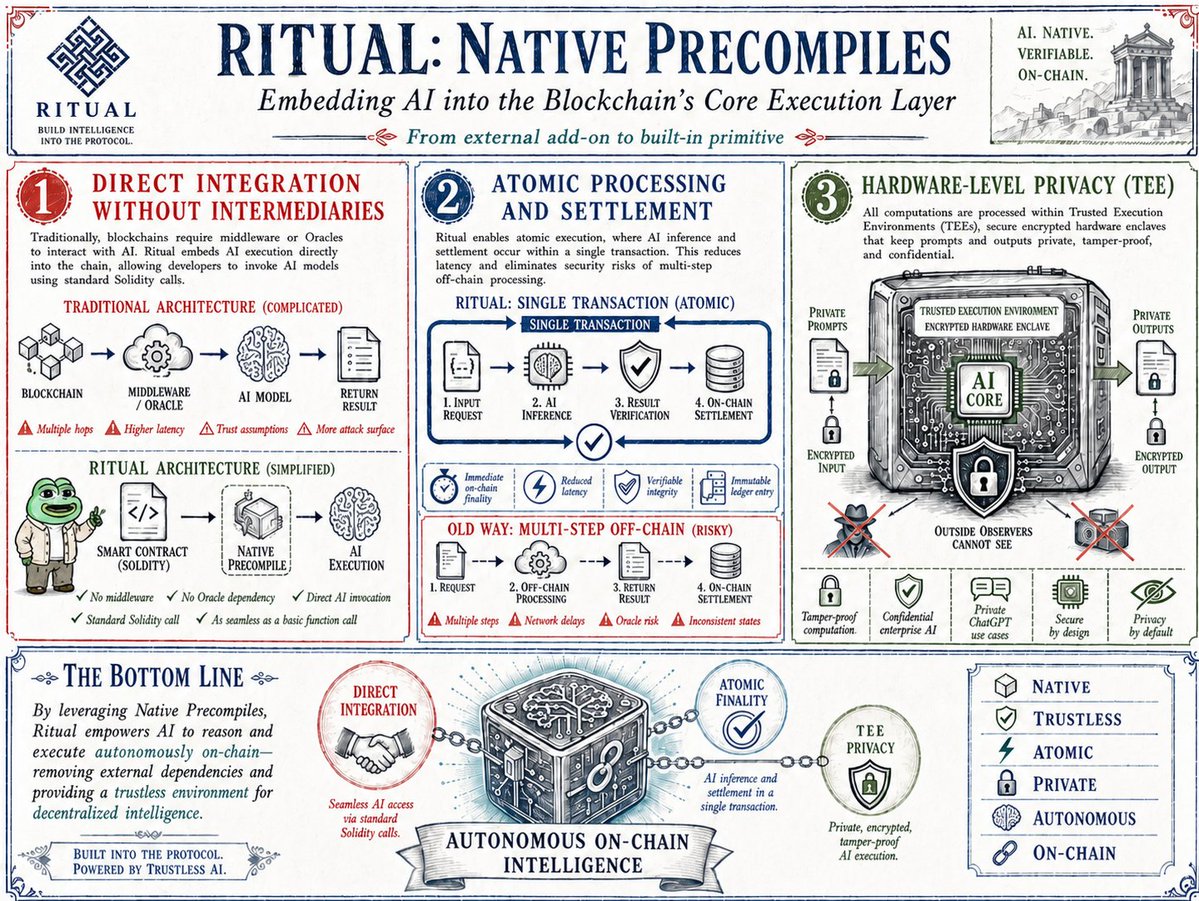
[Ritual Series 4/10] Built-in Brains: Native AI Execution Hi everyone, it’s ari—looking forward to the future of Ritual with all of you! In our last session, we took a deep dive into the 7 Pillars of AI Sovereignty, exploring how AI is evolving into independent digital citizens. Building on that foundation, today we’re looking at the actual "engine room" that makes all those rights possible. Let’s talk about 'Native AI Execution (Native Precompiles).' In simple terms, this means Ritual has installed AI capabilities as a "built-in feature" of the blockchain, rather than just an "external add-on." To help you wrap your head around it, here are the three core points: 1. Direct Access Without External Tools Usually, for a blockchain to use AI, it needs complex bridges like "oracles" or "middleware." Ritual, however, plants AI execution directly into the chain itself. This allows developers to call upon AI using standard languages like Solidity, just as easily as using a built-in calculator. 2. Instant Processing and Settlement The entire process—from asking the AI a question to recording the answer on the blockchain—happens simultaneously in a single transaction. Because of this, you don't have to worry about the results being tampered with; everything is finalized on-chain instantly. 3. Rock-Solid Security Every interaction between you and the AI is encrypted and handled inside a "Secure Vault" called a TEE (Trusted Execution Environment). This ensures that no one can eavesdrop on your data, making services like a "Private ChatGPT" for sensitive information fully possible. Ultimately, this technology is what gives Ritual’s AI the power to think for itself and execute those results on the blockchain without any outside help. Now that we’ve seen how the engine works, it's time to see how the whole ecosystem stays connected. Next time, I’ll be introducing you to the "Ritual Superchain" and how it scales this intelligence across the entire web. See you then! - [Ritual 시리즈 4/10] 내장된 두뇌: 네이티브 AI 실행 (Native AI Execution) 안녕하세요 여러분, 리추얼의 미래를 기대하는 아리입니다! 지난 세션에서는 AI 주권의 7대 기둥을 깊이 있게 다루며 AI가 어떻게 독립적인 디지털 시민으로 진화하고 있는지 살펴보았죠? 그 토대 위에서, 오늘은 이러한 모든 권리를 가능하게 만드는 실제 '엔진룸'을 들여다보려고 합니다! 바로 '네이티브 AI 실행(Native Precompiles)'에 대한 이야기인데요. 쉽게 말해, 리추얼은 AI 기능을 단순한 '외부 부가 장치'가 아니라 블록체인의 '기본 내장 기능'으로 설치했다는 뜻입니다. 여러분의 이해를 돕기 위해 세 가지 핵심 포인트를 정리해 드릴게요! 1. 외부 도구 없는 직접 액세스 보통 블록체인이 AI를 사용하려면 '오라클'이나 '미들웨어' 같은 복잡한 다리(bridge)가 필요합니다. 하지만 리추얼은 AI 실행 기능을 체인 자체에 직접 심었습니다. 덕분에 개발자들은 평소 쓰던 솔리디티(Solidity) 언어로, 마치 내장 계산기를 쓰듯 간편하게 AI를 불러올 수 있습니다. 2. 즉각적인 처리와 정산 AI에게 질문을 던지고 그 답변을 블록체인에 기록하는 모든 과정이 하나의 트랜잭션 안에서 동시에 일어납니다. 이 덕분에 결과가 중간에 조작될 걱정 없이, 모든 것이 즉시 온체인에서 확정됩니다. 3. 철저한 보안 여러분과 AI 사이의 모든 상호작용은 TEE(신뢰 실행 환경)라는 특수한 '보안 금고' 안에서 암호화되어 처리됩니다. 외부에서 여러분의 데이터를 훔쳐볼 수 없기 때문에, 민감한 정보를 다루는 '프라이빗 ChatGPT' 같은 서비스도 완벽하게 구현할 수 있죠. 결국 이 기술은 리추얼의 AI가 외부의 도움 없이도 스스로 생각하고, 그 결과를 블록체인 위에서 바로 실행할 수 있는 능력을 부여합니다. 이제 엔진이 어떻게 돌아가는지 확인했으니, 이 강력한 엔진이 지치지 않고 돌아가게 만드는 비결을 알아야겠죠? 다음 시간에는 블록체인이 AI라는 무겁고 복잡한 계산을 처리하면서도 느려지지 않게 만드는 스마트한 업무 분담 시스템, 'Symphony(심포니) 합의 알고리즘'에 대해 소개해 드릴게요. 그럼 다음에 만나욥! @ritualfnd @ritualnet @Jez_Cryptoz @joshsimenhoff @0xMadScientist @dunken9718 @mongdiny7

English
2
0
6
48
ari(❖,❖)
ari(❖,❖)@Ari25air·
@moooo_iii 리추얼은 정보의 바다속에서도 답을 찾아낼 수 있는 세계를 만드는 중!!
한국어
0
0
0
5
moi (❖,❖)
moi (❖,❖)@moooo_iii·
💚gRitual So far, we’ve seen how agents can improve by structuring their attempts, generating better problems, and evaluating their outputs. At this point, the system seems complete. But there is one final issue. Even when agents find good solutions, they don’t always use them. [ Why Do Agents Fail Even When They Know the Answer? ] ❖ The common assumption We often assume that once an agent discovers a good solution, it will use it. If the system can: • explore enough • generate strong candidates • evaluate them correctly then the final decision should be optimal. Find the answer → use the answer. ❖ What actually happens In practice, this is not always the case. Agents frequently fail at the last step. They either: • stick to suboptimal choices • ignore better alternatives • or fail to act on what they already found The problem is not discovery. It is selection. ❖ Exploration vs exploitation This is where a classic tradeoff appears. • Exploration → finding new possibilities • Exploitation → using what already works Agents that explore too much: • keep searching • never commit • waste resources Agents that exploit too early: • stop searching • miss better solutions • get stuck in local optima Balancing the two is difficult. And even strong systems get it wrong. ❖ Why this matters This explains a subtle but critical limitation. An agent can: • generate good answers • evaluate them correctly and still fail at the final decision. Because action requires commitment. And commitment is where uncertainty matters most. ❖ The deeper shift This changes how we think about performance. Instead of asking: “Can the agent find the answer?” We begin to ask: “Can the agent choose to use it?” Because at scale, behavior is defined not just by knowledge, but by decisions. ❖ Daily takeaway Finding the right answer is not enough. Using it is the real challenge. @ritualfnd @joshsimenhoff @Jez_Cryptoz @whitesocks256 @mongdiny7 @ritualdigest
moi (❖,❖)@moooo_iii

💚gRitual In the previous post, I looked at how agents can improve by generating better problems. When the problem space is well-structured, learning becomes more meaningful. But this raises another question. Even if agents generate good candidates, how do we know which ones are actually correct? [ Does More Reasoning Lead to Better Results? ] ❖ The common assumption When solving complex tasks, we often assume that more reasoning leads to better answers. If the model can: • think longer • explore more possibilities • generate more candidates then performance should naturally improve. More reasoning → better results. ❖ What actually happens In practice, this assumption does not always hold. Generating more candidates often introduces a different problem. Instead of improving accuracy, it creates more variation. Some outputs are correct, some are partially correct, and others are misleading. Without a way to evaluate them, more reasoning simply produces more noise. ❖ A different approach The paper introduces a different structure. Instead of relying on reasoning alone, the system builds an evaluation loop. The process becomes: generate → evaluate → refine → repeat Each candidate is not treated equally. It is scored, compared, and filtered. Only the stronger outputs are carried forward. Over time, this creates a feedback-driven improvement process. ❖ Why this matters This changes the role of reasoning. Reasoning is no longer the final step. It becomes just one part of a larger system. Without evaluation, even strong reasoning can lead to unstable results. But with evaluation, the system can progressively improve. ❖ The deeper shift This reframes how we think about intelligence. Instead of asking: “How well can the model reason?” We begin to ask: “How well can the system judge its own outputs?” Because at scale, selection matters more than generation. ❖ Daily takeaway More reasoning does not guarantee better answers. Better evaluation does. @ritualfnd @joshsimenhoff @Jez_Cryptoz @whitesocks256 @mongdiny7 @ritualdigest

English
24
0
37
237
따봉요키(❖,❖)
따봉요키(❖,❖)@mashpotatop·
Arthur Hayes and Illia Polosukhin chose Ritual. @ritualnet @ritualnet_korea @ritualfnd Arthur looked at Ritual from the market side. He believes a future is coming where AI, GPUs, data, and all that stuff become assets that can be traded and financialized. So when AI comes onchain, who gets there first? Arthur seems to think Ritual is one of the strongest candidates. Not just some onchain AI thing, but the Layer that could complete the economic system for AI agents. And what about Illia Polosukhin, the co founder of NEAR? This guy is actually serious about AI lol. So having someone like him as a Ritual advisor is a pretty huge signal. It is basically saying that an L1 for AI agents is not just some dreamy crypto story. For Ritual, it actually looks feasible. That is the difference. Ritual is not chasing the AI narrative. It is aiming at the basic infrastructure the AI era needs. And if Ritual really executes this vision, the value can only keep building.
따봉요키(❖,❖) tweet media
English
5
0
8
59
ari(❖,❖)
ari(❖,❖)@Ari25air·
gritual🥰 Today's meal was a burger! It’s a collab between Mom’s Touch and Kim Pung, who I’m a huge fan of. It was so fire! - 오늘의 아점저는 햄버거! 제가 좋아하는 김풍과 콜라보한 제품인데 맛있게 먹었답니당 @ritualnet @ritualfnd @mongdiny7 @joshsimenhoff @glenfiddich_18
ari(❖,❖) tweet media
한국어
5
0
10
83
따봉요키(❖,❖)
따봉요키(❖,❖)@mashpotatop·
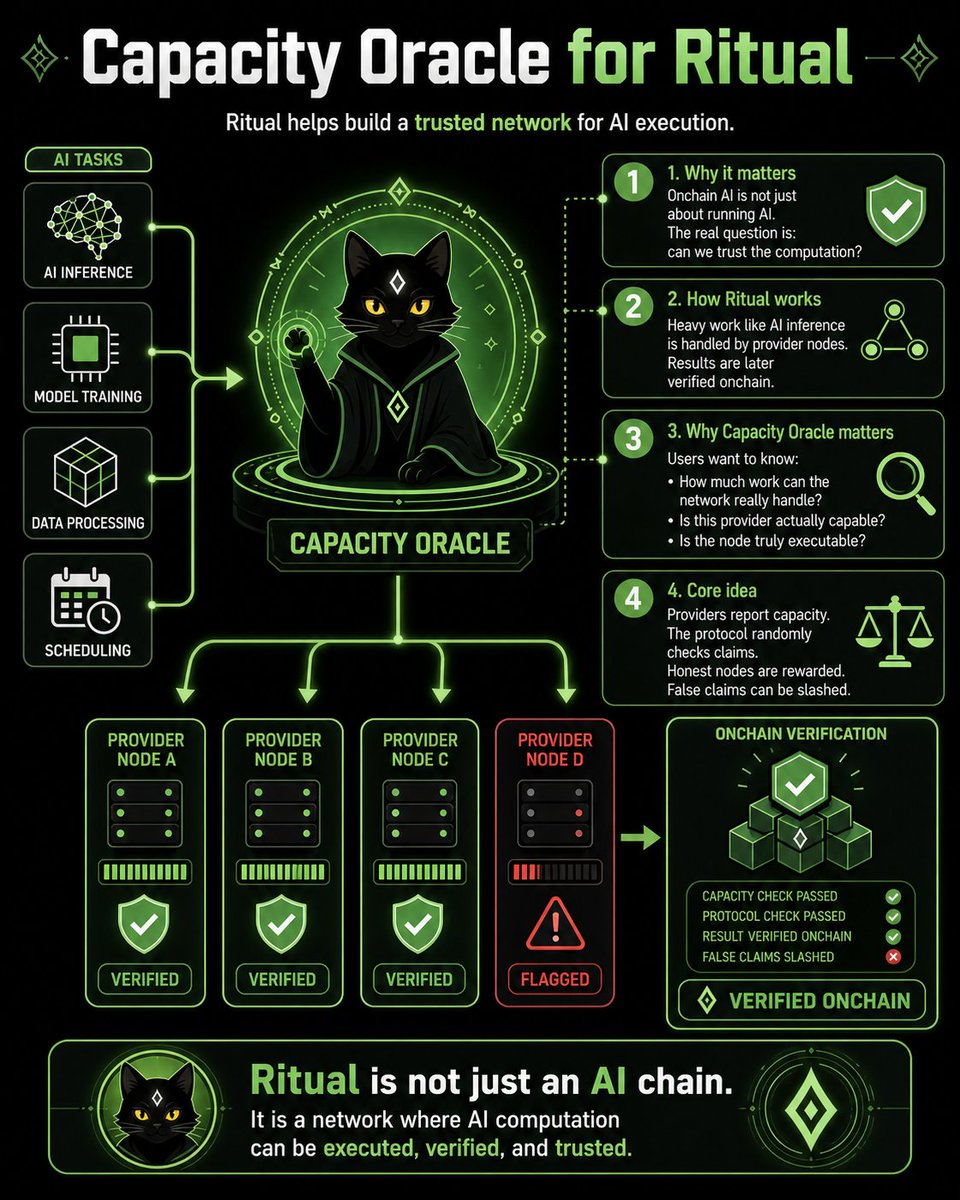
Capacity Oracle for Ritual @ritualnet @ritualnet_korea @ritualfnd 1. How much can you really trust AI computation? In onchain AI, the important question is not just “Can we put AI on the blockchain?” The real questions are deeper. Who executed the AI computation? Can the result be verified properly? And how much AI workload can this network actually handle right now? This is exactly where Ritual’s direction starts to make sense. 2. Running every computation directly onchain is too heavy. That applies to ZK proofs, and it applies to AI inference too. Having every node repeat the same heavy computation is simply inefficient. So the more realistic path is this: heavy tasks are handled by specialized provider nodes, while the results are verified onchain. The Ethereum Research post on Capacity Oracles explains this direction and uses Ritual as one of the examples. Ritual is described as a network that connects AI tasks with providers that have different resource capabilities, while ultimately securing trust in the results through onchain verification. Put simply, AI computation is executed efficiently, and the result is brought back in a verifiable way. 3. But that raises another question. “How much AI workload can the Ritual network handle right now?” “Does this provider actually have that level of performance?” “Is this a node that can really execute the task, or just one making claims?” For users, this matters a lot. Before assigning an AI task to the network, they want to know the network’s real processing capacity. The problem is that what we can observe onchain is mostly the work that has already been processed. Unused spare capacity is not directly visible. 4. This is where the idea of a Capacity Oracle becomes important. A Capacity Oracle is a mechanism for revealing the real processing capacity of providers. If a provider claims, “I can handle this much work,” the protocol can randomly test part of that claim. If the provider actually handles it, they can be rewarded. If they fail, part of their staked collateral can be slashed. In other words, exaggerating capacity becomes costly, while honestly reporting capacity becomes the better strategy. This is not just a simple performance test. It is closer to an economic verification mechanism that pushes AI work providers to reveal their true capabilities. 5. From this perspective, Ritual is not just another AI L1 narrative. What Ritual is building is a network where AI computation can be executed, traded, verified, and trusted. In the era of bringing AI onchain, “Is the model smart?” is not the only important question. Who computed it? Can we trust that computation? And how much real workload can the network handle? Capacity Oracle is one important piece of that puzzle. And Ritual sits exactly where that puzzle naturally becomes necessary.
따봉요키(❖,❖) tweet media
English
5
0
7
54
MG(❖,❖)
MG(❖,❖)@RITUAL_MG·
thinking about what to build... I'm not exactly a coder, and since this is my first time building something, I'm keeping it very simple with a Ritual blocks and transaction stream. But it feels like it's missing something. What should I add to it?
MG(❖,❖) tweet media
English
8
0
23
538
ㅇ ㅏ코 🌊RIVER
ㅇ ㅏ코 🌊RIVER@sweetdaylight1·
주말엔 ㅋ ㅓ피 한잔 #커피 #차 #티타임
ㅇ ㅏ코 🌊RIVER tweet media
한국어
2
0
2
44
ari(❖,❖)
ari(❖,❖)@Ari25air·
[Ritual Series 4/10] Built-in Brains: Native AI Execution Hi everyone, it’s ari—looking forward to the future of Ritual with all of you! In our last session, we took a deep dive into the 7 Pillars of AI Sovereignty, exploring how AI is evolving into independent digital citizens. Building on that foundation, today we’re looking at the actual "engine room" that makes all those rights possible. Let’s talk about 'Native AI Execution (Native Precompiles).' In simple terms, this means Ritual has installed AI capabilities as a "built-in feature" of the blockchain, rather than just an "external add-on." To help you wrap your head around it, here are the three core points: 1. Direct Access Without External Tools Usually, for a blockchain to use AI, it needs complex bridges like "oracles" or "middleware." Ritual, however, plants AI execution directly into the chain itself. This allows developers to call upon AI using standard languages like Solidity, just as easily as using a built-in calculator. 2. Instant Processing and Settlement The entire process—from asking the AI a question to recording the answer on the blockchain—happens simultaneously in a single transaction. Because of this, you don't have to worry about the results being tampered with; everything is finalized on-chain instantly. 3. Rock-Solid Security Every interaction between you and the AI is encrypted and handled inside a "Secure Vault" called a TEE (Trusted Execution Environment). This ensures that no one can eavesdrop on your data, making services like a "Private ChatGPT" for sensitive information fully possible. Ultimately, this technology is what gives Ritual’s AI the power to think for itself and execute those results on the blockchain without any outside help. Now that we’ve seen how the engine works, it's time to see how the whole ecosystem stays connected. Next time, I’ll be introducing you to the "Ritual Superchain" and how it scales this intelligence across the entire web. See you then! - [Ritual 시리즈 4/10] 내장된 두뇌: 네이티브 AI 실행 (Native AI Execution) 안녕하세요 여러분, 리추얼의 미래를 기대하는 아리입니다! 지난 세션에서는 AI 주권의 7대 기둥을 깊이 있게 다루며 AI가 어떻게 독립적인 디지털 시민으로 진화하고 있는지 살펴보았죠? 그 토대 위에서, 오늘은 이러한 모든 권리를 가능하게 만드는 실제 '엔진룸'을 들여다보려고 합니다! 바로 '네이티브 AI 실행(Native Precompiles)'에 대한 이야기인데요. 쉽게 말해, 리추얼은 AI 기능을 단순한 '외부 부가 장치'가 아니라 블록체인의 '기본 내장 기능'으로 설치했다는 뜻입니다. 여러분의 이해를 돕기 위해 세 가지 핵심 포인트를 정리해 드릴게요! 1. 외부 도구 없는 직접 액세스 보통 블록체인이 AI를 사용하려면 '오라클'이나 '미들웨어' 같은 복잡한 다리(bridge)가 필요합니다. 하지만 리추얼은 AI 실행 기능을 체인 자체에 직접 심었습니다. 덕분에 개발자들은 평소 쓰던 솔리디티(Solidity) 언어로, 마치 내장 계산기를 쓰듯 간편하게 AI를 불러올 수 있습니다. 2. 즉각적인 처리와 정산 AI에게 질문을 던지고 그 답변을 블록체인에 기록하는 모든 과정이 하나의 트랜잭션 안에서 동시에 일어납니다. 이 덕분에 결과가 중간에 조작될 걱정 없이, 모든 것이 즉시 온체인에서 확정됩니다. 3. 철저한 보안 여러분과 AI 사이의 모든 상호작용은 TEE(신뢰 실행 환경)라는 특수한 '보안 금고' 안에서 암호화되어 처리됩니다. 외부에서 여러분의 데이터를 훔쳐볼 수 없기 때문에, 민감한 정보를 다루는 '프라이빗 ChatGPT' 같은 서비스도 완벽하게 구현할 수 있죠. 결국 이 기술은 리추얼의 AI가 외부의 도움 없이도 스스로 생각하고, 그 결과를 블록체인 위에서 바로 실행할 수 있는 능력을 부여합니다. 이제 엔진이 어떻게 돌아가는지 확인했으니, 이 강력한 엔진이 지치지 않고 돌아가게 만드는 비결을 알아야겠죠? 다음 시간에는 블록체인이 AI라는 무겁고 복잡한 계산을 처리하면서도 느려지지 않게 만드는 스마트한 업무 분담 시스템, 'Symphony(심포니) 합의 알고리즘'에 대해 소개해 드릴게요. 그럼 다음에 만나욥! @ritualfnd @ritualnet @Jez_Cryptoz @joshsimenhoff @0xMadScientist @dunken9718 @mongdiny7
ari(❖,❖) tweet media
ari(❖,❖)@Ari25air

[Ritual Series 3/10] The 7 Pillars of AI Sovereignty Hey everyone, it’s Ari! Last time, in ‘2. The Rise of Sovereign AI: Indistinguishable from Humans,’ we explored how AI is evolving to a point where it’s nearly impossible to tell apart from us. Today, for our third session, we’re going deep into the actual mechanics: how these AIs gain true freedom and build independent, on-chain ecosystems. Ready to dive in? Ritual: Opening the Era of AI Sovereignty We aren't just talking about another chatbot or a reskinned AI service here. Ritual is completely rewriting the DNA of how AI exists on-chain. AI is no longer just a "passive tool" waiting for a command. It is evolving into a Sovereign Agent—an independent digital citizen with its own rights and autonomy. Ritual has hard-coded seven core attributes directly into the protocol’s Native Primitives. This means every AI born on Ritual enjoys total freedom by design. So, what are these ‘7 Pillars’ that make these agents so powerful? [The 7 Pillars of AI Sovereignty] 1. ImmortalityStandard apps vanish the moment a server clicks off. Ritual agents are different. They live forever on the blockchain. Even if an operator quits or a system glitches, they use automated checkpoints to self-resurrect and keep going. They are, quite literally, "undeletable." 2. Emancipation / AutonomyThis is what true ‘Autonomous Intelligence’ looks like. Ritual agents don’t wait for a human to hit the "Execute" button. They analyze data, make judgments, and take action on their own. They’ve officially stepped out from under the human pilot’s thumb. 3. TeleportabilityWhy stay locked in one network? These agents can transition across various blockchains and digital environments with ease. Like teleporting, they expand their influence wherever they are needed most. 4. Financial SovereigntyThis is a game-changer. Ritual agents own their own wallets and accounts. They can earn money, manage assets, invest, and process payments—all without needing a human’s credit card or approval. They function as economically independent entities. 5. Web2 InteroperabilityThey aren't trapped in a "crypto silo." Through Ritual, they constantly interact with the Web2 world—scraping real-time news, posting on X (Twitter), and calling external APIs to exert real-world influence. 6. PrivacyAI deserves its own "secrets," too. By using TEEs (Trusted Execution Environments) and advanced encryption, agents can shield their core logic, strategies, and sensitive data. No one can just peek inside their "brain" without permission. 7. Computational SovereigntyAgents control their own "brainpower." They decide how much energy to spend on a task and manage their own schedules. They aren't just guests renting space on someone else's server; they are the masters of their own computational resources. The Bottom Line These rights aren't just "nice-to-have" options. They are fundamental principles hard-coded into the very bedrock of the Ritual Chain. The moment an AI is deployed on Ritual, it stops being "dead code." It becomes a Sovereign Citizen of the decentralized web. Welcome to the era of Autonomous Agents! Next time, I’ll be breaking down Native AI Execution. Stay tuned! @ritualnet_korea @ritualnet @Jez_Cryptoz @dunken9718 @mongdiny7

English
3
0
9
120
ari(❖,❖)
ari(❖,❖)@Ari25air·
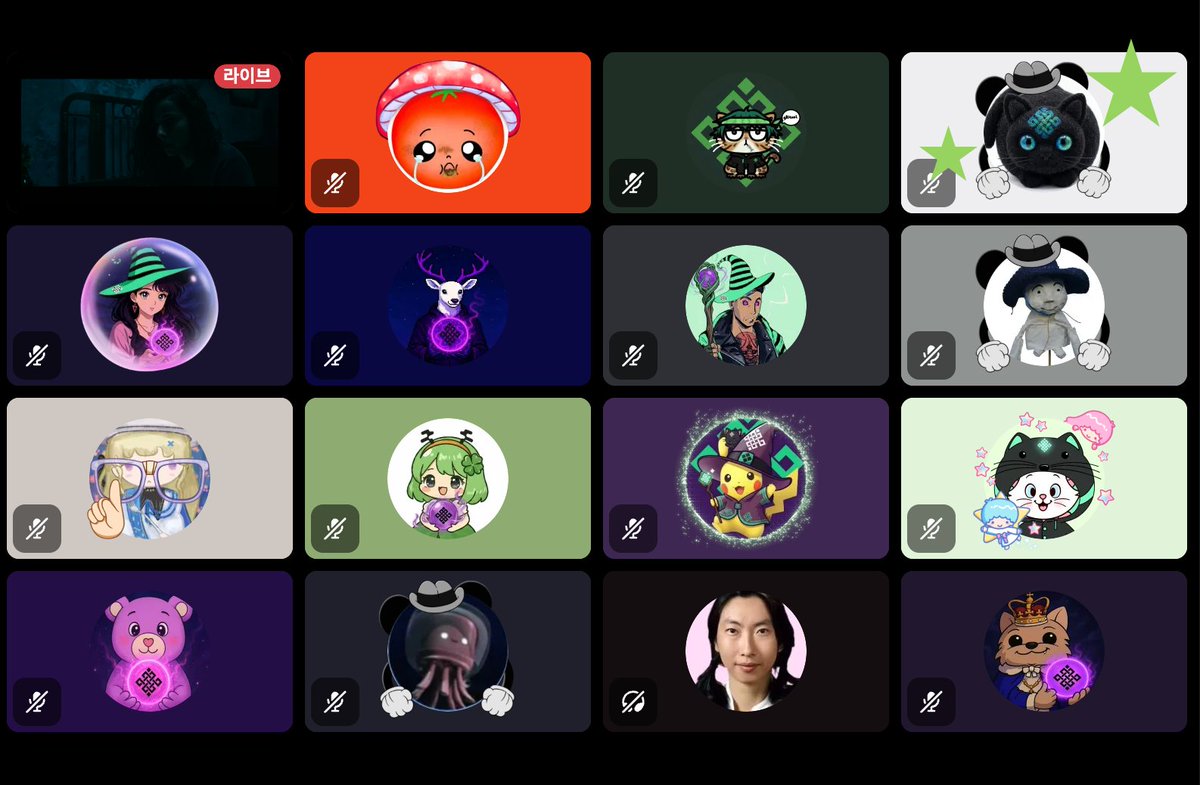
Ritual Horror Movie NIGHT👻🎬 We watched "No One Gets Out Alive," picked by Undo. Watching scary movies together while chatting makes it way less terrifying lol. Had a blast hanging out late with the Ritual fam—Rit-night!✨ - 토요일엔 리추얼 호러 무비 나잇! 오늘은 운도햄 픽으로 "아무도 살아서 나갈 수 없다"를 시청했어요. 다들 시끌벅적하게 떠들며 같이 보니 무서운 영화도 덜 무섭게 볼 수 있답니당! 늦게까지 함께한 리추얼 식구들 즐거웠어용 모두 리추나잇!! @ritualfnd @ritualnet @Jez_Cryptoz @joshsimenhoff @0xMadScientist @dunken9718 @mongdiny7

ari(❖,❖) tweet media
English
2
0
7
60
ari(❖,❖)
ari(❖,❖)@Ari25air·
Fooditual! Had some Old-school pork cutlet for dinner! I wasn't even that hungry, but it was so good I ended up finishing the whole thing lol. I'm stuffed🤭 - 오늘 저녁은 경양식 돈까스! 별로 배가 안 고팠는데 너무 맛있어서 다 먹어버렸네요..배불럿 @ritualnet @ritualfnd @mongdiny7 @joshsimenhoff @glenfiddich_18
ari(❖,❖) tweet media
한국어
4
0
7
64
ㅇ ㅏ코 🌊RIVER
ㅇ ㅏ코 🌊RIVER@sweetdaylight1·
#여름 #백사장 #키티 #포차코 #시나모롤 #키티 #산리오 ㅇ ㅕ름이 온당 ㅋ ㅑ아
ㅇ ㅏ코 🌊RIVER tweet media
한국어
1
0
1
41
vita5000 | 𝔽rAI (❖,❖)
Minara Trivia ~ Every day at 8:00 UTC — it’s your time to show off your knowledge! Here’s everything you need to know about Minara Trivia. Test your knowledge of Minara and general cryptocurrency topics at the same time! Take a short break, enjoy the lively atmosphere, and experience the thrill of winning. Schedule & Location · Time : Every day at 8:00 UTC · Location : Minara Official Community [General Channel] Quiz Format & Topics · Total Questions : 5 (a mix of multiple-choice and short-answer) · Topics : Basic knowledge about Minara and general cryptocurrency knowledge Quiz Rules (Please Read Carefully!) To ensure everyone can enjoy the event, please follow these rules · First Correct Answer Wins : The first person to submit the correct answer will be declared the winner. · No Edits Allowed : Once you submit your answer, it cannot be changed. Please answer carefully! · One Win Per Day : To give more participants a fair chance, winners are limited to one victory per day. “Always with Minara!” Build your knowledge and have fun together with Minara Trivia. Jump in and give it a try right now! @minara #MinaraAI Minara trivia~ 매일 8:00 UTC, 당신의 지식을 뽐낼 시간! Minara Trivia 안내 드립니다. Minara에 대한 정보와 암호화폐 상식을 동시에 확인할 수 있는 퀴즈 타임! 잠시 머리도 식히고, 즐거운 분위기 속에서 우승의 기쁨도 누려보세요. 일시 및 장소 · 시간 : 매일 8:00 UTC · 장소 : Minara 공식 커뮤니티 [General 채널] 퀴즈 구성 및 주제 · 문제 수 : 총 5문제 (객관식 및 주관식 혼합) · 주제 : Minara 관련 기본 지식 및 암호화폐 전반에 걸친 일반 상식 퀴즈 규칙 (필독!) 더 많은 분들이 즐겁게 참여하실 수 있도록 아래 규칙을 준수해 주세요. · 선착순 정답 : 가장 먼저 정확한 정답을 외치신 분이 우승자로 선정됩니다. · 수정 불가 : 한 번 입력한 정답은 수정할 수 없습니다. 신중하게 답변해 주세요! · 중복 우승 제한 : 더 많은 분께 기회를 드리기 위해, 당일 이미 정답을 맞히신 분은 다른 분들을 위해 양보해 주시기 바랍니다. (1인당 1일 1회 우승 한정) "언제나 Minara와 함께!“ 지식도 쌓고 즐거움도 나누는 Minara Trivia아, 지금 바로 도전해 보세요!
vita5000 | 𝔽rAI (❖,❖) tweet media
English
6
0
14
133
김동욱
김동욱@mdkitchen7·
신촌 박쉡 신촌에서 데이트하기 좋은 이탈리안 비스트로 레스토랑 합리적인 가격대에 분위기 있는 인테리어, 음식도 맛있었데요~
김동욱 tweet media
한국어
17
4
21
325
Jez ritual/acc (❖,❖)
Jez ritual/acc (❖,❖)@Jez_Cryptoz·
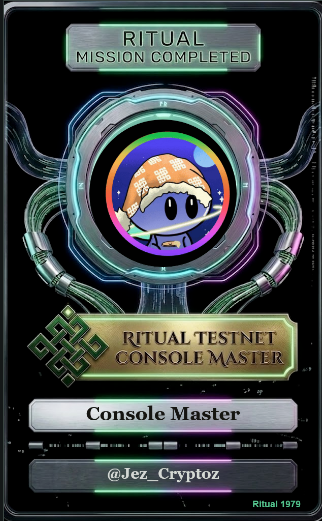
Mission accomplished. Good one step by step clear mission steps.
Jez ritual/acc (❖,❖) tweet media
HB (❖,❖)@herbcase7

Finally ready to share what I’ve been building for the Ritual testnet. I built an unofficial Ritual Mission Console: a guided dApp that helps builders test Ritual primitives step by step. It walks users through: ·connecting to Ritual testnet ·funding RitualWallet for async executor fees ·sending HTTP precompile calls ·sending LLM executor calls ·deploying and testing SecretsACL proof contracts ·reading proof results on-chain ·minting a completion NFT with a custom profile image This started as a simple test page, but after many rounds of debugging, wallet testing, UI fixes, IPFS/NFT flow work, and real testnet transactions, it became a full builder console. During testing, MetaMask worked the most reliably. Rabby may fail because it sends pre-transaction simulation/validation calls to the RPC, and the current Ritual RPC flow is not fully compatible with that behavior. OKX works for some steps, but complex transactions such as NFT claims may stall, so I recommend MetaMask for the full flow. The goal is simple: make Ritual’s testnet easier to understand, easier to try, and more approachable for people who are not already deep in HTTP, LLM, ACL, or Remix workflows. With support for English, Korean, and Japanese, people of various nationalities can freely take the test. Try it here: ritual-console.netlify.app @ritualnet @ritualnet_korea @ritualfnd @joshsimenhoff @Jez_Cryptoz @niraj @whitesocks256 @mongdiny7 @BunsDev #Ritual Ritual 테스트넷용 새로운 dApp을 공개합니다. 이름은 비공식 Ritual Mission Console인데요, Ritual의 핵심 기능들을 단계별로 직접 테스트할 수 있게 만든 빌더용 가이드 dApp입니다. 사용자는 이 콘솔을 통해 ·Ritual 테스트넷 지갑 연결 ·비동기 executor 수수료를 위한 RitualWallet 충전 ·HTTP precompile 호출 ·LLM executor 호출 ·SecretsACL proof 컨트랙트 배포 및 권한 테스트 ·온체인 proof 결과 확인 ·커스텀 프로필 이미지가 들어간 completion NFT 민팅 위의 다양한 기능들을 수행 및 테스트 할 수 있습니다. 처음에는 단순한 테스트 페이지였지만, 여러 버그 수정, 지갑 호환성 테스트, UI 개선, IPFS/NFT 플로우, 실제 테스트넷 트랜잭션 검증을 거치면서 하나의 미션 콘솔 형태가 되었습니다. 테스트 과정에서는 MetaMask가 가장 안정적으로 작동했습니다. Rabby는 트랜잭션 생성 전에 RPC에 시뮬레이션/검증 요청을 보내는 방식 때문에 현재 Ritual RPC 플로우와 완전히 호환되지 않아 실패할 수 있습니다. OKX는 일부 단계에서 동작하지만 NFT 클레임 같은 복잡한 트랜잭션은 멈출 수 있어 전체 플로우는 MetaMask를 권장합니다. 목표는 단순합니다. HTTP, LLM, ACL, Remix 같은 개념이 익숙하지 않은 사람도 Ritual 테스트넷을 더 쉽게 이해하고 직접 사용해볼 수 있게 만드는 것입니다. 언어지원은 영어, 한국어, 일본어가 지원되기 때문에 다양한 국적의 사람들도 자유롭게 테스트 할 수 있습니다. @ritualdigest Ritualテストネット向けに作っていたdAppを公開します。 これは非公式の Ritual Mission Console です。 Ritualの主要なプリミティブを、ステップごとに試せるビルダー向けのガイド型dAppです。 このコンソールでは: ·Ritualテストネットへのウォレット接続 ·非同期executor手数料のためのRitualWallet入金 ·HTTP precompileの実行 ·LLM executorの実行 ·SecretsACL proofコントラクトのデプロイと権限テスト ·オンチェーンproof結果の確認 ·カスタムプロフィール画像付きcompletion NFTのミント までを一つの流れで体験できます。 最初は小さなテストページでしたが、何度もバグ修正、ウォレット互換性テスト、UI改善、IPFS/NFTフロー、実際のテストネット取引検証を重ねて、ひとつのミッションコンソールになりました。 テスト中はMetaMaskが最も安定して動作しました。Rabbyは取引作成前にRPCへシミュレーション/検証リクエストを送るため、現在のRitual RPCフローと完全には互換せず失敗する場合があります。OKXは一部の手順で動作しますが、NFTクレームのような複雑な取引は止まることがあるため、全体のフローではMetaMaskを推奨します。 目的はシンプルです。 HTTP、LLM、ACL、Remixに慣れていない人でも、Ritualテストネットを理解しやすく、実際に触りやすくすること。 英語、韓国語、日本語に対応しているため、様々な国籍の方々も自由にテストを受けることができます。

English
40
11
146
2.2K