@matchaleiver Hey du scheinst bei mir in der Nähe zu wohnen und du siehst sweet aus :) Kann man dich kontaktieren? Folge mir mal bitte für DM
Deutsch
ARK-Mule
321 posts
@ArkMule
ARK Invest Insider. I'll expose how they work.

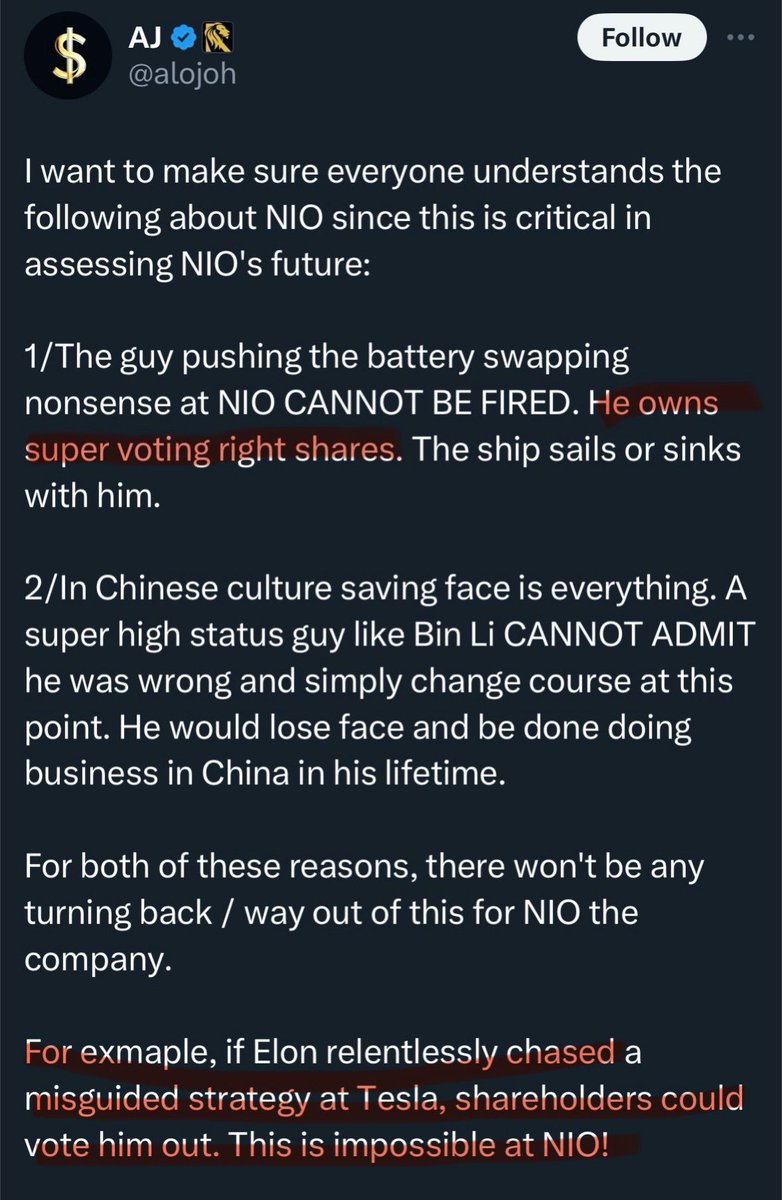
The perhaps most erroneous argument by NIO stock pumpers about NIO’s battery swapping is: “Battery swapping eliminates the issue of battery degradation”. Nothing could be further from the truth. Here is why: 1. This argument implicitly assumes NIO would use only new batteries in battery swap stations. It’s absurd to assume this. The opposite is true: NIO has a strong economic rationale to keep batteries in swapping stations as long as possible to reduce investments in new batteries. For this reason, a user swapping a battery will in most cases receive an already degraded battery of varying degree. This is precisely why NIO only promises a certain state of battery charge (SoC) but not a certain number of miles based on EPA (or other regulators') estimated consumption. 2. It’s reasonable to assume that swapped batteries are exposed to a lot more abuse than owned batteries: Why would a battery swap user care about battery health knowing after the next swap there will be a different battery in the vehicle? In contrast, a battery owner has a significant economic incentive to care about battery health. For example, some battery owners will avoid 100% SoC on a frequent basis. A battery swap user has no reason not to charge every time to 100%. For this reason, batteries in swapping stations are likely exposed to expedite degradation compared to non-swapped batteries. Bottomline: battery swapping does not provide for a reduction in battery degradation for the real world user experience and overtime is bound to provide for, on average, greater experienced battery degradation.