Arome Science Inc.

24 posts

Arome Science Inc. banner
Arome Science Inc.

Arome Science Inc.

@AromeScienceInc

We guide Biotech and Pharma companies through metabolomics measurements to get actionable insights for the improvement of people’s life quality and expectancy.

Farmington, CT Katılım Temmuz 2023
27 Takip Edilen23 Takipçiler
Arome Science Inc.
Arome Science Inc.@AromeScienceInc·
Untargeted metabolomics doesn't measure the metabolome. It measures what your solvent chose to dissolve. Low pH + positive mode: one "metabolome." High pH + negative mode: another. Same sample. Different data. The bias starts before the MS. arome-science.com/sample-prepara…
English
0
0
0
16
Elon Musk
Elon Musk@elonmusk·
You can access 𝕏 APi via @OpenClaw. We’re trying to make it affordable without giving away the shop. Hopefully, this can be useful & fun 💫
Robert Scoble@Scobleizer

Holy shit. Now everyone will be able to use their @OpenClaws and all the other agentic platforms to build apps on top of X. Here's the secret: build lists. Lists are how you build apps. The pattern: Build a list of your favorite football team. Or whatever you are into. Then ask your AI agents "build an app showing me all the important news about my favorite football team." In minutes you'll have an app. And that's just the beginning. Your agent can build a script about your favorite football team that you can take to places like Google's Notebook LM. Now you have a video, a podcast, a slide deck, a game, a mind map. All about your favorite football team based on real time news. You can do the same with something like @HeyGen, create an avatar of your favorite football player. Now you will have your favorite football player telling you everything that's happening on the football team. And I could go for hours about how many things you can build and not even cover a fraction of them. This is huge. Thank you @elonmusk for making it possible to make millions of agentic apps affordably on top of X. Start building!

English
2.7K
5.7K
47.6K
39M
Arome Science Inc.
Arome Science Inc.@AromeScienceInc·
𝗖𝗮𝘀𝗲 𝘀𝘁𝘂𝗱𝘆: 𝘂𝘀𝗶𝗻𝗴 𝗺𝗲𝘁𝗮𝗯𝗼𝗹𝗼𝗺𝗶𝗰𝘀 𝘁𝗼 𝗴𝘂𝗶𝗱𝗲 𝗱𝗿𝘂𝗴 𝗿𝗲𝗽𝘂𝗿𝗽𝗼𝘀𝗶𝗻𝗴 Primary amoebic meningoencephalitis, or PAM, caused by Naegleria fowleri, is one of the deadliest infections in medicine. For diseases like this, drug repurposing can be especially important because time matters. But repurposing works best when it is guided by mechanism, not trial and error. This case study highlights how metabolomics can help build that mechanistic framework. By clarifying pathways, biochemical vulnerabilities, and molecular context, metabolomics can support a more rational path toward identifying therapeutic opportunities. In this example, CYP51 stands out as a promising target, but the broader point is bigger than a single molecule. This is really about how metabolomics can improve study design and sharpen translational decision-making in drug discovery. Case study here: arome-science.com/how-to-use-met… #Metabolomics #DrugRepurposing #DrugDiscovery #MassSpectrometry #PrecisionMedicine #InfectiousDisease #Biotech
Arome Science Inc. tweet media
English
0
1
1
52
Arome Science Inc.
Arome Science Inc.@AromeScienceInc·
𝐂𝐨𝐦𝐩𝐨𝐮𝐧𝐝 𝐢𝐝𝐞𝐧𝐭𝐢𝐟𝐢𝐜𝐚𝐭𝐢𝐨𝐧 𝐢𝐬 𝐚 𝐦𝐚𝐣𝐨𝐫 𝐜𝐡𝐚𝐥𝐥𝐞𝐧𝐠𝐞 𝐢𝐧 𝐌𝐞𝐭𝐚𝐛𝐨𝐥𝐨𝐦𝐢𝐜𝐬 𝐒𝐭𝐮𝐝𝐢𝐞𝐬. In metabolomics, we detect thousands of molecular features, but here's a bold truth: on average, only 6% of all detected features are identified, and most of those "identifications" are just educated guesses. This widespread lack of reliable assignments risks flawed biological conclusions that could derail your research. True metabolite identification is not a checkbox; it's a rigorous confidence spectrum that demands scrutiny. Our new article explores identification in depth, diving into Metabolomics Standards Initiative (MSI) levels: from gold-standard confirmations with authentic references (Level 1) to tentative class inferences (Level 3). Why settle for ambiguity when isomers and unknowns lurk, potentially misleading pathway analyses or biomarker discoveries? 𝐊𝐞𝐲 𝐢𝐧𝐬𝐢𝐠𝐡𝐭𝐬: - Annotation confidence is not binary; missteps here inflate errors in high-stakes studies. - GC-MS shines for reproducibility in small molecules, but LC-MS/MS complexity often leads to overconfident claims without validation. - Research goals dictate precision: class-level for exploratory work, full structures for translational breakthroughs. At @AromeScienceInc , we cut through the noise with transparent, high-confidence metabolomics services that prioritize accuracy over volume. 𝐑𝐞𝐚𝐝 𝐭𝐡𝐞 𝐟𝐮𝐥𝐥 𝐩𝐢𝐞𝐜𝐞: arome-science.com/what-does-it-m… #Metabolomics #MassSpectrometry #Biomarkers #ScientificResearch #AromeScience
Arome Science Inc. tweet media
English
0
1
1
41
Arome Science Inc.
Arome Science Inc.@AromeScienceInc·
𝐁𝐢𝐨𝐥𝐨𝐠𝐢𝐜𝐚𝐥 𝐕𝐚𝐫𝐢𝐚𝐛𝐢𝐥𝐢𝐭𝐲 𝐢𝐧 𝐌𝐞𝐭𝐚𝐛𝐨𝐥𝐨𝐦𝐢𝐜𝐬: 𝐖𝐡𝐲 𝐄𝐯𝐞𝐫𝐲𝐭𝐡𝐢𝐧𝐠 𝐈𝐬 𝐀𝐥𝐰𝐚𝐲𝐬 𝐂𝐡𝐚𝐧𝐠𝐢𝐧𝐠 The metabolome is constantly shifting in response to literally everything. Unlike the genome, which stays mostly stable, or the transcriptome, which responds over hours, the metabolome can change in minutes, sometimes seconds. This makes metabolomics uniquely powerful for capturing real-time biology, yet it demands careful control for reproducible, trustworthy data. In this new article, we explore the primary sources of biological variability in metabolomics, including: - 𝐃𝐢𝐞𝐭: direct introduction of food-derived molecules, microbial transformations, and global shifts in energy metabolism - 𝐂𝐢𝐫𝐜𝐚𝐝𝐢𝐚𝐧 𝐫𝐡𝐲𝐭𝐡𝐦: daily fluctuations in metabolites such as amino acids, bile acids, and hormones, where sample collection timing alone can introduce two-fold or greater differences - 𝐌𝐢𝐜𝐫𝐨𝐛𝐢𝐨𝐦𝐞, 𝐞𝐧𝐯𝐢𝐫𝐨𝐧𝐦𝐞𝐧𝐭, 𝐥𝐢𝐟𝐞𝐬𝐭𝐲𝐥𝐞, 𝐚𝐧𝐝 𝐝𝐫𝐮𝐠𝐬: factors that drive orders-of-magnitude changes, from 1000-fold elevations in microbial metabolites like p-cresol to glucose swings from below 3 mM to above 30 mM The piece translates these realities into practical study design recommendations: what to control (fasting state, collection time, sample handling), what to record (dietary and lifestyle details), and how to manage irreducible variability through quantitative standards, multivariate statistics, and thoughtful experimental planning. Biological variability in metabolomics is not a bug to be fixed. It is the point. The metabolome is meant to be dynamic and responsive, which is precisely what makes it so informative. Read the full article here: arome-science.com/biological-var… How do you currently account for biological variability in your metabolomics workflows? Share your strategies or challenges in the comments. #Metabolomics #SystemsBiology #BiomarkerDiscovery #PrecisionMedicine
Arome Science Inc. tweet media
English
0
1
1
45
Arome Science Inc.
Arome Science Inc.@AromeScienceInc·
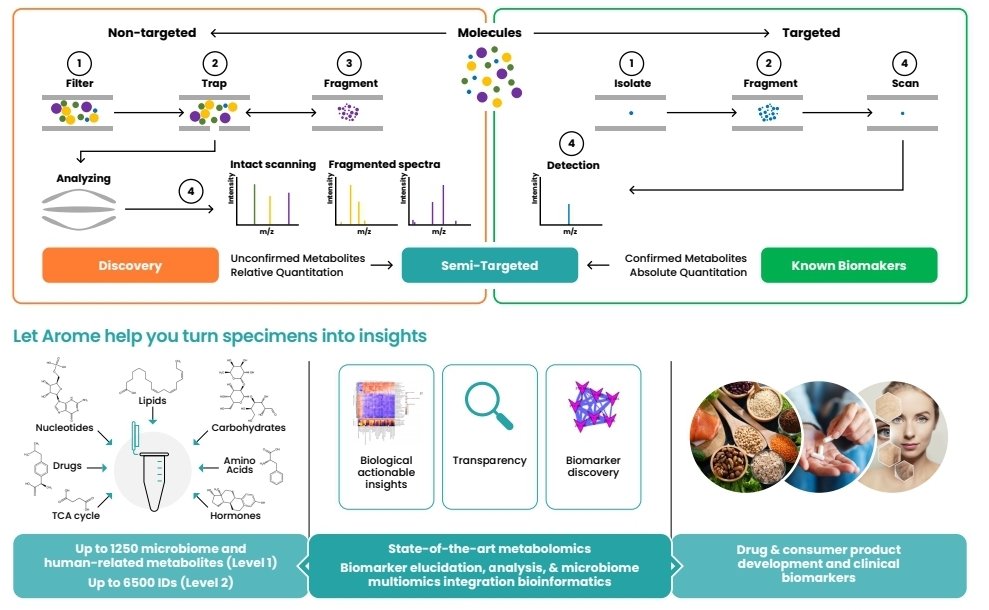
𝗧𝗵𝗲 𝗘𝗻𝗱 𝗼𝗳 𝗮 𝗧𝗿𝗮𝗱𝗲𝗼𝗳𝗳: 𝗛𝗼𝘄 𝗦𝗲𝗺𝗶-𝗧𝗮𝗿𝗴𝗲𝘁𝗲𝗱 𝗠𝗲𝘁𝗮𝗯𝗼𝗹𝗼𝗺𝗶𝗰𝘀 𝗕𝗹𝘂𝗿𝘀 𝘁𝗵𝗲 𝗟𝗶𝗻𝗲 𝗕𝗲𝘁𝘄𝗲𝗲𝗻 𝗣𝗿𝗲𝗰𝗶𝘀𝗶𝗼𝗻 𝗮𝗻𝗱 𝗗𝗶𝘀𝗰𝗼𝘃𝗲𝗿𝘆 Imagine choosing between a magnifying glass for detailed inspection of a few items or a wide-angle lens to capture the entire scene, but never both at once. This mirrors the longstanding challenge in metabolomics. In the evolving field of metabolomics, researchers have historically faced a critical tradeoff: precise quantification of select metabolites or broad discovery of unknown molecular patterns, but rarely both in one workflow. Our latest article explores how semi-targeted metabolomics is changing this paradigm by integrating rigorous quantitation for predefined panels with comprehensive high-resolution profiling, all in a single analytical run. This approach leverages advanced mass spectrometry, such as Orbitrap Astral technology, to deliver confident concentrations for biomarkers while enabling the discovery of unexpected pathways and markers. The result? Enhanced efficiency without much added costs, making it ideal for applications in drug development, personalized medicine, and environmental health. For instance, in cancer diagnostics, semi-targeted methods allow precise measurement of 50-100 known biomarkers, like lipid peroxidation products, alongside profiling thousands of metabolites to refine panels and address disease heterogeneity. At Arome Science, we are at the forefront of this convergence, providing services that bridge precision and discovery. Read the full article here: arome-science.com/the-end-of-a-t… What are your thoughts on how this hybrid approach could impact your research? Share in the comments below. #Metabolomics #MassSpectrometry #PrecisionMedicine #DrugDiscovery #AromeScience
Arome Science Inc. tweet media
English
0
1
1
47
Arome Science Inc.
Arome Science Inc.@AromeScienceInc·
Excited to share insights from Arome Science's presentation at the Keystone Symposia on Molecular & Cellular Biology on "Microbiome Metabolism and Metabolites: Discovery and Function in Health and Disease" in Banff, Canada. In the talk "Quantitative Metabolomics in Microbiome Research" by @Alexey_V_Melnik, we addressed key challenges in gut health testing, such as low patient compliance with traditional collection methods, limited functional metabolic markers, and difficulties in translating results into actionable recommendations. Our data from a 200-participant study at the University of Connecticut highlighted the S’Wipe collection approach, a simple, room-temperature stable method that facilitates sample collection and handling. We focused on quantitative analysis of short-chain fatty acids (SCFAs) and bile acids, essential metabolites connecting gut microbiome activity to chronic disease. A pivotal finding: Total dietary fiber intake did not correlate with, and did not predict, SCFA levels in the cohort. This underscores the need to move beyond generic fiber recommendations toward personalized strategies. We introduced a data-driven model prioritizing specific soluble fibers like beta-glucan, AXOS, and Maltodextrin based on individual SCFA profiles. Initial evidence indicates measurable improvements with tailored recommendations, aka designer fibers. Notably, inulin is the only soluble fiber out of 7 in our model that was not able to affect SCFA levels despite being the most popular fiber on the market and heavily advertised as a fiber to promote gut health. This research advances accessible, quantitative, and biologically actionable gut health assessments. Explore the full details: arome-science.com/arome-science-… #GutHealth #Metabolomics #MicrobiomeResearch #PersonalizedNutrition #SCFAs #KeystoneSymposia
Arome Science Inc. tweet media
English
0
0
2
120
Arome Science Inc.
Arome Science Inc.@AromeScienceInc·
What Metabolomics Can and Cannot Tell Us? In metabolomics, advanced instrumentation is impressive, but experimental design is the true cornerstone of reliable data. Poor design introduces biases that no technology can fully mitigate, while a well-planned study ensures meaningful, interpretable results. As highlighted in our latest blog, experimental design matters more than instrumentation because it directly impacts data quality from sample collection to analysis. Factors like timing, storage, randomization, and controls are critical to avoiding misleading outcomes. For instance, consider sample collection timing: metabolites such as glucose or amino acids can fluctuate rapidly due to circadian rhythms or dietary influences. Collecting samples at inconsistent times can introduce variability that skews results, making it difficult to distinguish true biological signals from artifacts. Similarly, improper storage conditions, like freezing samples without stabilizers, can lead to degradation of labile compounds, resulting in biased metabolite profiles. Randomization is another key element. Without randomizing sample processing order, batch effects from instrument drift or reagent variations can confound data interpretation. Proper controls, including blanks, quality control samples, and biological replicates, help identify and correct for these issues, ensuring reproducibility. In real-world applications, such as biomarker discovery for diseases like cancer or diabetes, overlooking these design aspects has led to irreproducible findings and wasted resources. A robust design not only minimizes bias but also enhances the statistical power of the study, leading to more actionable insights. At Arome Science, we prioritize rigorous experimental design in our metabolomics services to deliver accurate insights for your research. Learn more about our offerings at arome-science.com. Read the full article here: arome-science.com/what-metabolom… What are your thoughts on balancing design and technology in omics studies? Share below! #Metabolomics #ExperimentalDesign #ScientificResearch #BiasInData #AromeScience
Arome Science Inc. tweet media
English
0
0
2
69
Arome Science Inc.
Arome Science Inc.@AromeScienceInc·
🌟 Why Solvent Choice Matters in Metabolomics Sample Preparation 🌟 In metabolomics studies, the initial step of extracting metabolites from samples is critical, as it directly influences the quality and comprehensiveness of your data. Different metabolites exhibit diverse chemical properties, and no single solvent can extract them all equally effectively. A suboptimal choice may overlook entire classes of biologically significant compounds. The core principle is "like dissolves like": polar molecules thrive in polar solvents, while nonpolar ones prefer nonpolar environments. The metabolome encompasses a broad spectrum, from highly polar amino acids and sugars to hydrophobic lipids and fatty acids. Thus, the extraction solvent serves as a key selector, shaping which metabolites are detected in your analysis. Common solvents in metabolomics extraction include: 𝐖𝐚𝐭𝐞𝐫: Ideal for highly polar metabolites like sugars, amino acids, nucleotides, and small organic acids, particularly in studies of central carbon metabolism. However, it misses lipids and may introduce salts and proteins that interfere with mass spectrometry. 𝐌𝐞𝐭𝐡𝐚𝐧𝐨𝐥: A versatile staple, polar enough for primary metabolites yet adaptable with water mixtures for broader coverage. It precipitates proteins for cleaner extracts but still biases toward polar compounds. 𝐀𝐜𝐞𝐭𝐨𝐧𝐢𝐭𝐫𝐢𝐥𝐞: Less polar than methanol, favored in LC-MS for compatibility with reversed-phase chromatography and clean extracts. Effective for moderately polar metabolites, though less so for nonpolar lipids; it's also more costly and toxic. 𝐅𝐨𝐫 𝐥𝐢𝐩𝐢𝐝𝐬 𝐚𝐧𝐝 𝐧𝐨𝐧𝐩𝐨𝐥𝐚𝐫 𝐦𝐞𝐭𝐚𝐛𝐨𝐥𝐢𝐭𝐞𝐬: Options like 𝐞𝐭𝐡𝐲𝐥 𝐚𝐜𝐞𝐭𝐚𝐭𝐞 excel at extracting fatty acids and steroids, while 𝐜𝐡𝐥𝐨𝐫𝐨𝐟𝐨𝐫𝐦-𝐦𝐞𝐭𝐡𝐚𝐧𝐨𝐥 mixtures (e.g., Folch or Bligh-Dyer methods) provide comprehensive lipid coverage, despite chloroform's drawbacks. 𝐈𝐬𝐨𝐩𝐫𝐨𝐩𝐚𝐧𝐨𝐥 offers a balanced alternative. Solvent selection must align with your biological question, whether focusing on bile acids, short-chain fatty acids for GC-MS, or a comprehensive profile requiring biphasic extractions like 𝐰𝐚𝐭𝐞𝐫/𝐦𝐞𝐭𝐡𝐚𝐧𝐨𝐥/𝐌𝐓𝐁𝐄. 𝐄𝐦𝐞𝐫𝐠𝐢𝐧𝐠 𝐀𝐈 tools may soon predict optimal extraction conditions based on metabolite structures and analytical methods, though they require further validation. Ultimately, solvent choice is foundational, impacting everything from sample collection to data interpretation. At Arome Science, we collaborate with researchers to tailor extraction protocols for specific targets as part of our targeted metabolomics services. Read the full article here: lnkd.in/efBCUyeW What are your experiences with solvent optimization in metabolomics? Share in the comments! 👇 #Metabolomics #SamplePreparation #MassSpectrometry #ScientificResearch #AromeScience
Arome Science Inc. tweet media
English
0
1
2
33
Arome Science Inc.
Arome Science Inc.@AromeScienceInc·
🌟 Positive vs Negative Ion Mode in Metabolomics: Why Positive Dominates LC-MS Studies and what should you choose for yours? In metabolomics, the choice of ionization polarity in LC-MS profoundly impacts metabolite detection, signal stability, and metabolome coverage. Most studies favor positive ion mode due to ionization chemistry: organic molecules more readily form stable positive ions by gaining a proton or losing an electron, unlike negative ions which can be unstable without suitable orbitals. Protonation in positive mode suits diverse biological compounds with Lewis base functional groups like amines, hydroxyls, carbonyls, and ethers—ideal for amino acids, peptides, lipids, and more. GC-MS electron ionization operates exclusively in positive mode, forming radical cations. Negative mode excels for metabolites that lose protons, such as carboxylic acids (fatty, bile), halogenated or phosphorylated compounds, and sugars (via deprotonated hydroxyls in basic conditions). Buffers like ammonium acetate aid negative mode, while formic acid enhances positive mode ESI. Negative mode offers a sensitivity advantage with lower background noise, improving signal-to-noise ratios when ionization occurs. For untargeted metabolomics, positive mode provides broader coverage; dual-polarity approaches maximize insights but require more resources. Functional groups determine mode: basic sites favor positive, acidic ones negative. Integrate both in experiments for comprehensive data. Read our in-depth article: arome-science.com/metabolomics/p… Which mode do you prefer in your workflows, and why? Share below! hashtag#Metabolomics hashtag#LCMS hashtag#MassSpectrometry hashtag#ScientificResearch hashtag#AromeScience
Arome Science Inc. tweet media
English
0
0
3
19
Arome Science Inc. retweetledi
Alexey Melnik
Alexey Melnik@Alexey_V_Melnik·
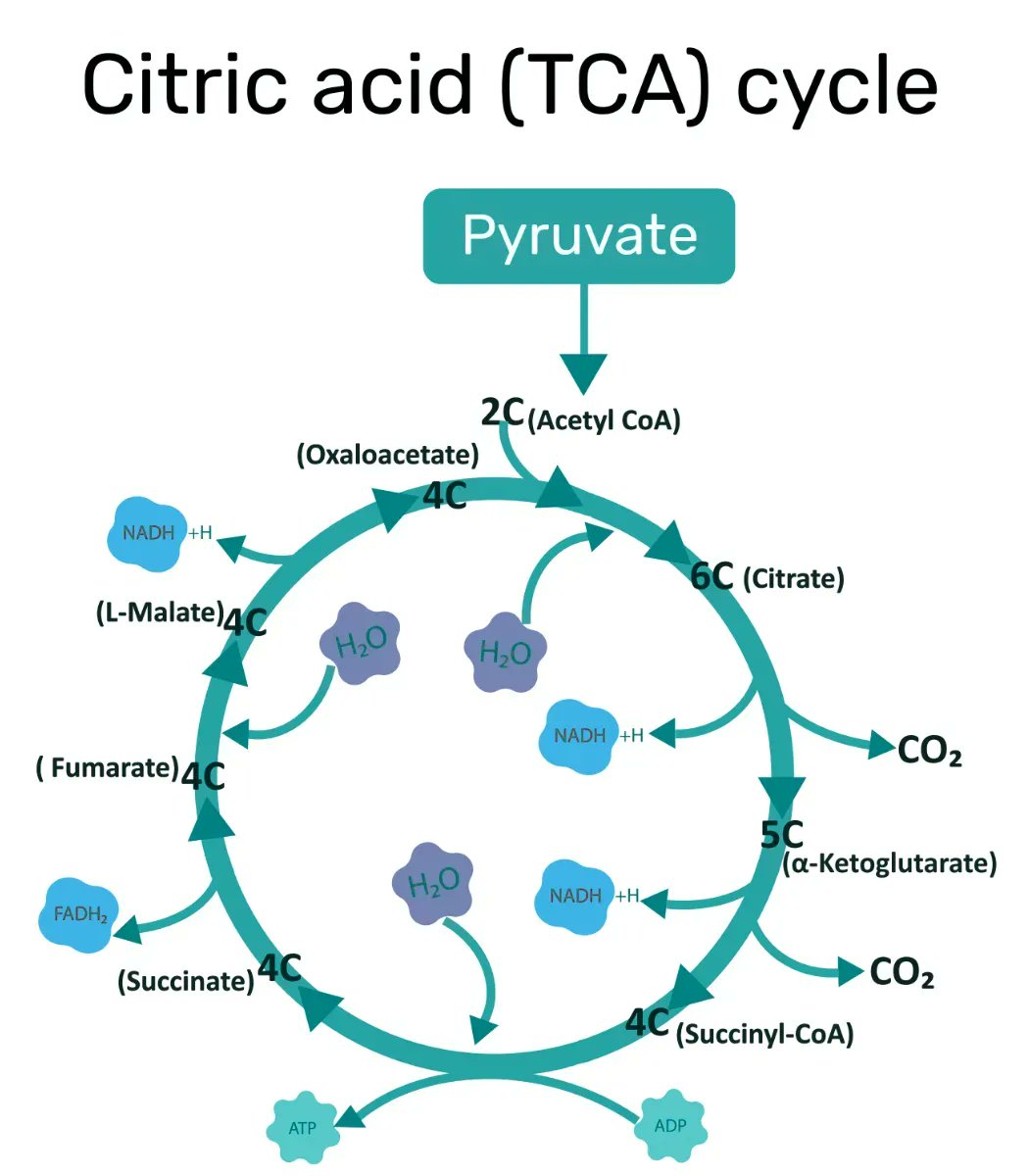
Pyruvate: The Powerhouse Molecule Behind the Body's Energy Pyruvate, or 2-oxopropanoic acid, is the end-product of glycolysis, the cellular process that breaks down sugars to generate energy. It acts as a key bridge in metabolism, entering the mitochondria for conversion to acetyl-CoA, which then fuels the citric acid cycle and drives ATP production, which is the main energy source essential for cellular functions. In addition to energy metabolism, pyruvate supports gluconeogenesis through intermediates like phosphoenolpyruvate, helping maintain balance between energy needs and biosynthetic pathways. It also functions as an antioxidant, protecting cells from oxidative stress caused by reactive oxygen species. Without pyruvate, cells would lack the energy required for proper function. Dysfunctions in pyruvate metabolism are associated with conditions such as heart failure, neurodegenerative diseases, diabetes complications, and glaucoma. A recent study in eLife (Li et al., 2025) shows that sodium pyruvate supplementation can enhance resilience against genetic risks for glaucoma in mouse models, preserving eye health. Clinical trials are now investigating its potential in humans, while sodium pyruvate is already a standard supplement in cell culture to support growth and metabolism. Read the full details in our Metabolite Insights article: arome-science.com/metabolite-ins… At @AromeScienceInc, we provide semi-targeted metabolomics services to measure pyruvate and related metabolites, offering valuable insights for research and clinical applications: arome-science.com/semi-targeted-… #Metabolomics #Pyruvate #CellularMetabolism #BiotechResearch
Alexey Melnik tweet media
English
0
1
1
72
Arome Science Inc. retweetledi
Alexey Melnik
Alexey Melnik@Alexey_V_Melnik·
Excited to announce that Arome will be at ASMS 2024 for the first time as a vendor! We can't wait to meet everyone. Visit us at Booth #531. See you there! #ASMS2024 @AromeScienceInc
Alexey Melnik tweet media
English
0
3
17
1.9K
Arome Science Inc. retweetledi
Metabolomics Society
Metabolomics Society@MetabolomicsSoc·
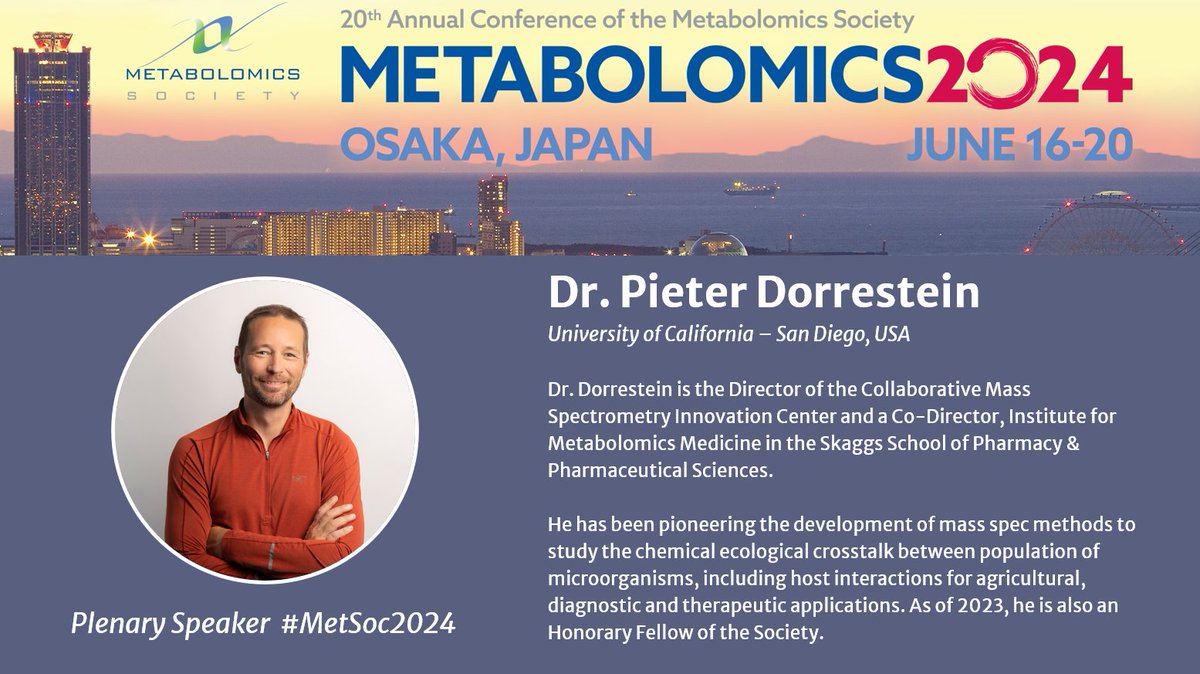
Happy to introduce our lineup of Plenary speakers for #MetSoc2024, starting with Dr. Pieter Dorrestein. Join us at the Opening Session for his lecture: The Emerging Big Data Era in Metabolomics/Lipidomics: Discovering New Molecules at the Repository Scale
Metabolomics Society tweet media
English
1
26
81
7.1K