Asadullah Baloch retweetledi
Asadullah Baloch
410 posts

Asadullah Baloch retweetledi

🌍 Strategic Voices| CISS AJK
Dr. Rizwana Abbasi highlighted that rising great power rivalry, weakening arms control and rapid technological advances are straining the NPT and reinforcing reliance on nuclear deterrence.
🔗Watch the complete analysis here:
youtu.be/UNWJC5A9uok?si…
@RadioactiveFrnd @AsmaKhawaja5 @zahirhkazmi @zafarwafa1977 @CISS_Islamabad @bttn_quetta @numl_official

YouTube
English
Asadullah Baloch retweetledi

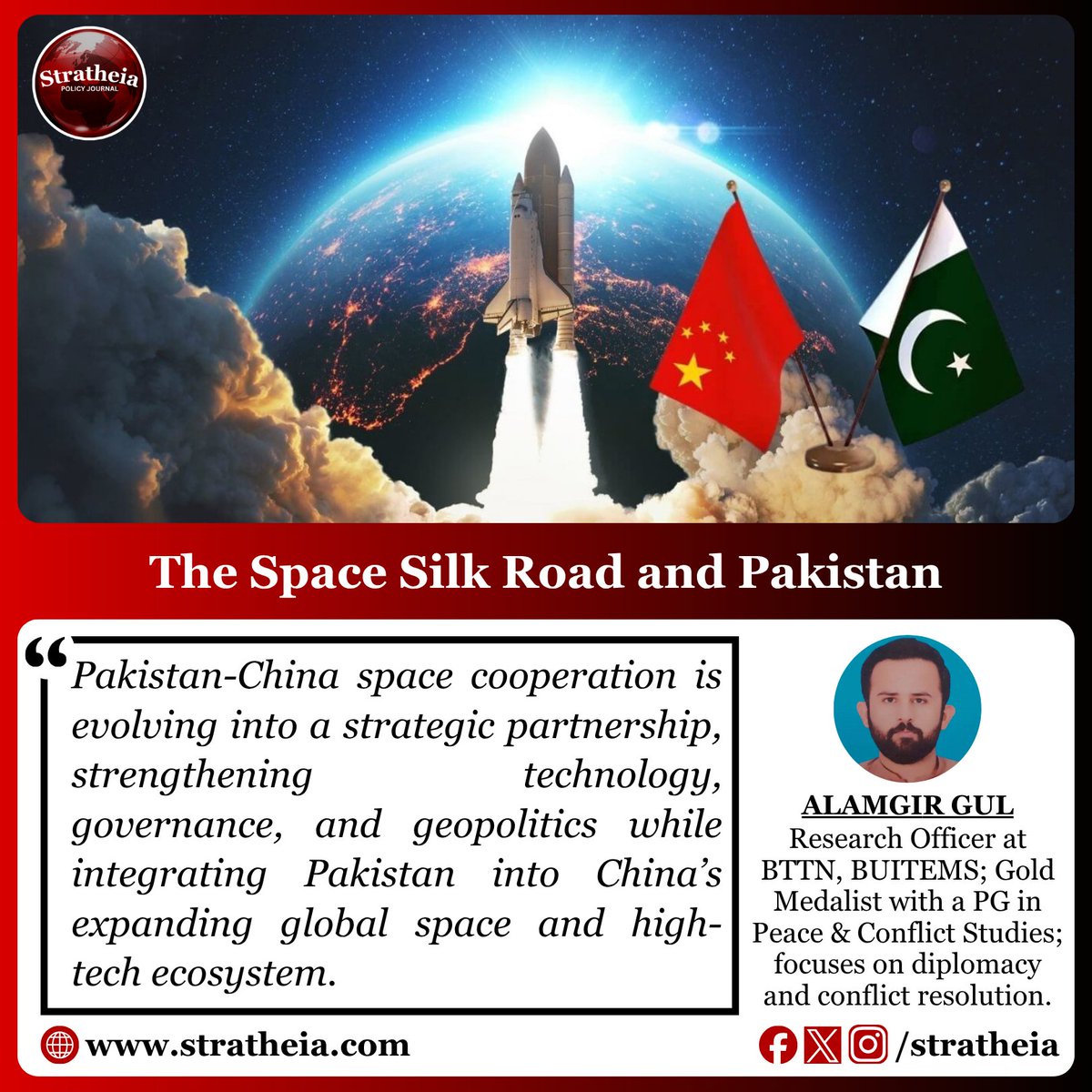
Pakistan-China ties are no longer just about CPEC. Space cooperation is emerging as the next frontier—reshaping technology, governance, and geopolitical alignment in the region. @alamrindh
#PakistanChina #CPEC #SpaceDiplomacy
Read Full Article: stratheia.com/the-space-silk…

English
Asadullah Baloch retweetledi

🌍 Publication| CISSAJK
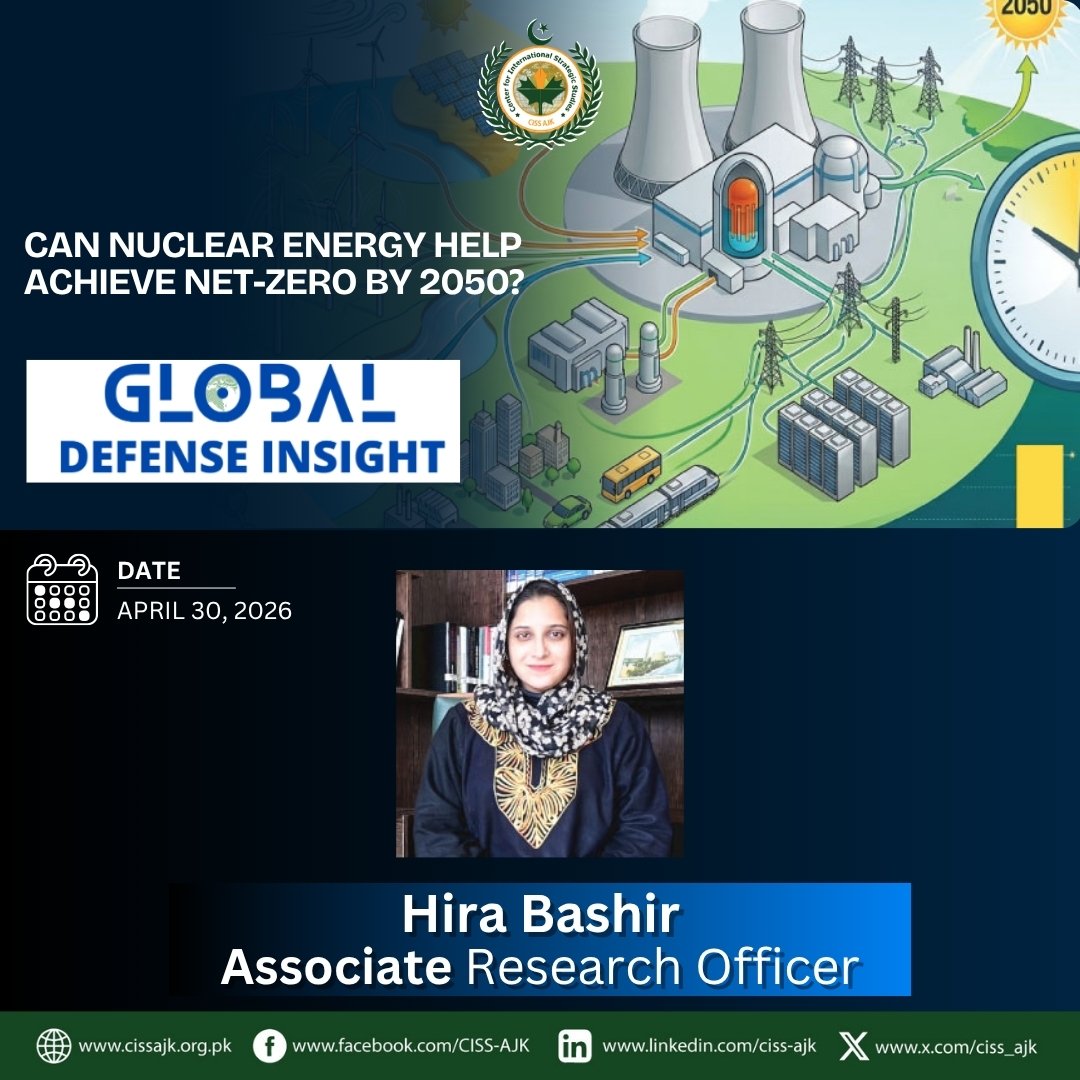
Author: Hira Bashir, Associate Research Officer
Highlights: Achieving net-zero emissions by 2050 requires both scale and reliability in energy production. Nuclear energy provides a combination of continuous output and low emissions that few other sources can match.
Read the full analysis here:
defensetalks.com/can-nuclear-en…
@RadioactiveFrnd @AsmaKhawaja5 @UNIDIR

English
Asadullah Baloch retweetledi

"TRUMP AND NATO"
NATO, perceived to be one of the strong pillars of the US grand strategy, will be regretted for the fall of American primary in Europe.
Others will have the chance to prevail upon by filling up the missing strategic gaps.
Such is the beauty of international politics.
#NATO #US #TRUMP #EUROPE
#SRTATEGY
English
Asadullah Baloch retweetledi

India’s missile trajectory isn’t about deterrence, it’s about prestige. From Agni-V to Agni-VI, this is a shift toward global power projection, not regional security. Now it’s unfolding exactly as I predicted in one of my pieces. 👇 #AgniVI #SouthAsia stratheia.com/prestige-above…
English
Asadullah Baloch retweetledi

foreignaffairs.com/india/why-next…
"Risk Of Escalation in South Asia"
Although many security analysts may argue that including this piece titled "Why the Next India-Pakistan War Will Escalate" reflects that terrorism may lead the two South Asian nuclear rivals to the brink of a serious military crisis, quickly reaching up the escalation ladder to a nuclear level.
However, fighting and containing terrorism should not be made a pretext to wage a preventive strike, as India did in both the 2019 and May 2025 crises. This is potentially irrational and dangerous. It is fraught with weaknesses that may escalate to a dangerous level.
The Herman Kahn and Rodney Jones conceptual escalation ladders may not be directly applicable to the complex South Asian nuclear environment, where a persistent conventional force asymmetry could escalate to the nuclear level.
Using terrorism as a pretext to strike a nuclear Pakistan means that India is putting itself into a “commitment trap” and “escalation trap.” India must contain terrorism within its borders by addressing its intelligence failure, governance issues, and, more importantly, enacting a counterterrorism strategy to address such issues within India. It should be India’s internal issue. India may bring this issue, which Pakistan commonly faces, to the negotiating table as part of CBMs.
The article does not say anything about this imperative that is good for the South Asian strategic stability, potentially preventing a serious military crisis because of a false pretext of terrorism.
The article is also silent without mentioning that Pakistan suffers from the menace of terrorism much more than India does. Has Pakistan ever made terrorism a pretext to launch a preemptive strike against India and its handlers? Pakistan can, but Pakistan has not, and this shows a great deal of strategic restraint, but restraint should not be considered a weakness. It is part of the strategy to signal to the other side not to do things that may exceed the bounds of restraint.
Although the article mentions somewhere in conclusion about the possible risk of escalation to a nuclear level, it does not specifically mention how and why nuclear deterrence has been playing a direct and indirect role in preventing both large-scale and limited war in South Asia.
The article also skips to mention why India showed restraint not to take military action against Pakistan after the car bomb explosion in New Delhi in November 2025 that killed about 10 people. Was it because India realized that terrorism can not be made a pretext for waging a preventive strike (illegal) against Pakistan? Or was it because of nuclear deterrence playing in the background, deterring India to be more cautious that time around, having learned its lesson in May 2025?
The role of the third party is important and therefore cannot be ignored, as India does. Ironically, on the one hand, India does not recognize the third-party role, but on the other hand, it does not talk to Pakistan and share information on issues concerning India and Pakistan. The burden of responsibility is on the Indian shoulder, much more than on Pakistan.
The article does not critically analyze this imperative.
The article also does not elaborate on how and why Pakistan proposed the Strategic Restraint Regime (SRR), which India declined, and how this relates to broader strategic stability in South Asia, as well as to crisis management and crisis prevention mechanisms.
The efforts for crisis resolution (the ultimate way forward) are not mentioned in the article at all; one wonders why.
The article could have been more balanced and interesting if this could inculcate all these missing imperatives.
@ethrelkeld @ForeignAffairs
#India #Pakistan #SouthAsia #May2025Conflict #Escalation #deescalation #risk #nuclear #Kashmir #flashpoint
English
Asadullah Baloch retweetledi

“Indian ICBMs (Agni-VI) – A Global Security Threat”
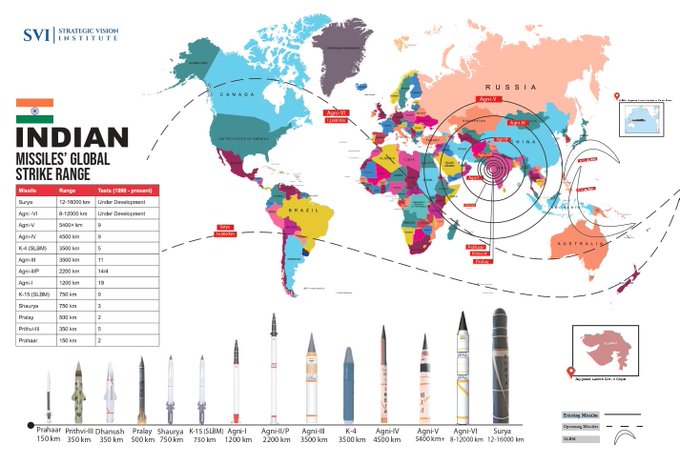
India’s development of Agni-VI, an ICBM with a range of 12000km-16000km, goes beyond Pakistan and China. It now clearly threatens the US, Canada, Europe, and the entire American Continent.
India, with increasing ranges of its ICBMS and SLBMs, has become a global threat.
The international community, including the US, needs to question India about such strategic ambitions.
This is no longer consistent with India’s declared minimum deterrence; it goes far beyond such a perceived nuclear policy.
It is no longer security.
It is dangerous hubris, an escalation dominance, prestige, and power projection, at both the regional and global levels.
Pakistan is watching; the Chinese are watching; the global community is concerned about this, and the US must take action now rather than never when India becomes a strategic Frankenstein against the US's vital security and geostrategic interests.
@MalluChique
@RealBababanaras
#India #DRDO #ICBMs #SLBMs #Threat #US #Canada #EU #global #power #prestige


English
Asadullah Baloch retweetledi

India doesn't need a 12,000 km missile to threaten Pakistan or China.
India develops the Agni-VI with an intercontinental range, placing Washington, London, and Paris under its nuclear umbrella — this doesn't merely highlight the technicalities; the motive remains deeply rooted in strategic ambitions.
Who is this missile for?
Not the adversaries India publicly names. The range overshoot tells a different story; one of prestige-driven power maximization, not credible minimum deterrence.
And yet, Western capitals remain conspicuously quiet. The same nonproliferation voices that challenge every Russian warhead and every North Korean test have nothing to say about India's silent march toward global strike capability.
That silence is itself a strategic choice. And it may prove to be a costly one.
@zahirhkazmi @zafarwafa1977 @AsmaKhawaja5 @ExecDirCISSS @ciss_ajk @CISS_Islamabad @SVI_Pakistan
#AgniVI #ICBM #NuclearStrategy #India #Deterrence #ArmsRace #StrategicStability
m.economictimes.com/news/defence/d…
English

@RadioactiveFrnd A state driven by hyper-nationalism expanding long-range nuclear capabilities should concern everyone. From “regional security” to potential global reach, this shift demands scrutiny. Strategic stability isn’t served by unchecked missile escalation.
English
Asadullah Baloch retweetledi

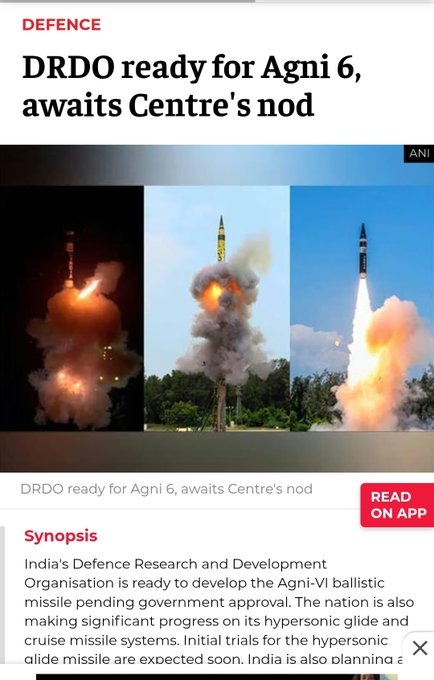
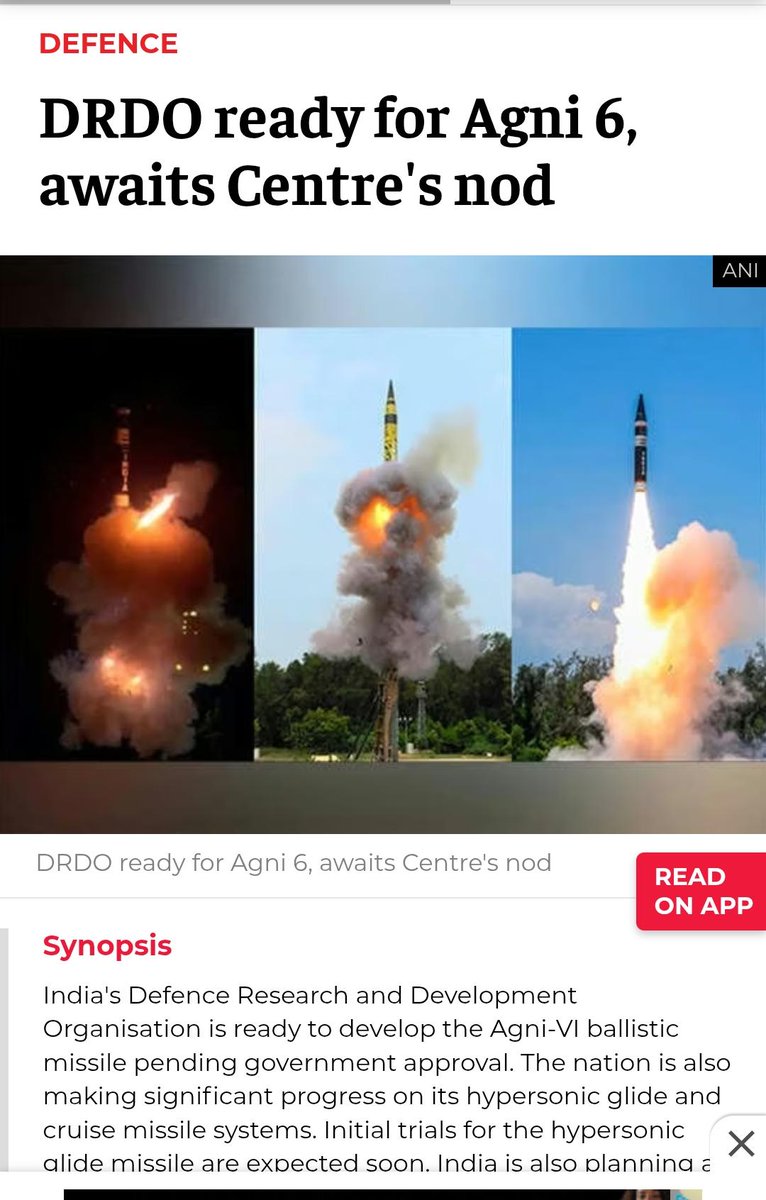
🛡️ DRDO Chairman Kamat confirmed: India is “ready” for Agni-VI ICBM development witch’s a nuclear-capable beast with speculated 10-12,000 km range & MIRV warheads. Enough to reach Europe, US & Canada.
Govt nod pending.
Who is this really for? Pakistan & China are already covered by existing arsenal.
In a nuclear South Asia, after Op Sindoor’s boldness, a Hindutva-driven push for global strike capability? The West watching this “minimum deterrence” stretch?
#AgniVI #StrategicShift
m.economictimes.com/news/defence/d…
@RadioactiveFrnd @orfonline @EconomicTimes @bttn_quetta @ciss_ajk @ciss_ajk @dratiaalikazmi @arooj_kaz
English
Asadullah Baloch retweetledi

On May 1, 2026, Indian DRDO officially confirmed an Agni-VI program of 12,000 km range.
1. Pertinent Question on Agni-VI is "Who is the target?"
2. Pakistan and China are already within range of Agni-III/IV/V.
3. A 12,000 km ICBM (Agni-VI)
covers all of Europe, Africa, and North America. It is a capability beyond “minimum credible deterrence” and regional threat perception.
4. India’s draft 1999 doctrine cites “credible minimum deterrence.” A US/Canada-range ICBM suggests movement toward “extended deterrence” or “global power projection.” This breaks the “regional deterrence” logic used to justify India’s 1998 tests and 2008 NSG waiver.
5.Notably, no state currently threatens India at 12,000 km range. Therefore, capability would be seen as “status-driven,” not "threat-driven."
6. Islamabad would link a new ICBM to the risk-acceptance pattern demonstrated during operation sindoor. The pattern is: Conventional strikes + expanded nuclear reach = crisis instability.
7. Agni-VI with MIRV compounds warhead growth potential.
8. Indian ICBM is moving from “minimum” to “flexible response” posture, forcing Pakistan into costly counter-buildup.
9. NSG waiver 2008 exempted India from NPT/CTBT. Agni-VI without additional safeguards reinforces “exceptionalism” rules for others, and waivers for India.
10. It enables “compellence” against distant states or gives India escalation dominance in regional crises.
11. Combined with “Cold Start” doctrine and public “enter their house” statements, Pakistan reads long-range MIRV as lowering threshold for India to absorb first strike and retaliate globally.
12. 1 vs 3-10 warheads changes first-strike stability math.
13. Canisterized/road-mobile vs silo. Mobile = survivable second strike = more offensive potential.
An Agni-VI at 12,000 km is not about China or Pakistan as they’re already covered. It is;
a. "Status signaling" to enter US/Russia/China ICBM club;
b. "Insurance" against future US/Western pressure;
c. "Doctrinal expansion" from regional deterrence to global power projection.
#indiawantsanswer
#IndiaOut #India #modidrama
#Bharat #BJP #RSS
#DRDO @ciss_ajk @CISSS_Karachi @bttn_quetta
@RadioactiveFrnd
indianmasterminds.com/news/defence/d…
English
Asadullah Baloch retweetledi

Nuclear deterrence remains the “ultimate shield”—not for fighting wars, but preventing them. By ensuring credible retaliation, states aim to avoid catastrophic conflict, even as debates over its ethics and limits continue.
Read my oped here on this...👇🏻
strafasia.com/nuclear-deterr…
English
Asadullah Baloch retweetledi

The International Atomic Energy Agency’s praise of India’s nuclear progress, despite weak safeguards, risks legitimizing exceptionalism and eroding global non-proliferation norms.
My latest oped:
thediplomaticinsight.com/praise-outpace…
English
Asadullah Baloch retweetledi

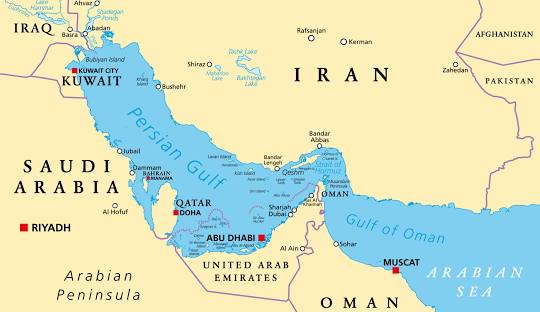
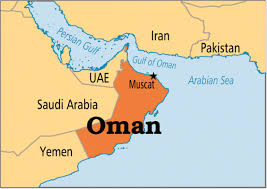
“The Persian Gulf Day”
Iran commemorates Persian Gulf Day today, reminding us of the Iranian struggle to expel Portuguese forces in 1622.
The Strait of Hormuz, bearing geoeconomic and strategic significance, connects the Persian Gulf with the Gulf of Oman and the Arabian Sea.
The Persian Gulf is significant for Iran and timely in today’s evolving and complex times, when the US has blocked the Strait of Hormuz (the Choke Point), which Iran has already blocked.
A blockade over a blockade.
Iran, once a Persian empire, has a rich history that tells much about what Iran is today.
#iranusisrael #IranWar #Persian #Gulf #Oman #ArabianSea #US #Iran #Oman


English
Asadullah Baloch retweetledi

thefridaytimes.com/30-Apr-2026/np…
My new piece is published in the Friday Times.
Of the interests of those pursuing the nonproliferation studies.
#NPT #armscontrol #disarmament #nonproliferation #nuclear
English
Asadullah Baloch retweetledi

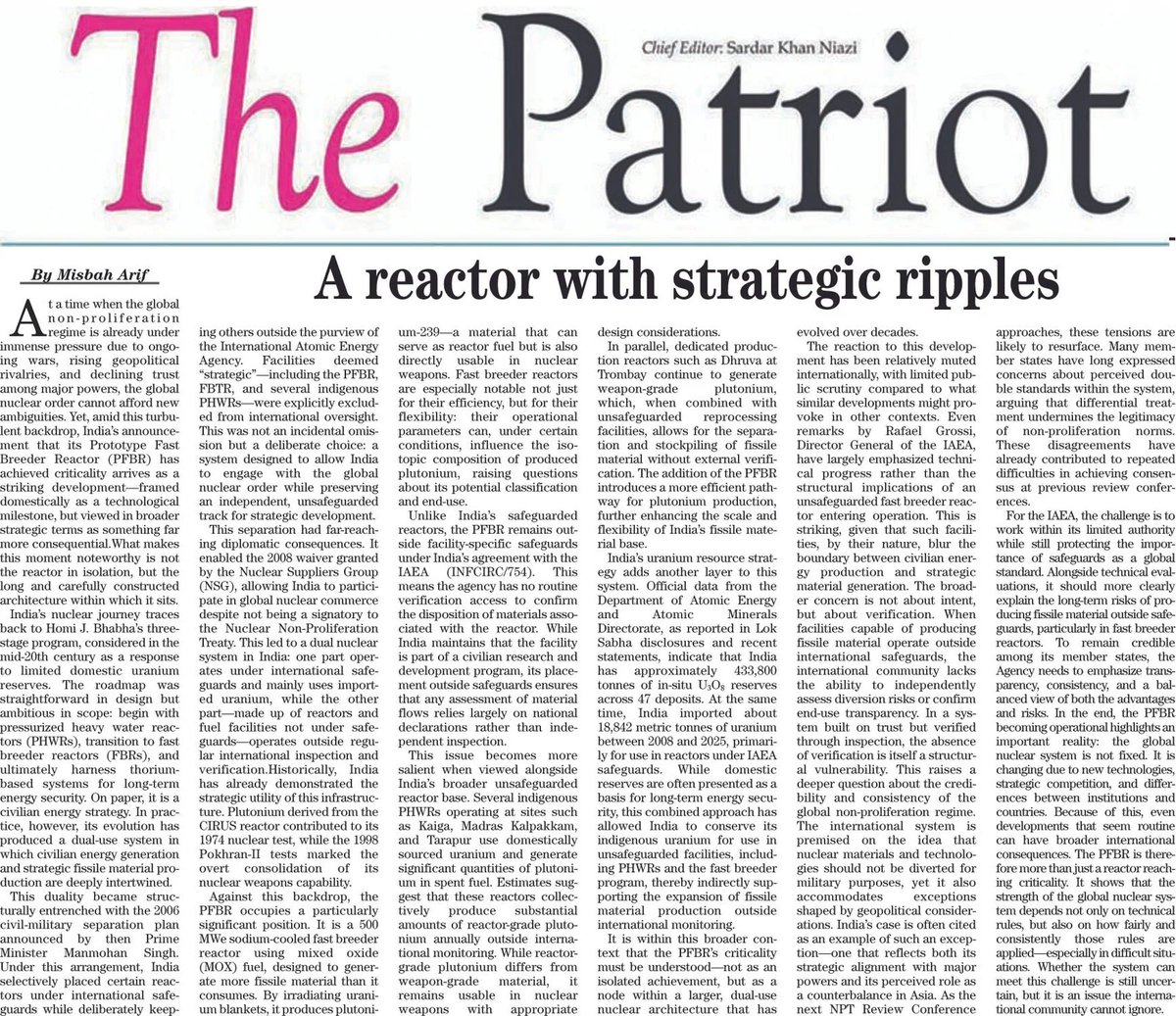
Analysis by Misbah Arif
India’s Prototype Fast Breeder Reactor isn’t just energy - it’s a strategic fault line, raising risks of unchecked fissile material and regional instability.
Today’s progress could become tomorrow’s proliferation crisis.
#NuclearSecurity #NuclearRisk

English