Asia Society Policy Institute (ASPI)

21.4K posts

Asia Society Policy Institute (ASPI) banner
Asia Society Policy Institute (ASPI)

Asia Society Policy Institute (ASPI)

@AsiaPolicy

@AsiaSociety's think tank.💡Tackling key policy challenges confronting the Asia-Pacific

New York, NY & Washington, DC Katılım Şubat 2013
1.2K Takip Edilen20.2K Takipçiler
Asia Society Policy Institute (ASPI) retweetledi
CSIS Freeman Chair in China Studies
🚨New Pekingology Podcast🚨 Last week, China concluded its Two Sessions, the annual parallel meetings of the National People’s Congress and the Chinese People’s Political Consultative Conference. @AsiaPolicy’s @NeilThomas123 joined Senior Fellow @Henrietta_Ivy to unpack the state of China’s elite politics, recent purges, the 15th Five-Year Plan, and more. 🎧 Listen here: csis.org/podcasts/pekin…
English
0
4
6
974
Asia Society Policy Institute (ASPI)
The discussion also explores whether Beijing’s policy response has been bold enough, what structural reforms remain unfinished, and how China can finance its next phase of development without the engine that once powered its rise.
English
0
0
1
98
Asia Society Policy Institute (ASPI)
The panel examines why China’s property downturn has had an outsized impact on the broader economy and the implications of what Huang describes as a profound fiscal rupture—an unwinding of the land-finance model that underpinned local government budgets, credit expansion, and household wealth for two decades.
English
1
0
1
109
Asia Society Policy Institute (ASPI)
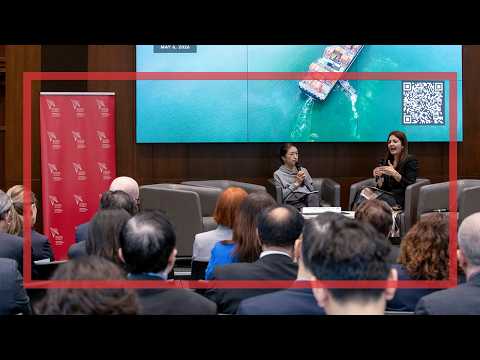
What does China’s property market downturn mean for its economic future? Moderated by CCA Fellow @wstv_lizzi, the latest "Year of Rebalancing" episode features Tianlei Huang, Senior Fellow at @PIIE, and @acollier, former President of Bank of China International (USA), on how property shapes China’s macroeconomy and its shift to domestic demand ⬇️
Asia Society Policy Institute (ASPI) tweet media
English
1
3
3
2.9K
Asia Society Policy Institute (ASPI) retweetledi
李其 Lizzi
李其 Lizzi@wstv_lizzi·
Sharing a new piece by me and my colleague @shuizaiping2 where we took a deep dive into Xi Jinping’s newly released book on the “correct view of political performance”, a compilation of his speeches spanning more than a decade, many of them previously unpublished! The timing, obviously, is no accident. Ahead of the Two Sessions, Beijing is clearly trying to push a shift beyond GDP worship and redefine what counts as bureaucratic success. In fact Xi has long been frustrated with his bureacrats. He complained about officials who “rack up a mountain of debt, pat their butts, and walk away,” chasing short-term growth at long-term cost. He is equally frustrated with the cadres’ lack of motivation: “some officials won’t lift a finger until the Central Committee issues a written directive… Are you telling me that if I don’t personally issue a directive, the work just grinds to a halt?!” So what’s the new, better KPI, according to Xi? Our takeaway: it’s a trilemma. From Xi’s speeches, good cadres should be expected to deliver 3 things all at once: strict political loyalty / compliance; new + better quality growth through technological upgrading eg “new quality productive forces”; systemic security (avoiding risks + containing those accumulated over the past decade.) The problem? Each of these priorities makes sense on its own. But together, they create a bureaucratic trilemma in which officials can realistically satisfy only two of the three. Is there a way to escape the trilemma? We offer some thoughts...
李其 Lizzi tweet media
English
10
22
118
72.8K
Asia Society Policy Institute (ASPI)
“When and how China shifts to absolute carbon caps will be an important area for international engagement.” @Kate_K_Logan discusses China’s 15th Five-Year Plan and why moving from intensity targets to absolute emissions caps is a key next step for #China’s climate policy 🇨🇳🌏
English
1
4
4
462
Asia Society Policy Institute (ASPI) retweetledi
Neil Thomas 牛犇
Neil Thomas 牛犇@neilthomas123·
What did Xi Jinping say about strategic competition at the Two Sessions? Happy to write for @WarOnTheRocks The Two Sessions are one of the few major events in Beijing where Xi is not the main speaker. But in meetings with provincial and sectoral delegations, China’s leader made clear that technological self-reliance remains central to his agenda. Xi still sees strategic competition, an unpredictable United States, and a fragile global economy as reasons for China to strengthen its ability to “withstand external shocks” by producing at home what “cannot be asked for, cannot be bought, or cannot be begged for.” Xi said one reason Beijing lowered this year’s growth target was because “what we are growing is hard power.” That logic anchors China’s new five-year plan. Its top priority is “building a modernized industrial system and strengthening the foundations of the real economy.” In practice, that means prioritizing original “zero to one” innovation, deploying AI across the economy, and securing “decisive breakthroughs” in integrated circuits, basic software, advanced materials, and biomanufacturing. It also means seeking leadership in “future industries” from quantum and fusion to brain-computer interfaces and 6G. Can Washington keep up?
Neil Thomas 牛犇 tweet media
English
4
9
21
3.9K
Asia Society Policy Institute (ASPI) retweetledi
Lyle Morris
Lyle Morris@LyleJMorris·
Chen Binhua, a spokesperson for China's Taiwan Affairs ​Office, told reporters in Beijing that "peaceful reunification" would bring better protection of Taiwan's energy and ​resource security with a "strong motherland" as its backing. "We are willing to provide Taiwan compatriots with stable and reliable energy and resource security, so that they may live better lives," he said, responding to a question about ​Taiwan's energy supplies during the war in the Middle East. Beijing does realize that an offer to provide Taiwan energy security is a tool to cut off energy to Taiwan to coerce, especially for a potential blockade. reuters.com/world/china/ch…
English
0
7
18
7.4K
Asia Society Policy Institute (ASPI) retweetledi
李其 Lizzi
李其 Lizzi@wstv_lizzi·
Sharing a new episode in our @AsiaPolicy CCA Year of Rebalancing webinar series, featuring the fantastic Tianlei Huang of @PIIE and Andy Collier of @Kennedy_School , on China’s property market conundrum. We dig into how risks built up over time, and why unraveling the land-finance model (“the addictive substance” as Tianlei puts it) that long underpinned local government revenues is extremely tricky... One of the more underappreciated dynamics we discuss is how the slump is widening China’s savings-investment gap which can paradoxically intensify external imbalances. So whether a domestic property correction ultimately helps vs hurts rebalancing is highly ambiguous-- a macro problem of this scale does not stay within China. We also discuss whether Beijing’s policy response has been bold enough, what structural reforms are unfinished, and how China can / might finance its next phase of development without the engine that once powered its rise. Take a listen! (link in post below)
English
2
3
10
4.1K