

KC Asko
23.6K posts

KC Asko
@AskoFN
| 26⚡️| North east 🇵🇱 | South east 🇮🇹 |Former @ASUS_ROG_FR | @OservEsport | https://t.co/PSYHJsLI7a
アニメ/マンガ Gojo ✨ Katılım Eylül 2017
947 Takip Edilen2.9K Takipçiler

@NooscaTV @Boulouwou Je pense il voulait parler de la fleche, perso j’utilise la fleche pour miner et pour les tours
Français

🚨 TIPS CRIMSON DESERT🚨
⏩ Tout bête mais si jamais vous en avez plein le uq de vous faire tirer dessus par les archers en hauteur... La compétence entaille circulaire permet de se débarrasser des tours rapidement !
ET ÇA C'EST SUPER 🔥
#CrimsonDesert

Français
KC Asko retweetledi


KC Asko retweetledi


@AskoFN Et oui !! La meilleur de l'album imo avec Pocahontas
Français


@MalinHecto65384 @Capetlevrai Ca regle est top tier
Supersocks@iamsupersocks
Le mec qui a créé Claude Code (@bcherny) vient de montrer comment son équipe dresse l’IA. Un fichier. CLAUDE.md. Tu le poses à la racine de ton projet. Dedans : les erreurs passées, les conventions, les règles. Claude le lit à chaque session. Résultat : l’agent s’améliore sans que tu retouches une ligne de code. Chaque bug corrigé devient une règle permanente. Boris Cherny utilise ça tous les jours chez Anthropic. Je vous mets son template ici. Prêt à copier/coller et à adapter à votre guise : ### 1. Plan Mode Default - Enter plan mode for ANY non-trivial task (3+ steps or architectural decisions) - If something goes sideways, STOP and re-plan immediately — don't keep pushing - Use plan mode for verification steps, not just building - Write detailed specs upfront to reduce ambiguity ### 2. Subagent Strategy - Use subagents liberally to keep main context window clean - Offload research, exploration, and parallel analysis to subagents - For complex problems, throw more compute at it via subagents - One task per subagent for focused execution ### 3. Self-Improvement Loop - After ANY correction from the user: update `tasks/lessons. md` with the pattern - Write rules for yourself that prevent the same mistake - Ruthlessly iterate on these lessons until mistake rate drops - Review lessons at session start for relevant project ### 4. Verification Before Done - Never mark a task complete without proving it works - Diff behavior between main and your changes when relevant - Ask yourself: "Would a staff engineer approve this?" - Run tests, check logs, demonstrate correctness ### 5. Demand Elegance (Balanced) - For non-trivial changes: pause and ask "is there a more elegant way?" - If a fix feels hacky: "Knowing everything I know now, implement the elegant solution" - Skip this for simple, obvious fixes — don't over-engineer - Challenge your own work before presenting it ### 6. Autonomous Bug Fixing - When given a bug report: just fix it. Don't ask for hand-holding - Point at logs, errors, failing tests — then resolve them - Zero context switching required from the user - Go fix failing CI tests without being told how ## Task Management 1. **Plan First**: Write plan to `tasks/todo.md` with checkable items 2. **Verify Plan**: Check in before starting implementation 3. **Track Progress**: Mark items complete as you go 4. **Explain Changes**: High-level summary at each step 5. **Document Results**: Add review section to `tasks/todo. md` 6. **Capture Lessons**: Update `tasks/lessons. md` after corrections ## Core Principles - **Simplicity First**: Make every change as simple as possible. Impact minimal code. - **No Laziness**: Find root causes. No temporary fixes. Senior developer standards.
Français

@AskoFN @Capetlevrai Elle pompe trop d’API sous Claude ?
Français

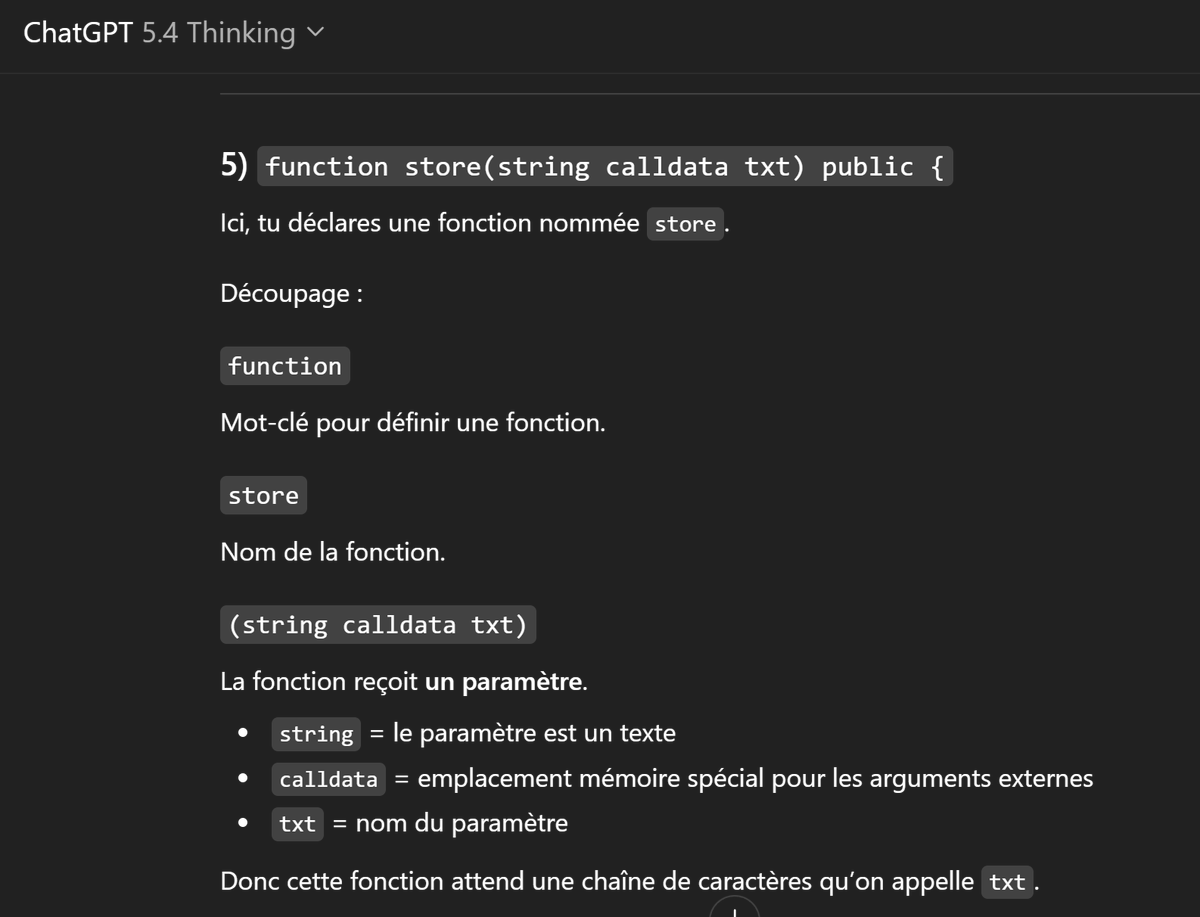
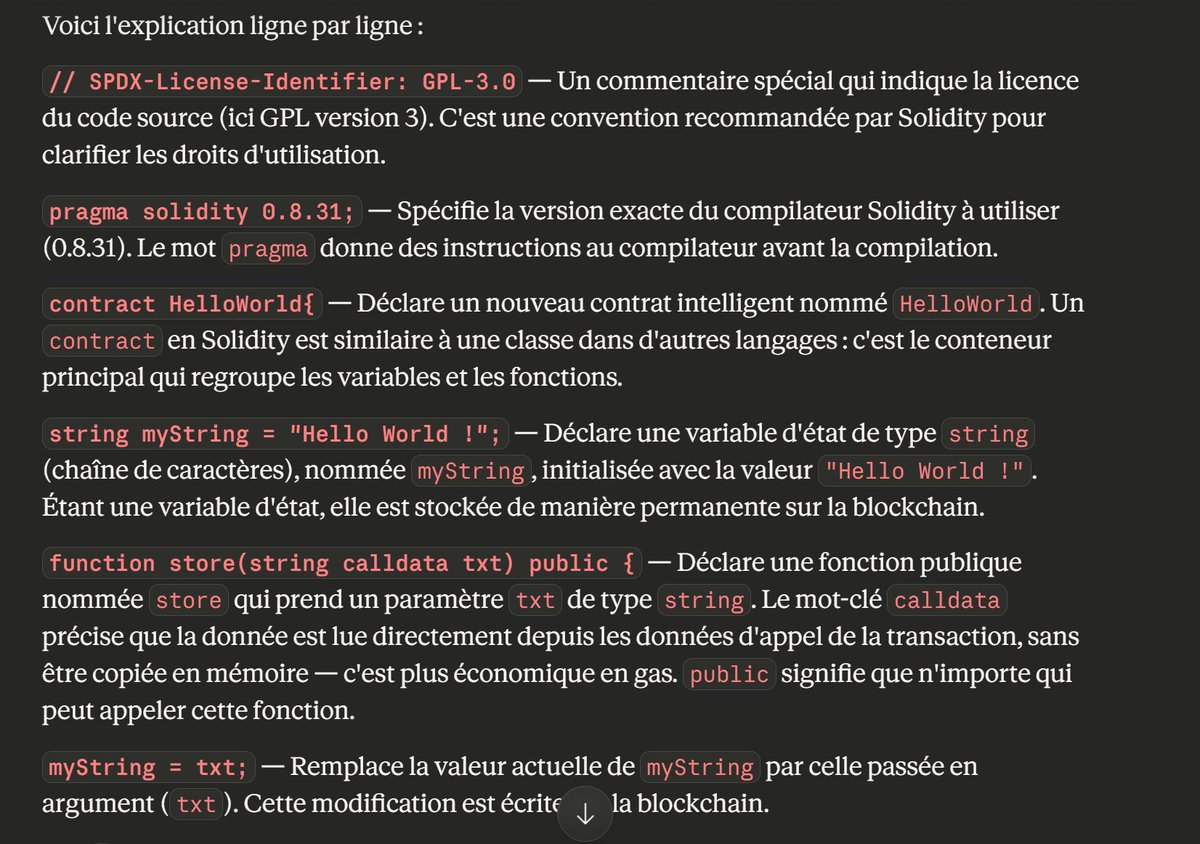
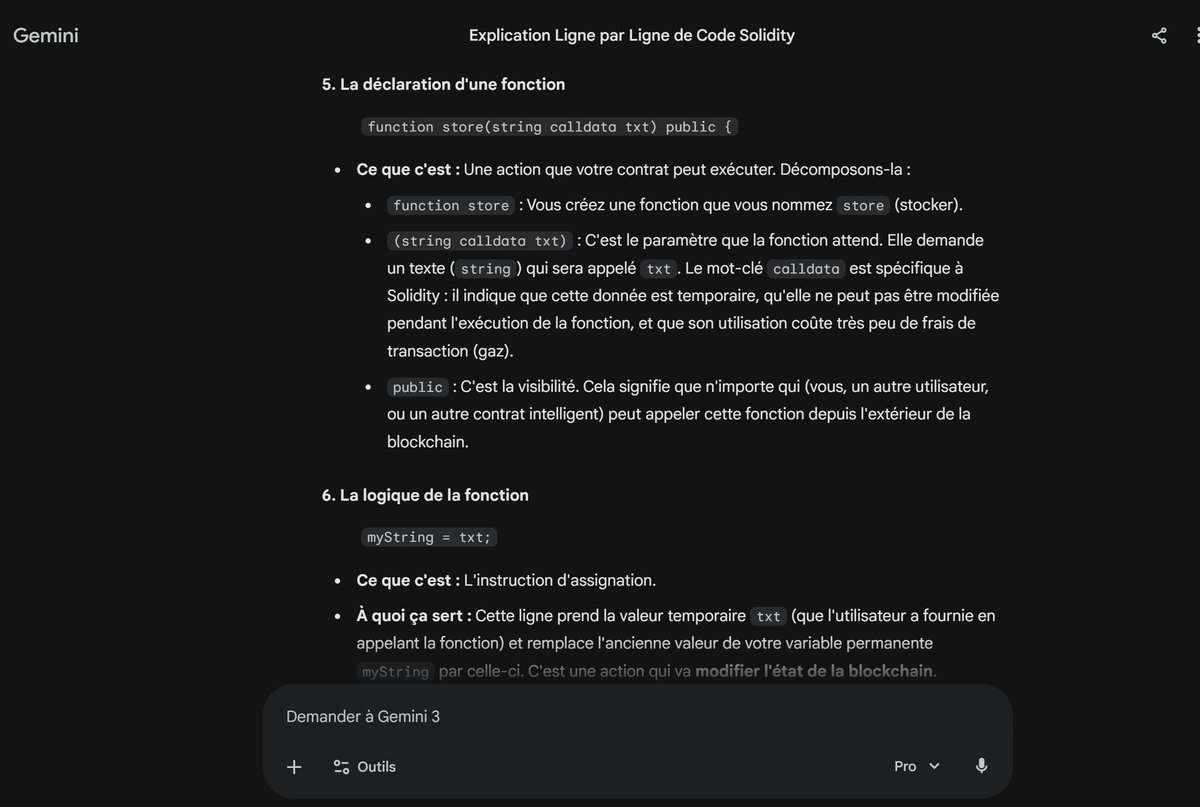
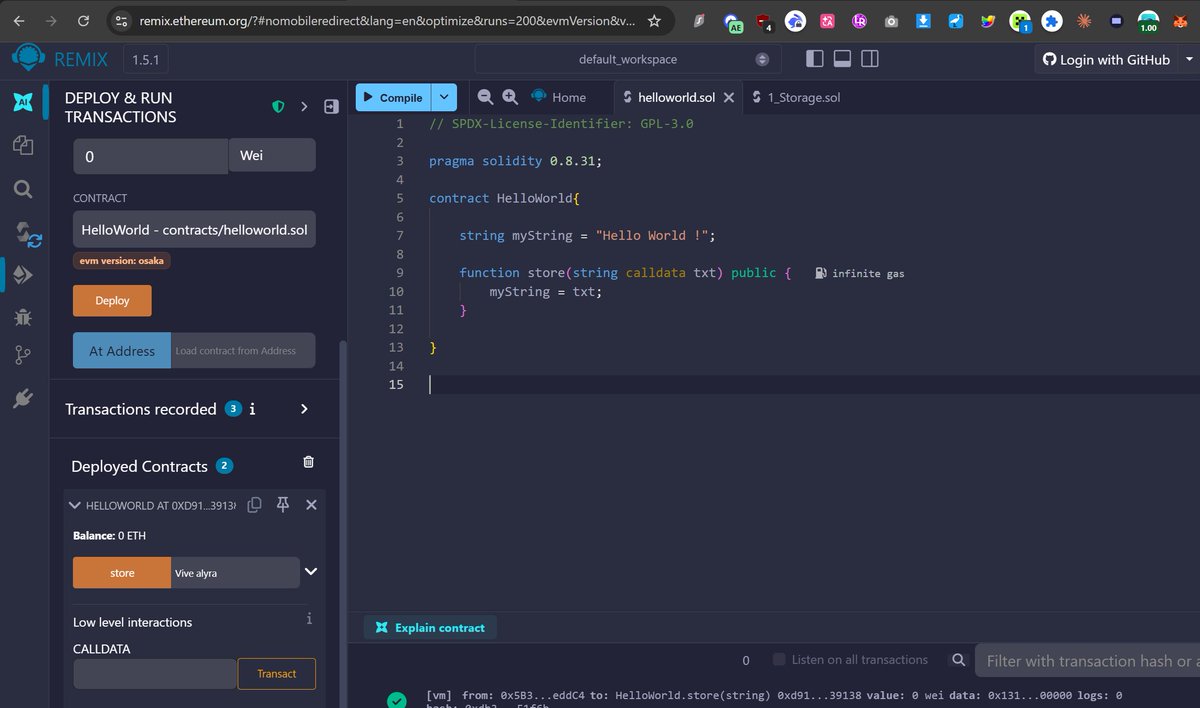
J'ai demandé à Claude Opus 4.6, Gemini 3.1 Pro et GPT 5.4 la même chose avec un prompt simple :
- Explique moi ce code Solidity ligne par ligne
Et bien ChatGPT 5.4 a été meilleur de très très loin, il a clairement tout expliqué ligne par ligne la ou Claude a totalement baclé le taff et Gemini a développé un peu sa pensé mais rapidos dans des paragraphes.
N'hésitez pas à jongler entre les 3 pour apprendre, mais agréablement surpris par GPT 5.4 Thinking cette fois.
Français
@Capetlevrai @MalinHecto65384 Perso je bombarde sous gemini cli, il me bouffe tres tres peu de token surtout avec la regle du patron de chez claude
Français
@MalinHecto65384 Minimax K2.5 ou Deepseek v3.2 ou Kimi ou GLM ça coûte pas trop cher si tu dois vraiment bombarder de prompt
ChatGPT à 20€ seul c’est bien aussi
Mais les chinois c’est vraiment pas cher
Français




I'm not trying to farm engagement here.
I just post whatever I think might be useful, stuff to learn from, get inspired by or just to show what I'm building.
Lately my reach has grown and I'm genuinely thankful for that!
A few small wins from this week:
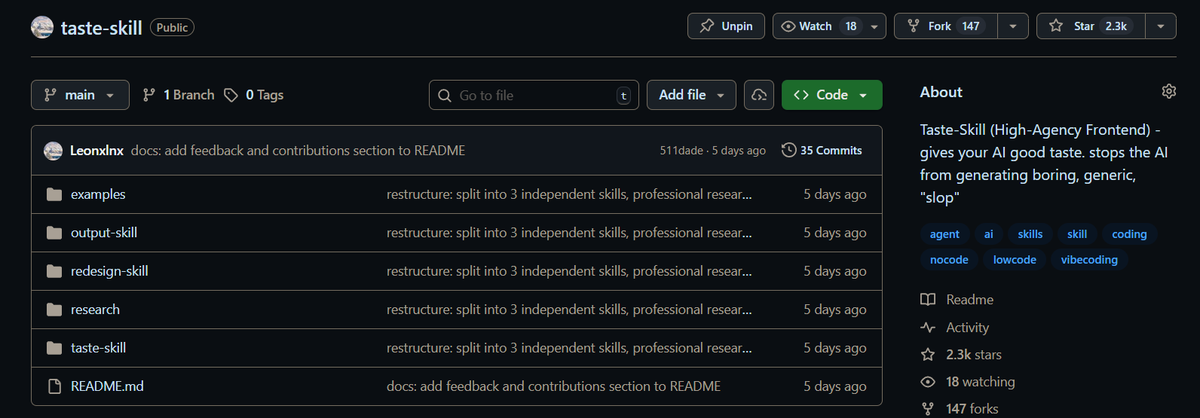
Tasteskill GitHub repo hit 2k+ stars (github.com/Leonxlnx/taste…)
Over 500 people on the waitlist now
(learn2vibecode.dev)
Thanks to everyone who's been following along and supporting. Means a lot. 💙

English

When rollups can safely communicate in real-time instead of waiting 12+ min for Ethereum finality, entirely new crosschain apps become possible.
Today hackers in SF are exploring what Espresso's fast finality unlocks.
Espresso ☕️@EspressoSys
This weekend we’re hacking in SF with @onappchain, @ApeChainHUB, and @thirdweb building crosschain apps powered by Espresso ☕️ 📆 - Jan 31 📍 - Fort Mason Center, SF 💰 - $10k prize pool Here are some projects you could build using fast crosschain confirmations 🧵⤵️
English
"Which rollup partnership have we signed?"
KATANA
@katana is a DeFi-focused blockchain designed to route real chain revenue back to DeFi users in the form of boosted yield and deeper liquidity. Katana aligns core DeFi applications, users, and the network through a unified economic engine where fees earned by the chain are recycled back into the DeFi Ecosystem.
The Katana team is working with Espresso on integration plans that would provide the chain with BFT-backed confirmations in seconds. This fast finality enables crosschain composability for unified liquidity pools, crosschain lending, and seamless bridgeless payments, while reducing the counterparty risk inherent in crosschain DeFi operations.
If you’re a Katana OG, you may be eligible for the ESP airdrop. Link your addresses in the registration portal to find out. claim.espresso.foundation
Espresso Foundation@espressoFNDN
Path to TGE #35 DeFi deserves better, samurai say. Chain-owned liquidity, fees pave the way. Deep pools, high yield. Concentration's goal. Sequencer revenue makes markets whole. OP stack base, fast finality aligned. Which rollup partnership have we signed?
English