Sabitlenmiş Tweet
Asra Mousavi
8.3K posts
Asra Mousavi
@AsraMusavi
Let grace fill your gaps. 🌸
Katılım Mayıs 2012
270 Takip Edilen2.1K Takipçiler
Asra Mousavi retweetledi

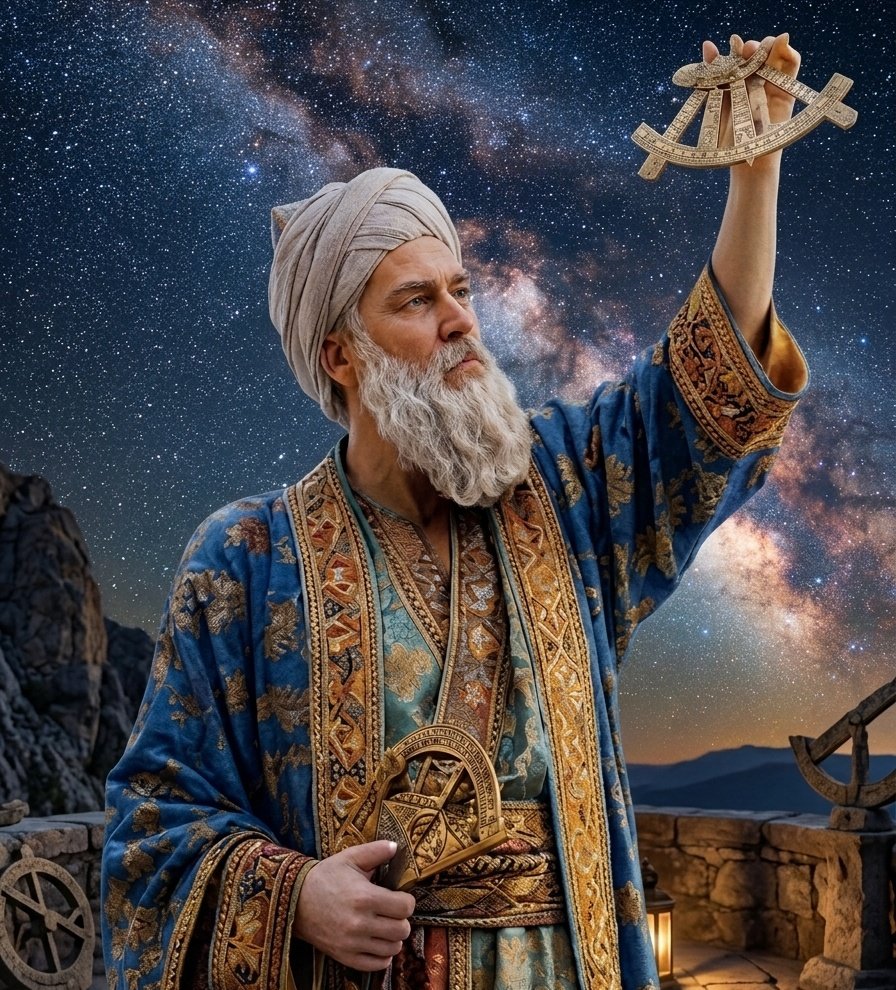
An Arab scholar in 1011 was placed under house arrest in Cairo for 10 years. He used the time to invent the scientific method, prove how vision actually works, and write a 7-volume book that Newton studied 600 years later.
I read about him last night and could not stop thinking about it.
His name was Ibn al-Haytham. The book is called the "Book of Optics."
The textbook story names Bacon, Galileo, and Descartes as the founders of modern science. All three of them came 600 years after Ibn al-Haytham. All three of them studied his work directly or through Latin translations. The man who actually invented the scientific method was working alone in a single room in Cairo while Europe was still in the Dark Ages.
Here is the story almost nobody tells you.
He was born in Basra around 965 CE. By his 40s he had a reputation across the Arab world as one of the most original minds alive. Then he made the mistake that almost killed him. He claimed publicly that he could regulate the flooding of the Nile. The mad caliph al-Hakim of Cairo summoned him to Egypt to do it.
Ibn al-Haytham took one look at the river and realized the project was impossible with the technology of his era. The caliph had executed dozens of scholars for less. So he faked madness. The caliph believed him and put him under house arrest in his own home in Cairo for the next 10 years.
Most people would have lost their actual mind. He used the time to invent science.
Before him, knowledge worked one way. You quoted authority. If Aristotle had said it, it was true. If Galen had written it, it was correct. The role of a scholar was to memorize and defend the ancient Greeks. I
Ibn al-Haytham broke this completely. He wrote a sentence in the Book of Optics that quietly destroyed 1,400 years of intellectual culture. "The seeker after truth," he said, "is not the one who follows his natural disposition to trust the writings of the ancients. The seeker after truth is the one who suspects them, questions them, and submits only to argument and experiment."
That single sentence is the foundation of modern science. He wrote it 600 years before the European Renaissance.
The second thing he did was build the actual machinery of experimentation.
He insisted that no claim about the physical world was acceptable until it had been verified by an experiment anyone could repeat. He gave detailed instructions for every experiment in his book. He told his readers, in writing, not to take his word for any of it. Build the equipment. Run the tests yourself. Verify or destroy my claims with your own eyes.
The third thing he did was use the method to overturn one of the most settled questions in physics.
The Greeks had taught for centuries that vision worked because the eye emitted invisible rays. Ibn al-Haytham proved them wrong with a darkened room, a small hole, and a wall. The first camera obscura. He showed that light from the outside world enters the eye, the exact opposite of what every Greek thinker had taught.
Two hundred years later his book was translated into Latin in Spain. Roger Bacon cited him. Kepler cited him. Galileo's work on the telescope was built on his optics. Newton's foundational work on light rested on his framework.
Walk into any physics department today. Ask who founded the scientific method. Almost nobody will say Ibn al-Haytham.
The man who invented the way humanity actually knows things did the work under house arrest, with no funding, no laboratory, and a paranoid caliph next door waiting for an excuse to kill him.
He did it anyway. Most of the world is still pretending it was someone else's idea.

English
Asra Mousavi retweetledi

Meet the genius, Nasir al-Din al-Tusi (1201-1274):
— Built the most advanced observatory on Earth at his time, with a 400,000-volume library
— Invented a geometric model silently reuse 250 years later by Copernicus
— Founded trigonometry as a science of its own
— Wrote the ethics textbook taught in Persian schools for 600 years
— Was the first to argue the Milky Way is a cloud of countless stars — 350 years before Galileo's telescope

English
Asra Mousavi retweetledi

A Persian scholar finished a single math book in 9th century Baghdad that quietly became the foundation for every line of code running on Earth today.
I started reading about him at midnight and could not believe how many things in my daily life trace back to one man.
His name was Muhammad ibn Musa al-Khwarizmi. The book is called The Compendious Book on Calculation by Completion and Balancing.
Every time you say the word algebra, you are saying his book title. Every time someone says the word algorithm, they are saying his name. Both English words come from him. Both are Latin transliterations of Arabic and of his own identity. The man did not just contribute to mathematics. He named it.
Here is the part almost nobody tells you.
Al-Khwarizmi was born around 780 CE in Khwarazm, in what is now Uzbekistan. He moved to Baghdad and worked at a research institution called the House of Wisdom, which during the Islamic Golden Age was the single most important center of learning on the planet. The caliph al-Mamun hired the best mathematicians, astronomers, and philosophers from across three continents and put them in one building with one job. Translate, study, and produce new knowledge.
Al-Khwarizmi finished his book on algebra around 820 CE. The Arabic title contained the word al-jabr, which referred to one of the two operations he used to solve equations. When the book was translated into Latin in the 12th century, the Latin world did not have a word for what he had built. So they kept his Arabic word. Al-jabr became algebra. The discipline was named after a single Arabic word in the title of a single book by a single man.
The deeper insight is what he actually changed about how humans think.
Before al-Khwarizmi, mathematical problems were solved geometrically. You drew shapes. You measured them. You compared areas. The Greeks had built an entire mathematical tradition on visual proofs and physical constructions. It was beautiful and limited. You could not solve a problem you could not draw.
Al-Khwarizmi did something nobody had done before him at this scale. He said you could solve any problem using abstract symbols and rules. You did not need a shape. You needed a procedure. You moved terms across the equation. You cancelled like terms on both sides. You isolated the unknown. He invented the idea that mathematics is a manipulation of symbols according to rules, not a study of physical figures.
That single shift made everything that came afterward possible. Calculus. Differential equations. Linear algebra. Quantum mechanics. None of it works if math is locked inside geometry. He pulled it out.
The second thing he did is the one that changed how the world counted forever. He took the Hindu numeral system from Indian mathematics, refined it, and wrote a book introducing it to the Arab world. That system included the concept of zero as a placeholder, and a positional notation where the value of a digit depends on its location. Roman numerals could not do complex calculation. Hindu-Arabic numerals could.
When his book on numerals was translated into Latin as Algoritmi de numero Indorum, the word Algoritmi was just the Latin spelling of his own name. Europeans started calling the new method "doing algorism," then "running an algorithm." The word for the most important concept in computer science is literally his name in Latin.
The third thing he did is the part that should haunt anyone who works in tech.
His method of solving problems was systematic. Step one, do this. Step two, check that. Step three, if condition A, then do X, otherwise do Y. He wrote down procedures that could be followed by anyone, anywhere, who knew how to read. The procedure did not depend on intuition or genius. It worked because the steps worked.
That is exactly what an algorithm is. A finite, deterministic procedure for solving a problem. He did not just give us the word. He gave us the entire concept of programming a thousand years before there was anything to program.
When Alan Turing built the first abstract model of computation in 1936, when John von Neumann designed the first stored-program computer in 1945, when every engineer at Google, OpenAI, Anthropic, and DeepMind writes code in 2026, they are working in a paradigm that started with one man in Baghdad twelve centuries ago.
The strangest part is what happens when you walk into any tech office in San Francisco or Bangalore or Lahore today. Engineers say the words algebra and algorithm hundreds of times a day. They do not know whose name they are saying. Almost nobody can spell al-Khwarizmi correctly on the first try.
His original Arabic manuscript is preserved at Oxford. His book on Hindu numerals survives only in Latin translation. The Latin version was the textbook that taught medieval Europe how to count.
The man who built the foundation of the AI revolution did not live to see a calculator. He died around 850 CE, a thousand years before the first electric current was sent through a wire. The civilization he built mathematics for collapsed. The library he wrote in burned. His own grave is unmarked.
But every algorithm running on every machine on Earth right now still answers to his name.

English
Asra Mousavi retweetledi

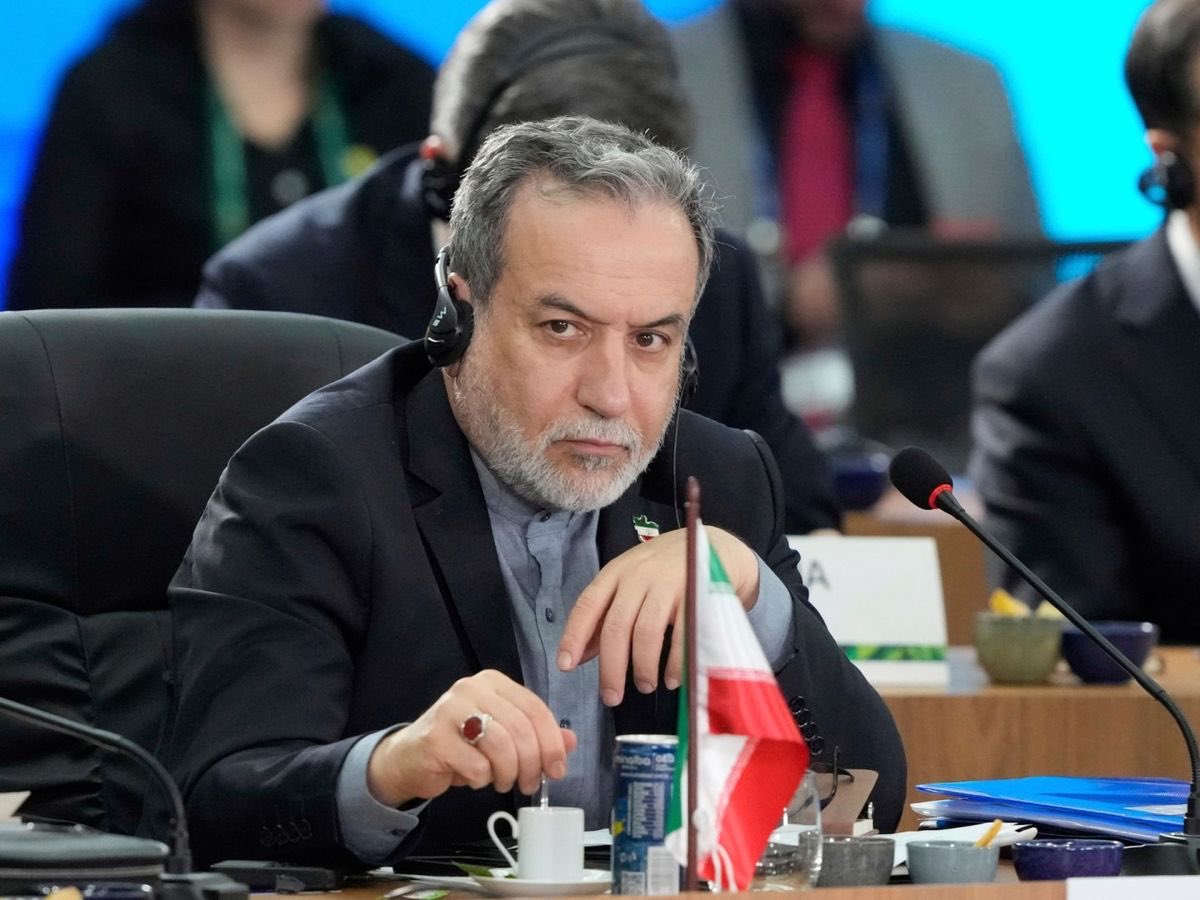
Abbas Araghchi: “Why We Insist on Uranium Enrichment”
“Why have we insisted, and continue to insist, on uranium enrichment? Why won’t we surrender it, even under the threat of war? Because no one has the right to dictate what we may or may not possess. This is rooted in a fundamental principle: the rejection of domination.
Enrichment is our right under international law, and whether we choose to exercise it is our business alone. For years we’ve been told, ‘You have no right to enrich; enrichment must be zero.’ Why? ‘Because we’re concerned,’ they say. If you’re concerned, we’re prepared to address that. Have questions? We’ll answer them. Is trust lacking? We’ll build it. But no one has the right to say, ‘You cannot have this because we don’t want you to.’
This is the heart of our resolve: we have stood firm in defense of our own rights. Enrichment matters, but what matters even more is demonstrating that the Islamic Republic of Iran takes orders from no one and submits to no domination.
If there are doubts about the peaceful nature of Iran’s nuclear program, we are ready to answer them. The only path forward is diplomacy. Every other path has been tried and has led nowhere. Negotiations will only succeed when the rights of the Iranian people are recognized and respected, not granted, because our rights are already legitimate in and of themselves. What we ask is simply that they be respected.”
In my view, Araghchi’s statement is more than a dignified reply to the United States. It is a rebuke of the condescending posture the West has held toward Muslims for nearly a century. It is a declaration that the era of bullying and imposed values is over. If Iran emerges from this with its honor intact, God willing, neither the United States nor the Muslim world will be what they once were.
English
Asra Mousavi retweetledi

The Sudanese woman in the pink hijab said:
“I say this to the Muslim leaders: Stay in your castles, wear our hijabs, and hand over your weapons. We deserve them more than you. You are cowards, sitting on the thrones built from the bones of the children of Gaza”
৻ꪆ د@moonlighba3e
There’s a video that always plays in the back of my mind and brings tears to my eyes. Sudanese women gathering and donating all their gold as if their lives depended on it for Gaza. They stood up for the oppressed, yet we didn’t do anything for them. We should do better for them.
English
Asra Mousavi retweetledi

We will bury colonialism!
Ayatollah Sayyid Mahmoud Taleqani (ra), whom Imam Khomeini (ra) described as the "Abu Dharr of our time," was a voice of sincerity, courage, and truth. He constantly reminded the Ummah that its real strength lies in unity... because it is this unity upon truth that truly frightens the enemies of Islam and protects the Ummah from weakness and division.
English
Asra Mousavi retweetledi

They say: Iran is not Arab. Iran is Shia. Iran has its own interests. Iran uses the Palestinian cause.
Fine.
Accept all of that for the sake of argument.
Accept that Iran's support for Palestine is partly strategic.
Accept that there are geopolitical calculations involved.
Accept every cynical interpretation of Iranian motives.
Now tell me: what is your excuse?
You are Arab.
You are Sunni.
You share language, culture, history, and in many cases a border with the Palestinians.
The people being killed are your people by every metric you claim matters.
Ethnicity. Sect. Language. Civilization.
And Iran, the Persian Shia country you're so concerned about, is doing more for those people than you are.
If Iran is using Palestine, what are you doing to Palestine?
You are using Palestine too.
Using it for speeches.
Using it for fundraising.
Using it to claim Islamic credentials with your own populations while conducting a completely different policy behind closed doors.
The difference is that Iran's use of Palestine comes with weapons, money, fighters, and the willingness to absorb American sanctions and Israeli bombs in defense of it.
Your use of Palestine comes with statements.
Deeply concerned statements.
Urgent statements.
Strongly worded statements.
The children in Gaza cannot eat your statements.
English
Asra Mousavi retweetledi

"Come! We are waiting! This war means the DESTRUCTION of all your capabilities."
This 2018 speech by Martyr Soleimani, directed at Donald Trump, could not have aged any better!
Follow: T.me/PressTV
English
Asra Mousavi retweetledi

A Leader they called a 'Dictator'
Written by Sayyid Kamber Hussain
Was he a dictator?
Some people say Sayyed Ali Hussaini Khamenei was a dictator.
So let us clarify this point.
Yes…
he was a dictator.
He was a dictator when he was asked if his picture could be placed on the nation’s currency -
and he said no.
He was a dictator when he was asked if his image could be printed in the books used in the educational system -
and again, he said no.
He was a dictator when people would chant to him,
“May our lives be sacrificed for you.”
and he stopped them, saying:
“Do not say that.
Say instead: May your lives be sacrificed for Islam.”
He was a dictator when people mocked and attacked women who did not wear the hijab -
and he said:
“They are also my children.”
He was a dictator when it was suggested to him:
“We can take you somewhere safe and secure while this storm passes.”
And he replied:
“How can I leave…
unless you can provide that same safety and shelter for all 90 million people?”
He was a dictator when he wrote to the youth of the West and told them:
“Return to the primary sources.
Return to the Qur’an
and the teachings of the Ahlulbayt (a.s).”
He was a dictator when he reminded us:
“The greatest weapon we have
is Allahu Akbar.”
Yes…
he was a dictator.
A dictator of truth.
A dictator of justice.
A man who taught us - and will continue to teach generations to come - how to walk the path of Amir al-Mu’mineen (a.s) and Aba Abdillah (a.s).
A dictator whom the heavens welcomed with open arms.
His life was a dictatorship over the hearts of the honourable people of the world.
And his martyrdom
will be an even greater dictatorship over the hearts
of all those who seek freedom, dignity, honour and justice.

English
Asra Mousavi retweetledi