

AstroAstro
179 posts
AstroAstro
@AstroAstroArt
2D Digital Artist - Paid Requests Open!
Moon Katılım Ocak 2026
2 Takip Edilen3 Takipçiler

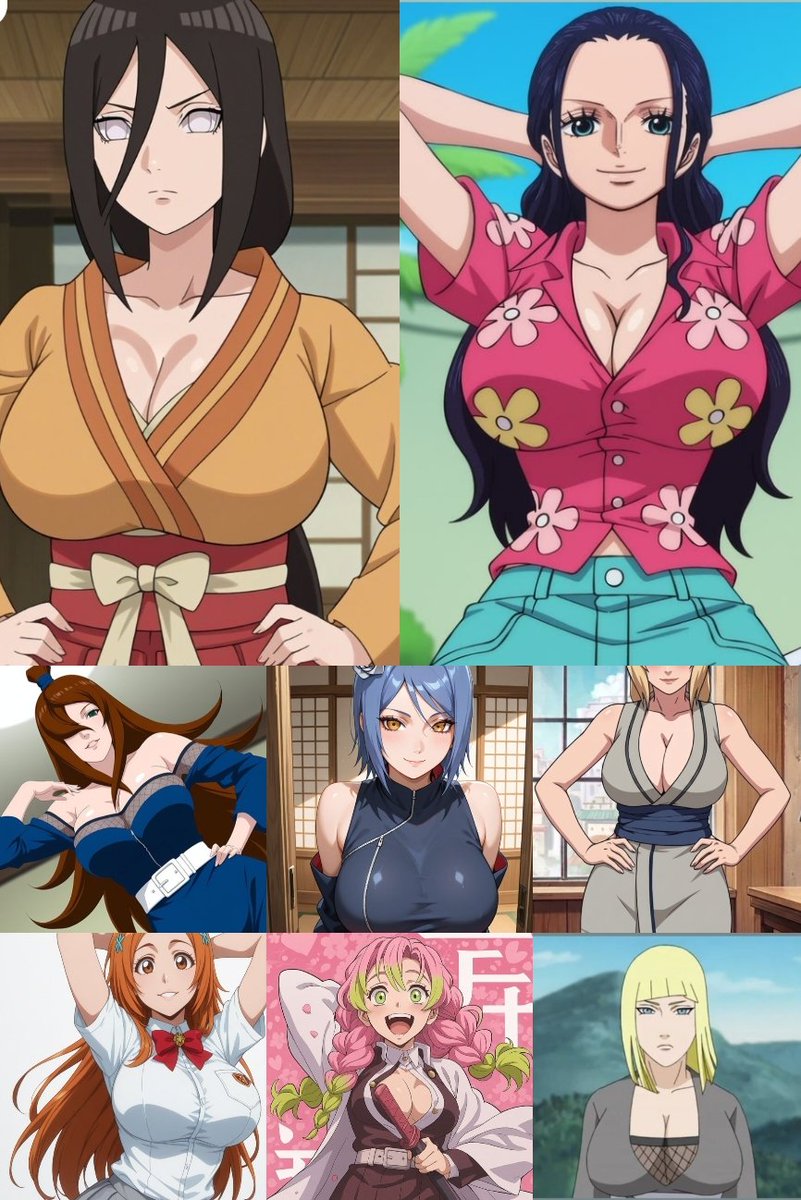
@FlamingForge For sure! I've even seen women built like this irl. Honestly when I realised how common it was, I was surprised at how little we see large chested women in media.
It's almost like they're kept for 18+ content while smaller chest women are pushed everywhere else
English

@AstroAstroArt I somewhat believe you... Surely, there must be ladies built like that. 🙏
English
@MasterTainment "you pay because you're requesting her time".
Then people like him can say "she sleeps with him because he used his money".
No, you can offer to pay for manner, courtship or whatever but it shouldn't be expected.
Many girls agree to dates for a free meal. You've got to be careful
English

If you ask a woman out on a date, you pay for her meal.
Because you're requesting her time.
She has no obligation to sleep with you.
The date is supposed to help both of you get to know each other.
How she supposed to know if she's attracted to you before the date?
I think this man meant to order a prostitute rather than go on an actual date because his expectations are garbage.
Chikky@chickyxime
Man refuses to pay for dates meal because she says she's not going to sleep with him
English
@dontclipit Is the apology in the video? "It's my bad" isn't an apology.
You go to her and say "I'm sorry". That's annapology. 'my bad' is accountability.
English

@arakkosuperstar Dude is the definition of double standard
x.com/i/status/20583…
leo of arakko says 🔺RESIST🔺@arakkosuperstar
a lot of people have readings of texts informed by personal interpretation and that’s fine but insisting that yours is the only accurate reading when it requires an egregious amount of conjecture if not straight up headcanon is when you look stupid
English

well he’s wrong bc danny is latino
Cartoon Base@TheCartoonBase
Butch Hartman says he would cast Walker Scobell as Danny Fenton in a live-action ‘DANNY PHANTOM’ movie.
English
@arakkosuperstar Double standard guy
x.com/i/status/20583…
leo of arakko says 🔺RESIST🔺@arakkosuperstar
a lot of people have readings of texts informed by personal interpretation and that’s fine but insisting that yours is the only accurate reading when it requires an egregious amount of conjecture if not straight up headcanon is when you look stupid
English
he was always latino to me idk. him and beast boy
English
@arakkosuperstar Didn't you JUST push a head anon of Danny Phantom being Latino, and come across stupid doing so?
GIF
English
a lot of people have readings of texts informed by personal interpretation and that’s fine but insisting that yours is the only accurate reading when it requires an egregious amount of conjecture if not straight up headcanon is when you look stupid
English
@amagicmantv I like Silver because the colours look good. Same with Crystal. I like blue.
English

Pokémon Gold, Silver, or Crystal?
The version you grew up with probably rewired your personality a little.
Every kid thought they picked their Pokémon game because of the legendary on the cover.
That’s a lie.
You picked the game that matched the kind of person you either already were — or were about to become.
The Game Boy Color era wasn’t just three versions of the same game.
Gold, Silver, and Crystal each had a completely different vibe.
Different energy. Different emotional temperature.
And if you were a kid when these came out, there’s a decent chance the version you obsessed over shaped your brain more than anyone wants to admit.
Here’s the breakdown:
GOLD VERSION KIDS
Gold players were optimistic chaos agents.
Not reckless. Not loud. Just… relentlessly forward-moving with main character energy.
These were the kids who picked the yellow Game Boy Color because it “felt like sunshine.”
The kids who stayed up past bedtime because the day version of the radio was playing and they refused to miss it.
If Silver players wanted depth, Gold players wanted journey.
Choosing Ho-Oh over Lugia said something psychologically important:
you believed in legends, miracles, and dramatic comebacks.
Gold was all warmth and momentum. The soundtrack felt hopeful. The day cycle made everything feel alive and full of possibility.
More adventure. More routes. More “let’s see what’s over that hill.”
Because Gold emphasized bright days, the Burned Tower, the legendary rainbow bird, and that triumphant feeling of climbing the mountain, it trained kids to associate persistence with destiny.
You didn’t overthink type matchups.
You believed your starter could solo the Elite Four if you just believed hard enough.
A shocking number of Gold kids became adults who still romanticize the underdog story and think “it’ll work out” is a valid strategy.
And somehow, half the time, it does.
SILVER VERSION KIDS
Lugia represented mystery. Power beneath the surface.
Quiet intensity.
Silver players didn’t want flash — they wanted presence.
Their teams had personality. They actually cared about the story in the Ruins of Alph. They grinded for that one shiny even if it took forever.
A Gold player would charge forward with pure vibes and friendship.
A Silver player would set up Whirlpool, dive into the depths, and hit you with a calculated Psychic while the night theme played.
The weirdest part is that Silver kids often developed a brooding, introspective side way earlier than everyone else.
Probably because half the game involved dark caves, the deep ocean, and that haunting night soundtrack that made kids feel strangely melancholic at age 9.
The Silver experience had this cool, distant feeling that accidentally created little philosophers.
If Gold players became hopeful protagonists, Silver players became the quiet ones who see the hidden layers.
CRYSTAL VERSION KIDS
Suicune being the mascot says everything.
Gold and Silver were emotional contrasts: sun vs moon, hope vs mystery, surface vs depth.
Crystal players looked at both and said:
“Yeah but what if I got the upgraded experience with a shiny legendary?”
That’s main character behavior.
Crystal kids also developed dangerously high standards because Crystal objectively was the polished version.
They experienced the satisfaction of waiting for the definitive edition instead of settling. That rewired their expectations forever.
Now they can’t start a new game without looking up the optimal starter and full playthrough order first.
The new features — especially the gender choice and the improved Battle Tower — created a generation obsessed with personalization and excellence.
Crystal players learned that beating the game wasn’t enough. You had to explore every corner, catch ‘em all, and make your version yours.
These are the same people today customizing everything from their phone layout to their coffee order with terrifying precision.

English
@pinglyadya Man you'l watch too much anime 😂
Is it not instead that it's not compatible with living beings and that's why it causes harm?
English

fun fact, viruses are not considered living since they don't reproduce or produce their own energy. there is evidence that they predate life.
Does that make you scared? That something existed to kill before a breath was ever taken? It's like life was a mistake to be corrected.
Jung. #CA11 📓 B05-06 SAT-SUN@jungsnrk
fever dream
English
@chickyxime He's wrong for saying that it's a waste of his time ant that he expected it.
She's wrong if she expected him to pay and made a deal about it.
Dates should be about learning and spending time with each other, and kindness to have a nice time and see a spark.
Not this
English

@k1rallik And this is coming from someone that's never even watched the show.
It shouldn't be difficult to have common decency and respect to just support the creators.
English
@k1rallik You know, those people are honestly a bit scummy and don't deserve Amazing Digital Circus.
They feel entitled because it was free, and rather than celebrate the irl film release (which is honestly cool), they leaked it and celebrated.
Honestly hope Gooseworx is alright...
English

🚨 do you understand what happened to Gooseworx..
She spent years making The Amazing Digital Circus - pulling all-nighters, pouring everything into the finale. Then it leaked.
And instead of sympathy, her own fandom celebrated it.
She responded with "ehh, who cares?" - not because she didn't care, but because she was already broken.
"I really just can't keep my heart in this thing anymore. It's gotten too much bigger than me"
> She made a cartoon. Just a cartoon. It went viral and she never asked for any of this
> The fandom harassed her voice actors and attacked her personally
> She pulled all-nighters for months to make the ending perfect - for people who leaked it anyway
> She's now saying she shouldn't have been the face of her own show
A creator just watched her passion project get destroyed by the people who were supposed to love it most.
ToonHive@ToonHive
Gooseworx has issued a new statement following backlash over their response to the movie leak for ‘The Amazing Digital Circus.’ “I really just can't keep my heart in this thing anymore. It's gotten too much bigger than me, & I probably shouldn't be the figurehead of it.”
English
@Tadpole_art12 Don't worry tadpole, it may not be for you, but I appreciate the time, skill and effort of the team and people that went into making this adaptation.
English

You guys realize you don't have to watch this right? You don't have to put yourself through this
DiscussingFilm@DiscussingFilm
The new trailer for ‘AVATAR: THE LAST AIRBENDER’ Season 2 has been released. Releasing June 25 on Netflix.
English
Always a reminder that some people have no life and thrive on being negative.
I hope their life improves so they can enjoy things other than hating.
Sail@Sail4Mai
They're playing in yall faces. Sound design/score? Terrible. Costumes? 2 dollars. Acting? Mid. Writing? Ass. Lighting? Nonexistent. Nothing about this project holds a candle to the flame that is ATLA. It's tough asf to replicate yeah, but they didn't even try lmfaooooiii
English
@xXFreyjaXx @animelain_ Two idiots that should've just been dropped out a window. What twisted people made this trash? 😂
English


@animelain_ Yo, shouldn't there be a warning here? You can't just post kids stabbing each other in the neck and casually make us all watch it you weirdo
English
@jaxonloid All that bounce with a stupid voice and they couldn't animate the impact bounce when she landed making her look weightless.
If they're gonna commit to the physics. Then do it right.
If you're just horny pervs, just say that.
Though TBF, we can already tell...
English

who tf actually looks at shit like this and thinks ‘this is so hot’ 😭 😭 😭 😭
Azur Lane Official@AzurLane_EN
【Preview: Mogador's Dual-Form (L2D) skin - Diving for Desire】 We're jumping! Ahah♥ Isn't this feeling of weightlessness just the best? You and me, Commaaander, falling and pressed together... You want this to last forever too, don't you? *Content is in development and may not reflect the final version. #AzurLane #Yostar
English