Atlan Coelho

9.6K posts

Atlan Coelho banner
Atlan Coelho

Atlan Coelho

@AtlanCoelho

• Web3 Graphic Designer • Illustrator • NFT creator •

Web3 Katılım Temmuz 2010
1.2K Takip Edilen3.4K Takipçiler
Sabitlenmiş Tweet
Atlan Coelho
Atlan Coelho@AtlanCoelho·
There is little left for the games to begin. Come with @plaguelabs
Atlan Coelho tweet media
English
2
4
15
349
Atlan Coelho
Atlan Coelho@AtlanCoelho·
@luscas O garoto não para! Se fosse mulher, ja iam dizer q é rodada, mas como o Brasil é machista Ta tudo certo, tem q trocar mesmo
Português
0
0
0
36
Atlan Coelho
Atlan Coelho@AtlanCoelho·
@plaguelabs In this collection I will do live producing the traits, whoever wants to accompany me follows me.
English
1
0
2
34
Atlan Coelho retweetledi
Plague
Plague@plaguelabs·
next free mint cooking
English
53
20
141
3.4K
Atlan Coelho
Atlan Coelho@AtlanCoelho·
@retro_anime the scene that captured all future fans of the Dragonball franchise
English
0
0
7
1.5K
Curiosity
Curiosity@CuriosityonX·
A single ant has 250,000 neurons and a human brain has 86 billion. Imagine what we could achieve if put aside all the differences and worked together as one.
English
124
249
2K
179.4K
Atlan Coelho
Atlan Coelho@AtlanCoelho·
@oldtoons_ The absurdity of the scenes makes the unexpected fun, I don't see that anymore.
English
0
0
1
14
old toons
old toons@oldtoons_·
Skeletons were the perfect spook hack for early animators. Cheap to animate, instantly recognizable, and just scary enough to feel dangerous without killing the vibe. 💀 🦴
English
5
59
352
14.9K
Daily Naruto
Daily Naruto@NarutoDaily_·
How did you feel when you learned that Sasuke lost Rinnegan?
English
42
92
2.2K
107.6K
Atlan Coelho
Atlan Coelho@AtlanCoelho·
@luscas Ué, é o q sobra da produção de cerveja? Ah, já sei, a Gen Z não ta mais bebendo e o futuro da empresa ta em risco, gênios
Português
1
0
13
12.6K
Archaeo - Histories
Archaeo - Histories@archeohistories·
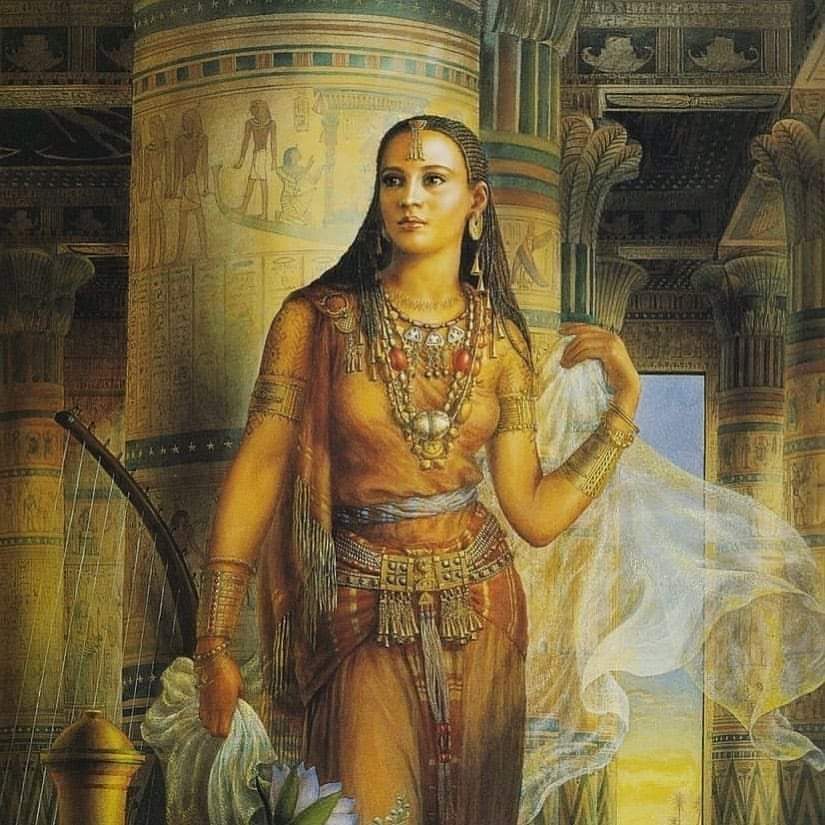
Women in ancient Egypt were regarded as the equals of men in every aspect save that of occupation. It is often assumed that women in the ancient world held little power or influence. However, women in ancient Egypt could become highly influential physicians, political advisors, scribes or even rulers. But like women in many cultures throughout history and today, they had to fight to acquire and hold onto their rights. The man was the head of the household and nation, but women ran the home and contributed to the stability of that nation as artisans, brewers, doctors, musicians, scribes, and many other jobs, sometimes even those involving authority over men. One of central values of ancient Egyptian civilization, arguably the central value, was ma'at – the concept of harmony and balance in all aspects of one's life. This ideal was the most important duty observed by the pharaoh who, as the mediator between the gods and the people, was supposed to be a role model for how one lived a balanced life. Egyptian art, architecture, religious practices, and even governmental agencies all exhibit a perfect symmetry of balance and this can also be seen in gender roles throughout the history of ancient Egyptian civilization. Women's social standing, however, depended on the support and approval of men and, in some cases, was denied or challenged. It also seems clear that many women were not aware of their rights and so never exercised them. Even so, the respect accorded to women in ancient Egypt is evident in almost every aspect of the civilization from religious beliefs to social customs. The gods were both male and female, and each had their own equally important areas of expertise. Women could marry who they wanted and divorce those who no longer suited them, could hold what jobs they liked – within limits – and travel as they pleased. The earliest creation myths of the culture all emphasize, to greater or lesser degrees, the value of the feminine principle. Women in ancient Egypt worked in many jobs traditionally dedicated to them, but they were powerful enough to be independent, have their own workshops producing textiles, jewelry and other goods, and even take an important role in political life, become physicians or scribes. Although, they were underestimated by many historians for centuries, their strong position in the powerful civilization of ancient Egypt could be an inspiration for modern women in many parts of the world. After thousands of years of equal rights, Ptolemy IV tried to stop the strong tradition of cults of women. He changed the law and canceled many rights that had made women equal to men. It was the beginning of the dark age characteristic for the upcoming dominating beliefs, which had their roots in Rome and Greece. However, Egyptian women didn't want to accept a patriarchal society. Until the power of the Egyptian civilization came to an end, they fought for their rights. Commonly, researchers accept that the end of Egyptian women’s independence arrived with the death of the great scientist  Hypatia in 415 AD. Before that event took place, Ancient Egyptian women had thrived in society for more than three millennia. #archaeohistories
Archaeo - Histories tweet media
English
111
141
673
67.4K
Archaeo - Histories
Archaeo - Histories@archeohistories·
St. Patrick’s Day is celebrated annually on March 17, anniversary of his death in 5th Century AD. Irish have observed this day as a religious holiday for over 1,000 years. On St. Patrick’s Day, which falls during the Christian season of Lent, Irish families would traditionally attend church in the morning and celebrate in afternoon. Lenten prohibitions against consumption of meat were waived and people would dance, drink and feast on traditional meal of Irish bacon and cabbage. Saint Patrick, who lived during 5th Century AD, is patron saint of Ireland and its national apostle. Born in Roman Britain, he was kidnapped and brought to Ireland as a slave at 16. He later escaped, but returned to Ireland and was credited with bringing Christianity to its people. In the centuries following Patrick’s death (believed to have been on March 17, 461 AD), mythology surrounding his life became ever more ingrained in Irish culture: Perhaps most well-known legend of St. Patrick is that he explained Holy Trinity (Father, Son and Holy Spirit) using three leaves of a native Irish clover, shamrock. Since around 9th-10th Century AD, people in Ireland have been observing Roman Catholic feast day of St. Patrick on March 17. The first St. Patrick’s Day parade took place not in Ireland but in America. Records show that a St. Patrick’s Day parade was held on March 17, 1601 AD, in a Spanish colony in what is now St. Augustine, Florida. The parade, and St. Patrick’s Day celebration a year earlier were organized by Spanish Colony's Irish vicar Ricardo Artur. More than a century later, homesick Irish soldiers serving in English military marched in New York City on March 17, 1772 AD, to honor Irish patron saint. Enthusiasm for the St. Patrick's Day parades in New York City,  Boston and other early American cities only grew from there. Over next 35 years, Irish patriotism among American immigrants flourished, prompting the rise of so-called “Irish Aid” societies like Friendly Sons of Saint Patrick and Hibernian Society. Each group would hold annual parades featuring bagpipes (which actually first became popular in Scottish and British armies) and drums. In 1848 AD, several New York Irish Aid societies decided to unite their parades to form one official New York City St. Patrick’s Day Parade. Today, that parade is the world‘s oldest civilian parade and largest in United States, with over 150,000 participants. Today, people of all backgrounds celebrate St. Patrick’s Day, especially throughout the United States, Canada and Australia. Although North America is home to largest productions, St. Patrick’s Day is celebrated around the world in locations far from Ireland, including Japan, Singapore and Russia. Popular St. Patrick’s Day recipes include Irish soda bread, corned beef and cabbage and champ. In United States, people often wear green on St. Patrick’s Day. In Ireland, St. Patrick’s Day has traditionally been a spiritual and religious occasion. In fact, up until 1970s, Irish laws mandated that pubs be closed on March 17. Beginning in 1995, however, Irish government began a national campaign to use interest in St. Patrick’s Day to drive tourism and showcase Ireland and Irish culture to the rest of the world.  One icon of the Irish holiday is the Leprechaun. Original Irish name for these figures of folklore is “lobaircin,” meaning “small-bodied fellow.” Belief in leprechauns probably stems from Celtic belief in fairies, tiny men and women who could use their magical powers to serve good or evil. In Celtic folktales, leprechauns were cranky souls, responsible for mending the shoes of the other fairies. Though only minor figures in Celtic folklore, leprechauns were known for their trickery, which they often used to protect their much-fabled treasure. Leprechauns have their own holiday on May 13 but are also celebrated on St. Patrick's, with many dressing up as the wily fairies. #archaeohistories
Archaeo - Histories tweet media
English
2
20
82
4.2K
Å𝖒Ø𝖗
Å𝖒Ø𝖗@Amordeev·
𝐀𝐢𝐫𝐝𝐫𝐨𝐩 𝐂𝐚𝐦𝐩𝐚𝐢𝐠𝐧 💌 $𝟐𝟎𝟎 𝐔𝐩 𝐟𝐨𝐫 𝐆𝐫𝐚𝐛 by @Pocket_SOL Apply : forms.gle/gsJ4VhjoRAh6Tp… Submit SOL address via Form Like & Retweet 12hrs ⏰
Å𝖒Ø𝖗 tweet media
English
341
319
446
10.5K
Retro Anime
Retro Anime@retro_anime·
Dragon Ball Z: Fusion Reborn (1995)
English
6
126
1.2K
56.1K
Caco Rocha
Caco Rocha@CacoRocha_eth·
No one really knows the story… or where the Vamps came from. But soon… you’ll start seeing them everywhere. 🧛‍♂️👀🌚 @AtlanCoelho @plaguelabs
Caco Rocha tweet media
English
2
0
10
190