AtlasXomics

103 posts

AtlasXomics banner
AtlasXomics

AtlasXomics

@AtlasXomics

Accelerating Spatial Multi-Omics

New Haven, CT Katılım Kasım 2020
873 Takip Edilen734 Takipçiler
Sabitlenmiş Tweet
AtlasXomics
AtlasXomics@AtlasXomics·
How tightly does chromatin accessibility reflect gene expression — in the same tissue? With Spatial CoProfiling, we measure chromatin accessibility and whole-transcriptome RNA from the same tissue section, enabling direct, spatially resolved regulatory inference. In our latest dataset, we observe: Concordant accessibility and expression → active regulation Accessibility preceding expression → poised states Discordant signals → alternative regulatory mechanisms This integrated view links chromatin state to transcription — in situ. 👉 Explore the dataset and white paper: atlasxomics.com/coprofiling-wh… #SpatialEpigenomics #SpatialOmics #SpatialTranscriptomics #GeneRegulation
AtlasXomics tweet media
English
1
9
46
4.3K
AtlasXomics
AtlasXomics@AtlasXomics·
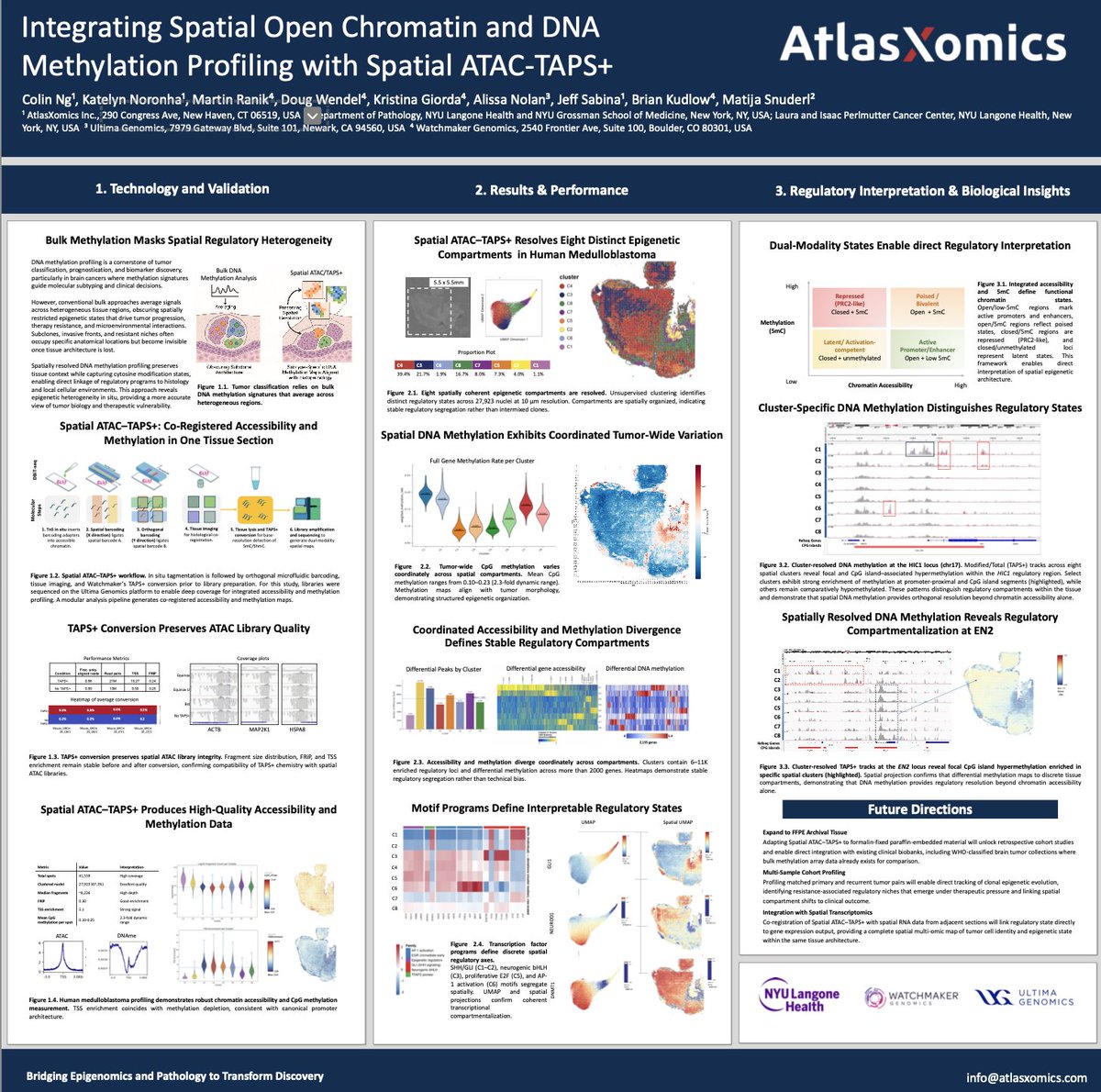
Introducing Spatial ATAC-TAPS+ Following our AGBT 2026 presentation, we're excited to share our poster introducing our dual-modality spatial assay — developed in collaboration with Watchmaker Genomics, Matija Snuderl, and Ultima Genomics. Spatial ATAC-TAPS+ integrates chromatin accessibility and DNA methylation (5mC & 5hmC) profiling within the same tissue section, revealing regulatory heterogeneity that bulk assays miss. 📄 View the full poster: lnkd.in/e9MAiveY 🔬 Explore Spatial ATAC-TAPS+ and our broader spatial epigenomic platform at AtlasXomics.com #AGBT2026 #SpatialEpigenomics #DNAMethylation #ChromatinAccessibility
AtlasXomics tweet media
English
0
14
36
12.5K
AtlasXomics
AtlasXomics@AtlasXomics·
Excited for @agbt 2026 — see you in Orlando! 📅 February 23–26, 2026 📍 Signia by Hilton Orlando Bonnet Creek We’re proud to present: 📌 Poster #450 🎤 Presenter: Colin Ng — Vice President, AtlasXomics 🗓 Wednesday, Feb 25 | 4:45–6:10 PM 📍 Bonnet Creek Ballroom I–VI 🧬 Integrating Spatial Open Chromatin and DNA Methylation Profiling with Spatial ATAC-TAPS+ In this work, Colin presents Spatial ATAC-TAPS+, a first-in-class dual-modality assay that maps chromatin accessibility and DNA methylation (5mC/5hmC) in intact tissue at near single-nucleus resolution. By linking epigenetic states with histology, we reveal spatial tumor heterogeneity — including poised and resistant niches invisible to bulk profiling. 🤝 In collaboration with Watchmaker Genomics, Matija Snuderl (NYU Langone), and Ultima Genomics. If you’re interested in spatially resolved epigenomics, tumor biology, or the next generation of integrated accessibility-methylation profiling, we’d love to connect! Learn more about our spatial epigenomics solutions at AtlasXomics.com #AGBT2026 #SpatialEpigenomics #DNAMethylation #ChromatinAccessibility #CancerEpigenetics #SpatialOmics #AtlasXomics #TumorHeterogeneity #GenomicsInnovation #CollaborativeScience
AtlasXomics tweet media
English
0
0
3
303
AtlasXomics
AtlasXomics@AtlasXomics·
Great to see the rapid advances in DNA methylation technologies highlighted in @GenomeWeb year-end feature last December — including emerging directions toward single-cell and spatial epigenomics. In its outlook toward 2026, the article points to early progress in bringing DNA methylation analysis into tissue context, and we’re proud that AtlasXomics was included in this discussion. Exciting to see where the field is headed as spatial and epigenomic tools continue to evolve — and stay tuned as we work toward expanding our spatial epigenomics portfolio into DNA methylation. Read the full article: genomeweb.com/sequencing/dna… #SpatialOmics #Epigenomics #DNAMethylation #GenomicsInnovation
English
0
2
6
449
AtlasXomics
AtlasXomics@AtlasXomics·
We’re excited to share a new partnership milestone for AtlasXomics! Through our collaboration with Forge and CPS Fluidics, LLC, we’re strengthening the manufacturability and scalability of our spatial epigenomics technology — helping bring powerful tools for studying gene regulation in tissue context to more researchers. This partnership brings together innovation, engineering expertise, and ecosystem support to accelerate impact in spatial biology. Grateful to FORGE Impact and CPS Fluidics for being incredible partners on this journey! 🔗 Read the full success story: forgeimpact.org/success-storie… #SpatialBiology #Epigenomics #BiotechInnovation
English
0
1
4
390
AtlasXomics
AtlasXomics@AtlasXomics·
🎉 Congratulations to Zongming Ma, our founder @RongFan8 , and collaborators on this exciting new bioRxiv preprint introducing SuperFocus — a powerful framework for achieving whole-slide, cell-level spatial omics from spot-based measurements integrated with histology. By bridging traditional spatial assays with high-resolution cellular inference across modalities, SuperFocus enables: Cell-level resolution from existing spot-based spatial data Direct integration of tissue morphology and molecular profiles Cross-modal spatial analysis at whole-slide scale This work represents an important step toward unlocking the full biological complexity of tissues — revealing fine-scale cellular organization and regulatory programs that are often blurred in conventional spatial measurements. A great example of how computational innovation is pushing spatial omics closer to true single-cell resolution in intact tissue context. 🔗 Read the full preprint: biorxiv.org/content/10.648… #SpatialOmics #ComputationalBiology #SpatialTranscriptomics #SystemsBiology #bioRxiv #SingleCell
AtlasXomics tweet media
English
0
0
8
346
AtlasXomics
AtlasXomics@AtlasXomics·
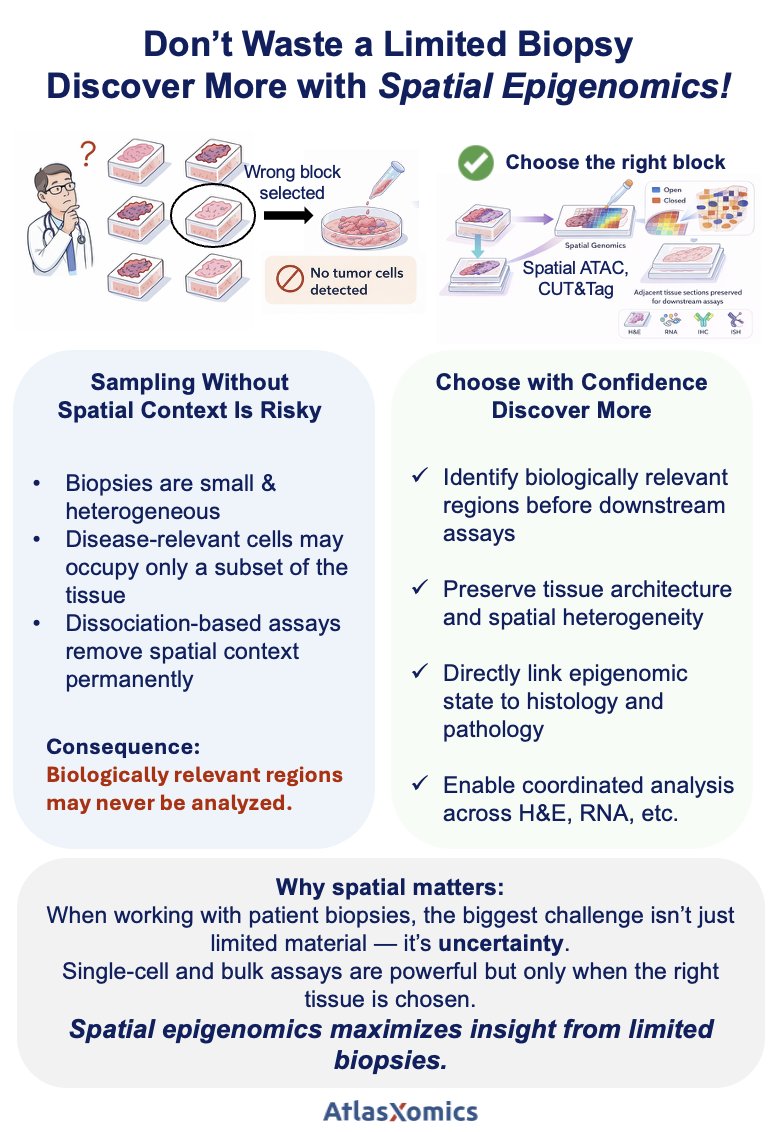
Maximizing Insight from Limited Biopsies with Spatial Epigenomics Working with patient biopsies? The biggest challenge isn't just limited material—it's uncertainty about what you're actually sampling. Traditional dissociation-based approaches permanently remove spatial context, risking the loss of rare, disease-relevant cell populations that may occupy only specific tissue regions. Spatial epigenomics offers a solution: Use H&E on adjacent sections to identify tissue blocks with tumor or critical features, then perform coordinated spatial epigenomic profiling assays on the same block. Because the tissue architecture is preserved, epigenomic signals can be interpreted alongside histopathology, enabling direct links between regulatory state and tissue morphology. This coordinated approach ensures you're profiling disease-relevant regions while preserving tissue for validation—no guesswork, no wasted material. Make every biopsy count. Let's discuss how spatial epigenomics fits your workflow. #SpatialEpigenomics #CancerResearch #Biopsies #Pathology #Oncology #SpatialATAC #SpatialGenomics #SpatialBiology #SpatialOmics #BiopsyAnalysis #TranslationalResearch #PrecisionMedicine
AtlasXomics tweet media
English
0
0
6
428
AtlasXomics
AtlasXomics@AtlasXomics·
Mapping the Epigenome in Space: Spatial CUT&Tag We’re excited to share AtlasXomics’ new white paper on Spatial CUT&Tag—a practical guide to profiling histone modifications and chromatin-associated proteins directly in tissue while preserving native architecture and connecting regulatory state to pathology. If you’re curious about spatial CUT&Tag, this white paper walks through: - Antibodies that have been validated on our platform - The types of chromatin data you can extract across various histone marks - How spatial chromatin profiles show strong concordance with bulk ChIP-seq (Pearson R > 0.75) - How to interpret spatial CUT&Tag data alongside histopathology The gastric cancer case study is a great example—showing how H3K36me2 patterns can be mapped across tumor regions, revealing spatially distinct regulatory states that aren’t apparent from pathology alone. 📄 Download the white paper: atlasxomics.com/knowledge-cent… #epigenetics #spatialbiology #genomics
English
0
1
7
696
AtlasXomics
AtlasXomics@AtlasXomics·
2025 was a big year for spatial epigenomics. 🔬 With 145+ labs worked with to date and 50+ tissue types analyzed, we launched new assays, publications, and tools that make data exploration and pathology integration easier than ever. Excited for what’s ahead. 🚀 #Epigenetics #Genomics #Spatialbiology
English
0
0
5
194
AtlasXomics
AtlasXomics@AtlasXomics·
Spatial omics data is complex — but connecting it to tissue pathology doesn’t have to be! Today we’re excited to launch Part 3 of our 3-part walkthrough series, showing how researchers use AtlasXomics’ cloud-based interactive platform to integrate tissue pathology with spatial epigenomic data — all in one interactive environment. In Part 3, we focus on pathology-guided spatial analysis. You’ll learn how to: • Load annotated H&E images • Align histology with spatial ATAC/CUT&Tag cluster maps • Select regions of interest based on tissue morphology • Compare chromatin accessibility across pathology-defined regions All without writing a single line of code — bringing molecular regulation and tissue context together in just a few clicks. Explore the platform: Atlasxomics.com #Epigenomics #SpatialBiology #Pathology #ATACseq #Multiomics #Histology
English
0
0
2
128
AtlasXomics
AtlasXomics@AtlasXomics·
Spatial omics data is complex — but interpreting it doesn’t have to be! Today we’re launching Part 2 of our 3-part walkthrough series, showing how researchers use AtlasXomics’ cloud-based interactive platform to transform spatial epigenomic data into clear biological insights. In Part 2, we focus on cell-type annotation using gene activity scores. You’ll learn how to: • Visualize marker gene accessibility • Lasso-select and annotate cell groups • Filter cells by gene activity thresholds • Compare chromatin profiles across cell groups • Explore peaks for each group directly in IGV All without writing a single line of code — turning clusters into biology in just a few clicks. Stay tuned for Part 3 (integrating tissue pathology), coming soon. Explore the platform: atlasxomics.com #Epigenomics #Genomics #Multiomics
English
0
0
6
169
AtlasXomics
AtlasXomics@AtlasXomics·
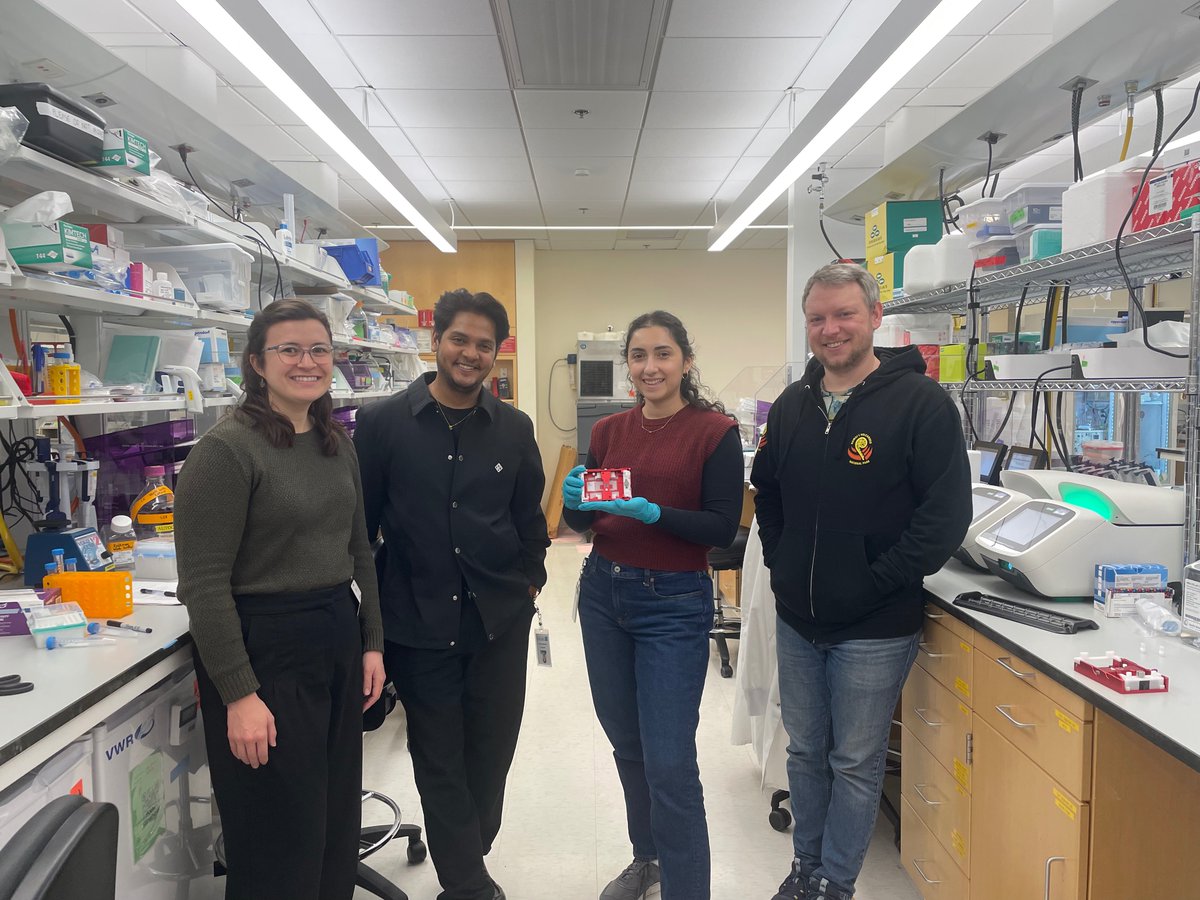
Exciting day at the @broadinstitute ! We spent a day in November setting up our AtlasXomics spatial CUT&Tag kit, walking through the workflow, and sharing some of the latest improvements coming to the platform with Michal Lipinski, Abhi Kumar and Tamara Aleksanyan! Always inspiring to collaborate with teams pushing the boundaries of chromatin biology and spatial profiling. Huge thanks to our partners at Broad for the warm welcome and great discussions. Looking forward to seeing the data and a new perspective on the mechanisms of early neurodevelopment! #epigenetics #genomics #SpatialBiology
AtlasXomics tweet mediaAtlasXomics tweet media
English
0
0
6
308
AtlasXomics
AtlasXomics@AtlasXomics·
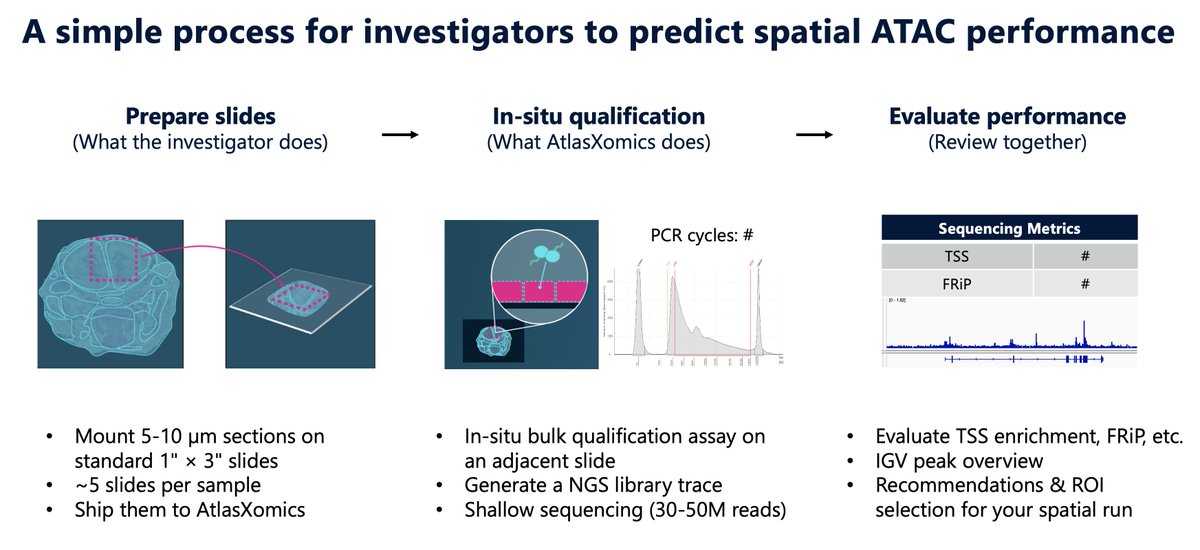
FFPE Spatial ATAC-seq is finally possible — and now there’s a simple way to predict whether your tissue will succeed. FFPE blocks are some of the most valuable materials in translational research, but they’ve historically been difficult to use for spatial epigenomic assays. A failed run wastes slides, time, and budget. To address this, we built an in-situ bulk sample qualification workflow that screens adjacent or control tissue sections before you commit precious clinical samples to a full spatial ATAC-seq run. With a simple in-situ bulk assay, we help investigators: 🔹 Determine whether a sample is suitable for spatial epigenomic profiling 🔹 Predict full spatial assay performance using library trace, TSS, FRiP, and other QC metrics 🔹 Confidently select ROIs and plan spatial experiments with reduced risk A simple workflow. A major reduction in uncertainty. FFPE Sample → Qualified → Spatial ATAC-seq success. If you’re working with challenging FFPE blocks or planning spatial epigenomic studies in 2026, we’d be happy to walk you through the qualification process. #epigenetics #genetics #spatialbiology
AtlasXomics tweet media
English
1
5
17
1.8K
AtlasXomics
AtlasXomics@AtlasXomics·
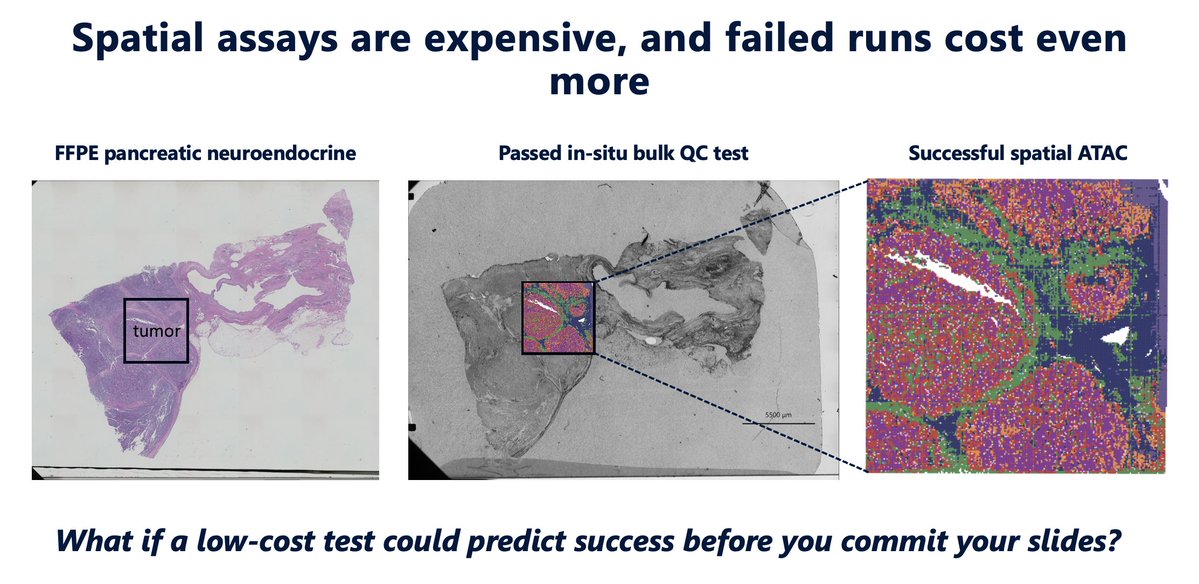
Case Study Spotlight: Predicting Spatial ATAC-seq Success in FFPE Pancreatic Neuroendocrine Tumor Spatial epigenomic profiling enables high-resolution mapping of enhancer activity and regulatory programs in situ, but FFPE tissue introduces variability in chromatin integrity and assay performance. In this FFPE pancreatic neuroendocrine tumor sample, we applied our in-situ bulk QC assay to assess tissue quality prior to spatial ATAC-seq. ✔ QC indicated preserved chromatin structure and robust accessibility signal ✔ Subsequent spatial ATAC-seq generated high-resolution accessibility and regulatory maps ✔ QC outcome accurately predicted full spatial epigenomic assay success This low-cost QC step helps researchers make informed decisions and avoid failed runs, particularly when working with challenging FFPE tissues. If you'd like to incorporate QC into your spatial epigenomic study design, we’d be glad to help. #epigenetics #Genetics #genomics #Spatialbiology
AtlasXomics tweet media
English
1
3
16
1.8K
AtlasXomics
AtlasXomics@AtlasXomics·
Happy Thanksgiving from AtlasXomics! We’re grateful for our collaborators, partners — and our incredible AtlasXomics team, whose passion and innovation continue to push spatial epigenomics forward. Whether you're carving turkey or carving regulatory landscapes, we’re thankful for everyone advancing spatial epigenomics with us. Here’s to more discovery, more data, and more breakthroughs ahead! 🦃 #epigenetics #genetics #spatialbiology
AtlasXomics tweet media
English
0
0
3
181