South Shore Audubon

224 posts

South Shore Audubon banner
South Shore Audubon

South Shore Audubon

@AudubonSS

The South Shore Audubon Society is a nonprofit, all-volunteer chapter of the National Audubon Society and a member of the Audubon Council of New York State.

Southern Nassau County, NY Katılım Haziran 2022
82 Takip Edilen133 Takipçiler
South Shore Audubon
South Shore Audubon@AudubonSS·
Discover the endangered and unique natural history of “The Hempstead Plains: The Last Stand of a Long Island Grassland,” a presentation by Dr. Paul van Wie, President of Friends of Hempstead Plains. Learn about preserving this globally rare, 99.9% gone ecosystem. When: March 10, 2026 (Tuesday), 7:30-9:00 PM Where: Freeport Memorial Library, 144 W. Merrick Road, Freeport, NY Details: FREE to the public. Light refreshments served. No need to RSVP. Host: South Shore Audubon Society. #HempsteadPlains #Uniondale #Hempstead #NassauCounty #HempsteadNY #LongIslandNature #NativePlants #LIHistory
South Shore Audubon tweet media
English
0
0
0
16
South Shore Audubon
South Shore Audubon@AudubonSS·
Send a message to #SuffolkCounty officials to bring back Long Island’s fabled brook trout fishing. In a 2024 rainstorm, Mother Nature breached an old earthen dam at #StumpPond, instantly transforming a sluggish warm-water pond into a free-flowing cold-water stream confluence again. This transformation is nature’s call to action to rekindle the #Nissequogue River’s #brooktrout fishing legacy. These headwaters are designated NY Class C(TS) for critical trout spawning habitat requiring high-level conservation protection. Alarmingly, this cold-water stream ecology may be lost forever by rebuilding the dam. Join the growing movement fighting to conserve a healthy, natural river at FreeTheNissequogue.org
South Shore Audubon tweet media
English
0
0
1
41
South Shore Audubon
South Shore Audubon@AudubonSS·
Smithtown, NY - Since Mother Nature breached the #StumpPond dam in a rainstorm in August 2024, an astonishing 11 bird species have been recorded here for the first time. See Note 1 for species. Another 35 species have reached historical high counts on eBird, drawn to the Nissequogue’s expansive new wetlands and bountiful field habitats now emerging in Blydenburgh County Park. See Note 2. Birds are telling us that wildlife thrives without the dam. Exceptional ecological recovery, vibrant new habitat, and bird numbers justify letting the river run free. But alarmingly, this idyllic transformation is under threat. This free-flowing riparian wetland habitat will be lost forever if the dam is rebuilt. What to do? Join the growing coalition fighting for a healthy, natural river at FreeTheNissequogue.org. Of 190 total bird species reported at Blydenburgh, 38 are currently imperiled species. They require state, local and NGOs (Non-Governmental Organizations) to partner to preserve and protect the winding stream confluence, native plants, and floodplain habitat that’s emerging to support many of these species populations. • State Protected: 11 species at Blydenburgh are listed as Endangered, Threatened or Special Concern under NYS Law (6 NYCRR Part 182). Note 3. • High Priority: 12 more are designated High Priority (HPSGCN) to help DEC staff, local municipalities (counties, cities, towns) and NGO partners to direct their funding, time, and other resources toward conducting urgent research and habitat management. Note 4. • Conservation Need: 18 additional are listed as Species of Greatest Conservation Need (SGCN), facing further declines in NY if conservation actions are not taken within the next 10 years. Note 5. It’s time to act! Restoring the #Nissequogue River protects more than just birds; it supports pollinators, native plants and broader wildlife biodiversity to come. Help save birds and nature. Join the grassroots movement fighting for a healthy, natural Nissequogue at FreeTheNissequogue.org. ------ Note 1: First time recorded. Baird's Sandpiper, Dunlin, Pectoral Sandpiper, Sanderling, Semipalmated Plover, Short-billed Dowitcher, Stilt Sandpiper, Vesper Sparrow, White-rumped Sandpiper, Wilson's Snipe, Worm-eating Warbler. Note 2: High Counts on eBird. Bald Eagle, Barn Swallow, Blue Jay, Brown Thrasher, Canada Goose, Cape May Warbler, Chipping Sparrow, Common Nighthawk, Cooper's Hawk, Eastern Bluebird, Eastern Phoebe, Eastern Warbling Vireo, Great Blue Heron, Great Egret, Green Heron, Indigo Bunting, Killdeer, Least Sandpiper, Lesser Yellowlegs, Marsh Wren, Peregrine Falcon, Pine Warbler, Purple Martin, Rose-breasted Grosbeak, Ruby-throat Hummingbird, Rusty Blackbird, Semipalmated Sandpiper, Sharp-shinned Hawk, Snowy Egret, Solitary Sandpiper, Spotted Sandpiper, Swamp Sparrow, Wild Turkey, Willow Flycatcher. Note 3: NYS Endangered, Threatened or Special Concern. Bald Eagle, Cooper's Hawk, Northern Harrier, Osprey, Peregrine Falcon, Pied-billed Grebe, Red-shouldered Hawk, Sharp-shinned Hawk. 2x - Common Nighthawk*, Red-headed Woodpecker*, Vesper Sparrow*. Note 4: High Priority. Per NY State Wildlife Action Plan (SWAP) - Canada Warbler, Prothonotary Warbler, Rusty Blackbird. 2x - Common Nighthawk*, Red-headed Woodpecker*, Vesper Sparrow*. Per NYS Law - American Black Duck, Bay-breasted Warbler, Brown Thrasher, Cape May Warbler, Semipalmated Sandpiper, Short-billed Dowitcher. Note 5: Conservation Need. American Woodcock, Bank Swallow, Barn Swallow, Black-billed Cuckoo, Black-crown Night Heron, Black-throat Blue Warbler, Blackpoll Warbler, Brant, Chimney Swift, Clapper Rail, Forster's Tern, Prairie Warbler, Scarlet Tanager, Snowy Egret, Swainson's Thrush, Tennessee Warbler, Veery, Wood Thrush.
South Shore Audubon tweet media
English
0
0
3
36
South Shore Audubon
South Shore Audubon@AudubonSS·
In 2024, Mother Nature breached the #StumpPond dam, restoring the #Nissequogue River in #BlydenburghPark. From the dormant seed bank in the river sediment, 90 species of vibrant native flora emerged, soon followed by 11 bird species never seen here before. ` Today, critical cold-water flows have returned for native brook trout, and the resilient floodplain offers better storm protection than a dam. The panorama is breathtaking—but this progress is under threat. Don’t let this recovery be reversed. Join the growing movement to save Long Island’s natural heritage at FreeTheNissequogue.org
English
0
0
1
41
South Shore Audubon retweetledi
Enezator
Enezator@Enezator·
They’re like planes at the airport getting ready for takeoff
English
57
1K
9.1K
129.2K
South Shore Audubon
South Shore Audubon@AudubonSS·
Spring countdown begins today!🐦Happy Valentines Day ❤️
English
0
0
0
22
South Shore Audubon
South Shore Audubon@AudubonSS·
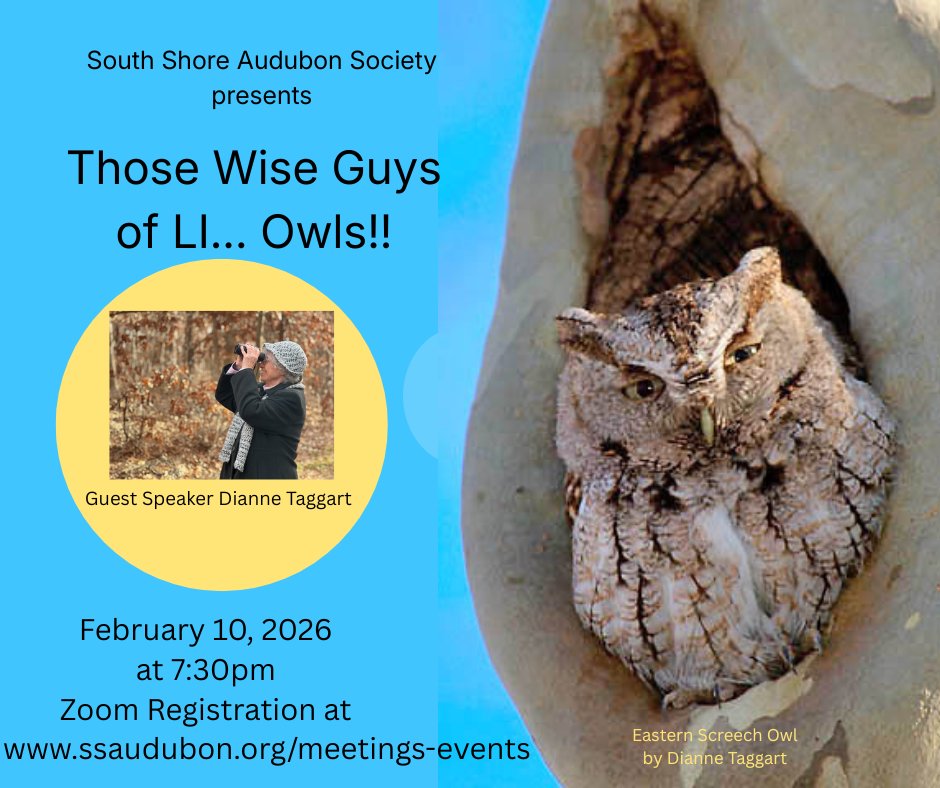
What’s fascinating, wise, and found right here on Long Island? Owls! Join us Tuesday, February 10 at 7:30 PM on Zoom for a captivating evening of owl photos, fun facts, and firsthand stories with Dianne Taggart, a Long Island birder with over 35 years of experience. Don’t miss this hoot of a program! 📷Register in advance: ssaudubon.org/meetings-events
South Shore Audubon tweet media
English
0
1
1
32
South Shore Audubon
South Shore Audubon@AudubonSS·
Here’s a fascinating list of our region's 21 earliest nesters. How many of them will you spot courting or paired up in nesting habitat this weekend? See which owls, raptors, and songbirds may be preparing to nest soon, if not already!
English
0
0
0
22
South Shore Audubon
South Shore Audubon@AudubonSS·
Think it’s too early for nesting season? Think again! While most of us are still bundled up for winter, some of these birds are already busy padding their nests for their families across #LongIsland
South Shore Audubon tweet media
English
1
0
1
31
South Shore Audubon
South Shore Audubon@AudubonSS·
Support a Free-Flowing River! Learn more at: freethenissequogue.org A once-in-a-generation ecological miracle is unfolding at Blydenburgh County Park in Smithtown, and we need your help to protect it. Since the 2024 dam failure, the Nissequogue River has reemerged like a phoenix, transforming a manmade warmwater pond back into a thriving coldwater wetland ecology. This rare moment has brought back native wildflowers, pollinators, bird species not seen here before, and critical habitat for native brook trout, alewife, and eels. However, this recovery is vulnerable. Suffolk County is considering rebuilding the dam, which would drown this vibrant ecosystem once again. Take Action Now! Click here: freethenissequogue.org/raise-your-voi… Don’t let this wild and scenic river landscape and its species disappear forever. Use the Free the Nissequogue Action Portal to tell Suffolk County legislators to oppose a new dam and let the river run free for future generations. Thank you. #nissequogue #NissequogueRiver #suffolkcountyny #blydenburgh #longislandny #longislandnature #longislandwildlife #stumppond #hikinglongisland #longislandhiking #SuffolkCounty #GreenbeltTrail #longislandbirdwatching #longislandbirding #birdsoflongisland #Suffolk #LongIsland #longislandnewyork #migratorybirds
English
0
0
0
68
South Shore Audubon
South Shore Audubon@AudubonSS·
WHY FLY? FLIGHTLESS BIRDS OF THE WORLD WITH DR TODD GREEN ONLINE. Register in advance: zoom.us/meeting/regist… During evolution, some birds have lost the ability to fly. Dr. Todd Green, an avian paleontologist will guide us through Earth’s flightless phenoms such as the water-savvy penguins, ostriches, rheas, kiwis, emus, and cassowaries, recently extinct dodos, and towering terror birds. An online event by South Shore Audubon Society of Freeport, NY. Open to the public. @TheCassowaryKid
English
0
1
1
191
South Shore Audubon
South Shore Audubon@AudubonSS·
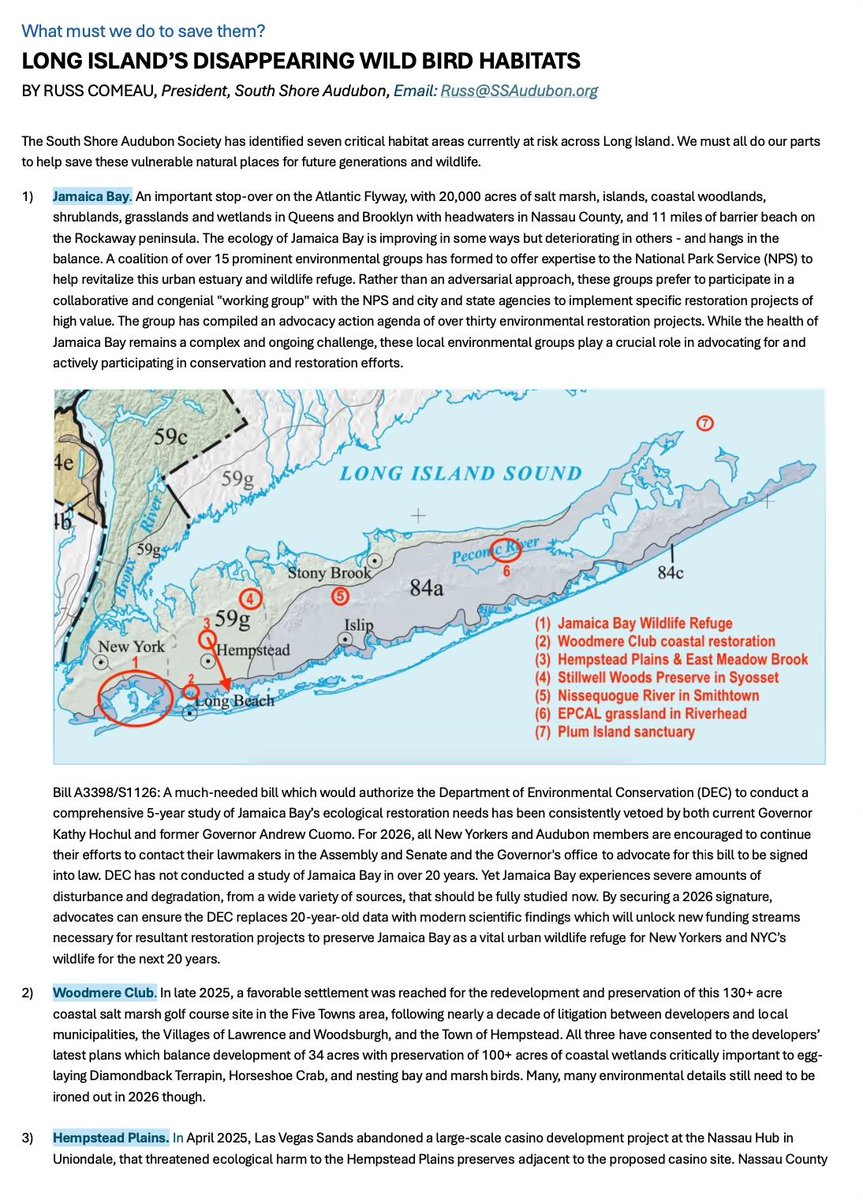
GONE FOREVER OR SAVED FOREVER? Make a New Year’s resolution to safeguard Long Island’s vulnerable wild places for future generations and wildlife. Stay connected with groups like South Shore Audubon. Keep informed of local environmental news in the media. Sign petitions, use online forms to support campaigns like NY’s Bigger Better Bottle Bill. Participate in activities like Audubon’s "Be a Good Egg" program to protect shorebird nesting sites. Contact elected officials: Learn who your representatives are in the Nassau/Suffolk Legislature, NY State Senate/Assembly, Governor's Office, and US Congress/Senate and voice your support for critical habitat protection and restoration important to you. You’ll find this overall advocacy process does work well, and your activism does lead to positive changes. Thank you.
South Shore Audubon tweet mediaSouth Shore Audubon tweet media
English
0
0
0
35
South Shore Audubon
South Shore Audubon@AudubonSS·
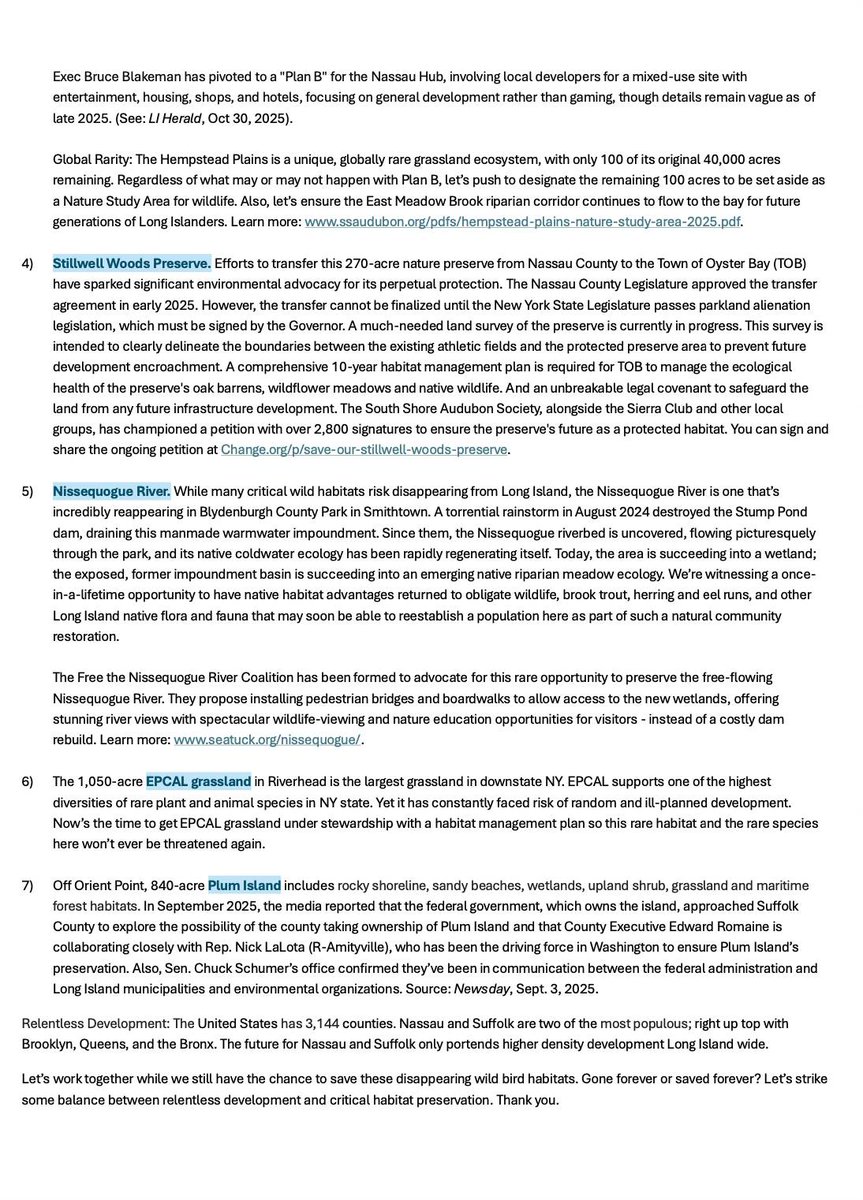
PHOENIX RISING IN SMITHTOWN - While many wild habitats are disappearing from Long Island, the Nissequogue River is reemerging like a phoenix in Blydenburg County Park. An old earthen dam failed here in a torrential rainstorm in 2024, causing a manmade warmwatert impoundment, Stump Pond, to drain. Since them, the Nissequogue riverbed has been uncovered, flowing picturesquely through the park. Its native coldwater ecology has rapidly restored the area into a lush wetland with a native riparian meadow. We’re witnessing a once-in-a-lifetime act of Nature recreating native habitat to restore obligate wildlife, brook trout, herring and eel runs, and other LI native flora and fauna that will reestablish populations here in this succeeding natural community. The Free the Nissequogue River Coalition has been formed to advocate for this rare opportunity to preserve the free-flowing Nissequogue River. They propose installing pedestrian bridges and boardwalks to allow access to the new wetlands, offering stunning river views with spectacular wildlife-viewing and nature education opportunities for visitors - instead of a costly dam rebuild.
South Shore Audubon tweet media
English
0
0
0
44
South Shore Audubon
South Shore Audubon@AudubonSS·
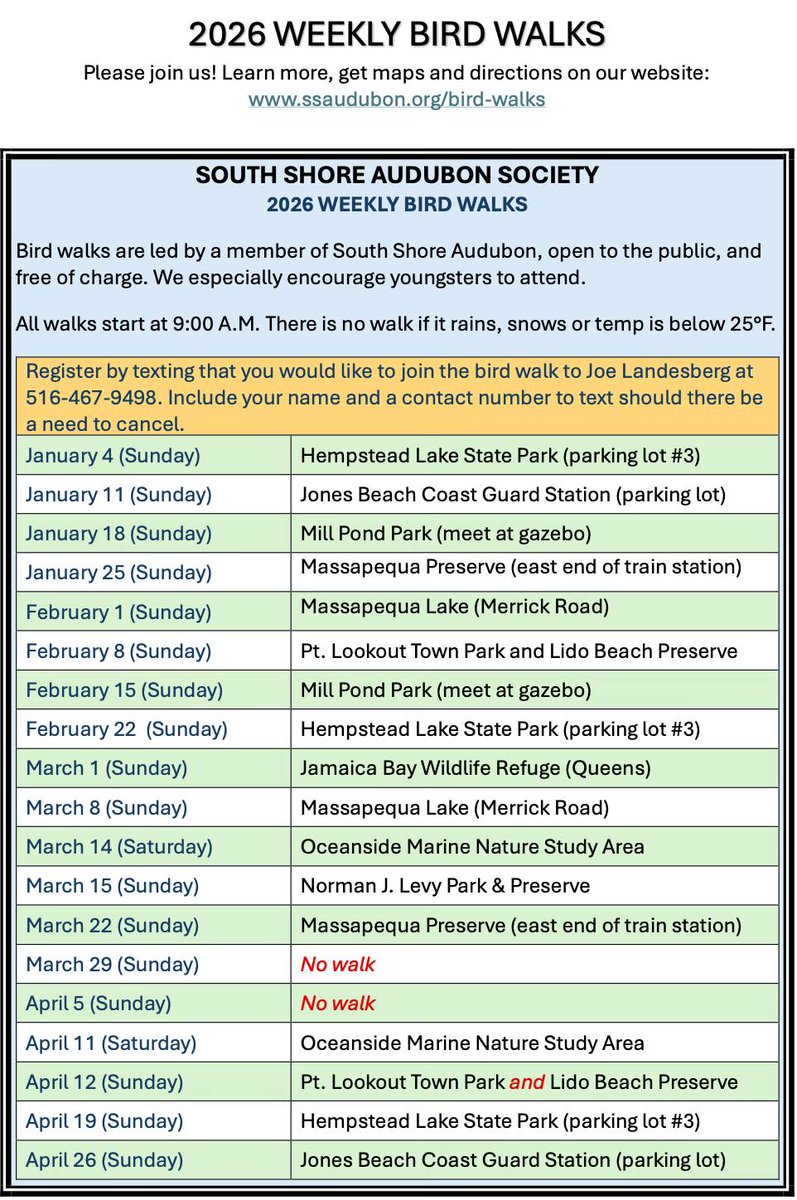
Discover the Wild Side of Your Weekend! Get ready to connect with nature and experience the vibrant world of gorgeous birds up close. Our FREE 2026 Weekly Bird Walks are open to the public and offer a unique connection to local wildlife. Don't just hear about nature – be in it!
South Shore Audubon tweet media
English
0
0
0
20
South Shore Audubon
South Shore Audubon@AudubonSS·
The winter woods are calling: Become a Woodpecker Watcher! A vibrant world of drumming and tapping awaits just beyond your doorstep on Long Island! When many other birds flee south, five remarkable woodpecker species brave the chill, offering an exciting, accessible quest for every nature enthusiast. Our local parks and even your own backyard bird feeders become winter havens for these resilient residents. COMMON WINTER WOODPECKERS OF LONG ISLAND: Three species are found here year-round, often foraging at suet bird feeders: 1) DOWNY WOODPECKER: The smallest and most common species on Long Island, easily found in both suburban backyards and local parklands. 2) HAIRY WOODPECKER: A slightly larger "look-alike" to the Downy, that prefers more expansive forest preserves. 3) RED-BELLIED WOODPECKER: Although the namesake red belly is often just a faint blush, especially in winter, these birds are not uncommon in local preserves and parks, and will visit feeders for suet, peanuts, and sunflower seeds. LESS COMMON IN WINTER: The next two species are not found so much on Long Island in winter, but if they locate good cover (often meaning a treed area to their liking), they may winter over in that same favorable spot for several consecutive winters: 4) NORTHERN FLICKER: While most of the population migrate south, some remain on Long Island through the winter. They are often spotted perched, silhouetted at the top of a tall, bare tree, identified by the large bill and distinctive dark bib. 5) YELLOW-BELLIED SAPSUCKER: Primarily a migrant, but individuals are spotted on the island during the winter months. They are known for creating horizontal rows of "sap wells" in trees, preferably with thin, smooth, skin-like bark. Winter woodpeckers don’t flock together but tend to gravitate to some of the same favorable areas, often wooded tracts of tall trees where, if you find one, chances are good to find others.
South Shore Audubon tweet mediaSouth Shore Audubon tweet media
English
0
0
0
15