Aurelius Health Group

16 posts

Aurelius Health Group banner
Aurelius Health Group

Aurelius Health Group

@Aurelius_Health

We build protocols for people who want more than generic health advice. Command your biology using microdosed GLP-1 oral stacks.

Katılım Mart 2026
2 Takip Edilen174 Takipçiler
Aurelius Health Group
Aurelius Health Group@Aurelius_Health·
Resistance training does something cardio doesn't. It builds metabolically active tissue. Every additional pound of muscle burns roughly 6 calories a day at rest. That's not life changing on its own, but compound it across 10 pounds of muscle and a few decades and the math gets interesting. Cardio burns calories, lifting changes the engine.
Aurelius Health Group tweet media
English
0
0
1
16
Aurelius Health Group
Aurelius Health Group@Aurelius_Health·
Stress isn't just an emotion. It's a hormonal cascade that affects fat storage. Chronic cortisol elevation drives visceral fat accumulation, raises blood sugar, and suppresses GLP-1 signaling. Meditation, slow breathing, and walks aren't soft self care. They're cortisol management protocols with measurable downstream effects on body composition.
Aurelius Health Group tweet media
English
4
1
39
2.9K
Aurelius Health Group
Aurelius Health Group@Aurelius_Health·
Eating slower triggers more GLP-1 release than eating fast, even with the same exact meal. The L-cells in your gut take time to register what you've eaten and broadcast the satiety signal. Inhale your food in 8 minutes and you'll outpace your own hormones. Eat the same plate over 25 minutes and your brain actually gets the memo.
Aurelius Health Group tweet media
English
0
2
28
3.4K
Aurelius Health Group
Aurelius Health Group@Aurelius_Health·
Sleep less than 6 hours and your hunger hormones drift into chaos One night of restricted sleep raises ghrelin (the "feed me" hormone) by about 15% and drops leptin (the "I'm full" hormone) by a similar amount. You wake up biologically primed to overeat. This is physiology, not weakness.
Aurelius Health Group tweet media
English
0
0
1
102
Aurelius Health Group
Aurelius Health Group@Aurelius_Health·
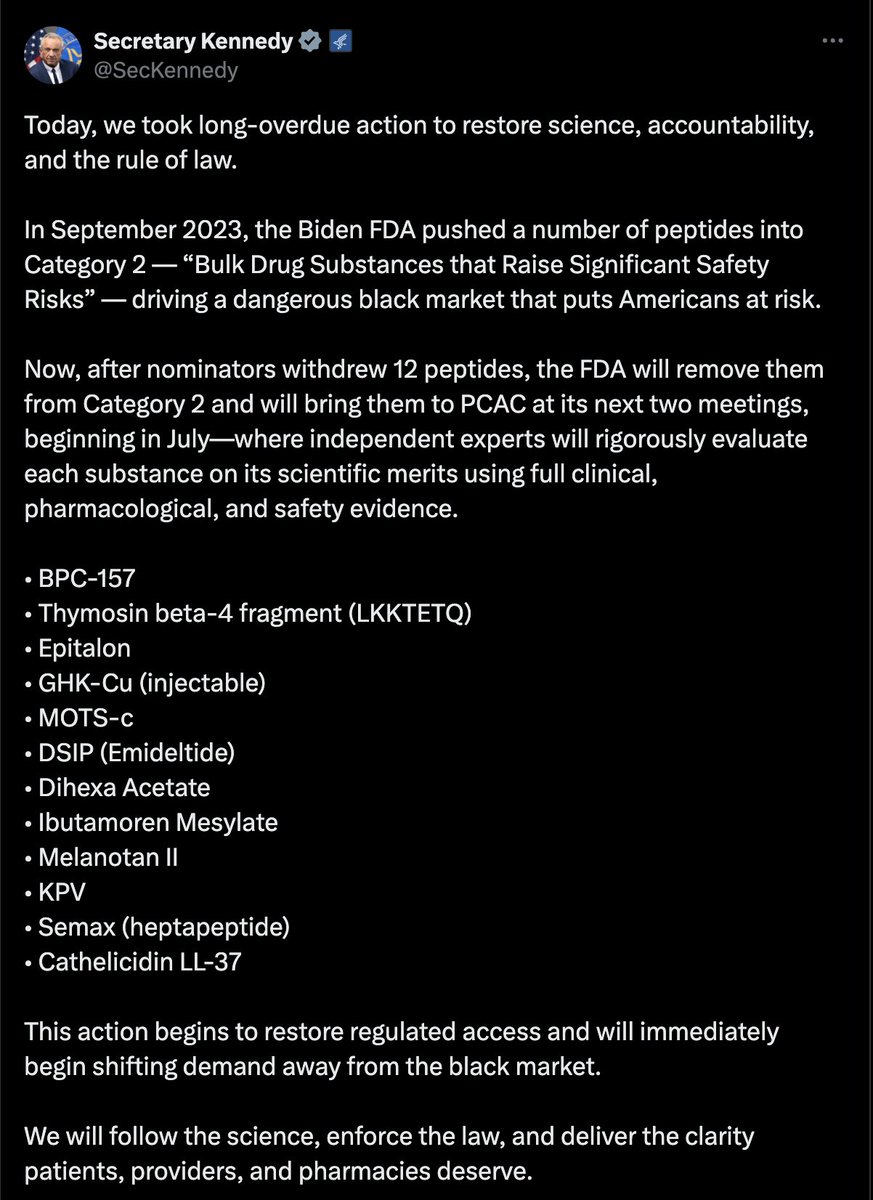
RFK just announced that he is planning to move 12 peptides from Category 2 to Category 1. If you are new to peptides, you can find useful information on this blog. peptidepeppers.com/articles/pepti… Disclaimer: We do not sell, prescribe, or distribute peptides. Any discussion of peptides is for informational and educational purposes only and should not be considered medical advice or an offer to provide such products.
Aurelius Health Group tweet media
English
10
12
276
481.2K
Aurelius Health Group
Aurelius Health Group@Aurelius_Health·
Protein for breakfast is one of the most underrated levers in metabolic health. 30g of protein in your first meal triggers higher GLP-1, PYY, and CCK release than a carb-heavy breakfast. That's three appetite regulating hormones working in your favor for the rest of the day. The croissant doesn't stand a chance against eggs. So for your next meal, remember to fuel your metabolic health first, not your cravings.
Aurelius Health Group tweet media
English
0
0
1
199
Aurelius Health Group
Aurelius Health Group@Aurelius_Health·
Walking after meals isn't a wellness aesthetic. It's a measurable intervention. A 10 minute walk after eating can blunt the post meal glucose spike by up to 30% in some studies. The muscle contractions pull glucose out of your blood without needing extra insulin. Your legs are doing your pancreas a favor.
Aurelius Health Group tweet media
English
0
0
1
163
Aurelius Health Group
Aurelius Health Group@Aurelius_Health·
GLP-1 isn't a drug, it's a hormone your gut has been making your whole life. Discovered in 1986, it's released within minutes of food hitting your small intestine, a chemical telegram from gut to brain that says "food's here, stand down." Every GLP-1 medication on the market is essentially an attempt to mimic something your body was already doing for free.
English
0
0
1
131
Aurelius Health Group
Aurelius Health Group@Aurelius_Health·
GLP-1s for Anti Aging? Early GLP-1 studies flagged shifts in epigenetic age markers, including changes on the PhenoAge clock. The mechanism touches 4 of the 9 hallmarks of aging: epigenetic alterations, chronic inflammation, mitochondrial function, and nutrient sensing dysregulation. It was never positioned as an anti-aging drug. Early research suggests it may be worth a closer look.
Aurelius Health Group tweet media
English
0
0
1
110
Aurelius Health Group
Aurelius Health Group@Aurelius_Health·
In 2024, Zepbound (tirzepatide) became the first medication to receive FDA approval for obstructive sleep apnea. What made the trial results notable was that the improvement in apnea symptoms went beyond what weight loss alone could account for. Here is why: GLP-1 receptors are present in the hypoglossal nucleus, the part of the brain that controls the muscles keeping your upper airway open during sleep. When those receptors are activated, airway muscle tone improves directly, independent of changes on the scale. For many people with sleep apnea, the underlying issue is not just body weight. It is how the nervous system is regulating the airway.
Aurelius Health Group tweet media
English
0
0
1
121
Aurelius Health Group
Aurelius Health Group@Aurelius_Health·
Most men who look into low testosterone go straight to hormone replacement therapy. But there's a metabolic pathway that doesn't get talked about nearly enough. Visceral fat (the fat stored deep around your organs) contains an enzyme called aromatase, which converts testosterone into estradiol. The more visceral fat you carry, the more testosterone gets converted before your body can use it. A 2026 meta-analysis found that men on GLP-1 protocols had significantly higher testosterone levels, without TRT or any direct hormonal intervention. The shift came from changes in their metabolic environment. Instead of asking "how do I raise my testosterone," it may be worth asking what in your metabolic health is affecting your hormone levels in the first place.
Aurelius Health Group tweet media
English
0
2
1
95
Aurelius Health Group
Aurelius Health Group@Aurelius_Health·
The reason GLP-1 improves cognition isn't mysterious. Glucose crashes impair prefrontal cortex function, chronic inflammation impairs neuroplasticity, and insulin resistance is associated with cognitive decline. GLP-1 addresses all three. The brain fog clears because the metabolic environment improves.
Aurelius Health Group tweet media
English
0
0
0
70
Aurelius Health Group
Aurelius Health Group@Aurelius_Health·
Not everyone who loses weight looks better. That’s the part nobody talks about. Tirzepatide targets both GLP-1 and GIP receptors while semaglutide targets one. The clinical literature suggests the dual mechanism may better support body composition not just the number on the scale. Face, muscle, and fat distribution matter.
Aurelius Health Group tweet media
English
0
0
0
87
Aurelius Health Group
Aurelius Health Group@Aurelius_Health·
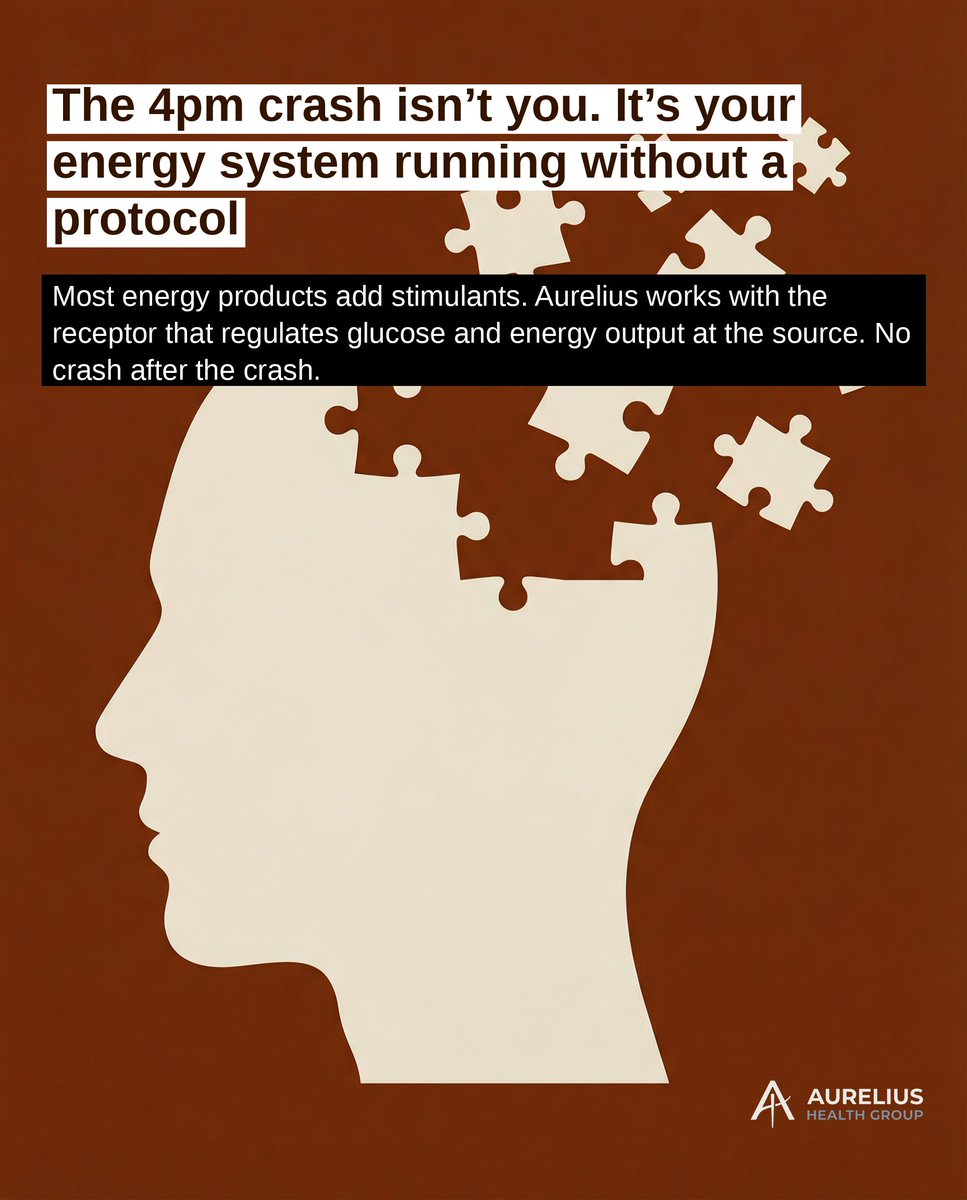
The entire GLP-1 conversation got captured by a single application, weight loss. But GLP-1 receptors aren't just in your gut, they're expressed across four distinct biological systems including metabolic function, insulin signaling, neuroinflammation, and sleep wake regulation. Most people have no idea because the weight loss narrative took up all the oxygen in the room. For the person who trains hard, optimizes deliberately, and has no need to lose 15% of their body weight, the full dose injectable was never designed for their goals in the first place. Oral microdosing activates the same receptor at a fraction of the therapeutic dose, producing a completely different signal with a completely different intent, dramatically fewer side effects, and full clinician supervision throughout. We built four distinct protocols for four distinct outcomes: Energy + Muscle Energy + Mental Acuity Metabolic + A1C Sleep Support The category is so much bigger than weight loss, and the receptor always was too.
Aurelius Health Group tweet media
English
0
0
2
77
Aurelius Health Group
Aurelius Health Group@Aurelius_Health·
GLP-1 side effects disrupting your training? The nausea, the fatigue, the muscle loss...those are dose dependent, not receptor dependent. In semaglutide trials, over 40% of patients reported nausea at therapeutic doses, which is the expected tradeoff when injectable protocols were engineered for maximum suppression. A precision oral microdose activates the same receptor with far less in your system, so you get the metabolic benefits without the side effects that come with clinical doses designed for someone who trains, performs, and needs their body working, not recovering from medication.
Aurelius Health Group tweet media
English
0
0
1
92
Aurelius Health Group
Aurelius Health Group@Aurelius_Health·
Something that gets lost in the injectable vs. oral GLP-1 debate is they weren't designed for the same person. Injectable is a clinical tool. You're dealing with significant weight loss or T2D. The dose is higher, side effects are real, and there's a reason you need monitoring. Oral microdose is for someone whose metabolism drifted, not broken. They noticed things stopped working the way they used to. They don't need a clinical intervention but instead a nudge. People keep asking which one is "better" and it's the wrong question. You wouldn't compare surgery to physical therapy and pick a winner.
Aurelius Health Group tweet media
English
0
0
1
88