40 years after Chornobyl, people still remember the explosion, the radiation, and the firefighters sent straight into hell.
But far fewer know the name Leonid Kindzelskyi.
1/5
In a world where artificial intelligence can replicate a person’s voice or face in seconds, Denmark is stepping forward with a groundbreaking proposal: a copyright law that grants every citizen ownership of their own likeness.
If passed, this law would mean no one — not even AI companies — could legally use your face, voice, or body data without consent. The move comes amid growing global concerns about deepfakes, where digital replicas of real people are used in scams, misinformation, and even political manipulation.
Forty years ago, I wasn’t allowed to go outside at all. I was four, and most of it is a blur—but a few images stuck.
Pigeons flew into our apartment in central Tallinn. I remember being excited, thinking I suddenly had pets. My mom, on the other hand, looked terrified. My grandma wouldn’t let me go near the birds—she shooed them out before I could even touch them.
Then came the strange part: I had to stay inside for a whole week, even though I wasn’t sick. No walks, no playground, nothing. At that age, it made no sense. I just knew something was off. And it scared me.
I ended up being fine. Maybe because my mom and grandma kept me inside.
We only understood what was happening from Finnish TV.
youtu.be/RbK_ib6KLRo?si…
Дно журналістики ше не досягнуто
Читаю: "Реактор, встановлений на Чорнобильський АЕС, був виготовлений в США...".
Це про небезпечний тип реактору, розроблений радянськими фахівцями в брєжневські часи?! Really? І
lb.ua/society/2026/0…
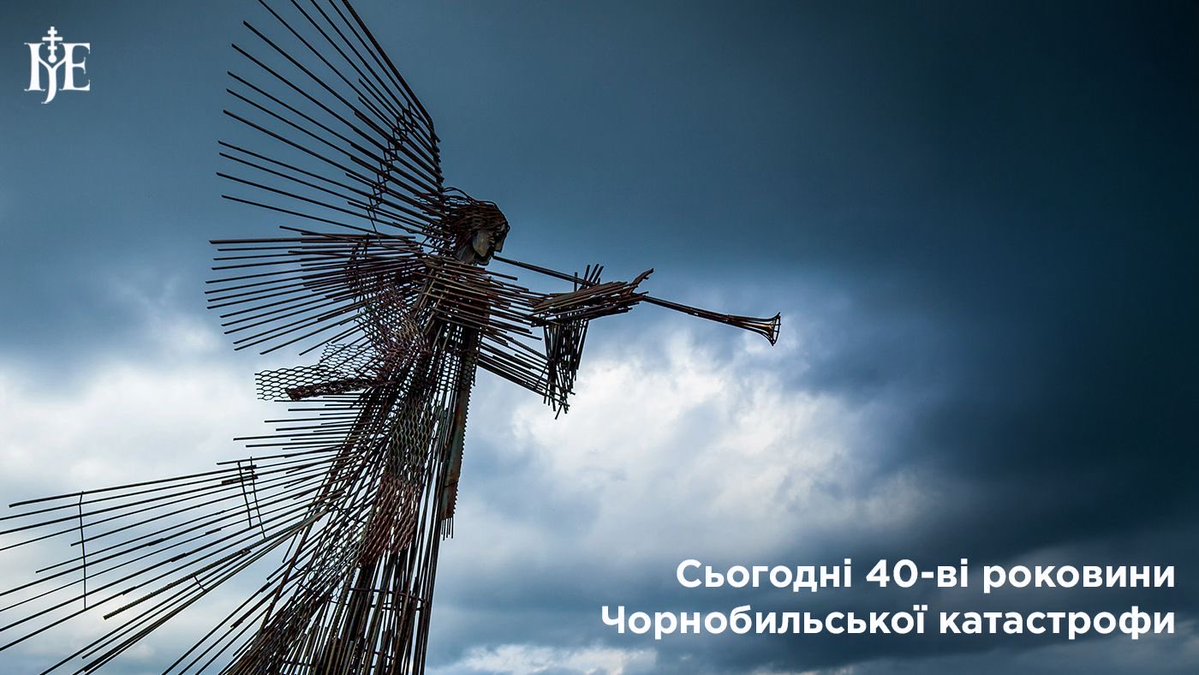
Чотири десятиліття минуло від тієї страшної трагедії – аварії на Чорнобильській АЕС, яка стала найбільшою техногенною катастрофою ХХ століття, яка принесла непоправну шкоду цілим поколінням українців, і, на жаль, значна загроза для здоров’я залишатиметься і для прийдешніх поколінь.
У день пам’яті про Чорнобильську катастрофу ми, найперше, молитовно вшановуємо жертв Чорнобиля – тих, хто загинув від наслідків катастрофи, тих, хто від неї постраждав. Ми молимося за упокій душ тих, хто помер через дію «мирного атому», що вийшов з-під контролю людини. З подякою підносимо молитви за ліквідаторів аварії і тих, хто жертовно працював, щоби захистити світ від поширення радіаційного забруднення.
А також ми підносимо особливі молитви до Бога, щоби Він не допустив подібної трагедії, щоби утримав нашого ворога-агресора від учинення смертоносної техногенної катастрофи вже у ХХІ столітті. Бо російський тиран та його окупаційне військо зовсім не бояться погрожувати непоправною катастрофою всьому світові.
Господи, дай нам сили протистояти злу та агресору, щоби зупинити всі його згубні наміри, щоби врятувати людство від смертельної небезпеки і зуміти захистити найбільший дар Божий – життя.
Добре видно у нинішньому світі згубні наслідки страшної гордині, яка просто випалює в людях все людське, добре, правильне, яка спотворює світобачення і світорозуміння, призводить до агресії, руйнувань, вбивств. Ненаситна гординя спонукає людину вважати себе ледь не богом на землі, виправдовувати власні злодіяння, вивищуватись над іншими, знецінювати чужі життя, утверджуватись в ілюзії вседозволеності та свавілля.
Здається, зараз ця згубна й небезпечна ілюзія досягла свого апогею. Диктатори й тирани, агресори й загарбники шматують і розпинають цей світ, знецінивши найдорожчі дари Божі – свободу та життя. І заради чого? Задля ще більшого збагачення, ще більшої влади над іншими?
У цій ганебній нерозумності слід зупинитися! Припинити знеславлювати, ганьбити, спотворюти себе перед людьми та перед Господом. Бо немає більшого безчестя за те, коли людина завдає скорботи ближньому та підносить себе над ближніми. Згадайте слова Ісуса Христа: «Хто хоче між вами бути більшим, нехай буде вам слугою. І хто хоче між вами бути першим, нехай буде вам рабом» (Мф. 20: 26 – 27).
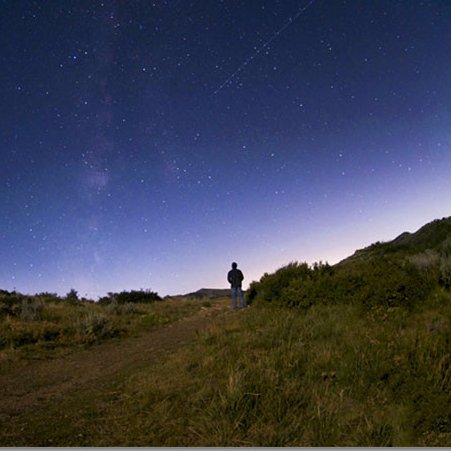
A 2,700-year-old meteor shower returns tomorrow night.
The Lyrid meteor shower — one of the oldest recorded in human history — reaches its peak on the night of April 21 into the early morning hours of April 22.
The first known observation dates back to 687 B.C.E., when Chinese astronomers recorded meteors “falling like rain.”
Each year, Earth plows through a trail of dusty debris left by Comet Thatcher. These tiny particles streak into our atmosphere at tremendous speeds, vaporizing in brilliant flashes of light.
This year’s viewing conditions are excellent. A slim waxing crescent Moon (only about 27% illuminated) will set early, delivering dark skies ideal for watching in the pre-dawn hours.
Under good conditions, expect 10 to 20 meteors per hour. The Lyrids are known for occasional surprise outbursts that can briefly boost the rate even higher.
To catch the show, face northeast after 9 or 10 p.m. local time, where the bright star Vega rises in the constellation Lyra. The radiant climbs higher as the night progresses, giving you better odds after midnight.
For the best view, get away from city lights, give your eyes 15 to 20 minutes to adjust, and lie back so you can take in as much of the sky as possible.
Usted vive en un planeta donde los árboles se avisan del peligro
a través de raíces que se tocan bajo la tierra.
Donde los pulpos sueñan en colores.
Donde los elefantes vuelven a los huesos de sus muertos y se quedan allí en silencio, como recordando.
Donde las abejas bailan para decirse adónde volar.
Donde las flores florecen después del fuego, como si el renacer fuera su manera de hablar.
Donde los cuervos recuerdan los rostros crueles y enseñan a sus hijos a reconocerlos.
Donde las hormigas hacen ciudades con túneles y puentes invisibles al ojo apurado.
Donde los gatos ronronean con una frecuencia que puede ayudar a sanar huesos.
Donde las ballenas cantan canciones que cruzan los océanos y cambian un poco en cada encuentro.
Donde las ardillas adoptan crías huérfanas y las cuidan como propias.
Donde los delfines se llaman entre sí por su nombre, y los caballos reconocen el sonido de una voz amiga.
Donde las mariposas recuerdan rutas de migración que sus antepasados siguieron muchos veranos atrás.
Donde los hongos crean redes infinitas bajo la tierra, ayudando a los bosques a respirar unidos.
Donde los lobos cuidan a sus mayores y cantan juntos a la luna.
Donde las luciérnagas vuelven a encender la noche para que los grillos tengan algo que cantar.
Donde los peces se agrupan para protegerse, moviéndose como si fueran un solo cuerpo.
Donde las tortugas regresan año tras año al mismo lugar donde nacieron.
Donde los árboles viejos guardan en sus anillos la historia del clima, del tiempo y del hombre.
Donde la vida, incluso en silencio, se acuerda del beso de la luz.
Usted vive ahí.
En un mundo que siente,
que cuida,
que recuerda.
Feliz día :)
France has made planned obsolescence a criminal offense, becoming one of the first countries in the world to treat deliberate product shortening as a serious crime.
Manufacturers caught intentionally designing electronics, appliances, or other goods to fail prematurely or become unusable—whether through hardware flaws, software updates that slow performance, or other engineered limitations—now face steep penalties: up to 2 years in prison and fines reaching €300,000, or as high as 5% of their average annual turnover in the most serious cases.
This landmark law, building on France’s earlier consumer-protection framework and reinforced by high-profile scandals (such as the 2017–2018 investigations into smartphone “battery-gate” slowdowns), explicitly targets both physical and digital tactics used to push consumers toward frequent replacements.
The legislation is more than just punishment—it’s a cornerstone of France’s broader “right to repair” agenda. By criminalizing practices that drive premature disposal, the government aims to:
- Slash the massive environmental footprint of electronic waste,
- Protect consumers from hidden “forced upgrades,”
- Encourage manufacturers to prioritize durability, repairability, and longer-lasting support.
France’s tough stance sends a clear message to global tech and appliance companies: the era of disposable-by-design products is ending. By leading the charge on sustainability and consumer rights, the country is helping shift the world toward a more circular economy—one where goods are built to last, repaired when needed, and discarded only when truly necessary.
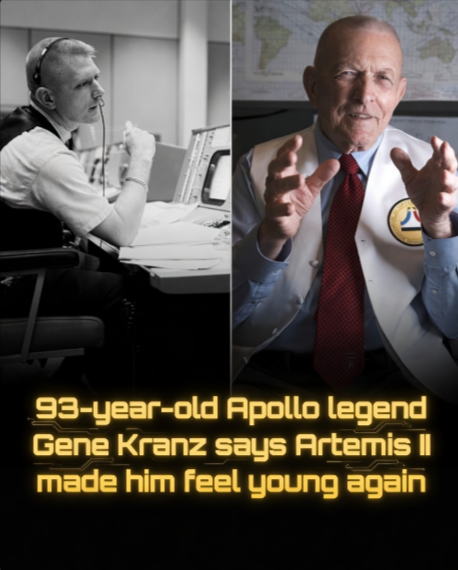
At 93 years old, Gene Kranz — the legendary flight director who helped save Apollo 13 — has just watched astronauts return to the Moon.
The experience, he says, made him feel young again.
Kranz was one of the most pivotal figures of the Apollo program, serving as flight director for seven missions, including the historic Apollo 11 landing and the life-or-death drama of Apollo 13. More than five decades later, he witnessed the Artemis II mission send astronauts on a journey back toward the Moon.
The moment clearly moved him deeply.
Seeing the crisp new images of the lunar surface, Kranz said it “took me back,” reigniting the same excitement he felt as a 34-year-old during the original Moon landings. Now, at 93, watching a new generation of explorers head into space made it feel as though the story was beginning all over again.
What makes his reaction so powerful is the extraordinary span of time it represents.
Kranz was present at the dawn of America’s space age. He guided crews through the most dangerous and intense years of lunar exploration using the primitive technology of the 1960s and 1970s. Now, more than half a century later, he is watching humanity return with vastly superior spacecraft, stunning high-resolution imagery, and renewed ambition.
He noted how impressive today’s visuals are, remarking that if the Apollo teams had access to such technology, they could have supported astronauts on the lunar surface far more effectively. Back then, they achieved miracles with limited tools. Today, the technology is finally catching up to the dream.
Kranz also sees Artemis as proof that America is back on track — that the Moon is once again becoming the gateway to something greater: not just fleeting visits, but the foundation for a sustained human presence beyond Earth.
For a man who helped write the first chapter of lunar exploration, witnessing the next chapter is far more than nostalgia.
It is history coming full circle.
¿Sabían que los parches bordados de misión de la NASA son diseñados por la misma tripulación?
Abajo les cuento de donde nace la tradición, sus usos, reglas, controversias y los parches con el diseño más bello.
🚀🚀🚀
👇👇👇
"Houston, we've had a problem"
Some of the most famous words in NASA's history were spoken on this day in 1970.
Two days into the Apollo 13 mission that was to land in the Moon's Fra Mauro region, a routine stirring of the spacecraft's oxygen tanks led to disaster. The crew reported hearing a loud bang and then noted that oxygen tank 2 was empty and tank 1's pressure was falling.
With the failing Apollo 13 spacecraft over 210,000 miles (330,000 km) from Earth, the race to save the crew from the life-threatening accident began.
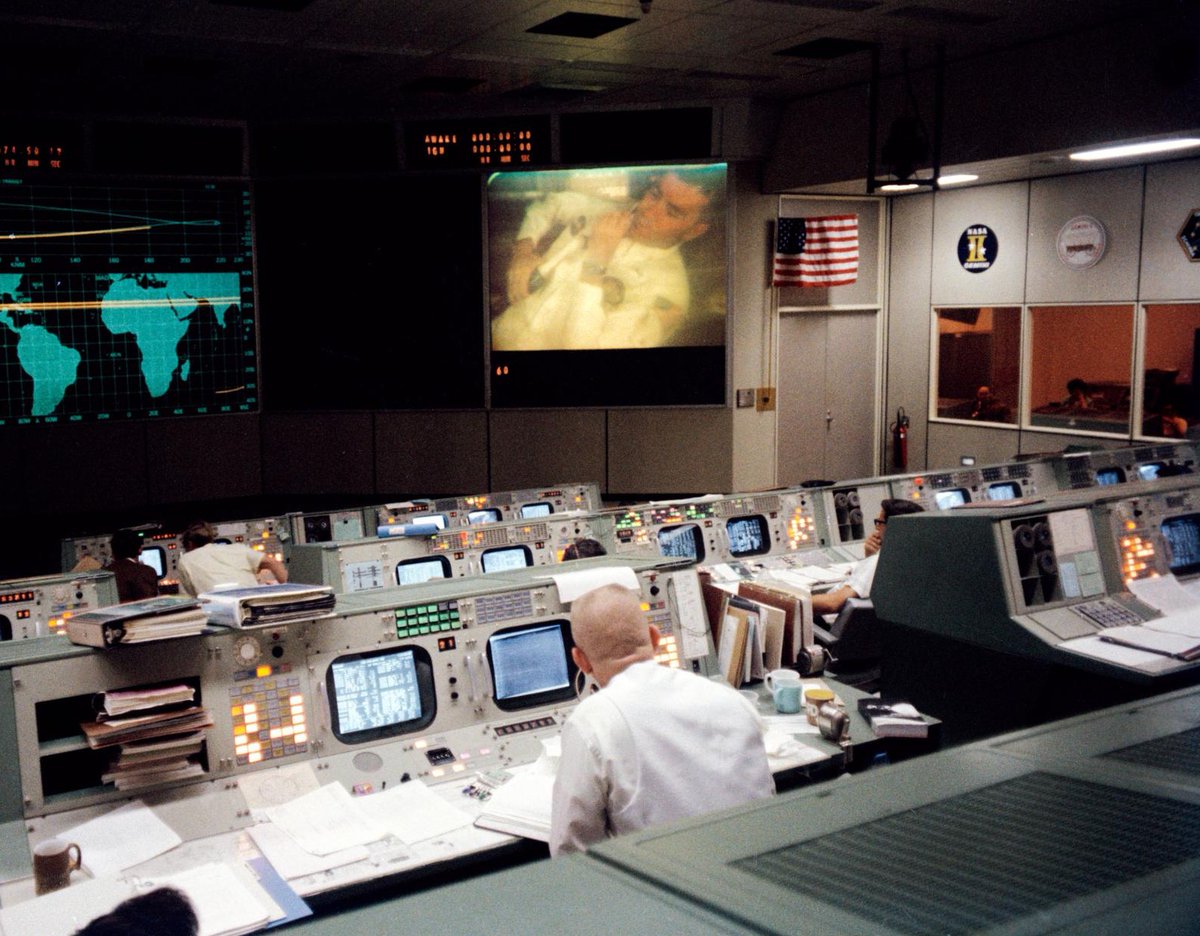
In this photo we see the Mission Operations Control Room at what is now Johnson Space Center, during a television transmission that took place just before the accident. Eugene F. Kranz (wearing a white vest with his back to camera), was on duty as one of the four Apollo 13 flight directors. On the large screen we see astronaut Fred W. Haise Jr., Apollo 13's lunar module pilot.
Honestly, I think it looks ridiculous next to modern buildings. It feels like different eras overlapping: a gray, old facade, stars that were much loved in the Soviet era and modern high rise buildings.
Personally, I would rebuild the cathedral they destroyed or turn the site into a park. Maybe even build a hotel that resembles the cathedral if having a hotel there is that important. This one doesn’t even look space-themed because it isn’t truly futuristic.
In 1934, Russians destroyed St. Nicholas Military Cathedral, where Cossacks once prayed. They leveled the entire area to destroy the memory of Ivan Mazepa, who personally financed it and fought for Ukraine’s independence from Russian influence.
Later, they replaced it with a House of Pioneers and the “Salut” hotel, one of the ugliest Soviet buildings in Kyiv, which still stands today.
📍Kyiv, Ukraine
@victoriaslog Soviet ideology was the main factor in the destruction of shrines. (For example, Oleksandr Dovzhenko supported the destruction of the St. Michael's Monastery!) Wikipedia is an manipulative source for studying history, look for information on specialized resources related to Kyiv.