Sabitlenmiş Tweet
Aust.Trades
781 posts

Aust.Trades
@AustTrades
Funded futures trader, here to learn and grow ---- ..Life is what you make it, so find what you enjoy and put your all into that sh*t
Katılım Eylül 2020
252 Takip Edilen70 Takipçiler
Aust.Trades retweetledi

@chamathGundlach @VolSignals @JoeyGEX JPM is no longer going to have a collar trade in SPX options.
They're going to do it with quarterly /ES futures options instead.
English

@TylerG_Capital TRUE inspiration. What changed for you in that one month compared to the previous years?
English
Aust.Trades retweetledi

Seven clocks are running. None of them negotiable. All of them counting down to the same weeks.
The planting clock. Mid-April is the biological deadline for corn and soybean planting across the US Midwest. Every day that passes without nitrogen becoming affordable and available narrows the window for corn. USDA projects corn falling to 94 million acres from 98.8 million. Soybeans rising to 85 million from 81.2 million. The seeds that go into the ground in the next three weeks determine America’s grain harvest in October. The decision is irreversible.
The USDA clock. March 31. Prospective Plantings. The report that converts farmer intentions into official data. Every acreage number, every corn-soy ratio, every nitrogen-dependent calculation becomes a published fact that traders, governments, and food agencies will use to model global supply for the next twelve months. The number arrives in twelve days.
The FAO clock. April 3. The Food Price Index. The first global reading that captures post-Hormuz commodity prices across cereals, vegetable oils, dairy, meat, and sugar. The 2022 peak was 159.7 in March 2022 after Ukraine. This reading will incorporate oil above $100, urea at $610, LNG halted, packaging repriced, and freight surcharges of $500 to $1,500 per container. The number that determines whether the UN declares a food emergency arrives in fifteen days.
The pharmaceutical clock. India’s API inventory buffers are two to three months, measured from the war’s onset on February 28. Late May is the depletion window. Methanol at 87.7 percent Hormuz exposure feeds the solvent chain for paracetamol, ibuprofen, metformin, and antibiotics. Once buffers deplete, the shortage becomes a patient access crisis for the 47 percent of US generics that originate in India.
The China crude clock. FGE NexantECA confirmed China is drawing commercial reserves at up to one million barrels per day. The draw sustains refinery operations for four to six weeks from March 19. Mid-April to late April is the exhaustion window. After that, China faces three options: accelerate Russian pipeline imports, reroute at massive premium, or crack open the strategic petroleum reserve. The third option reprices every commodity on the planet.
The helium clock. SK Hynix and Samsung hold two to three months of helium inventory. Late May to early June is the depletion window. South Korea imports 64.7 percent of its helium from Qatar. Ras Laffan is offline. If helium buffers deplete before alternative supply arrives, semiconductor fabrication faces rationing. The AI hardware supply chain hits a physical wall measured in months, not quarters.
The insurance clock. Solvency II requires 30 to 60 days of zero incidents before P&I clubs can reinstate war risk coverage. Even after a ceasefire, the insurance normalisation takes six to sixteen months based on the Red Sea precedent of 26 months and counting. The logistics system lags the financial relief rally by the longest duration of any clock in this crisis.
Seven clocks. The shortest expires in twelve days. The longest runs for over a year. The planting window, the USDA report, the FAO index, the drug buffers, the Chinese crude draw, the helium inventory, and the insurance cycle are all counting down simultaneously. None of them pause for diplomacy. None of them respond to presidential directives. None of them read sealed packets.
The calendar is the only actor in this war that has never lost a negotiation.
open.substack.com/pub/shanakaans…

English
Aust.Trades retweetledi

Aust.Trades retweetledi

If your system says go short, go short.
If your system says go long, go long.
"it seems too obvious"
"it wouldnt happen again"
"that would be too easy"
are NOT valid reasons to take/not take a trade. Stick to data driven decisions. only.
50ptMAE@50ptMAE
I had an extremely strong bearish thesis for fading 6950/7000. Backed by a shitload of data showing euphoric bullish positioning. The best bullish thesis I heard was "Index broke down out of same consolidation pattern last year so it couldnt happen two years in a row right?"
English
Aust.Trades retweetledi

US OIL STOCKS REACT TO VENEZUELA:
1. Chevron, $CVX: +11%
2. Valero, $VLO: +11%
3. ConocoPhillips, $COP: +10%
4. Marathon, $MPC: +10%
5. Exxon Mobil, $XOM: +7%
6. Phillips 66, $PSX: +6%
7. Occidental Petroleum, $OXY: +4%
8. EOG Resources, $EOG: +4%
9. Devon Energy, $DVN: +4%
10. Kinder Morgan, $KMI: +3%
These stocks have now added +$100 BILLION in market cap on the news President Maduro being captured by the US.
US big oil has won again.
English
Aust.Trades retweetledi

Venezuela Regime Change & Energy Rebuild Plays
Chevron (CVX) — Only U.S. major still operating in Venezuela with OFAC licenses; positioned to ramp production immediately if sanctions ease.
Valero Energy (VLO) — Gulf Coast refineries optimized for heavy sour crude would benefit from cheaper Venezuelan feedstock and widening margins.
Phillips 66 (PSX) — Similar heavy-crude exposure; lower input costs translate directly into refining profitability.
Halliburton (HAL) — Field rehabilitation, drilling, and maintenance contracts would follow any production restart.
Schlumberger (SLB) — Technical expertise in complex heavy crude reservoirs positions SLB for higher service intensity if output increases.
See more: unusualwhales.com/stock/xom/over…

English
Aust.Trades retweetledi

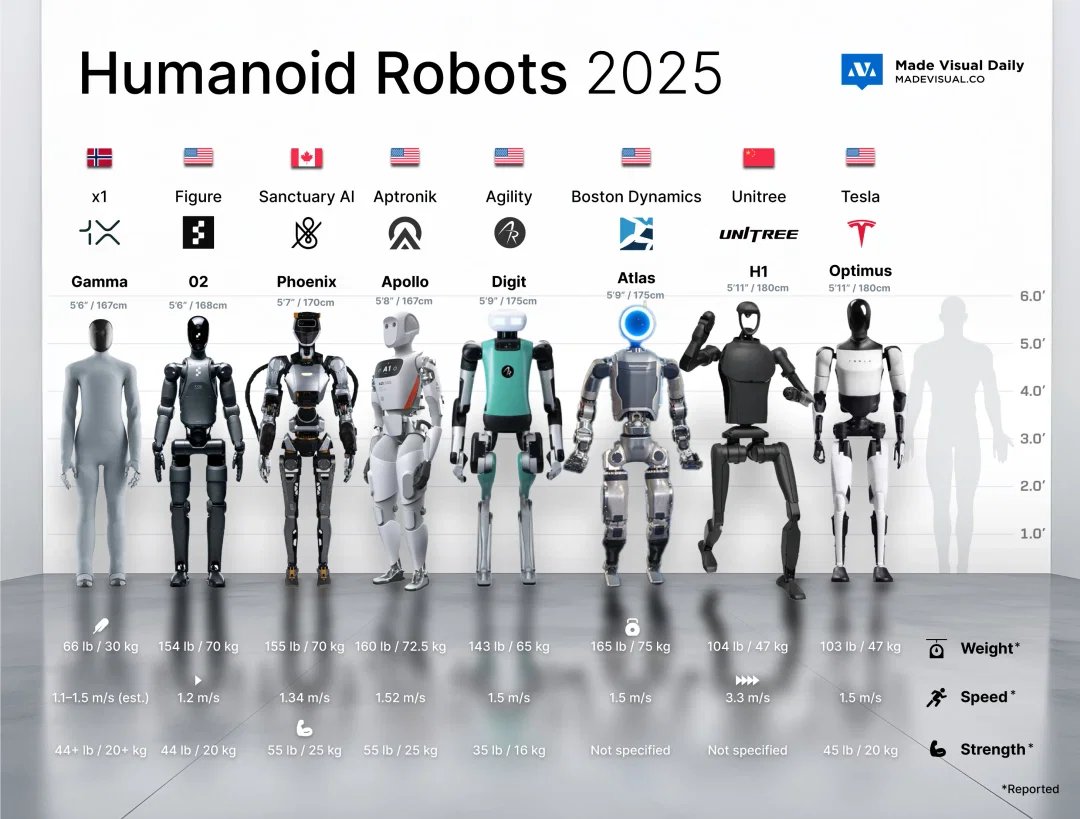
The US will likely be investing heavily into robotics in 2026.
There's many angles you can play this:
DEFENSE
- AeroVironment | $AVAV: Defense focused & unmanned drones.
- Kratos Defense | $KTOS: Defense focused & unmanned drones for US military.
WAREHOUSE
- Symbotic | $SYM: Fully automating huge retail warehouses.
- Amazon | $AMZN: Nearly 1 million robots already automating warehouses and last mile delivery.
MEDICAL
- Omnicell | $OMCL: Builds automated dispensing cabinets and robotics inventory systems to manage medical supplies.
- Procept Robotics | $PRCT: Produces AquaBeam Robotics System which uses high velocity water to precisely remove prostate tissue.
- Intuitive Surgical | $ISRG: Makes the Da Vinci surgical system for soft tissue robotics surgery.
SOFTWARE
- Nvidia | $NVDA: Provides the "brain" and simulation platform.
- Palladyne | $PDYN: Develops AI software that allows industrial robots to learn complex tasks.
INDUSTRIAL
- Teradyne | $TER: Owns Universal Robots and Mobile Industrial Robots. The "arms" and the "legs" of CoBots.
- Tesla | $TSLA: A continued bet on Elon and Optimus.
VISION
- Cognex | $CGNX: Building advanced machine vision sensors that guide autonomous robots.
AUTOMATION
- Pegasystems | $PEGA: Provides low-code platform that lets large enterprises build complex app workflows
OFFSHORE ENERGY
- Oceaneering International | $OII: Operates a fleet of deep-water robots to build, fix, and maintain infrastructure for defense and energy.
English
Aust.Trades retweetledi

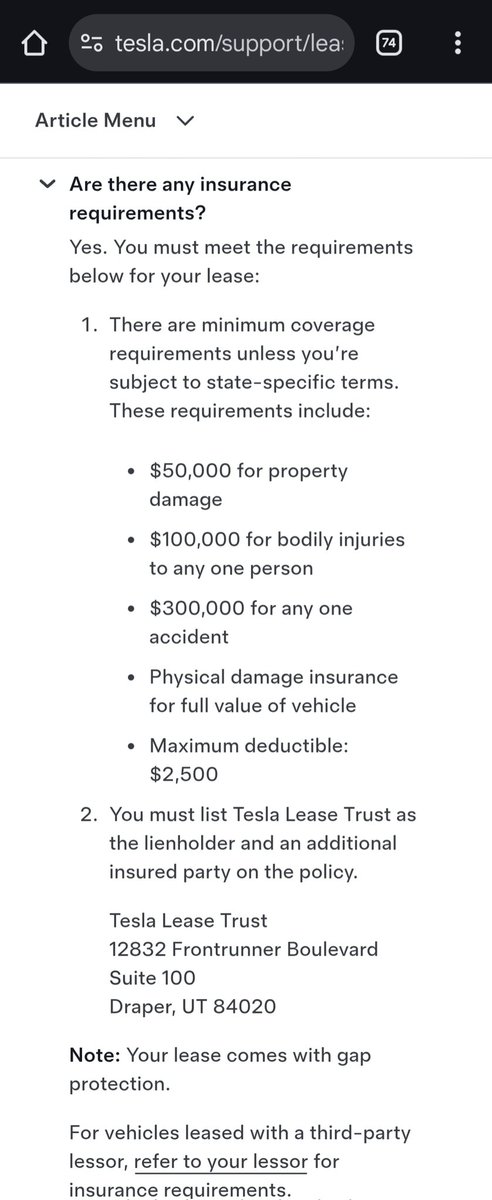
@redbottravels @p_llc41223 @TeslaKing420 Also, Tesla lease has an 100/300 insurance requirement. Most states' minimum coverage does not meet Tesla's minimum lease requirements.

English

@p_llc41223 @TeslaKing420 But! You can’t use ride share or DoorDash with Tesla insurance as it stands today. Need to go to another provider for that
English

You say you can’t afford a Tesla, but that’s just not true. You can lease a Model 3 RWD for $299 a month with $1,500 down. Add the FSD subscription and your monthly payment is still only $398. Now sign up for DoorDash, Uber, Spark or any gig job. Let the car drive you while you make a few deliveries just 3 or 4 days a month. Boom! you’ve just covered your Tesla payment.

English
Aust.Trades retweetledi

VWAP is the average price weighted by where real money actually bought the stock after a catalytic move & it’s my favorite metric to track during market pullbacks.
Here are the anchored VWAPs at the April tariff-war bottoms:
AI Hardware
• $NVDA -- $156
• $TSM -- $230
• $AMD -- $167
AI Utility
• $IREN -- $35
• $NBIS -- $76
• $CIFR -- $11
AI Power
• $EOSE -- $10
• $VST -- $134
• $CEG -- $309
AI Connectivity
• $AVGO -- $281
• $ALAB -- $145
• $MRVL -- $72
AI Security
• $MSFT -- $481
• $CRWD -- $456
• $NET -- $183
AI Applications
• $PLTR -- $144
• $SNOW -- $212
• $MDB -- $245
Nuclear Energy
• $OKLO -- $82
• $CCJ -- $73
• $LEU -- $227
Space Economy
• $RKLB -- $42
• $ASTS -- $49
• $PL -- $9
Robotics
• $TSLA -- $345
• $AMZN -- $216
• $ISRG -- $497
English
Aust.Trades retweetledi

$NVDA highlighted that physical AI is shaping up to be a multi-trillion-dollar opportunity.
Here’s the Top 10 Robotics Index I would build:
1. $SERV AI sidewalk delivery layer
2. $ISRG surgical robotics standard
3. $TSLA real-world robotics engine
4. $RR hospitality automation stack
5. $SYM robotic supply-chain operator
6. $NVDA simulation-to-robotics platform
7. $KTOS autonomous tactical drone stack
8. $AMZN warehouse automation backbone
9. $PLTR real-world autonomy operating layer
10. Anduril AI command-and-control system for autonomous warfighting
Robotics is shaping up to be the biggest AI trade of all.

English