Avi Mayer אבי מאיר

77.1K posts

Avi Mayer אבי מאיר banner
Avi Mayer אבי מאיר

Avi Mayer אבי מאיר

@AviMayer

Founder, https://t.co/904G6eDonQ / Former Editor-in-Chief, The Jerusalem Post / 🇺🇸🇮🇱 / Pretty Jewish. No big whoop. / [email protected]

Jerusalem, Israel 🇮🇱 Katılım Eylül 2008
9K Takip Edilen342K Takipçiler
Avi Mayer אבי מאיר
It is important to reflect on this moment in American politics. An individual with a Nazi tattoo on his chest, who has expressed admiration for Hamas, promoted antisemites and white supremacists, and told an antisemitic conspiracy theorist he is a “longtime fan”—alongside a series of homophobic, misogynistic, and ableist statements and slurs, as well as comments justifying sexual assault and blaming the victims thereof—is the Democratic nominee for the United States Senate in the great state of Maine. How scary. And how sad.
English
305
798
2.7K
221.1K
Avi Mayer אבי מאיר
For the uninitiated, the Israeli Navy has intercepted a bunch of boats making their way to Gaza. When Israeli personnel boarded the boats, they found troves of condoms and drugs, and this is how the activists are behaving on their way to Israel. Narcissistic clowns.
Israel Foreign Ministry@IsraelMFA

Approximately 175 activists from more than 20 boats of the condom flotilla are now making their way peacefully to Israel. In the video: the activists enjoying themselves aboard Israeli vessels

English
10
14
73
5.5K
Avi Mayer אבי מאיר
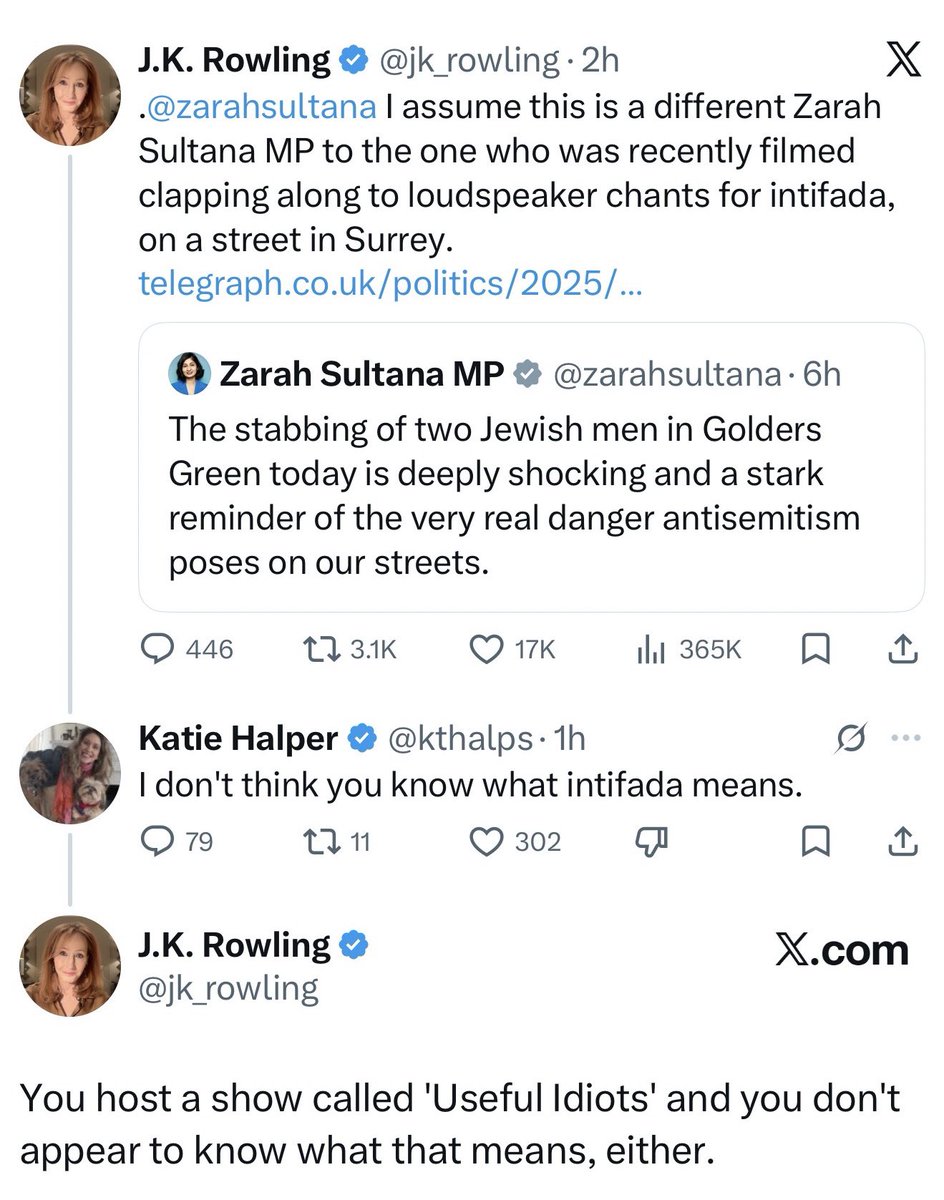
BREAKING: Two British Jews reportedly wounded in stabbing attack in heavily Jewish London neighborhood of Golders Green.
English
13
13
72
14K
Avi Mayer אבי מאיר
Avi Mayer אבי מאיר@AviMayer·
🔴 BREAKING: Former Israeli prime ministers Naftali Bennett and Yair Lapid announce joint run in unified political party ahead of upcoming election.
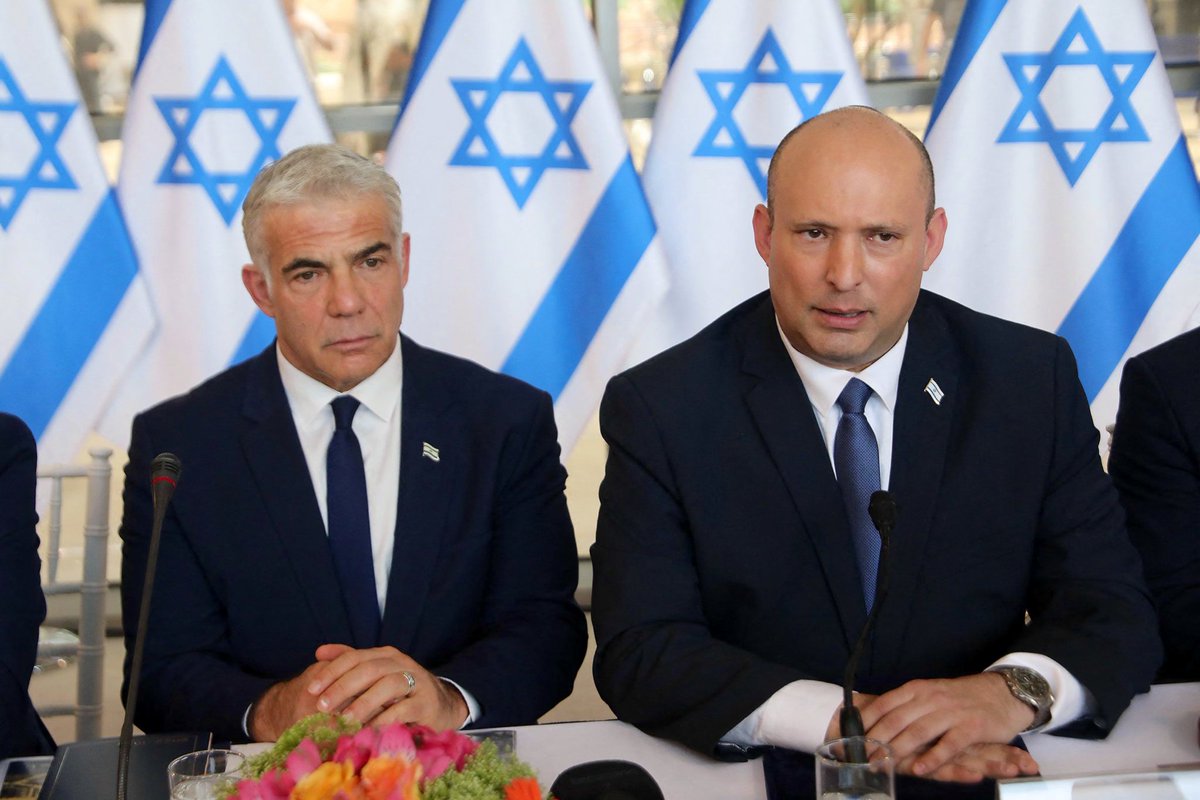
Avi Mayer אבי מאיר tweet media
English
31
21
163
30K
Avi Mayer אבי מאיר
Avi Mayer אבי מאיר@AviMayer·
Congratulations to @GeorgeDeek—an outstanding representative of Israel and the country’s first Christian ambassador—on this critically important and timely appointment. There is no one better for the job.
Israel Foreign Ministry@IsraelMFA

Minister of Foreign Affairs @gidonsaar Appointed @GeorgeDeek as Special Envoy to the Christian World Minister of Foreign Affairs Gideon Sa’ar has appointed George Deek as Special Envoy to the Christian World. The appointment is intended to deepen Israel’s ties with Christian communities around the world. Deek, a veteran diplomat with 18 years of experience, most recently served as Israel’s Ambassador to Azerbaijan and was the first Christian ambassador in Israel’s history. He is a recipient of the Ministry of Foreign Affairs Director General’s Award for Excellence. He is a member of the Arab Christian community in Jaffa and has been active in the community from a young age. His father, Youssef Deek, served for many years as Chairman of the Orthodox Christian community in Jaffa and in Israel. Minister Sa’ar: “The State of Israel attaches great importance to its relations with the Christian world and with its Christian friends around the world. I am confident that George, a respected and experienced diplomat, will greatly contribute to the friendship and strengthening of the ties between the State of Israel and the Christian world.”

English
5
4
30
4K
Avi Mayer אבי מאיר
Avi Mayer אבי מאיר@AviMayer·
"It has been approved for publication.” They are the most dreaded words in the modern Hebrew language, familiar to every Israeli. They cause listeners to pause and hold their breath as they await what they know is coming. They are the words with which television anchors, radio broadcasters, and news websites announce that another soldier has been killed in action. Each year, just before Yom HaZikaron — Israel’s Memorial Day, which takes place today — the Defense Ministry and the National Insurance Institute release a macabre tally of soldiers killed in the line of duty and civilians killed in terror attacks over the past year, since the previous Yom HaZikaron. According to this year’s announcement, 170 soldiers and 79 civilians have been killed over the past year and 54 former service members died of wounds sustained during their military service. In total, 25,644 individuals have been killed fighting for Israel’s establishment and in its defense since 1860. The circle of bereavement consists of 59,583 family members of the fallen, including 31,814 siblings, 14,430 orphaned children, 8,420 parents, 4,872 widows and widowers, 35 legal guardians, and 12 fiancées. 4,587 individuals, including 810 children and teenagers, have been killed in acts of terror since Israel’s establishment in 1948; nearly a quarter of them — 1,017 — were killed on or since October 7, 2023. Today there are 99,156 victims of terror living in Israel and 14,815 bereaved family members, including 4,932 orphaned children. The numbers are too enormous, too overwhelming, and too horrific to comprehend. They are also incomplete. Since the announcement was issued on Thursday, two more soldiers have lost their lives, both in southern Lebanon. Warrant Officer Barak Kalfon, 48, was killed when a boobytrapped building exploded in the town of Tibnin. He left behind a wife and two teenage daughters. His mother said he insisted on continuing to perform reserve duty as a paratrooper despite his age. “Mom, you have to understand — there aren’t enough soldiers,” he told her. “I have to keep serving. There’s no choice.” Sergeant First Class Lidor Porat, 31, was killed on Saturday when a military vehicle was blown up by a Hezbollah IED. He left behind a father and two siblings, including a twin sister; his mother passed away several years ago. “Lidor was the best friend you could ask for,” a friend recalled. “He was always smiling; all he wanted to do was live, to learn and laugh.” Walking through the streets of Israel, it is impossible to miss the human cost of maintaining our existence in this land. Bus stops, lampposts, street signs, and train stations are plastered with bumper stickers bearing the smiling young faces of fallen soldiers and quotes by or reminiscent of them. From time to time, I will see the face of a soldier I knew personally and send a photo to his parents. Israel is a tiny country, smaller than some metropolitan areas in the United States; there are few, if any, Israelis who have not experienced the death of a loved one, a friend, a classmate, a neighbor, or some other acquaintance in war or an act of terror. The sense of loss, the painful awareness of young lives cut short in their prime, is both pervasive and deeply personal. Yom HaZikaron is a day to remember those who gave their lives so we could live. As others have put it, if Yom HaShoah — Holocaust Remembrance Day, which we marked last week — commemorates the price of not having a Jewish state, Yom HaZikaron memorializes the price of having one. As the sun hangs low in the sky, the hundreds of thousands of Israelis who spent the day visiting the gravesites of loved ones in military cemeteries across the country are making their way home to prepare for Yom HaAtzma’ut, Israel’s 78th Independence Day, which begins at nightfall. The transition from solemn remembrance to exuberant celebration is sharp and disorienting, but the message is unmistakable: it is the sacrifice of Israel’s fallen soldiers that brought the country into being and enables its continued existence. And it is in this twilight moment, in these quiet hours of suspended existence, that we have to ask how we can ensure that this country continues to be worthy of that sacrifice. Israel’s Declaration of Independence, adopted in Tel Aviv on a Friday afternoon 78 years ago tomorrow, sets out a vision of a state that is at once proudly Jewish and robustly democratic, that ensures fundamental rights for all its citizens and pursues peace with its neighbors, that joins hands with Jewish communities around the world and takes its place among the family of nations, a state “based on freedom, justice, and peace, as envisaged by the prophets of Israel.” We must ask, today and every day, whether we are living up to that vision. The Israel of today is a marvel that, in many ways, surpasses what its founders may ever have imagined. Its population has grown more than tenfold since 1948, fueled by aliyah (immigration) from more than 150 countries and by the highest birthrate in the developed world. It is a regional superpower, with one of the most capable militaries on earth, its planes flying deep into hostile territory to eliminate distant threats. It is an economic powerhouse, its tech sector celebrated by the world’s leading corporations, its stock exchange hitting record highs even in the midst of war. It is a vibrant, diverse society whose citizens are consistently ranked among the happiest in the world. But the Israel of today is also a country beset by profound internal challenges. Deep divisions in Israeli society are being widened and exploited by those who should be working to heal them. Basic norms are breaking down, corruption and unaccountability are becoming normalized, and the democratic foundations of the state are under sustained pressure. Public discourse has grown more hateful. Inequality persists between those with access to power and those without. There is a strain of racist, violent extremism that is being tolerated, and at times encouraged, by senior figures in government. It increasingly feels as though the country is made up of parallel societies that are resentful of one another, have little common ground, and are growing further apart. These societal ills are serious and corrosive, but they can be healed. A country that rose from the ashes to become an example to the world, that defied the odds to secure its sovereign existence, and that continues to produce young men and women willing to lay down their lives in its defense is equal to the task of national repair. But it is a choice we must make. We are in a period of national reckoning, a time in which we must decide what kind of country we wish to be. In the months ahead, there will be many who will seek to further inflame internal tensions, who will conjure up dark visions of a country defined by hatred and fear, and who will prey on our basest instincts for political gain. We must not permit them to succeed. Instead, we should lend our voices and our votes to those who will do the difficult but necessary work of mending divides, strengthening governance and civility, promoting dignity and equality, and making this country more Jewish and more democratic. It is perhaps notable that this week’s Torah portion is Acharei Mot, which translates as “After the Death,” referring to the killing of Aaron’s sons, Nadav and Avihu, by a divine flame. When Aaron, the High Priest, is informed of his sons’ death, he responds stoically — “And Aaron was silent” (Leviticus 10:3) — offering an example that we echo today in the moments of silence observed on Yom HaShoah and Yom HaZikaron. But the portion does not dwell on grief. It turns, instead, to what comes next: a detailed description of the Yom Kippur service, for which Aaron must purify himself and don special garments. The order of events may seem confusing at first, but a closer look reveals a sequence of poignant elegance. On Yom Kippur, the fate of the entire nation hangs in the balance. Aaron, who has just experienced profound personal loss, is called to approach the task of atoning for the people’s sins with precision and care. Perhaps only someone who knows from immediate personal experience how high the stakes are, and what can be lost, can truly comprehend the gravity of serving a people and shaping its future. There is nothing more sacred than life itself. We owe it to the families who entrust their sons and daughters to the state — and whose children endanger and, at times, give their lives for that state — to ensure that it is truly worthy of that most precious gift. Tonight, as we pop champagne corks and toast the 78th anniversary of our national independence, let us resolve to build a country that embodies our highest values, in which all segments of society feel equally at home, of which all Israelis and Jews around the world can be proud, and which honors those who made the ultimate sacrifice in its defense. A Country Worthy of Their Sacrifice Jerusalem Journal April 21, 2026 jerusalemjournal.com/p/a-country-wo…
Avi Mayer אבי מאיר tweet media
English
4
24
161
15.3K
Avi Mayer אבי מאיר
Avi Mayer אבי מאיר@AviMayer·
Thank goodness we have Rabbi Mehdi to tell us that Israel—which appears approximately 2,000 times in the Torah, is referenced in every Jewish prayer, and is the basis of the Jewish calendar—has nothing to do with Judaism. Thank you for Mehdisplaining Judaism to us.
Mehdi Hasan@mehdirhasan

I think we should have more Jewish actors on TV playing Jewish characters open about their awesome Jewish faith. I love the Shema and have had it memorized since I was a child. Not sure why Israel has to play a role in any of this. Let’s not conflate Israel with Judaism please.


English
29
108
891
50.1K
Avi Mayer אבי מאיר
Avi Mayer אבי מאיר@AviMayer·
As Israel transitions from Memorial Day to Independence Day, we must ask how we can build a country that honors those who gave their lives in its defense. My latest, on this sacred moment on the Israeli calendar and in the life of the country. jerusalemjournal.com/p/a-country-wo…
Avi Mayer אבי מאיר tweet media
English
1
1
12
1.7K
Avi Mayer אבי מאיר
Avi Mayer אבי מאיר@AviMayer·
I argue that you should look at the entire body of evidence that proves that distilling the rationale for the war to "Israel made us do it" reflects either willful ignorance or malice. There is simply no way that anyone familiar with the events that led up to the war could possibly conclude that America only did it for Israel.
English
1
1
1
65
Jes B
Jes B@JesBlantern·
@AviMayer I read your piece and I enjoy reading your stories. You’re a great writer. But presenting an argument, and disqualifying the biggest objections that play a central role to the issue at hand, isn’t something I agree with. You argue we should only listen to Trump not his disciples
English
1
0
1
52
Avi Mayer אבי מאיר
Avi Mayer אבי מאיר@AviMayer·
Several days ago, I gave a guest lecture to my college Hillel director’s class on Jewish leadership via Zoom, as I do almost every semester. After sharing a few experiences and observations from the past few years in the life of Israel and the Jewish people, I opened the floor to questions from the students. As always, they were thoughtful and wide-ranging, touching on everything from the relationship between anti-Zionism and antisemitism to the media’s treatment of Israel to how one might go about developing a career in communications. Toward the end of the class, one of the students raised a virtual hand and posed an interesting and timely question. Do I believe, he asked, that blaming Israel for the war in Iran is antisemitic? He noted that Israeli leaders have been advocating for military action against the Iranian regime for years; that the charge is a critique of Israeli actions and policies, rather than of the country’s very existence; and that it doesn’t seem to fit into any of Natan Sharansky’s three ‘D’s — delegitimization, demonization, or double standards — distinguishing legitimate criticism of Israel from antisemitic discourse. Why, then, do some observers believe that accusing Israel of being behind the war is antisemitic? It was a smart question, and while I offered an answer at the time, it strikes me as being worthy of a lengthier response. Let us state the obvious: Yes, Israeli leaders have long identified the Iranian regime and its nuclear program as a threat to Israel’s existence and have openly discussed the possibility of military action to remove that threat. In June 1995, just five months before he was assassinated, Prime Minister Yitzhak Rabin told The Washington Post that Iran posed a major threat to Israel and raised alarm about its nuclear program. Every Israeli leader since has echoed that concern, but none as doggedly as Benjamin Netanyahu, who has made countering the Iranian threat the centerpiece of his policy agenda for decades. As The New York Times recently reported, in the leadup to the current war, Prime Minister Netanyahu pitched President Donald Trump on a military campaign against the regime for several months, arguing that delaying it would allow Iran to create a “shield of immunity” of missiles behind which it could finally build a nuclear bomb. Early in the war, Secretary of State Marco Rubio and Speaker of the House Mike Johnson both suggested that U.S. military action was necessitated by Israel’s determination to carry out its own campaign against the regime, which would have resulted in Iranian attacks against U.S. assets and allies in the region (Rubio immediately added that the war would have been necessary “no matter what”). Iranian leaders have consistently called for Israel’s destruction and have created a network of terrorist proxies dedicated, in both word and deed, to achieving that goal. A weakened regime — or a new Iranian government altogether — would certainly be in Israel’s national interest. All this is true. But it doesn’t explain why the United States chose to go to war. The reality is that President Trump’s decision to launch the military campaign in Iran was driven by far more than any single ally’s wishes, and claiming otherwise betrays, at best, a lack of familiarity with either the facts or how consequential decisions are made by American presidents. Put simply, no president — especially this president — would enter a war that may well define his presidency to satisfy another country’s interests. And while Israeli input may have contributed to President Trump’s decision, so did a host of other factors, including pressure from multiple allies in the region, the advice of senior administration officials and advisors, assessments by the Defense Department and intelligence agencies, the publicly stated positions of successive U.S. presidents and administrations over the past three decades, and Trump’s own longstanding and widely publicized convictions. To focus on Israel’s role while ignoring all other factors and considerations is to ascribe to the Jewish state outsized, almost mystical influence over American policy — a modern echo of dark tropes from bygone eras. In truth, Israel was far from alone among Middle Eastern countries urging U.S. military action against the Iranian regime. According to The Washington Post, in the month leading up to the war, Saudi Crown Prince Mohammed bin Salman pressed for a U.S. military campaign against Iran, making multiple phone calls to Trump and dispatching his brother, Defense Minister Khalid bin Salman, to Washington to make the case in person. Despite publicly advocating a diplomatic solution — and even going so far as to declare that U.S. aircraft couldn’t use Saudi territory or airspace to attack Iran, in a clear but ultimately failed attempt to prevent Iranian retaliation — the crown prince was adamant in his appeals to Trump and other senior administration officials. “The Saudi leader warned that Iran would come away stronger and more dangerous if the United States did not strike now,” the Post reported. Saudi Arabia was the destination of Trump’s first foreign trip of his current term, during which Mohammed promised to invest nearly $1 trillion in the United States. Other Gulf states are also believed to have privately pushed for military action against Iran, which they have long viewed as a threat. Notably, multiple countries in the region — including some that had expressed reservations about a potential military campaign and were nevertheless targeted by Iranian missiles and drones — are now urging the U.S. not to stop until the Iranian regime is no longer able to threaten its neighbors and not to make do with an agreement that preserves their ability to do so. Numerous administration officials have also long advocated for military action against Iran. During the 2012 talks that ultimately led to the Obama-era Joint Comprehensive Plan of Action — the JCPOA, colloquially known as the Iran nuclear deal — then-Senator Marco Rubio cautioned that diplomacy would fail to prevent a nuclear-armed Iran. “At that point there’s only one country in the world that can do anything about it, and that's us,” he told the Council on Foreign Relations at the time. “I think I am in line with what the [Obama] administration has said, which is ultimately [a] military option may be necessary if everything else fails,” he added. According to New York Times reporting, Secretary of State Rubio told Trump in the lead-up to the war that a military campaign could effectively destroy Iran’s missile program. In 2017, Pete Hegseth — then a Fox News host — called Iran “America’s mortal enemy”; a year later he said the Islamic Republic was developing “a nuclear capacity which threaten[ed] the very existential existence of America.” The Times reported that Hegseth was “the biggest proponent of a military campaign against Iran” in the Trump cabinet and that he said the U.S. “would have to take care of the Iranians eventually, so they might as well do it now.” As the Republican nominee for vice president in 2024, JD Vance identified the Iranian regime as a threat to the United States and said, “If you are going to punch the Iranians, punch them hard,” praising President Trump for authorizing the killing of Iranian Quds Force commander Qassem Soleimani. In the lead-up to the current conflict, Vance repeatedly said that the U.S. would not permit Iran to develop nuclear weapons and that there was evidence that Iran was trying to rebuild its nuclear program; he had previously said that President Trump has “clear authority to act” to prevent Iran from developing nuclear weapons. Other prominent figures considered close to the White House — including senators Tom Cotton, Ted Cruz, and Lindsey Graham — have also pushed for military action against the Iranian regime. The Defense Department and the array of U.S. intelligence agencies have considered the Iranian regime a threat to the United States for decades. In the 1980s and 1990s, U.S. defense officials identified Iran as a state sponsor of terrorism targeting American interests and cautioned that the country was acquiring the means to develop nuclear weapons. In 2007, Director of National Intelligence (DNI) John Negroponte testified that Iran’s military power “challenges U.S. interests” and identified the Islamic Republic, along with North Korea, as “the states of most concern to us” due to their pursuit of nuclear weapons. Intelligence assessments in 2010 and 2013 acknowledged that Iran already had the capacity to develop a nuclear weapon and that it possessed the largest missile arsenal in the Middle East. Also in 2013, Defense Secretary Chuck Hagel said his department was developing “all military options” to prevent Iran from becoming a nuclear power; a year later, in 2014, the Pentagon said that preventing Iran from acquiring a nuclear weapon is “a top administration priority.” In 2017, DNI Daniel Coates termed the Iranian regime “an enduring threat to U.S. national interests”; in 2025, the Annual Threat Assessment grouped Iran with major U.S. adversaries China and Russia, asserting that cooperation between them “reinforc[es] threats from each of them individually while also posing new challenges to U.S. strength and power globally.” In the months leading up to the current war, defense and intelligence officials warned that the Islamic Republic continued to pose a threat to the United States despite blows sustained during the June 2025 Twelve-Day War. Admiral Brad Cooper — who today commands U.S. Central Command — told Congress after the June war that Iran still poses a “considerable” threat. The 2026 National Defense Strategy, released just weeks before the current conflict, warned that Iran “appears intent on reconstituting its conventional military forces” and cautioned that it may try to rebuild its nuclear weapons program. Taken together, these assessments reflect a longstanding consensus within America’s defense and intelligence communities that Iran poses a direct threat not only to regional stability, but to U.S. interests and national security. Indeed, every Democratic and Republican president in recent decades has expressed a willingness to use military force to counter Iran and prevent it from acquiring nuclear weapons. President George W. Bush repeatedly said that “all options are on the table” and refused to rule out a nuclear strike to prevent a nuclear-armed Iran. In defending the 2015 Iran nuclear deal, President Barack Obama explicitly left open the option of military action if the agreement failed to prevent Iran from pursuing nuclear weapons. “There are times when force is necessary, and if Iran does not abide by this deal, it’s possible that we don’t have an alternative,” Obama said at the time. As Obama’s vice president, Joe Biden echoed the president’s position. “President Obama is not bluffing,” he said in 2013. “All options, including military force, are on the table.” Later, as president, Biden said he would use force if necessary to prevent the Iranian regime from acquiring a nuclear weapon. “We will not allow Iran to acquire a nuclear weapon,” he said in 2022. “The only thing worse than the Iran that exists now is an Iran with nuclear weapons.” Finally, of course, President Trump’s own statements about the Iranian regime and the need to use military force against it leave little doubt as to his longstanding position, which predates this war by more than four decades. In 1980, Trump called the regime’s seizure of the U.S. embassy in Tehran and its abduction of 52 Americans “a horror” and said he would “absolutely” send U.S. troops to rescue them. Several years later, he expanded on his approach. “I’d be harsh on Iran,” he told a British journalist in 1988. “One bullet shot at one of our men or ships and I’d do a number on Kharg Island. I’d go in and take it. Iran can’t even beat Iraq, yet they push the United States around. It’d be good for the world to take them on.” Years later, as the threat of a nuclear-armed Iran became more acute, he said the regime must never be permitted to acquire a nuclear weapon, an approach he has maintained consistently ever since. In fact, in the lead-up to the U.S. strike on Iran’s nuclear facilities last year, the White House compiled a list of more than fifty times Trump reiterated — as a candidate and as president — that Iran can never become a nuclear power. “Iran’s quest for nuclear weapons is a major threat to our nation’s national security interests,” he tweeted in 2011. “We can’t allow Iran to go nuclear.” In 2019, he threatened that Iran would face “obliteration like you’ve never seen before” if it didn’t stop pursuing nuclear weapons. In April 2025, several months before the June airstrikes, White House Press Secretary Karoline Leavitt said there would be “all hell to pay” if Iran didn’t accede to Trump’s demands that they cease pursuing nuclear weapons. In January of this year, weeks before the current war, Trump said “the military is looking at it, and we’re looking at some very strong options” to take action against the Iranian regime. Three days after the war began, Trump flatly dismissed claims that Israel had forced the U.S. to launch it — and suggested that the opposite was true. “Based on the way the negotiation was going, I thought they [Iran] were going to attack first,” he said in the Oval Office on March 3. “If anything, I might have forced Israel’s hand.” The claim that President Trump took America to war for or because of Israel crumbles under the weight of both the evidence and the historical record. Israel’s prime minister may have wanted the U.S. to engage in military action against the Iranian regime, but that is not why America went to war. America went to war because multiple U.S. allies pressed for it; numerous administration officials advocated for it; America’s defense establishment and intelligence communities have long considered Iran a major and growing threat; successive U.S. presidents have threatened military action to prevent Iran from pursuing and acquiring a nuclear weapon; and the current president decided to act on his predecessors’ threats, on military and intelligence assessments, on counsel from allies and advisors, and on convictions he has expressed for nearly half a century. All of this is on the public record. None of it is a secret. So one has to ask why so many persist in trying to blame Israel for America’s war in Iran and to convince others of the Jewish state’s culpability. To some, the claim offers a simple, easily digestible explanation for a deeply complex reality. But it also ascribes to Israel a degree of influence over American decision-making that is at odds with how power actually works. And while some may intend merely to critique American or Israeli policy, the claim is being promoted and amplified by others who disregard, distort, or simply omit what is readily knowable. In either case, the argument itself draws on tropes with a dark and disturbing history: the notion that Jews, or the Jewish state, exercise hidden, disproportionate, and malign influence over global affairs. Like other antisemitic conspiracy theories throughout the ages, it is belied by verifiable facts. America did not go to war for Israel. It went to war because a broad range of American, regional, strategic, and political considerations converged — and because the president of the United States decided to act on them. One can debate that decision or argue whether the considerations justified it, but to blame the Jews for it is something else entirely. America Didn't Go to War for Israel Jerusalem Journal April 16, 2026 jerusalemjournal.com/p/america-didn…
Avi Mayer אבי מאיר tweet media
English
7
11
33
4.9K
Jes B
Jes B@JesBlantern·
@AviMayer So the Secretary of State Rubio and house speaker Mike Johnson who made the statement following a classified briefing were lying. Both confirming that it was Israel who initiated the war, the same Israel who previously initiated a war with Iran during a peace negotiation no less.
English
1
0
1
56