AP@Average_NY_Guy
Ukraine has one of the darkest track records when it comes to Jews, and it goes back a long time. It didn’t start with the Holocaust. In the 1600s, during the Cossack uprisings under Bohdan Khmelnytsky, Jewish communities were wiped out one after the other. Tens of thousands were slaughtered. For Jews in Eastern Europe, these events became part of how they understood their place in the world.
But it didn’t stop there. Late 1800s into the early 1900s, pogrom after pogrom. It was not in just one city, or just one moment. Repeated waves of violence. Looting, killings, entire towns terrorized. Estimates run between 30,000 and 100,000 Jews murdered in those years, with some historians putting it even higher. When something repeats like that across decades, it’s not random anymore, it’s a pattern.
Then the Holocaust, and Ukraine became one of the main killing grounds. Around 1.5 million Jews were murdered there. It wasn’t in gas chambers for the most part, but face to face. Forests, pits, ravines. The “Holocaust by bullets.” The most known example is Babi Yar, where over 33,000 Jews were shot in two days. Two days. That scale is hard to even process.
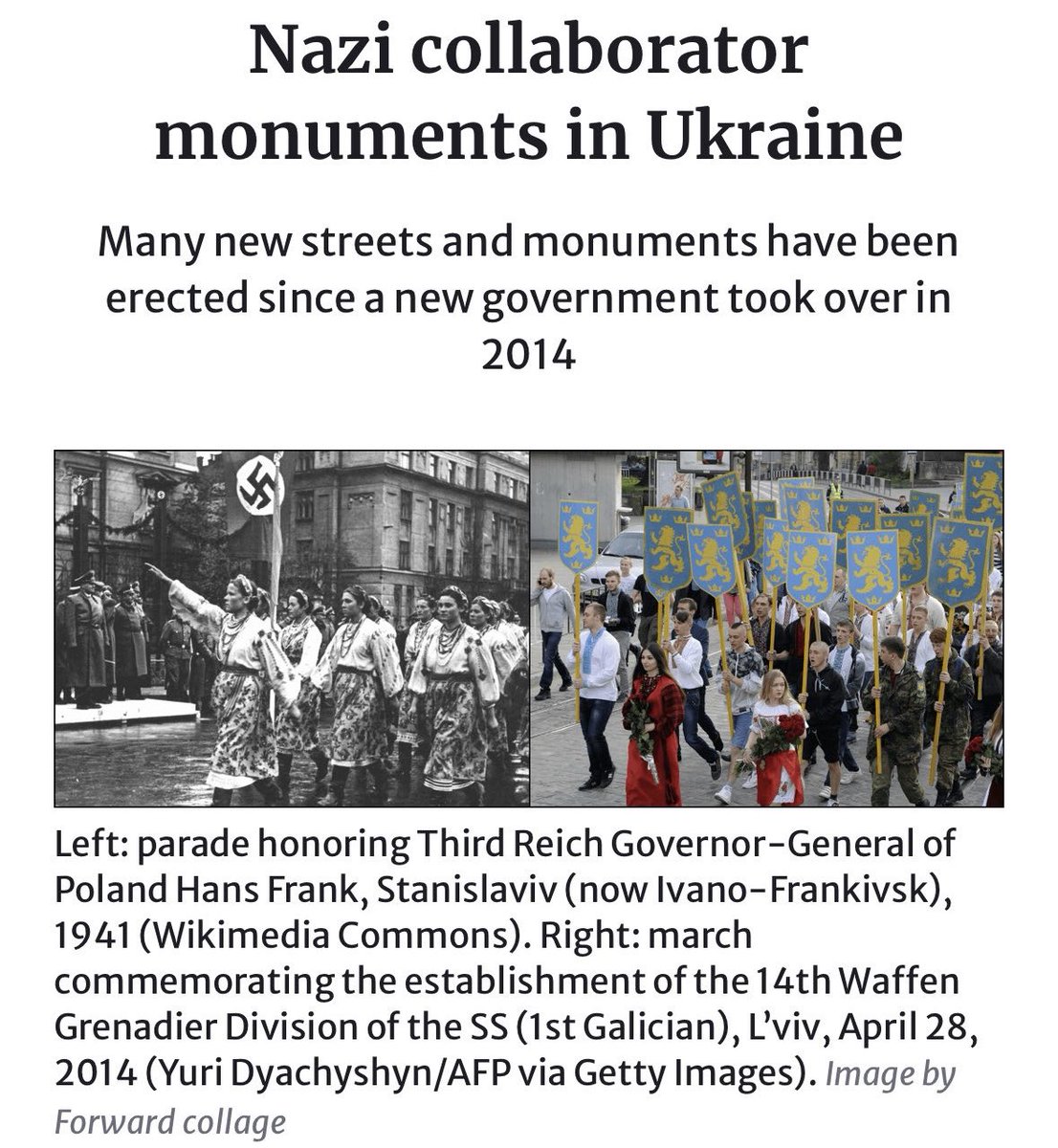
And it wasn’t done by only the Germans. There was widespread local collaboration. Auxiliary police, nationalist groups, civilians helping identify Jews, round them up, sometimes taking part themselves. That fact gets people uncomfortable, but leaving it out doesn’t change what happened.
After the war, it didn’t disappear. Under Soviet rule it was pushed under the rug, but it stayed there. After independence, it shows up in different forms. Polls over the years have found a meaningful percentage of people still buying into the same old ideas about Jews and power, influence, money.
You also have the continued honoring of figures like Stepan Bandera. For many Ukrainians he’s a nationalist hero. For Jews and Poles, his movement is tied to collaboration and mass violence. Add to that far-right groups that use symbols and rhetoric straight out of the neo-Nazi playbook. They aren't a majority, but they exist, and they’re not exactly hiding.
Now to be fair, Ukraine today is not Nazi Germany. They elected Volodymyr Zelenskyy, who is Jewish. There are laws against antisemitism. You’re not seeing mass violence against Jews in the streets. But that doesn’t mean the deeper issue is gone. Attitudes don’t just vanish because laws change.
And when you zoom out, it’s not just history or fringe groups. Ukraine has consistently voted against Israel in the UN, including after October 7. You can argue politics, alignments, or legacy voting blocs, but it still shows where things tend to land in practice.
I traveled through Europe a few years ago, went to about 9 countries. Different places, different people, no issues. The one place where we got yelled at and even ran after a few times was Ukraine. That’s one experience, not a dataset.
But at a certain point, when the history is this long and the signals keep lining up, it stops feeling like coincidence.