Azores Whale Lab - Cetacean Ecology Group

415 posts

Azores Whale Lab - Cetacean Ecology Group banner
Azores Whale Lab - Cetacean Ecology Group

Azores Whale Lab - Cetacean Ecology Group

@AzWhaleLab

Twitter feed of the Azores Whale Lab - Cetacean Ecology Group, headed by Dr. Mónica A. Silva. Cetacean research in the North Atlantic for over 20 years.

Horta, Portugal Katılım Ekim 2017
182 Takip Edilen1K Takipçiler
Azores Whale Lab - Cetacean Ecology Group
This is the last post of @AzWhaleLab. In science, as in life, we follow strict ethics principles: honesty, integrity, respect, fairness, objectivity, responsibility, collaboration. This platform no longer follows or defends these principles. Find us on @azwhlab.bsky.social
English
0
0
1
97
Azores Whale Lab - Cetacean Ecology Group
On the 7th June, the Azores Whale Lab provided practical exercises on photo-id and bioacoustics to the Master’ students (University of the Azores). They had the opportunity to collect photo-id pictures of common dolphins and to acoustically detect and locate sperm whales
Azores Whale Lab - Cetacean Ecology Group tweet mediaAzores Whale Lab - Cetacean Ecology Group tweet mediaAzores Whale Lab - Cetacean Ecology Group tweet media
English
0
0
3
367
Azores Whale Lab - Cetacean Ecology Group
The highest impact was on the decrease in prey size than on a reduction on prey size variability implying that foraging success rates are more sensitive to changes in average energy intake, than variability in energy intake.
Azores Whale Lab - Cetacean Ecology Group tweet media
English
1
0
0
135
Azores Whale Lab - Cetacean Ecology Group
New paper on sperm whale reponses to changes in prey structure. In-situ foraging data was used to determine daily energy acquisition and to identify the minimum required foraging success rate and explore potential responses to environmental changes. Check the thread 🧵
Azores Whale Lab - Cetacean Ecology Group tweet mediaAzores Whale Lab - Cetacean Ecology Group tweet media
English
1
5
20
1.2K
Azores Whale Lab - Cetacean Ecology Group
Species showed some spatial or temporal partitioning, suggesting that species coexistence could play a key role in structuring the cetacean community in the region and in its ecological role. Thanks to @AzWhaleLab, Jérôme Spitz and Yann Planque at #Pelagis (@CNRS)
English
0
0
0
137
Azores Whale Lab - Cetacean Ecology Group
Niche overlaps occur mainly between species within the same guild, indicating some potential for trophic redundancy in the community.
English
1
0
0
114
Azores Whale Lab - Cetacean Ecology Group
Species were grouped into four trophic guilds, segregated mainly by trophic position (TP): low-TP guild with three zooplanktivore baleen whales, mid-TP guild with micronektivores, high-TP guild with micronekton and nekton consumers, and a cluster with false killer whales only.
Azores Whale Lab - Cetacean Ecology Group tweet media
English
1
0
1
97
Azores Whale Lab - Cetacean Ecology Group
Stable isotopes from 12 cetacean species were analysed. Isotopic niches are very diverse and suggest the use of diverse habitats and resources among species.
Azores Whale Lab - Cetacean Ecology Group tweet media
English
1
0
1
134
Azores Whale Lab - Cetacean Ecology Group
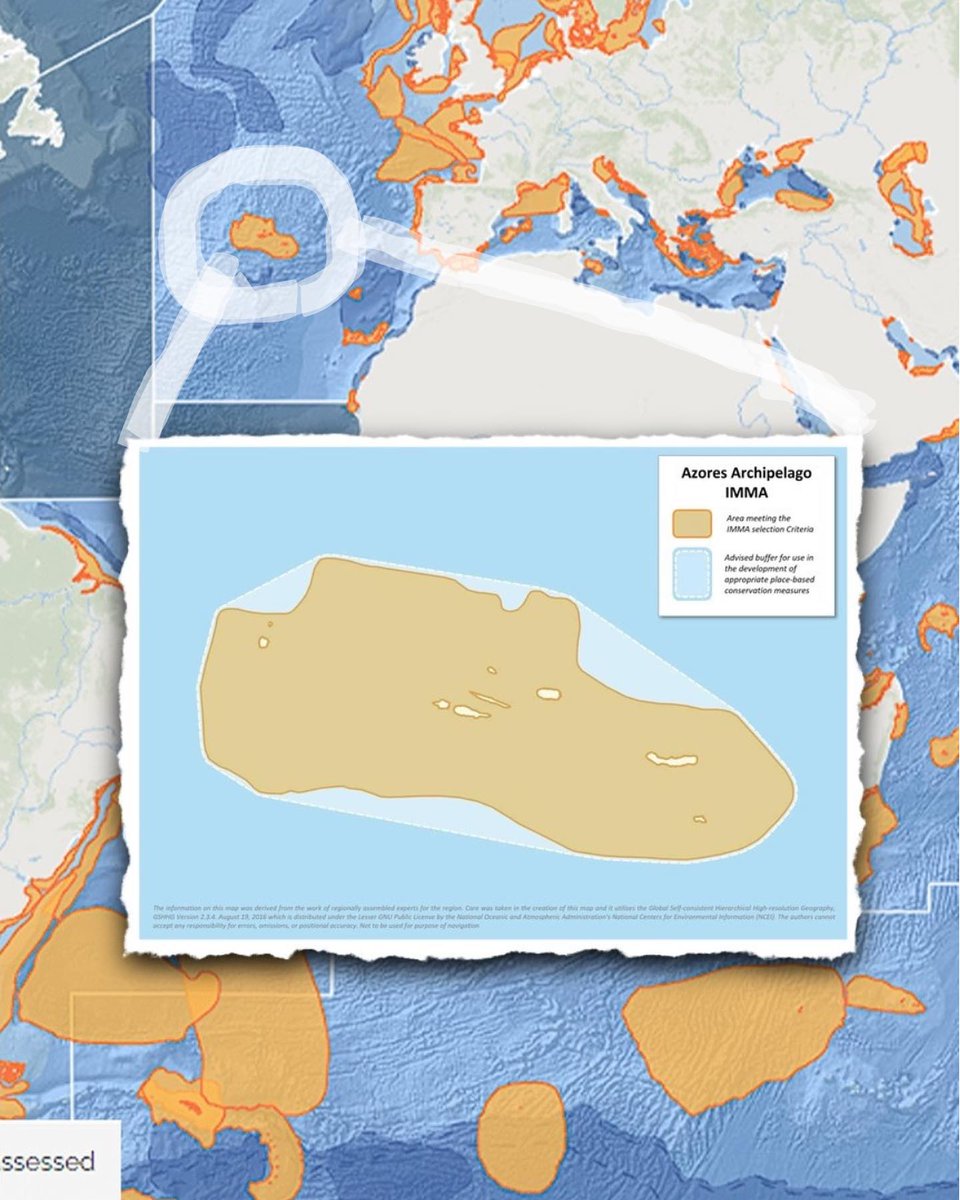
The @AzWhaleLab contributes to the creation of an Important Marine Mammal Area (IMMA) for the Azores encompass within an initiative that has created 33 new IMMAs in the North East Atlantic Ocean and Baltic Sea and was led by the @IUCN Marine Mammal Protected Areas Task Force
Azores Whale Lab - Cetacean Ecology Group tweet media
English
1
1
12
340