IanLove.eth 🇸🇬🇭🇰🇦🇺🇲🇲🦇🔊🏄‍♂️💀🌋

7.9K posts

IanLove.eth 🇸🇬🇭🇰🇦🇺🇲🇲🦇🔊🏄‍♂️💀🌋 banner
IanLove.eth 🇸🇬🇭🇰🇦🇺🇲🇲🦇🔊🏄‍♂️💀🌋

IanLove.eth 🇸🇬🇭🇰🇦🇺🇲🇲🦇🔊🏄‍♂️💀🌋

@BCAssetsFund

Formed in June 2017, in Perth Western Australia, we are the first Australian compliant investment firm specialising only in digital assets.

Perth, Western Australia Katılım Haziran 2017
4.2K Takip Edilen1.3K Takipçiler
Adam Livingston
Adam Livingston@AdamBLiv·
You start reading weird books. You buy “The Bitcoin Standard” and then “The Fiat Standard” and then you accidentally end up reading Murray Rothbard, and then somehow you’re reading Mises, and then it’s 11:47 PM on a Tuesday and you’re 340 pages into “Human Action” and you’re highlighting passages about praxeology and your wife comes downstairs and asks if you’re coming to bed and you say “in a minute” but you don’t come to bed for two hours because you have just discovered that everything you were taught about economics in college was wrong, all of it, every single sentence, and now you can’t go back, you can never go back, you have been orange-pilled in a way that goes deeper than money, you have been epistemologically orange-pilled, you now believe that John Maynard Keynes was a charlatan and the gold standard was actually fine and the income tax is theft and you can never say any of this out loud at a dinner party ever again.
English
159
397
2.6K
81.5K
David Hoffman
David Hoffman@TrustlessState·
Has there been a huge vibe shift in CT over the last 2 weeks, or was that just me selling the last of my ETH
English
538
54
1.1K
1.5M
Peter Van Valkenburgh
Peter Van Valkenburgh@valkenburgh·
HUGE. Looks like we got a non-partisan vote out of Senate Banking with the BRCA still intact. I'm thrilled. The last minute compromise reflects Coin Center's analysis from last January, there were some steps forward since then and then back but we are feeling very comfortable.
English
15
48
357
67.1K
IanLove.eth 🇸🇬🇭🇰🇦🇺🇲🇲🦇🔊🏄‍♂️💀🌋
Last night in the US, the most consequential piece of crypto legislation to date passed Senate committee level and moved to a full Senate vote If passed, the Clarity Act could unlock trillions of dollars of capital currently sitting on the sidelines due to regulatory uncertainty
English
1
0
1
45
The Kobeissi Letter
The Kobeissi Letter@KobeissiLetter·
BREAKING: The White House has published a full list of business leaders who are joining President Trump on his trip to China: 1. Elon Musk, Tesla and SpaceX CEO 2. Tim Cook, Apple CEO 3. Larry Fink, BlackRock CEO 4. Stephen Schwarzman, Blackstone CEO 5. David Solomon, Goldman Sachs CEO 6. Jane Fraser, Citigroup CEO 7. Kelly Ortberg, Boeing CEO 8. Michael Miebach, Mastercard CEO 9. Ryan McInerney, Visa CEO 10. Larry Culp, GE CEO 11. Sanjay Mehrotra, Micron CEO 12. Cristiano Amon, Qualcomm CEO 13. Brian Sikes, Cargill CEO 14. Dina Powell McCormick, Meta Executive 15. Jacob Thaysen, Illumina CEO 16. Jim Anderson, Coherent CEO There may be additional CEOs who join the trip that are not yet named. We continue to believe the market is underestimating the potential outcomes of the US-China summit.
English
477
817
5.8K
956.5K
IanLove.eth 🇸🇬🇭🇰🇦🇺🇲🇲🦇🔊🏄‍♂️💀🌋 retweetledi
Senator Dave McCormick
Senator Dave McCormick@SenMcCormickPA·
This Thursday, the Senate Banking Committee and I will vote on the CLARITY Act. We’re voting on a bill that protects consumers, gives digital asset innovators certainty, and keeps the future of crypto in America, not offshore. Let's get this done.
English
123
312
2.1K
61.4K
IanLove.eth 🇸🇬🇭🇰🇦🇺🇲🇲🦇🔊🏄‍♂️💀🌋 retweetledi
WallStreetBets
WallStreetBets@wallstreetbets·
Every cycle has one ecosystem that gets ignored until it's too late In 2017 it was ETH, in 2021 it was SOL, in 2026 it's $TAO We're going to look back at TAO the same way we look back at ETH in 2016
WallStreetBets@wallstreetbets

x.com/i/article/2049…

English
92
264
1.4K
181.9K
Shanaka Anslem Perera ⚡
Shanaka Anslem Perera ⚡@shanaka86·
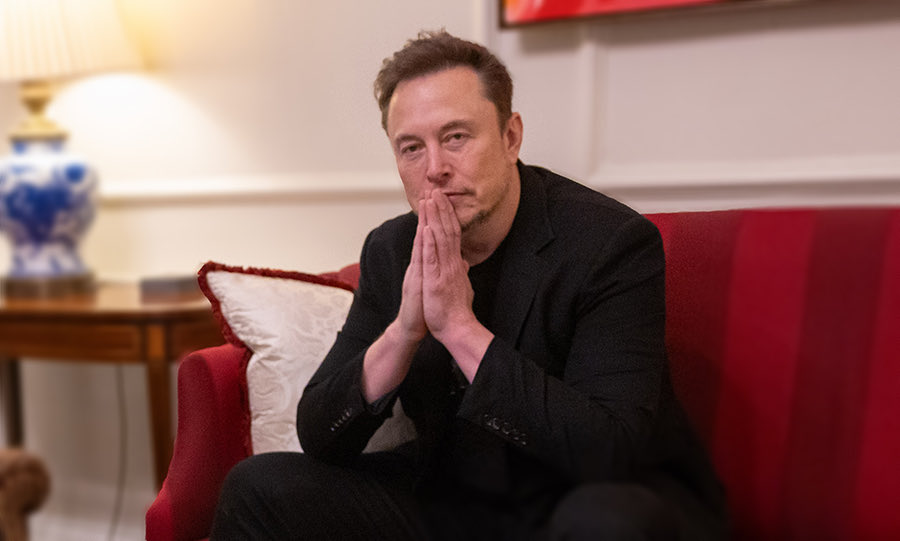
Elon Musk earns $54,080 per year. Unchanged since 2019. That is the annual salary of the richest person on Earth from the company targeting the largest IPO in history. SpaceX’s board approved a new compensation package in January. It was disclosed this week in confidential SEC registration excerpts ahead of the IPO. The terms are not financial. They are physical. Two hundred million super-voting Class B restricted shares vest if and only if SpaceX reaches a $7.5 trillion market valuation and establishes a permanent human colony on Mars with at least one million people. A separate tranche of 60.4 million restricted shares, awarded March 23, vests on valuation milestones plus the operation of orbital data centers delivering at least 100 terawatts of compute capacity. If any target is missed, Musk receives zero shares. Not reduced shares. Zero. Read the milestones again. They are not revenue targets. They are not EBITDA gates. They are physics problems. One million people on Mars means solving 0.38g gravitational physiology, 233 millisieverts per year of unshielded radiation, closed-loop life support across 26-month windows, and in-situ propellant production at industrial scale. Nature published a 2024 analysis showing Starship exceeds its published dry mass by roughly 110 tonnes and lacks return delta-v. MOXIE produced 122 grams of oxygen over two years. A colony needs tonnes per day. One hundred terawatts of orbital compute means space-based data centers where heat rejection scales with the fourth power of temperature. Global electricity generation averages 3.3 terawatts. This milestone requires 30 times the planet’s entire power output routed to AI chips in vacuum. Musk posted on April 22 that this scale “would be 200 times the US economy every year.” This is not compensation. This is a civilization specification sheet priced in equity. The lunar pivot makes the sequence visible. Moon first because windows open every 10 days instead of 26 months. Lunar factories manufacture orbital data centers. Mass drivers catapult them into orbit. Revenue from orbital compute funds the self-growing city. The city stages Mars. Mars becomes the backup. Each step requires a different branch of physics. Orbital mechanics for windows. Electromagnetism for mass drivers. Stefan-Boltzmann for cooling. Radiation biology for survival. ISRU chemistry for fuel. And at the base: a $54,080 salary ensuring the builder receives nothing unless the physics works. SpaceX filed its S-1 with an explicit warning: “Our initiatives to develop orbital AI compute and in-orbit, lunar, and interplanetary industrialization are in early stages, involve significant technical complexity and unproven technologies, and may not achieve commercial viability.” The company told you the milestones might be impossible. Then tied 260 million new shares to achieving them anyway. The IPO targets June 28 at a valuation between $1.75 and $2 trillion. The compensation package requires $7.5 trillion. The gap between where the company starts trading and where Musk gets paid is a 4x return that depends on physics no human has ever demonstrated. $54,080. Two hundred million shares. Seven and a half trillion dollars. One million humans on another planet. One hundred terawatts in orbit. Zero shares if any of it fails. That is not a compensation package. That is a wager against the laws of physics with the stakes denominated in civilization. open.substack.com/pub/shanakaans…
Shanaka Anslem Perera ⚡ tweet media
English
50
146
553
45.5K
George Noble
George Noble@gnoble79·
This is the most OUTRAGEOUS deal I've seen in my 45 years on Wall Street. SpaceX just disclosed Musk's new compensation package: He gets up to 200 million super-voting shares if SpaceX hits a $7.5 trillion valuation, establishes a permanent human settlement of at least ONE MILLION people on Mars, and deploys roughly 100 terawatts of space-based computing power. Let me put the 100 terawatts in perspective: The entire electricity generation capacity of the United States is around 1.2 terawatts. The comp plan asks Musk to build more than 80x America's entire power grid... in orbit. This is a science fiction screenplay that somehow landed in front of the SEC. But here's why it actually matters for your portfolio... The S-1 reportedly claims a $28.5 trillion total addressable market, with over 90 percent attributed to AI. CapeFearAdvisors flagged this one cleanly: when Palantir went public, it disclosed a $119 billion TAM and the SEC reviewed and accepted it. SpaceX is claiming a market roughly 240x BIGGER. Now let's talk about what is actually being sold here: Reported 2025 revenue is approximately $15.5 billion. Starlink delivers around $11 billion of that with healthy margins, and the launch business is genuinely dominant. The problem is xAI - the AI piece doing all the heavy lifting in the trillion-dollar valuation pitch. xAI generated just $210 million of revenue in the first 3 quarters of 2025 while burning through $9.5 billion in cash. Ben Brey and Rupert Mitchell - a former Fidelity portfolio manager and a former head of equity capital markets at Goldman and Citi between them - ran a serious discounted cash flow on the actual operating businesses and arrived at roughly $400 billion. Lawrence Fossi covered their work recently and the math holds up. The IPO is being marketed at $1.75 TRILLION. The gap between what these businesses support and what Musk is asking the public to pay is roughly $1.35 trillion of pure narrative. Then layer on what we just learned last week... The New York Times investigation revealed Musk personally borrowed $500 million from SpaceX between 2018 and 2020 at rates as low as 1%, while bank prime rates sat around 5%. The same SpaceX has been used to bail out SolarCity, prop up Tesla during cash crunches, and absorb xAI when the AI losses became unmanageable. This is the same playbook he's run for two decades. Use a privately controlled entity as a personal piggy bank, and when the bills come due, find new investors to absorb the losses. The IPO is structured to keep that game going FOREVER. The Texas reincorporation strips away Delaware's fiduciary protections. Controlled-company status on the Nasdaq eliminates independent board requirements. And retail is being offered up to 30% of the offering (3x the normal allocation) because the institutions who actually do the math are quietly stepping away. Here is the part that finishes the case for me: Roughly $40 billion of the IPO proceeds are already spoken for before a single dollar reaches operations. About $23 billion retires SpaceX debt. Another $17 billion retires the high-interest debt sitting on xAI and X. This raise is not funding the future. It's just plugging existing holes that retail investors will now own. In my 45 years I've never seen a deal where the comp hurdle is colonizing another planet. I've never seen a disclosed TAM that exceeds verified comparables by two orders of magnitude. I've never seen a company asking the public to fund the retirement of debt incurred by separate private entities controlled by the same individual. Every red flag I've watched precede a major bust over four decades is sitting in this prospectus, in plain sight. The Tesla mispricing is being repeated on a far larger scale. And this time the bag is being handed directly to retail. Don't be the one holding it.
English
665
1.2K
4.6K
1.7M
Bitcoin Magazine
Bitcoin Magazine@BitcoinMagazine·
JUST IN: 🇺🇸 US Senator Cynthia Lummis announces Bitcoin and crypto market structure legislation will get marked up "in May." 👀 "We are gonna get it to the finish line." 🚀
English
281
305
1.8K
133.7K