

Olubukola, Princess of Lagos
10.8K posts

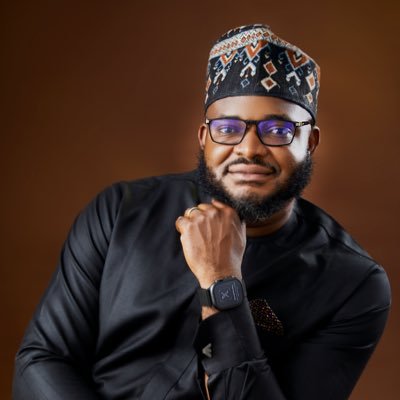
Leader of the New School?
The person who gave Seyi Tinubu that name is smart.
This boy is moving like his father.
I want to genuinely ask, aside politics, does this boy have something he has built for himself?
Iyalaya@lollylarry1
Seyi Tinubu represents a new generation of leadership...defined by humility, clarity of purpose, and a commitment to meaningful impact.
English

Cole Family of Victoria Island no get level ohh🤣
‘deola.@deyola_a
Actress Wofai Ifada and her husband Taiwo Cole just announced that they are expecting their second baby Congratulations to the couple🥳🥳🥳🥳
English

Chowdeck's first ever Brand Ambassador is here.
We're not telling you who it is yet but we'll give you three clues:
🔎 Super Eagles international,
🔎 Decorated European football career
🔎 Recently featured on our IG page 👀
First 50 people to use his name as a discount code get ₦2,000 off.
Drop your guesses 👇🏾
#ChowdeckBrandAmbassador

English
Olubukola, Princess of Lagos retweetledi

Olubukola, Princess of Lagos retweetledi

Olubukola, Princess of Lagos retweetledi
Olubukola, Princess of Lagos retweetledi


Olubukola, Princess of Lagos retweetledi

Olubukola, Princess of Lagos retweetledi

Olubukola, Princess of Lagos retweetledi

Wine is made from grapes.
Grapes are plants.
Wine is salad.
English
@whitenigerian I am currently working on a research on the oligopsony of the coffee sector, your work with mai shayi coffee has always stood out for me and I see a lot of lessons to be learnt. I would love the opportunity to have a virtual conversation/interview with you on this
English

A story from Mai Shayi Coffee: From a tiny coffee shop on Adeola Odeku in Lagos and a coffee farm in Jos… to the Vice President's residence in Bogotá, Colombia*. 🇳🇬🇨🇴☕
Last night, I lived something I still can't fully explain. Let me try.
Several months ago, I received a video call from the Deputy Minister of Trade of Colombia, the Nigerian Honorary Consul, and the Colombian Ambassador to the region. They had heard about my work in the Nigerian coffee sector and wanted to talk. That call led to an official invitation to the CELAC – Africa Bilateral Summit here in Bogotá.
Before the summit, I spent several days deep in the mountains of Manizales — at Cenicafé — sitting with world-class researchers and coffee scientists, absorbing decades of knowledge that I intend to bring home. My mission? To explore how Nigeria can reclaim and rebuild its once-thriving coffee sector — through knowledge exchange, genetic-resistant crop material, and the kind of private sector leadership that actually moves things.
Then last night happened.
I received an exclusive, by-invitation-only letter — signed by the Vice Presidency of the Republic of Colombia — to attend an official dinner hosted by Vice President Francia Elena Márquez Mina. The same invitation extended to African and Latin American ambassadors, development bank executives, and sitting foreign ministers.
At 7:30 PM, a protocol bus arrived at my hotel. I stepped on board with five other diplomats — seasoned men, each old enough to be my father, each representing a different nation. I was introduced simply as "Mr. Ibrahim, part of the Nigerian delegation." There were no other Nigerians on that bus. Just me.
We drove 25 minutes to a colonial fortress of a building — military checkpoints, secret service agents, an Alpha team requesting the full delegation manifest. Then the doors opened.
What I saw next stopped my breath. 🚨
80 meters of red carpet. A full lineup of Colombian military guards in ceremonial regalia. Salutes. Song. Dance. We disembarked one by one, and one by one — we were walked, in single file, down that carpet, into the Vice President's residence.
I wanted to pull out my phone SO badly. You know me. But I read the room and I held it together. 😂
Inside, officials from the Colombian government welcomed us warmly. Then, across the room, I spotted the Deputy Minister of Trade — the man who had personally called me months ago to invite me on this journey. He walked over, smiled and said: "Ibrahim, I'm glad you made it. How was Cenicafé? Can we take a picture? Here's my personal line."
At this point, I'm having a full out-of-body experience. HOW? How does coffee — a crop, a conversation, a conviction — take you HERE?
Then she walked in.
Vice President Francia Elena Márquez Mina. Colombia's first-ever female, first-ever Black Vice President. Humble. Elegant. Younger than I expected for someone carrying that weight of history. She greeted each of us. I stepped forward, extended my hand, and introduced myself — "Ibrahim Samande. Nigeria." She smiled and said, "Welcome." Her husband followed — and I'll say this: he was the best-dressed man in that room. After me, of course. 😏
I must tell you — I came in full Hausa kaftan and hulla. 🧢
Every other African diplomat was in a suit. That's expected. But I made a choice. My identity was going to walk into that room first. I wore that kaftan and cap with everything I had, representing not just Nigeria, but the North — my culture, my people, my roots — at a table with nations.
At dinner, I spotted the Nigerian Foreign Minister seated among the dignitaries with the Vice President herself.
And in that moment, I thought of a scripture: "A prophet is not welcomed in his own home." I have never received this kind of honour on Nigerian soil. Last night, a foreign nation honoured me for the work I am doing — for Nigeria. It was humbling in a way I don't have words for yet. Continued…
English
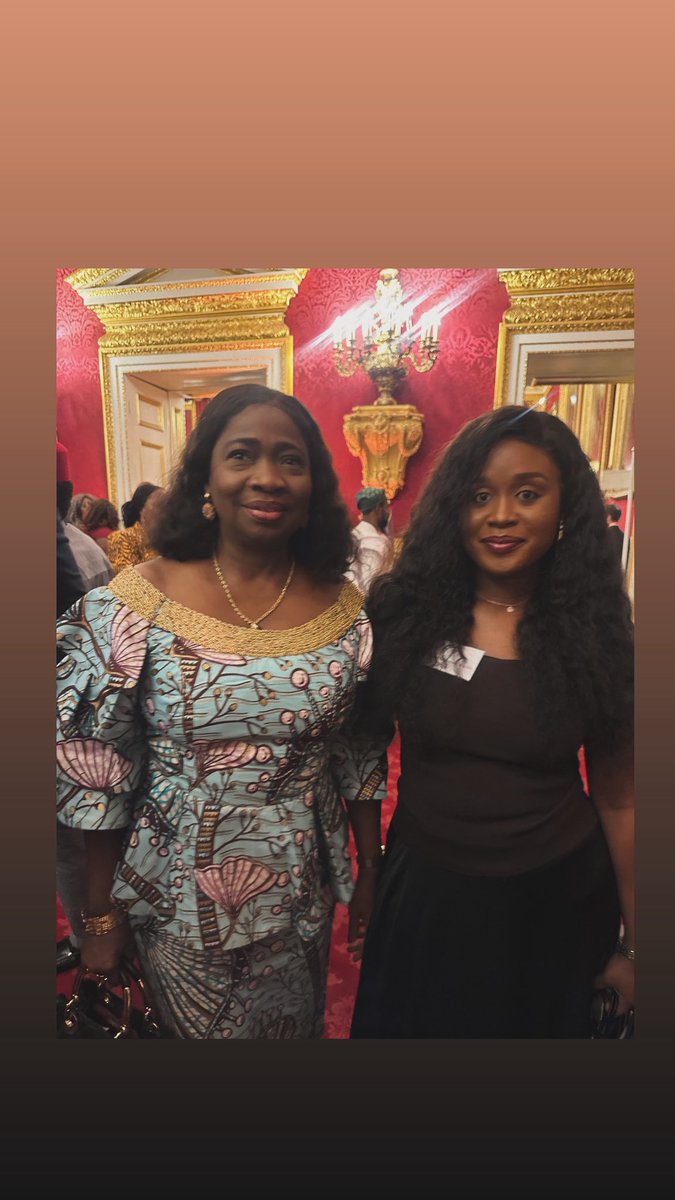
Honoured to have been invited to spend the evening with His Majesty King Charles III. It was also wonderful connecting with fellow Nigerians in the United Kingdom who are doing incredible things.
It was equally a pleasure, as always, to see my mummy, Hon. Abike Dabiri-Erewa @abikedabiri Moments like this remind me of the strength and excellence of the Nigerian community abroad.
English

Third, global coffee markets are highly concentrated. A small number of multinational firms dominate the roasting and retail segments, including companies like Nestlé and Starbucks. This creates what economists call an oligopsony: many producers selling to a small number of powerful buyers.
Because of this structure, corporations often segment markets globally. Premium specialty coffee and the so-called “latte revolution” are largely concentrated in wealthy consumer markets, while lower-cost instant coffee products are marketed heavily in lower-income economies.
Another important factor is how coffee is traded globally. Coffee prices are determined on commodity exchanges such as the Intercontinental Exchange in London and New York City. That means coffee is not just an agricultural product, it is also a financial asset, traded and speculated on by investors far removed from the farmers who produce it.
All of this means that conversations about café culture are not just about lifestyle or consumer taste. They are also about who controls the global coffee value chain.
Developing local roasting, branding, and specialty markets is important. But it exists within a much larger system where pricing, demand, and value capture are heavily shaped by global markets and corporate power.
So the question of coffee culture is not just cultural or infrastructural. It is also deeply political and economic.
English
A quick follow-up to my earlier point on coffee culture, because there is another layer to this discussion.
A lot of people understandably say the solution is to develop local coffee infrastructure: build more cafés, develop local roasting, strengthen branding, and create domestic specialty coffee markets. I actually agree with that. It’s encouraging to see Nigerian brands trying to move in that direction, and initiatives from Mai Shayi Coffee show that local value addition is possible.
But even that conversation often stops at infrastructure. The reality is that coffee culture is shaped by much larger global forces.
First, café culture usually develops where the profitable stages of the coffee industry are located: roasting, branding, and retail. Countries that control these stages tend to build vibrant coffeehouse economies, while countries that mainly export raw beans often remain consumers of lower-value instant coffee.
Second, the global coffee system itself helps make café culture affordable in wealthy countries. Political economists sometimes describe this as a kind of subsidized Northern lifestyle. The raw beans and labor behind coffee are relatively cheap because millions of smallholder farmers in producing countries earn very little from the crop. That helps make it possible for consumers in cities like London or New York City to treat a daily latte as an ordinary habit.
English
So I am going to wear my Political Economist hat on this one, my last research was actually on the oligopsony/inequalities of power in the coffee industry….
I think you make a valid point about sachet coffee and how purchasing power shapes what people can consume, but attributing the absence of a large café culture simply to a “non-working government” overlooks the broader global economic structure behind the coffee industry.
In Europe or the United States, going to a café is often a casual daily habit. But it is worth asking why a daily latte is relatively affordable there, while “finer coffee” remains a luxury in many producing countries. Scholars of political economy describe this dynamic as the Coffee Paradox: the global coffee industry generates enormous wealth, yet most of the 25 million smallholder farmers who grow the beans remain poor. The raw coffee bean is kept relatively cheap on world markets, allowing consumption to flourish in wealthy countries while producers capture only a small share of the final value.
The screenshot you shared also mentions how Nigeria’s coffee sector declined after the discovery of oil. From a political economy perspective, this reflects a deeper historical pattern. During the colonial era, many African economies were structured to export raw commodities-coffee, cocoa, palm oil while importing higher-value manufactured goods. Nigeria did not escape that pattern; it simply shifted from agricultural commodities to crude oil because the most profitable stages of the coffee industry-roasting, branding, and café retail are concentrated in the Global North, building a specialty café culture in Nigeria often requires importing roasted beans, foreign equipment, and international branding at a significant premium.
Meanwhile, large multinational companies capture much of the value through global consumer markets and branding strategies. As a result, African countries frequently remain suppliers of raw agricultural inputs while higher-value activities take place elsewhere.
So the issue is not simply that Nigerians are “too poor” to have a coffee culture. It is that the global coffee value chain is structured in a way that concentrates wealth in consuming economies while producers remain at the lowest-value stage of production.
Sachet coffee, in that sense, is not just a reflection of local purchasing power. It also reflects how global markets segment products across different regions of the world economy.
Ama Udofa@the_amazingama
I don’t like it when people say “Nigeria doesn’t have a coffee culture” We do. Heck, we even cultivate and export coffee, albeit on a small scale). If we had a working government, it could have been big. Sachet coffee sells because they’re dirt cheap and accessible. Like with many other things, we’re just too collectively poor to enjoy finer stuff at scale.
English
Olubukola, Princess of Lagos retweetledi

Exchanging pleasantries with The King of England, King Charles during the *DIASPORA EVENT* organized at the St. James’ Palace.where the king met with British Nigerians ahead of President Bola Ahmed @officialABAT’s historic state visit, the first in about 37 years
English