Coach B Patel

60.8K posts

Coach B Patel banner
Coach B Patel

Coach B Patel

@bpatel515

Husband.Father.Human Performance Coach.Relentless Learner. #GetBetter #WinInLife

Here & Now Katılım Haziran 2009
9.6K Takip Edilen9.6K Takipçiler
Coach B Patel retweetledi
Dear Son.
Dear Son.@DearS_o_n·
WHAT THE F*CK ARE YOU AFRAID OF - Death : We’re all gonna die. - Bankruptcy : You can make it all back. - Shame : Everyone will forget in a week. - Rejection : It happens to everyone. - Failure : It’s part of the path. - Judgment : They’ll judge anyway. - Losing people : Not all are meant to stay. - Making mistakes : You’ll survive them. - Taking risks : Regret hurts more. Live every day like it's your last day.♟️
English
68
1.2K
6K
369.7K
Coach B Patel retweetledi
🧬Maxpein🧬
🧬Maxpein🧬@maximumpain333·
A young man once approached a wise monk and asked, “How do I stop overthinking?” The monk replied: “You overthink because your mind is trying to protect you… from a future that does not yet exist. Tell me—who has ever seen tomorrow? Whatever you fear about it is not reality, but imagination wearing the mask of truth. So the mind creates problems that aren’t real… and then exhausts itself trying to solve them. Like a cat spinning in circles, chasing its own tail. If you wish to be free, remember two things. First—your thoughts are not facts. Most of what you worry about will never happen. Second—life will unfold as it must. Release what you cannot control, and respond wisely to what actually comes. Do this, and your restless mind transforms… from a loop of fear into a steady river— flowing, adapting, and at peace with whatever lies ahead. Understand this clearly: the mind is often trying to solve problems it created itself. Trust life. Act where you can. Let go where you cannot. This is the way.” Moral: Overthinking is not wisdom—it is fear pretending to be preparation. Peace begins the moment you stop battling an imagined future… and start living in the present. ✨🙌🏾💫
🧬Maxpein🧬 tweet media
English
35
384
1.3K
67.5K
KILLABEARS 🐻
KILLABEARS 🐻@killabearsnft·
I heard whispers of a witch goblin deep in the Umbrah… They call her Sistah Mirkah. They say she doesn’t give you power… She peels you open until your true self stares back. None who seek her return the same. —Nana, KillaBear 712
English
11
23
53
1.1K
Coach B Patel retweetledi
The Curious Tales
The Curious Tales@thecurioustales·
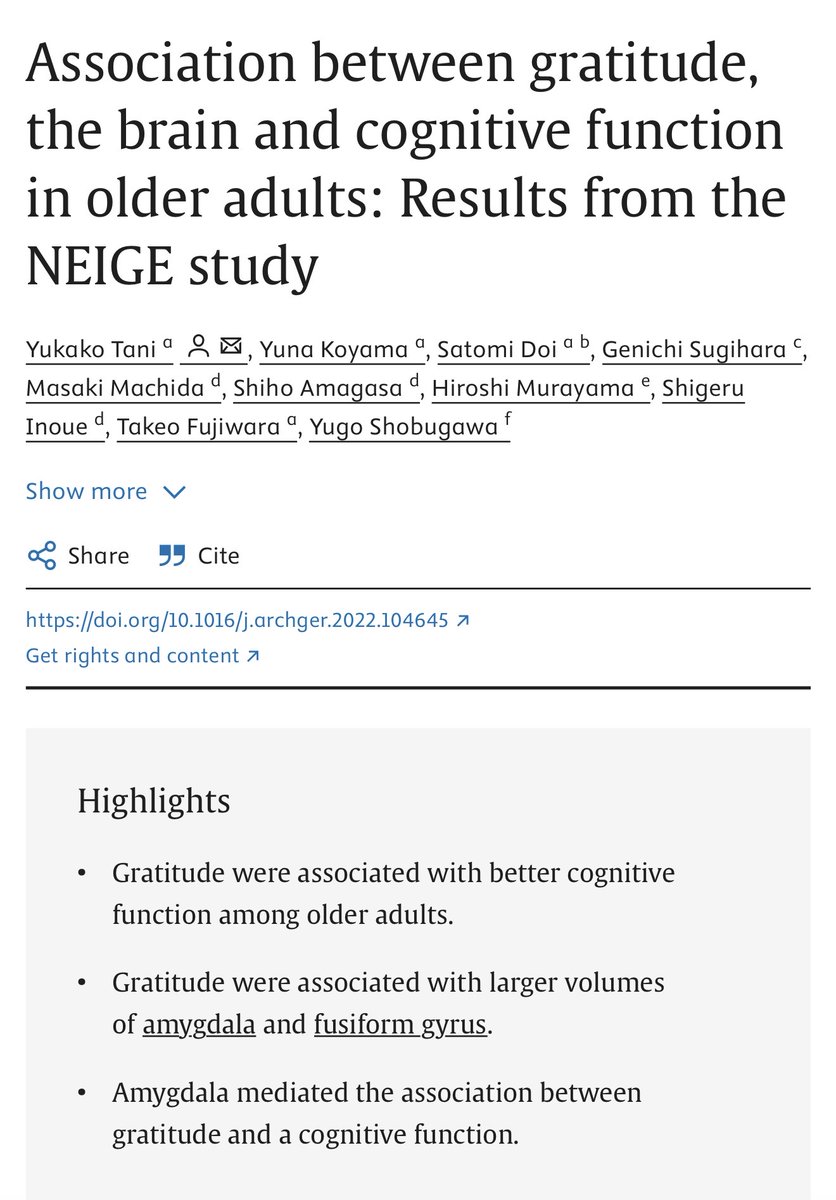
🚨BREAKING: 8 weeks of gratitude practice physically rebuilds the neural pathways between your memory and reward centers. Your brain physically rewires itself every time you feel grateful. Eight weeks of intentional gratitude practice creates measurable structural changes in the neural pathways connecting your hippocampus to your ventral tegmental area. The memory center starts talking to the reward center in a fundamentally different way. New synaptic connections form. Existing ones strengthen. The physical architecture of how you process positive experiences rebuilds itself. Most people approach gratitude like a mood they can choose to feel. A psychological vitamin they remember to take when life gets difficult. The neuroscience reveals something far more profound. Gratitude is a biological intervention that sculpts brain tissue. Researchers tracked participants practicing gratitude exercises for two months using brain scans. They watched new neural highways construct themselves in real time. The anterior cingulate cortex developed stronger connections to the medial prefrontal cortex. The brain learned to route positive emotional experiences through higher order thinking centers instead of storing them as fleeting feelings. Every positive experience you’ve ever had exists as a neural trace in your memory network. Most sit dormant, accessible only when something external triggers the specific sensory combination that originally encoded them. You smell coffee, suddenly remember a conversation from years ago. Random. Unreliable. Outside your control. Gratitude practice systematically rewires that retrieval system. After two months, participants could voluntarily access positive memories with increasing ease. Their brains had built stronger pathways between memory storage areas and emotional processing centers. They experienced deeper emotional resonance during memory retrieval. The quality of remembering itself had improved. The participants also started noticing positive details in their present environment they had previously filtered out. Their attention systems recalibrated. The same neural pathways pulling positive memories forward were scanning current experiences more thoroughly for elements worth encoding as positive memories. Their brains became biased toward collecting evidence that life contains meaningful moments. Most cognitive interventions try to change how you interpret negative experiences. Gratitude practice changes how thoroughly you notice positive ones. It teaches your visual and emotional processing systems to detect opportunities and pleasures that were always present but neurologically invisible. The timeline reveals something crucial about neural plasticity. Weeks one through three showed minimal structural changes. Participants felt slightly more positive, but brain scans looked identical to baseline. Weeks four through six showed the first measurable increases in gray matter density. Weeks seven and eight revealed entirely new neural network formation. Two months. Your nervous system can physically restructure itself with consistent practice. The method was almost embarrassingly simple. Participants wrote down three specific things they felt grateful for every evening, explaining why each mattered. No meditation apps. No guided visualizations. Just pen, paper, and the requirement to identify gratitude targets with enough detail that their brains had to actively search for positive elements. Specificity drives the neural development. General statements like “I’m grateful for my family” generate different brain activity than precise observations like “I’m grateful my daughter laughed at my terrible joke during dinner because it showed me she still finds me funny despite growing more independent.” The brain needs detailed targets to practice connecting memory specifics to emotional rewards. After eight weeks, participants developed a fundamentally different relationship with their attention and memory systems. Someone whose brain automatically scans for and emotionally amplifies aspects of experience that make existence feel worthwhile. The neural pathways remain permanent after practice ends. Gratitude carves lasting roads through consciousness.
The Curious Tales tweet media
Darshak Rana ⚡️@thedarshakrana

Gratitude rewires the brain. Gratitude rewires the brain. Gratitude rewires the brain. Gratitude rewires the brain. Gratitude rewires the brain. Gratitude rewires the brain. Gratitude rewires the brain. Gratitude rewires the brain. Gratitude rewires the brain.

English
101
2.4K
9.9K
927.8K
Coach B Patel retweetledi
P.S. I Love ME
P.S. I Love ME@ps_ilove_me·
🚨Research confirms that your brain physically reshapes itself when you feel grateful, and the process happens in reverse of what most people think. The common story about gratitude goes like this: count your blessings, feel better, repeat. Mental health gurus treat it like a mindfulness exercise where you inventory good things until your mood lifts. The neuroscience reveals something far stranger. Gratitude doesn’t work by making you notice positive things that were already there. It works by literally building new neural pathways that change how your brain processes all incoming information, positive and negative. When you experience genuine gratitude, your anterior cingulate cortex lights up in ways that are measurably different from other positive emotions like joy or contentment. The anterior cingulate sits at the crossroads between emotion and attention. It decides which signals get amplified and which get filtered out before they reach conscious awareness. Most people live with an anterior cingulate trained by evolution to scan for threats, problems, and gaps. This made sense when predators could kill you, but in modern life it means your brain’s default setting is to spotlight everything wrong, missing, or potentially dangerous in any situation. You walk into a room and immediately notice the stain on the wall, not the ten things that look perfectly fine. Gratitude practice doesn’t override that system. It builds a competing neural network. Each time you feel grateful for something specific, you’re strengthening synaptic connections between your memory centers and reward circuits. Your brain begins associating the act of paying attention with positive neurochemical hits. Over time, this creates a new default: your attention system starts scanning for things worth appreciating instead of things worth worrying about. The really wild part is how fast this happens. Neuroimaging studies show detectable changes in brain activity patterns after just eight weeks of consistent gratitude practice. The prefrontal cortex, which handles executive function and emotional regulation, develops stronger connections to the limbic system, where emotions get processed. People literally become better at managing stress and making decisions under pressure because their neural architecture has physically reorganized. But here’s where it gets interesting in ways that most gratitude research misses completely. The brain changes from gratitude practice don’t just make you feel better. They make you perceive reality differently. Your visual cortex, auditory processing, even your sense of time passing, all get influenced by which neural networks have become dominant in your anterior cingulate. People with gratitude trained brains report that colors look more vivid, music sounds richer, and positive experiences seem to last longer while negative ones seem to pass more quickly. This isn’t metaphorical. Their brains are literally processing the same sensory input through different neural filters than they used before. This explains why gratitude feels fake and forced when you first try it. You’re asking a threat detection system to appreciate what it’s designed to ignore. The neural pathways for appreciation barely exist yet. It’s like trying to play piano with no finger muscle memory. But once those pathways strengthen, gratitude stops feeling like work and starts feeling like upgraded perception. The most profound part might be how this rewiring affects social relationships. The neural networks that handle gratitude overlap heavily with the networks that handle empathy and social cognition. When you strengthen one, you automatically strengthen the others. People who develop strong gratitude circuits become measurably better at reading facial expressions, predicting how others will respond to their words, and maintaining long term relationships. Their brains get better at spotting what others are doing well instead of cataloging what others are doing wrong. What started as a simple practice of noticing good things ends up rebuilding the fundamental neural infrastructure through which you experience other people and they experience you. The brain you have today was shaped by every thought pattern you’ve repeated for years. The brain you’ll have next year is being shaped by the thought patterns you’re repeating right now. Gratitude just happens to be the most efficient way to aim that reshaping process somewhere useful.
P.S. I Love ME tweet media
Darshak Rana ⚡️@thedarshakrana

Gratitude rewires the brain. Gratitude rewires the brain. Gratitude rewires the brain. Gratitude rewires the brain. Gratitude rewires the brain. Gratitude rewires the brain. Gratitude rewires the brain. Gratitude rewires the brain. Gratitude rewires the brain.

English
18
541
2.3K
144.3K
Edward NYC
Edward NYC@MrEdwardNYC·
After recently buying a couple MAYCs, attending a community based Ape meetup in NY and meeting the people behind the apes, I knew it had to be done. I bought my first BAYC!! 🎉 He seems fitting for the day, Happy Easter to those who celebrate 🐰 🦍 🍌
Edward NYC tweet media
English
126
26
463
12K
Coach B Patel retweetledi
Jon Rothstein
Jon Rothstein@JonRothstein·
"When we focus on the competition, we become reactive. When we focus on improving ourselves, we become innovative." - Simon Sinek
English
2
20
155
31.9K
Coach B Patel retweetledi
x - Conor Hurley
x - Conor Hurley@CHurls13·
Metsa World Peace on the way to Ottawa to help the Sabres clinch a playoff berth for the first time in 14 seasons / 15 years. Put it in the Louvre.
English
6
13
486
9.7K
Coach B Patel retweetledi
FBB4
FBB4@fbb4official·
The greatest opportunity will be found in the volatility.
GIF
English
44
32
225
6.7K
Coach B Patel retweetledi
2 Goalies 1 Mic
2 Goalies 1 Mic@2Goalies1Mic·
Some Metsa love... #Sabrehood 🔹In his first 30+ games with the team, the Sabres have scored 90% of the goals at 5v5 while Metsa is on the ice (18 goals for vs. only 2 against). 🔹Metsa leads all Sabres rookies and ranks near the top of the entire team with a +20 plus-minus rating in just 38 games. 🔹According to NHL EDGE player tracking data, Metsa ranks in the 99th percentile of all NHL skaters for "Neutral Zone Time" at 19.4% (well above the league average of 17.9%). This indicates that he is elite at breaking up plays in the middle of the ice and transitioning the puck back toward the offensive zone before the opponent can even set up.
2 Goalies 1 Mic tweet media
English
2
11
83
7.8K
Coach B Patel retweetledi
The Winning Difference
The Winning Difference@thewinningdiff1·
“We have this culture of playing incredibly hard. We never lose because of lack of effort,” -Dan Hurley The standard is simple: compete the right way, play with relentless effort, and never let quitting become part of your culture.
English
2
65
359
27.8K
Coach B Patel retweetledi
Reads with Ravi
Reads with Ravi@readswithravi·
Your brain can learn anything if you practice it daily.
English
213
2.9K
18.1K
920.6K
Coach B Patel retweetledi
Gary Brecka
Gary Brecka@thegarybrecka·
Most people are overstimulated, over breathing, and under-recovered. Fast, shallow mouth breathing keeps your body in a stress state. That means higher cortisol, lower CO2 tolerance, worse focus, and less efficient oxygen delivery. Start here: - inhale through your nose for 4 - exhale slowly for 6 to 8 - repeat for 2 minutes - do it before meetings, meals, and sleep Your breath changes your state faster than your thoughts do. Use it on purpose.
English
16
27
351
39K
Coach B Patel retweetledi
Anand Sanwal
Anand Sanwal@asanwal·
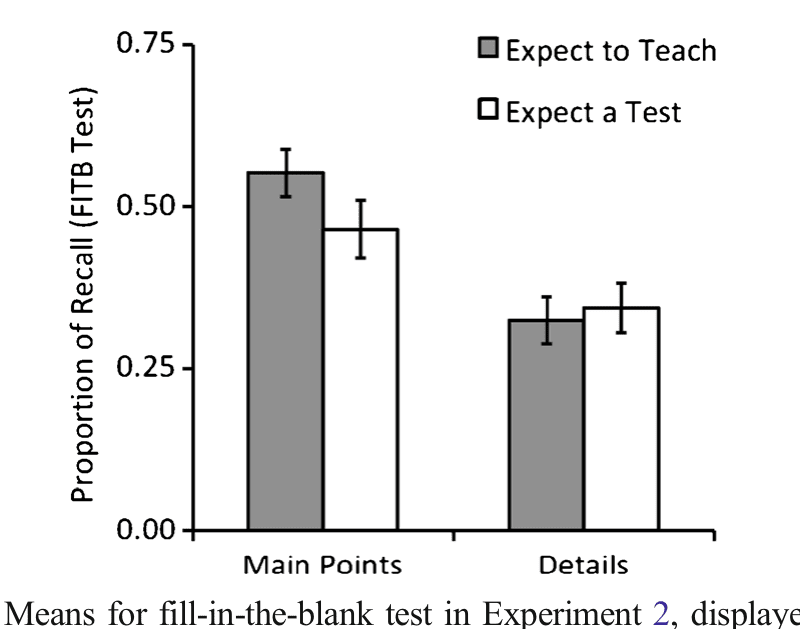
Great “trick” to get kids to learn Two groups read the same passage. * Group A was told they'd be tested. * Group B was told they'd have to teach it to another student. Nobody actually taught anything. They were just told they’d have to teach. Group B crushed it. Better recall. Better organization. Advantage concentrated on main points. So just believing they'd have to teach changed how they studied. The researchers' line that stuck with me: students have effective study strategies they simply don't use unless prodded to. So our kids already know how to learn well. They just don't do it when they're told to study for a test. The test framing makes them passive. While teaching makes them active. At @ForgePrep, the highest level of mastery students can demonstrate is teaching another students to competence. It’s part of why we have Montessori mixed age classes as this creates more opportunities for this type of teaching
Anand Sanwal tweet media
English
45
153
750
86.9K
Coach B Patel retweetledi
CooperBaggs 💰🍞
CooperBaggs 💰🍞@edgaralandough·
Turmeric needs black pepper to activate. Garlic needs fat to release its compounds. Tomatoes need heat to unlock lycopene. Food science is real. Cook with intention and your food becomes medicine.
English
31
1.1K
7.7K
127.8K