Back to the Reformation

1.9K posts

Back to the Reformation banner
Back to the Reformation

Back to the Reformation

@BTTReform

Examining current issues through the lens of the Reformation

Katılım Ocak 2020
148 Takip Edilen699 Takipçiler
Back to the Reformation
@RobbBrunansky The Law of Christ is third use of the law. It’s the Law handed to us in Christ, and it is no longer a covenant of works. I noticed every time someone responds to you, you have to put a comment like at the end. Why not just politely dialogue with your brother in Christ.
English
1
0
0
16
Robb Brunansky
Robb Brunansky@RobbBrunansky·
Christians are not under the Law. We don't obey the Law. No one does. The law of Christ has replaced the law of Moses. But responses like yours illustrate perfectly the irony I mentioned in my original post. You have nothing but despair when you look within, and without skipping a beat you claim to obey the law. Breathtaking.
English
1
0
0
34
Robb Brunansky
Robb Brunansky@RobbBrunansky·
What’s truly staggering is that all the so-called Reformed people denying the NT teaching about subjective assurance because they (falsely) claim it focuses on works will then insist the “third use of the law” is a biblical approach to evangelical obedience. At least the free grace adherents like Ryrie were internally consistent.
English
5
1
6
966
Back to the Reformation
@RobbBrunansky The problem is the way people like you use 1 John. Take the test, and if you pass the test, then you have assurance. That’s not assurance at all. So if they fail the test, and they don’t see enough fruit in their life, do you tell them to work harder or to look up?
English
1
0
0
8
Back to the Reformation
@RobbBrunansky When someone looks inward and they are discouraged at what they see, you point them upward to Christ. Gazing inward for even a short amount of time will produce despair. After one looks in they need to look up.
English
3
0
0
24
Back to the Reformation
@RobbBrunansky You turn faith into obedience, rather than obedience being a necessary fruit of faith. This is exactly what the problem with Washer is. I would hope that you do away with the Bible and me only attitude and read some Reformed Confessions.
English
1
0
0
22
Back to the Reformation
@RobbBrunansky I think most of us understand what you’re getting at. What you are writing and preaching is nothing but neonomianism. The same mistake that John MacArthur made when he wrote The Gospel According to Jesus. A major confusion of law and gospel, and assurance by fruit inspection.
English
1
0
0
24
Back to the Reformation
@RobbBrunansky Is false assurance a problem? Yes, of course it is. When there are sheep and goats, this will always be the case. What happens is that while being obsessed with those who are faux believers, true believers assurance is removed. You should assume the best and let the HS work.
English
0
0
0
7
Back to the Reformation
@RobbBrunansky Let me explain, because I don’t think that I’m misunderstanding you. The problem is that you used that passage in discussing assurance of salvation in discussing the Paul Washer controversy. The passage should not used as a test to see if someone is legit or not in this context
English
2
0
0
17
Back to the Reformation
@RobbBrunansky The preceding verse in Matt 7:15 states:”Beware of false prophets, who come to you in sheep’s clothing but inwardly are ravenous wolves.” It’s not speaking of the ordinary garden variety Christian, who is struggling with sin.
English
1
0
0
29
Robb Brunansky
Robb Brunansky@RobbBrunansky·
You didn’t correct a misinterpretation. You doubled down on your misinterpretation. The context of Matthew 7 is about false professors, and what characterizes them is “lawlessness,” lives of persistent and unrepentant disobedience to Christ. Doing miraculous things is no substitute for genuine faith that produces obedience.
English
1
0
0
40
Back to the Reformation
@RobbBrunansky I think you are misunderstanding the video and the way you understand Matthew 7. Matthew 7 is addressing false teachers who thought their works that are stated in the text are what made them in right standing before God. They were truly legalistic.
English
3
0
0
29
Back to the Reformation
@RobbBrunansky Heidelberg Catechism Question 114 Can those who are converted to God perfectly keep these commandments?” No; but even the holiest men, while in this life, have only a small beginning of this obedience; yet so that with earnest purpose they begin to live not only according to
English
1
0
0
15
Back to the Reformation
@RobbBrunansky The Reformed position is that fruits are a necessary consequence of faith. There is no disagreement in that a true regenerate person will produce fruits of repentance. “Struggling” Christians should not be told to naval gaze and question their assurance. They should be pointed up
English
0
0
0
11
Back to the Reformation
@RobbBrunansky That text is being misused as people such as yourself to use it in such a way where Christians should examine themselves to see if their fruits are in keeping with their faith. That’s not what the text is saying.
English
0
0
0
11
Back to the Reformation retweetledi
Jim Lincoln
Jim Lincoln@JimLincoln1517·
Antinomianism denies the third use of the law and the believer’s grateful obligation to obey. If you label as antinomian a clear law/gospel distinction, Christ-grounded assurance, and justification apart from obedience, then your neonomian reflexes are kicking in.
English
9
11
56
2.5K
Back to the Reformation
Back to the Reformation@BTTReform·
@D_B_Harrison That book is absolutely garbage. x.com/paramountchurc…
Paramount Church@ParamountChurch

Some Christians leave church feeling strangely satisfied after a sermon that beats them up. They are told how hopeless they are. They are told how they must improve their spiritual performance. They are given conditions for blessing and a list of things to fix. And yet they leave thinking: That was a really good sermon. Graeme Goldsworthy once described this phenomenon: “A former colleague of mine used to express the conviction that often congregations seem to have an almost masochistic approach to preaching. If the preacher really told them what a hopeless bunch they were and what they need to do about it, or if he really laid down the law about how they needed to improve their spiritual lives and performance, they would come away feeling really good. Battered and bruised, but good! Now this may be a bit of an exaggeration, but I suspect there has been many a holiness convention when this is exactly what happened. Why do we like to be given this kind of treatment? We may not enjoy being taken to task, but somehow we feel that, when we have been so treated, we have benefited all round. Things are looking up. There’s a chance if we all pull together that we can get this church back on track. I now know exactly what I need to do in order to be living the victorious Christian life. And so on. I suggest that we love this kind of treatment because we are legalists at heart. We would love to be able to say that we have fulfilled all kinds of conditions, be they tarrying, surrendering fully, or getting rid of every known sin, so that God might truly bless us. It is a constant temptation to want to take our spiritual pulse and to apply the sanctificational barometer. This is not necessarily the same as the worthwhile discipline of self-examination. Self-examination is a way of uncovering and coming to terms with the very problem under review. True self-examination is a means of going back to the source of our salvation because it reminds us of the constant need of grace.” ~Graeme Goldsworthy, Preaching the Whole Bible as Christian Scripture, 118

English
0
0
0
145
Darrell B. Harrison
Darrell B. Harrison@D_B_Harrison·
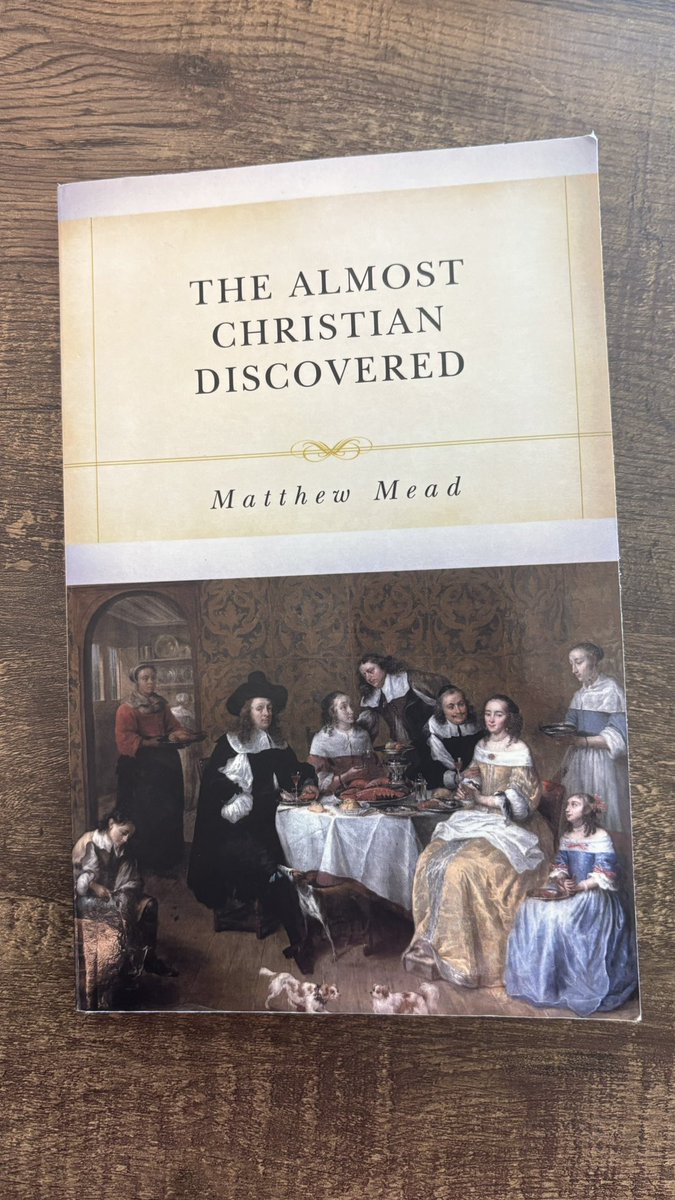
Beloved, let me tell you, there is no change, no conversion, that can stead your souls in the day of judgment this side of the saving work which is wrought on the soul by the Spirit of God renewing you throughout. The sober man, without this change, shall as surely go to hell as the foolish drunkard. Morality and civility may commend us to men, but not to God. They are of no value in the procurement of an eternal salvation. - Matthew Mead (1629-1699), The Almost Christian Discovered, 53. @RHB_Books
Darrell B. Harrison tweet media
English
12
36
184
8.1K