

David Mhlanga
637 posts
David Mhlanga
@Babamutsaa
One of our greatest freedoms is how we respond to things!!
Katılım Haziran 2025
389 Takip Edilen86 Takipçiler
@BabesweHunters Zvimwe zvinyaya zvamunobvunza soo une makore mangani ??

Here is how we work
Ukanditadzira woita sorry ndokuregerera
Wotadza futy woita sorry ndoregerera bt half moyo ndounenge waano
Paunotadza 3rd tym haa zvaendwa
ngl.link/babeswehunters1

Filipino
Kkkk haa wangu most women dont bring their minds to relationships unangwarira kusvika 40 uchimutsvaga asingawanike, wambozama ma engineer nema doctor here
ngl.link/babeswehunters1

Eesti

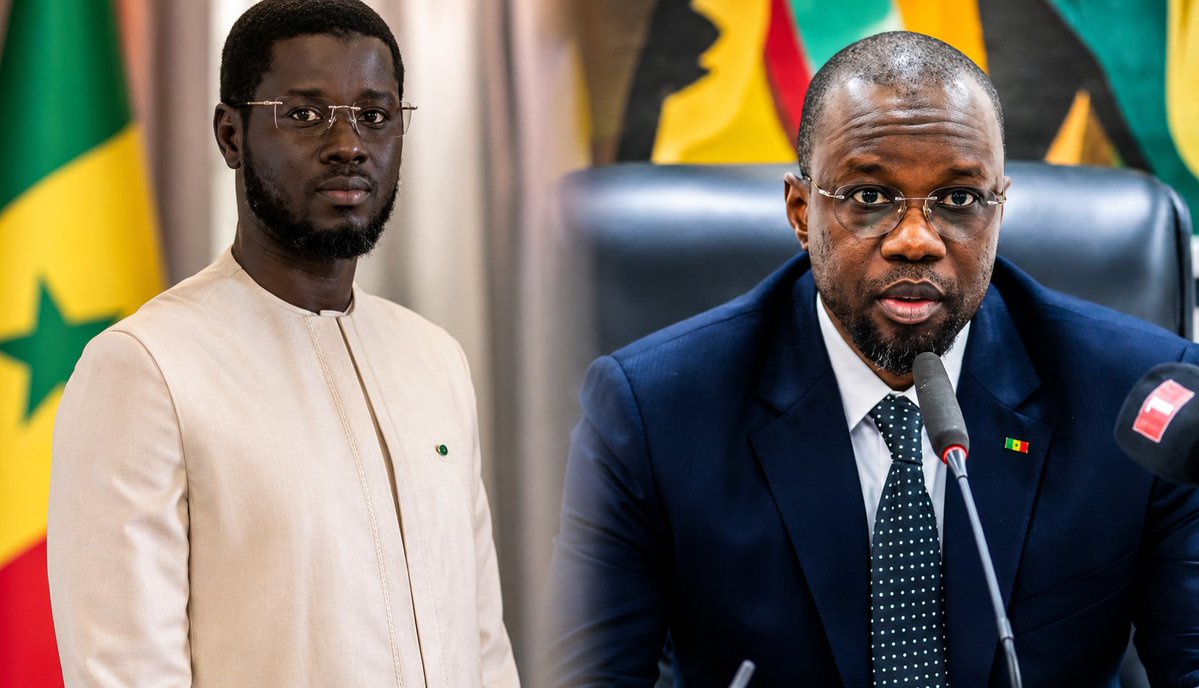
🇸🇳Ousmane Sonko: “There will be no system of hyper-presidentialism in Senegal today.”
Senegal’s parliament erupted in celebration and dance as Ousmane Sonko took his seat as the new President of the National Assembly, amid escalating tensions with President Bassirou Diomaye Faye.
“What is at stake is the relationship between morality and politics,” Sonko declared.
“The National Assembly will use all its levers of power firmly but responsibly moving forward,” Sonko warns in his first address, as he officially becomes Senegal’s second-highest state authority.
"I will not use the Assembly to feed personal vendettas. That would be a betrayal to our very own struggle."
While insisting that his party, PASTEF, will give President Faye “the best conditions to complete his term”, Sonko maintains that his party must remain central to the functioning of government. He argues that the appointment of the new Prime Minister, Ahmadou Al Aminou Lô, was carried out without adequate consultation with the ruling party, PASTEF.
“Our party was not involved in this decision to appoint the new prime minister. It was also not consulted in the formation of the government. You can’t have PASTEF without PASTEF.”
“I know the Prime Minister personally having worked with him for a year and a half during which he accomplished a tremendous amount of work.”
However, Sonko says he had “certain disagreements” with him on monetary and debt-related issues.
English
@TraceyMachona Anotokuudza kuti ndomwa pressure ndeyei ...ototi ndini ndinoidawo nhumbu here ?
Indonesia

Nhai varume, seriously why do you not make sure she takes the morning after pill,asati adzokera kumba kwavo womuti imwa,medza, Why wait kuzomuramba womusiya ne nhumbu?. why
English
@BabesweHunters Honestly speaking hamunao kucheka here mdara ?
English


Nhai varume nhasi ndine mubvunzo, murikufungeiko nezve vakomana kana varume vakabvisa vakadzi venyu humhandara? Munombofungawo nezvazvo here kana kuti murikufara henyu nesituation yacho.
Zvinhu zvakangooma kugara nemukadzi wausina kubvisa humhandara, panosimuka varume hauna kodzero yekusimuka, hurume hwacho hauna, wakaruma chii? Vasati varoora, hero shoko rechenjedzo, kana usina kumubvisa humhandara unoridiiko dohwe risisina muto rakatsengwatsengwa kare?
Suomi



@Cde_begar Facts are facts urimbwa hako but a special one ... a pitbull 😂
English
Ousmane Sonko had to go.
What did you expect President Faye to do? Work with someone who was undermining his leadership?
Yes, Sonko may be a good man and all, but Faye is the President.
There is a time for everything: a time to play revolutionary politics and a time to lead. It is Faye who is carrying the burden of Senegal's leadership. He has to make unpopular decisions.
Sonko should give Faye the space he needs to govern. When his time comes, he can do as he pleases with Senegal. I bet he will not be any different. Leading a country is not as easy as many of you make it seem.
The great Genghis Khan once said, "It is easy to conquer the world from horseback; it is dismounting and governing that is hard."
Sonko should give Faye the room he needs to work.
Good riddance.
English

@baroswahjr This is an African problem. In Europe even Israel most countries have 2 leaders and this is what makes them successful. A President that you never hear about and a Prime Minister or Cancellor that's the face of the country.
But greed n short-sightedness can't allow
English

“Power is sweet until you forget who actually hired you.”
Senegal’s political bromance between President Bassirou Diomaye Faye and PM Ousmane Sonko was always going to hit turbulence one day. These were two men who came into power as revolution partners, anti-establishment heroes, and symbols of a new Africa. But somewhere along the road, the Prime Minister started looking less like an employee and more like a co-president.
Let’s be honest, Sonko was the engine of the movement. The crowds loved him, the streets believed in him, and politically he had more fire than almost everyone around him. In many ways, he made the current president possible. Without Sonko’s sacrifices, battles, and influence, the current administration probably never happens. History will forever give him flowers for that.
But politics has one golden rule: there can never be two centers of power.
Insiders say the tension started when Sonko’s influence began overshadowing the presidency itself. Public appearances, government messaging, political strategy… sometimes it felt like the Prime Minister was the main character while the president was slowly becoming a supporting actor in his own government. That never ends well anywhere in Africa
A president can tolerate popularity.
A president can tolerate ambition.
But a president will NEVER tolerate feeling politically smaller inside his own house.
And that’s where the fallout reportedly began. Quiet disagreements turned into power struggles behind closed doors. One side pushing “we promised change,” the other side trying to maintain order, stability, and control of government. Eventually the relationship that once looked unbreakable started cracking in public.
The painful part? Both men actually wanted Senegal to succeed. But leadership is delicate. Sometimes the person who helps you climb the mountain forgets that only one person wears the crown at the top.
Now Sonko leaves office with two legacies:
1. The revolutionary who helped awaken Senegalese youth and reshape the country’s politics.
2. The powerful PM who may have overplayed his hand by appearing bigger than the presidency itself.
And for President Faye, this is now the real test. Campaign energy is over. Friendship politics is over. Governing starts now.
African politics always teaches one lesson:
Kingmakers often become too powerful for kings to sleep comfortably.

English
@baroswahjr Thank you for this view 💥💥l haven't had any problem with Faye
English
Power has one rule politicians always ignore until it’s too late: never create a center of power parallel to your own.
President Faye’s decision may look harsh to supporters, but history keeps teaching the same lesson repeatedly. Kibaki and Raila started as partners, then the system slowly developed two presidents in one government. Ruto and Gachagua? Same script, different cast. Once deputies begin building independent political gravity, the presidency starts competing with itself.
The 48 Laws of Power says it clearly: never let anyone around you become too powerful or too visible within your own kingdom. The moment people start asking “who is really in charge here?” instability begins quietly.
Politics is not friendship management. It is power management. And every president eventually realizes there can only be one sun in the solar system.


English


Pane nyaya yandaverenga pa ZimDaily hanzi “a married man impregnates a house maid of his side chick” varume hatigute shuwa😂😂😂🙌
Filipino
Loadshedding is ENDING FOR GOOD under President @edmnangagwa …. Access to RELIABLE & AFFORDABLE electricity is a prerequisite for Economic Development….
By 2030, Solar Power will be a major source of power in Zimbabwe & other developing countries.

English
The question of whether Parliament will conduct a secret ballot is somewhat moot; the predominant sentiment among MPs is a palpable support for CAB3.
It stands to reason that individual legislators would not oppose an amendment that postpones a costly election, thereby prolonging their own tenure. This scenario benefits not only them but also the nation at large.
They can forgo exorbitant campaign expenses associated with seeking re-election. Thus, behind closed doors, many may indeed prefer a secret ballot, even if they do not publicly disclose such preferences. In this context, the CAB3 battle appears to have been won already.
It makes more sense that only after Parliament votes can those eager to challenge the Bill contest in Court. As it is, it appears premature to challenge something that hasn't as yet been approved.
Even then, Parliament may duly enact the legislation, and yet the President might refrain from signing it into law. What is the urgency in seeking judicial recourse over a law that is, at present, non-existent?
newzimbabwe.com/members-of-par…
English