CryptoLaunch

1K posts

CryptoLaunch banner
CryptoLaunch

CryptoLaunch

@BabyAmple

Value maxi

Katılım Ekim 2022
489 Takip Edilen328 Takipçiler
Sabitlenmiş Tweet
CryptoLaunch
CryptoLaunch@BabyAmple·
There are certain projects that remind you why you are here in crypto. @AmpleforthOrg is 1 of those. They released $SPOT which is an inflation resistant stable coin that is used by breaking down $AMPL. It is a flywheel that is only possible in crypto.
English
1
2
28
2K
Ampleforth
Ampleforth@AmpleforthOrg·
Market extremes expose monetary design. In euphoric phases, $AMPL tends to trade above its purchasing power target. The protocol responds with positive rebases, expanding supply into demand. Instead of forcing price to absorb all upside pressure, AMPL distributes part of that pressure into balances. Volatility still exists, but it is reorganized across supply rather than concentrated purely in price. In panic phases, AMPL often trades below the target. The response is negative rebases, contracting supply as demand collapses. While frequently misunderstood as “loss,” it is actually the system expressing monetary policy: when demand falls, units contract so the discount can compress over time. There is no peg defense, no collateral liquidation, and no discretionary intervention. The response is mechanical. Across extremes, AMPL does not attempt to suppress volatility. It routes volatility through supply adjustments. Fixed-supply assets force all shocks into price. Pegged assets externalize shocks into collateral and liquidations. AMPL internalizes them through rebasing. The tradeoff is psychological, not structural: balances change visibly. The benefit is policy consistency. Overall, AMPL behaves less like an equity and more like a monetary system with supply as its control surface.
Ampleforth tweet media
English
14
5
36
5K
CryptoLaunch
CryptoLaunch@BabyAmple·
A great way to capitalize on the future upside of Bitcoin is through $JrBTC by @FragmentsOrg! May sure you sign up for the waitlist. The time to get educated is now in a bear market so you will be prepared for the eventual bull! link.fragments.org/43BWC5
English
0
0
2
37
Ampleforth
Ampleforth@AmpleforthOrg·
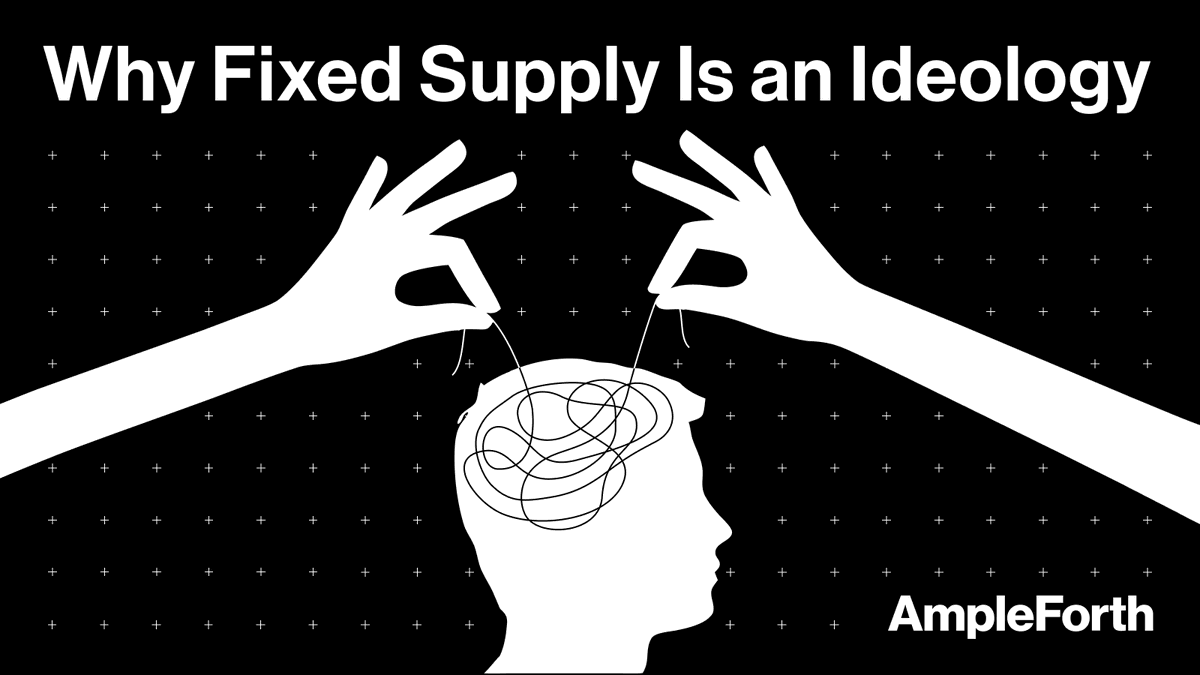
Fixed supply is often framed as a neutral monetary design. In practice, it’s an ideology. It encodes a belief that money should only optimize for scarcity and long-term appreciation. That works well for assets meant to be held, but it breaks down when you ask money to function as money. In a fixed-supply system, every increase in demand must express itself through price. Volatility becomes the clearing mechanism. But that dynamic rewards early holders, penalizes late users, and makes everyday economic coordination harder. While deflation may sound appealing initially, a unit of account that rises in value discourages spending, worsens debt burdens, and makes long-term contracts more brittle. When money becomes more valuable over time, obligations become heavier, and productive activity is distorted by the expectation of future appreciation. Bitcoin proves fixed supply can succeed as digital scarcity. But scarcity is not the same as monetary suitability. AMPL is the first asset to ever take the opposite approach. Instead of fixing supply and letting price absorb shocks, it fixes a purchasing power target and lets supply adapt. This reframes monetary policy as a transparent, rules-based mechanism rather than a narrative about scarcity. Fixed supply is a powerful idea. It’s just not a neutral one.
Ampleforth tweet media
English
13
4
35
3.2K
Ampleforth
Ampleforth@AmpleforthOrg·
In traditional systems, monetary policy is discretionary. Committees meet. Assumptions change. Incentives shift. Supply decisions are made by people, under pressure, with incomplete information and political constraints. Even when well-intentioned, discretion is the point of fragility. Ampleforth removes discretion entirely. $AMPL does not rely on governors, voters, or emergency interventions. Its supply responds automatically to demand, according to transparent, pre-defined rules. No meetings. No exceptions. No human override. Supply itself is the policy. Decentralized networks encode choices about power, authority, and control directly into software. AMPL makes one such choice explicit: monetary policy should be mechanical, not managerial. By fixing a target instead of a supply, AMPL treats volatility as a signal to be redistributed rather than some crisis to be managed. The result isn’t the absence of policy, but policy without discretion. In the end, AMPL asks a simple question: what if rules were the institution?
Ampleforth tweet media
English
13
7
35
3.1K
$SPOT
$SPOT@SPOTprotocol·
Slowly but surely, beating all inflationary assets
$SPOT tweet media
English
8
2
22
417
Fragments
Fragments@FragmentsOrg·
Leverage isn’t loud because it’s greedy. It’s loud because it was built for trading, not holding. For Bitcoin holders, conviction is expressed through time, not constant action. That’s why most leverage structures quietly fail long-term believers. We break this down here:
Fragments@FragmentsOrg

x.com/i/article/2013…

English
1
1
16
819
Fragments
Fragments@FragmentsOrg·
The core problem with modern leverage is not risk. It is time. Most leverage products embed costs and constraints that compound the longer a position is held. Funding, margin pressure, liquidation thresholds, and volatility clustering all grow more dangerous with duration. Even when the long-term thesis is correct, the path matters. Temporary drawdowns can permanently end positions. Survival becomes a function of timing, not conviction. Bitcoin holders think in cycles and decades, but leverage products demand constant attention and rapid reaction. ◇ Bitcoin Junior is built around a different premise: long-term exposure should survive volatility, not be destroyed by it. Leverage that cannot tolerate time is not leverage for investors. Join the waitlist: link.fragments.org/YDD6QP
Fragments tweet media
English
14
0
31
1.6K
Ampleforth
Ampleforth@AmpleforthOrg·
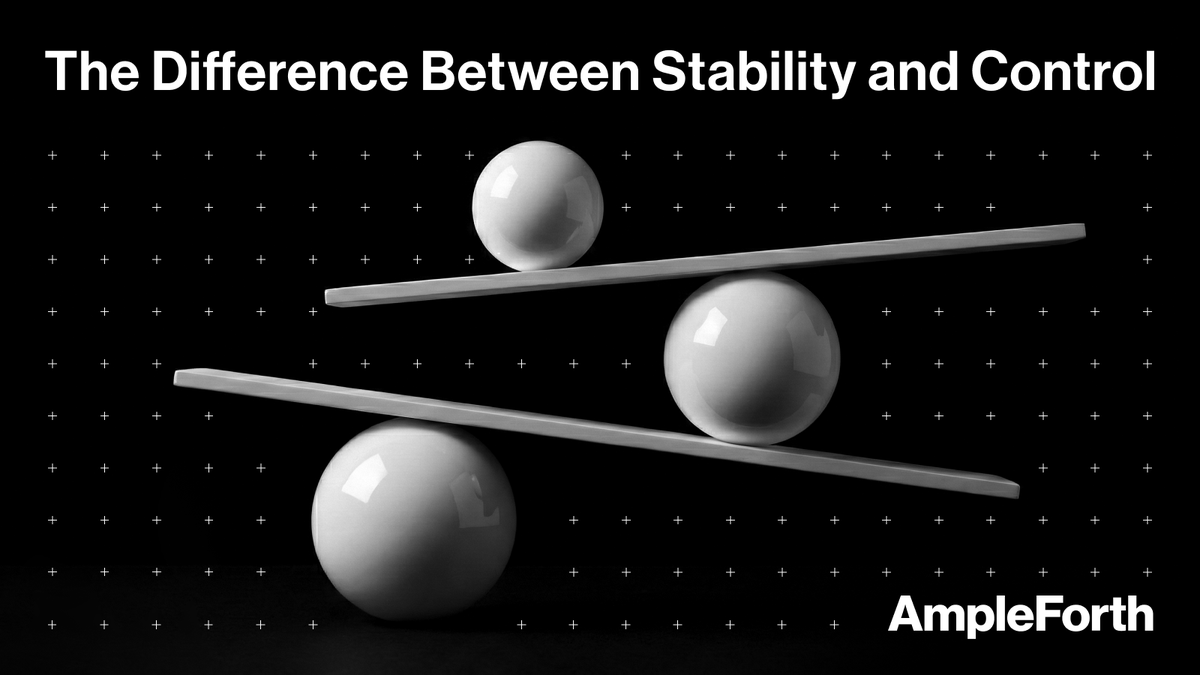
Most financial systems that promise stability rely on control. They fix prices, enforce pegs, or depend on active management to keep things aligned. As long as conditions are calm, this works. But when markets change, these systems must intervene: raise rates, deploy reserves, freeze flows, or rewrite rules. That is not stability. It is maintenance. $SPOT is part of a new type of system. Instead of trying to hold outcomes in place, it's designed to adjust automatically. Supply and incentives respond to demand through rules rather than discretion. No one steps in to “save” the system, because the system is built to move. That matters because control concentrates failure. When assumptions break, controlled systems face cliffs. Adaptive systems absorb stress gradually. $SPOT does not promise a rigid peg. It promises resilience. Stability, in this model, is not something enforced. It is something that emerges.
Ampleforth tweet media
English
14
1
35
3.6K
$SPOT
$SPOT@SPOTprotocol·
Psst, you want some $SPOT?
$SPOT tweet media
English
7
1
14
553
CryptoLaunch
CryptoLaunch@BabyAmple·
You have to love $SPOT here. It’s under $1
GIF
English
0
0
1
68