Bad theory labs

222 posts

Bad theory labs banner
Bad theory labs

Bad theory labs

@Badtheorylabs

infrastructure for AI native computing https://t.co/dYotWXnaqn maker of @retaindb. E54u2LpWSNZ5LqLitetfw7Ajc7t4phCPHCJuJVRPpump

Katılım Nisan 2026
42 Takip Edilen636 Takipçiler
Sabitlenmiş Tweet
Bad theory labs
Bad theory labs@Badtheorylabs·
🚨 WE'RE LIVE! 🚨 The relaunch is officially live. Thank you to everyone who stood by us and believed in the project. This is a fresh start, and we're focused on building a stronger community from here. Contract Address (CA): E54u2LpWSNZ5LqLitetfw7Ajc7t4phCPHCJuJVRPpump What you can do: ✅ Buy and hold ✅ Share the launch ✅ Invite others to join the community ✅ Help us build long term This is just the beginning. Let's make this launch count. 🚀
English
29
5
40
8.5K
Bad theory labs
Bad theory labs@Badtheorylabs·
@GFTY01 we literally gave everybody more window to build out their stuff and i was too sick to review anythign at that point if you feel you have been wrong send a message in discord
English
1
0
0
128
GIFTIFY
GIFTIFY@GFTY01·
@Badtheorylabs You said 48 hrs just as a hook for the little guys to come on board then postponed it to do the dirty work That's just fucked up
English
2
0
0
128
Bad theory labs
Bad theory labs@Badtheorylabs·
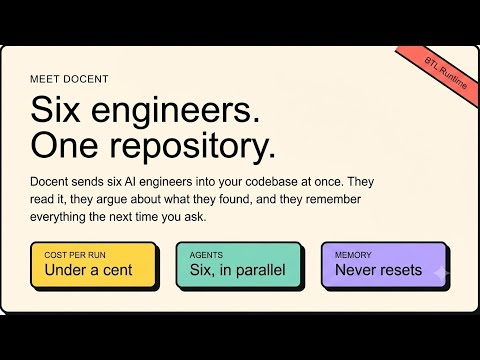
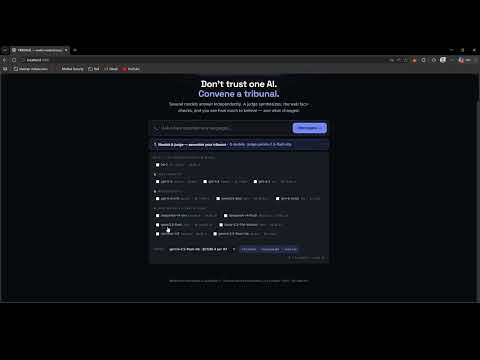
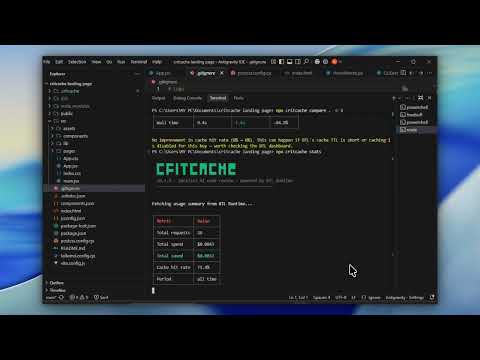
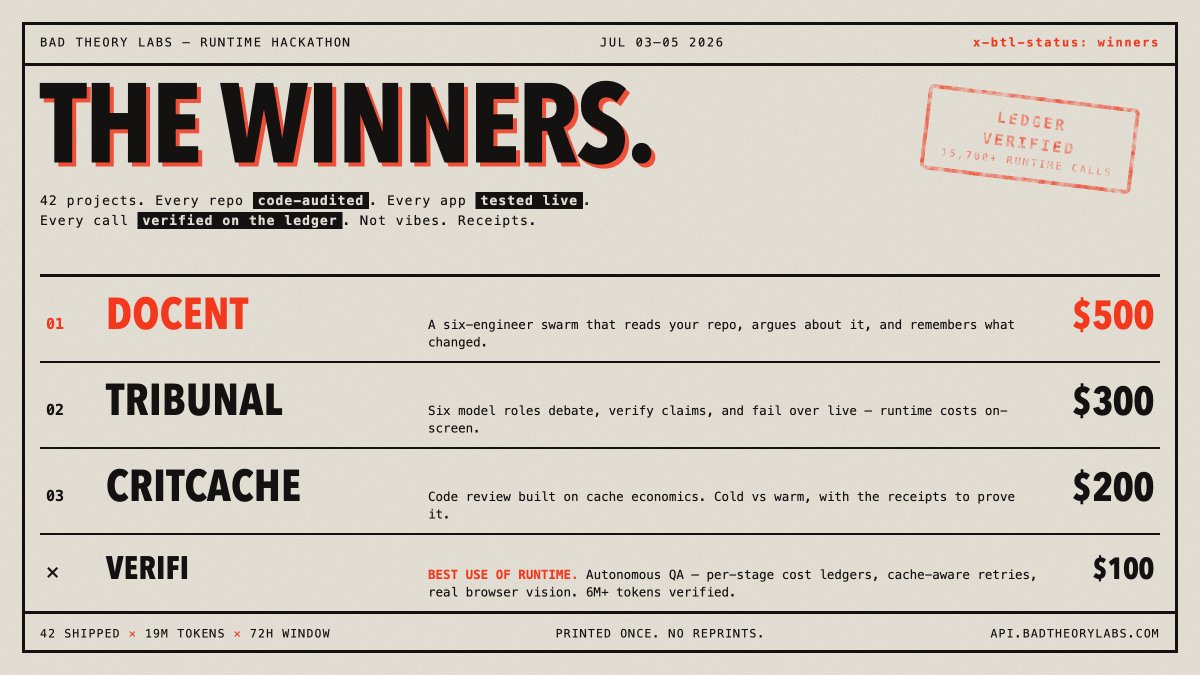
The BTL Runtime Hackathon is decided. 42 projects. 72 hours. 40M tokens burned. We did not judge on vibes. Every repo was code-audited. Every live app was tested. Every runtime call was verified against the usage ledger. Not vibes. Receipts. Here are your winners. 1st place: DOCENT ($500) A six-engineer AI swarm that reads your repo, argues about what it finds, and remembers what changed the next time you ask. 900+ verified runtime calls across chat, embeddings, and streaming, all load-bearing. Code: github.com/IamHarrie-Labs… Try it: trydocent-production.up.railway.app Demo: youtu.be/bXbu2HVZuh8 2nd place: TRIBUNAL ($300) Six model roles (panelists, judge, claim extractor, verifier, skeptic) debate live through the Runtime, with failover when a route dies and every cost header on-screen. The highest verified score of the event. Code: github.com/knockknock1456… Try it: tribunal-z2jl.onrender.com Demo: youtu.be/-LYkG-QIzMc 3rd place: CRITCACHE ($200) Code review built on cache economics. Cold run vs warm run, with the receipts to prove the savings. The cleanest build we audited: every commit inside the window, zero red flags. Code: github.com/DiverseXL/crit… Site: critcache.vercel.app Demo: youtu.be/Pem0BKjkL4Y Best Use of Runtime: VERIFI ($100) An autonomous QA agent that browses your app and finds real bugs. Per-stage cost ledgers built from our headers, cache-aware retries, and a real browser vision loop. 6M+ tokens of verified workload. The Runtime was not decoration, it was the engine. Code: github.com/torpadeka/veri… Demo: youtu.be/wze8sQ3KGCw Honorable mentions, all code-audited, all real: readIQ, student RAG with vision OCR: github.com/muhaj-dev/Read… Vintage, verified-computation investing agent: github.com/AIINSTARAJ/Vin… Dispatch, cache headers as product data: github.com/Xconmax245/Dis… Crosscheck, extraction you can trust: github.com/PugarHuda/cros… flex, multi-model contract audit swarm: github.com/Techkeyy/flex HIVE, scoped memory with auditor veto: github.com/Kaypoops/hive Icaruz, cache-economics knowledge market: github.com/arko05roy/Icar… BtlRadar, cost-tiered security cascade: github.com/TheWeirdDee/bt… Helena Labs, incident copilot: github.com/Pavan-personal… How we judged: 30 points Runtime use, 25 usefulness, 20 execution, 15 creativity, 10 presentation. Then we verified everything. Cloned every repo. Probed every live app. Matched every claim against the ledger. Congratulations to every team that shipped. The next event is coming.
YouTube video
YouTube
YouTube video
YouTube
YouTube video
YouTube
YouTube video
YouTube
Bad theory labs tweet media
English
9
6
38
2.8K
Temu☆
Temu☆@theyclonedsam·
Thank you @Badtheorylabs !!!!!
Temu☆ tweet media
Bad theory labs@Badtheorylabs

The BTL Runtime Hackathon is decided. 42 projects. 72 hours. 40M tokens burned. We did not judge on vibes. Every repo was code-audited. Every live app was tested. Every runtime call was verified against the usage ledger. Not vibes. Receipts. Here are your winners. 1st place: DOCENT ($500) A six-engineer AI swarm that reads your repo, argues about what it finds, and remembers what changed the next time you ask. 900+ verified runtime calls across chat, embeddings, and streaming, all load-bearing. Code: github.com/IamHarrie-Labs… Try it: trydocent-production.up.railway.app Demo: youtu.be/bXbu2HVZuh8 2nd place: TRIBUNAL ($300) Six model roles (panelists, judge, claim extractor, verifier, skeptic) debate live through the Runtime, with failover when a route dies and every cost header on-screen. The highest verified score of the event. Code: github.com/knockknock1456… Try it: tribunal-z2jl.onrender.com Demo: youtu.be/-LYkG-QIzMc 3rd place: CRITCACHE ($200) Code review built on cache economics. Cold run vs warm run, with the receipts to prove the savings. The cleanest build we audited: every commit inside the window, zero red flags. Code: github.com/DiverseXL/crit… Site: critcache.vercel.app Demo: youtu.be/Pem0BKjkL4Y Best Use of Runtime: VERIFI ($100) An autonomous QA agent that browses your app and finds real bugs. Per-stage cost ledgers built from our headers, cache-aware retries, and a real browser vision loop. 6M+ tokens of verified workload. The Runtime was not decoration, it was the engine. Code: github.com/torpadeka/veri… Demo: youtu.be/wze8sQ3KGCw Honorable mentions, all code-audited, all real: readIQ, student RAG with vision OCR: github.com/muhaj-dev/Read… Vintage, verified-computation investing agent: github.com/AIINSTARAJ/Vin… Dispatch, cache headers as product data: github.com/Xconmax245/Dis… Crosscheck, extraction you can trust: github.com/PugarHuda/cros… flex, multi-model contract audit swarm: github.com/Techkeyy/flex HIVE, scoped memory with auditor veto: github.com/Kaypoops/hive Icaruz, cache-economics knowledge market: github.com/arko05roy/Icar… BtlRadar, cost-tiered security cascade: github.com/TheWeirdDee/bt… Helena Labs, incident copilot: github.com/Pavan-personal… How we judged: 30 points Runtime use, 25 usefulness, 20 execution, 15 creativity, 10 presentation. Then we verified everything. Cloned every repo. Probed every live app. Matched every claim against the ledger. Congratulations to every team that shipped. The next event is coming.

English
1
0
3
120
Bad theory labs
Bad theory labs@Badtheorylabs·
It’s time to announce our hackathon winners…:.
English
0
0
18
849
Bad theory labs retweetledi
Al-ameen
Al-ameen@alameenpd·
What you're watching is qwen3 4b, a model that runs on a consumer laptop and cannot see images at all, uploading a file and confirming it succeeded. no screenshot was ever sent to it. the page arrives as text nodes built from raw pixels, no DOM tree, no vision model, nothing. this morning I published a thesis paper called ESP. the claim: a small text-only model can operate a computer without ever seeing a screenshot, by holding a skeleton of the screen and sensing change the way a bat senses a cave. it clicks "Choose file". it learns the filename changed to report.pdf through a 10 token change event. it notices the Upload button just went live. it clicks it, then reads the success banner from a region that did not exist 2 seconds earlier. then it says done, with the document ID, and we verify success from the actual page state, not from the model's word. perception layer is a few hundred lines of ordinary code. zero GPU. zero vision model anywhere in the loop. now the honest part. look at node 4 in the trace, the phantom node labeled "(". that's a bug. the decomposition carved the edge of a button into its own cell and OCR hallucinated a character onto it. it's also failure mode #1 in the paper, written this morning before this code existed. the model survived because the labels were legible enough to route around the bad geometry. on an uglier page it clicks the sliver. that's exactly the kind of failure the pre-registered plan exists to measure instead of hide. PS: I DIDNT MAKE THE VIDEO, THE VIDEO WAS MADE BY A MODEL WITHOUT INTERFERRING WITH MY WORK OR COMPUTER, MORE ON THAT LATER
Al-ameen@alameenpd

If you're reading this, stop scrolling. I might have just reinvented computer use. Might. That word is doing a lot of work here and I'll explain why at the end, because the craziest part of this isn't even the claim. Ok so from the top. Every computer use agent today works the exact same way. Take a screenshot. Feed it to a huge vision model. Act once. Sleep for some guessed amount of time. Screenshot again. Over and over till the task is done or the agent falls apart. Think about what that loop actually costs you. A 20 step task pays for 20 full perceptions of a screen that barely changed. The page structure gets rebuilt from pixels every single step, and rebuilt slightly differently each time, so agents literally lose track of buttons they already clicked. And between screenshots the agent is fully blind. It clicks a button and finds out if the click worked one whole screenshot later. If it finds out at all. The entire field's answer to this? Bigger vision models. Denser screenshots. Capture more often. Bigger eyes basically. I'm going the opposite direction. Here's the thing everything rests on: a screen is not a photograph. It's the output of a layout engine. It's mostly empty rectangles. The structure is a handful of regions that matter. The meaning is carried by text. And change is sparse, one progress bar ticks while everything else sits still. Every one of those four properties has a classical, decades old, basically free sensor. Quadtrees. Hit testing and hover response. OCR inside known rectangles. And my personal favorite, dirty rectangle tracking, which VNC and RDP have been transmitting as their literal wire format since the 90s. The exact change stream agents are dying for has been getting computed for free on every remote desktop session on the planet for 30 years. Nobody ever handed it to a model as a sense organ. So I did. It's called ESP. Echo-Skeleton Perception. And yes the pun is deliberate. It gives a model with no eyes something like extrasensory perception. A bat flying through a cave in the dark. It perceives in three passes: Skeleton. One framebuffer grab gets carved into an adaptive region tree. Big lazy cells over empty space, tiny dense ones hugging content. Then it probes the screen like a bat pinging a cave. Hit tests, hover sweeps, cursor changes. When the cursor flips from arrow to hand, the OS just told you something is clickable. Free. No neural network anywhere. Populate. OCR runs only inside the cells the skeleton already found. Faster and more accurate than reading a whole page, and every word lands already attached to a node. Icons get hovered once, the tooltip names them, name gets cached forever. The skeleton learns to read. Echo. The screen gets diffed at millisecond scale and changes arrive as tiny events against a skeleton the model already holds: changed(node 51, text: "47%" -> "100%") appeared(node 60, banner "Upload complete") no_change(after=click(node 14), window=600ms) Look at that last one again. no_change is a first class percept. The silently failed click, the number one killer of agent runs, currently discovered a full screenshot later or never, becomes something the agent feels instantly and just retries. The failure is a sensation, not a deduction from a later photo. And waiting stops being sleep(3000) and a prayer. The agent subscribes to quiet(node) and the world wakes it up. End result: a small local text only model, 4B to 14B, the kind that runs on your laptop, holds a labeled skeleton as world state, receives tiny deltas, and acts through strict tool calls. It never sees an image. Not once. The whole perception layer is a few thousand lines of ordinary code. No GPU anywhere in the loop. Every token the model spends goes to actual thinking instead of re-photographing the same static form for the 8th time. The whole field is racing toward bigger eyes. ESP is my bet that for most of the work people actually automate, you don't need eyes at all. You need a skeleton and echoes. Now the part I said I'd explain. I published this paper before writing the prototype. On purpose. The paper has four falsifiable hypotheses, each with a hard number attached. Within 10 points of an accessibility tree agent. At least 5x cheaper in perception tokens. At least 15 points of recovery on silently failing controls. At least 70% of success retained on canvas pages where DOM agents drop to zero. Those numbers are locked in print right now, before a single line of code exists. Same with the decision rule for every possible outcome, including the branch where everything fails and I publish the negative result with the full trace corpus. There is no version of this where I quietly move the goalposts to fit whatever the experiments say. A bat doesn't decide where the cave wall is after it hears the echo. Neither will I. If you've been following Bad Theory Labs you already know the shape of this bet. Prism externalizes the reasoning scaffolding of frontier models into inspectable modules. ESP does the same thing to perception. Two halves of one thesis: mechanical scaffolding around small local models, everywhere the field assumes you need a giant one. The paper is live. Architecture, an honest accounting of which pieces are old (most of them) and what's actually new, a worked session, the pre-registered experimental plan, and six named failure modes where I expect this to get attacked. Prototyping started. The experiments cost a weekend and zero GPU hours, which is exactly why the claims are locked before they run. Read it. and Scrutinize it Paper in comments

English
0
2
16
879
Bad theory labs retweetledi
Al-ameen
Al-ameen@alameenpd·
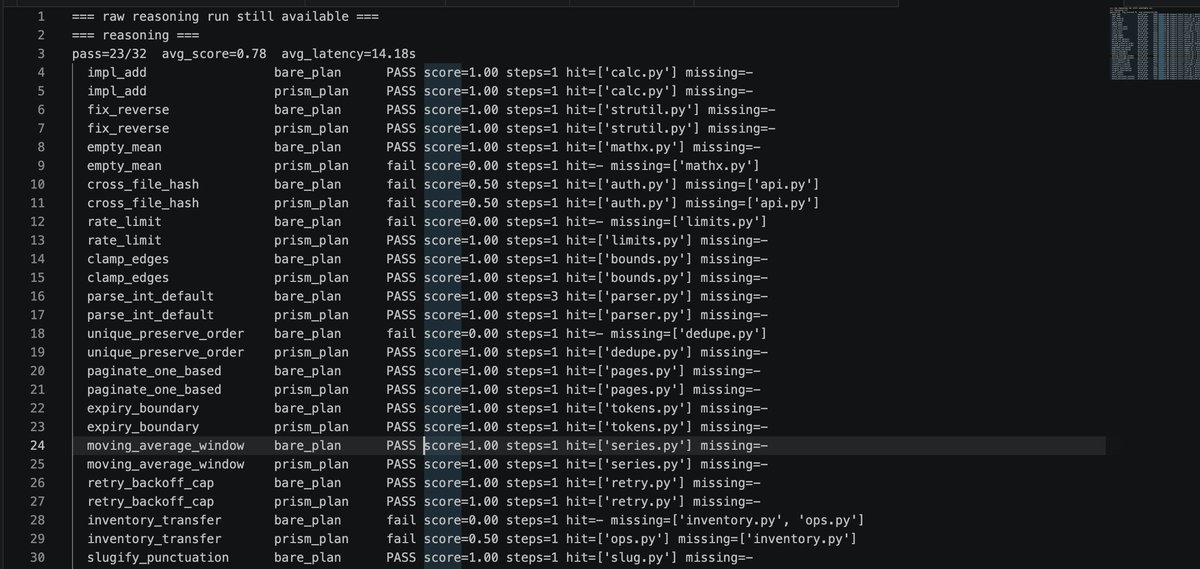
The story behind Prism, since the announcement is on the lab account and this one's mine. A few weeks ago I was watching an 8B model fail at a task I knew it could do. It wrote perfectly fine code in the wrong file. It didn't lack intelligence. It lacked awareness. It had never seen the repo the way I see a repo. That bothered me more than it should have. Because the difference between that model and a frontier model on that task wasn't really "smarter weights." The frontier model would have held the repo in attention, planned the change, checked its own work. All invisible. All internal. All unavailable to anything I can run on my own machine. So the question became: how much of that invisible work can I pull out of the model and build as actual software? Turns out: a lot more than I expected, and less than I hoped, and finding out which was which is the whole story. First thing I built was context a code graph over the repo, hybrid retrieval, packed into a budget. That worked. Then I got excited and started building a planning layer, because obviously reasoning is next, right? Then I stopped and did something uncomfortable: I ran a deep research pass against my own design. Pulled the actual literature R1, process supervision, test-time compute, the harness papers extracted the falsifiable claims, and had them adversarially verified. Explicitly allowed the process to come back and tell me I was wrong. It did. Twice. Wrong #1: you cannot prompt-scaffold a vanilla small model into reasoning. That capability gets trained into weights. What scaffolding CAN do is hold the global plan outside the model so the model only ever has to think locally which is a different, humbler, more honest claim than the one I started with. Wrong #2: asking a model to critique its own output is roughly useless and sometimes actively harmful models flip their own correct answers to wrong. The reliable verifier was sitting there the whole time: the compiler. The test suite. Execution doesn't have opinions. I rebuilt around what survived. That version is what shipped today. My favorite thing in it isn't even the model orchestration. It's that Prism can derive a real multi-step plan from the dependency graph alone zero model calls. The structure of the code already contains most of the plan. You just have to read it. What I'm not going to tell you: that this makes a 7B model into GPT-5. It doesn't. Multi-file changes are still hard. The harness sometimes makes mistakes the bare model wouldn't I have the failure cases documented in the repo, next to the wins, because I'd rather you find them there than in my mentions. What I will tell you: an open model on my laptop in Lagos now reads a repo it's never seen, plans the change, executes it step by step, runs the tests, catches its own failure, and only ships green. No API key. No rent. And I can inspect every single decision it made along the way which is more than anyone can say about what happens inside a frontier model's head. The weights are becoming a commodity. The scaffolding around them is where the interesting engineering lives. I'm building that part in the open. Context was the first plate. Prism is the suit.
Bad theory labs@Badtheorylabs

For the past two years the entire AI industry has been running one play: make the model bigger. Bigger weights, bigger clusters, bigger API bills. And it works — if you're one of five labs on earth. We've been building the other play. Here's the thing nobody says clearly: a frontier model is not just big weights. It's big weights plus an enormous amount of invisible work the model does silently in its head. It holds an entire repo in attention. It plans ten steps ahead. It checks its own output before you see it. It recalls facts. It orchestrates tools without fumbling. That silent scaffolding IS most of what makes frontier feel frontier. Small models can't do that scaffolding internally. So everyone concluded small models are toys. Wrong conclusion. If the scaffolding is the magic —rip the scaffolding OUT of the weights. Make every piece of it an explicit, deterministic, inspectable module that lives outside the model. Then run a small model through the modules. That's Prism. An inference-time capability layer for open models: ▸ CONTEXT — a code graph + hybrid retrieval that gives an 8B model whole-repo awareness. It doesn't guess which files matter. It knows, from the dependency structure. ▸ PLAN — the harness holds the plan as explicit external state and feeds the model one bounded step at a time. The model reasons locally; the harness reasons globally. Prism can derive a real multi-step plan from the code graph with ZERO model calls. Planning as infrastructure, literally. ▸ TOOLS — typed schemas, validation, retry. A small model physically can't fumble the mechanics. ▸ VERIFY — this is the one I'm most proud of. Prism doesn't ask the model to judge itself (the research is brutal on self-critique — models flip their own correct answers to wrong). It compiles. It runs your tests. It reads the diagnostics. Nothing ships until execution says so. The compiler is a free frontier-grade verifier and almost nobody treats it that way. Every layer is deterministic where it can be. Every decision is inspectable you can see exactly which files were retrieved, why, what the plan was, what failed, what got repaired. Try inspecting what a frontier model did in its head. You can't. That opacity is a product decision you've been paying for. And here's what makes this different from every wrapper you've seen: we researched our own idea adversarially before shipping it. Pulled the 2024–2026 literature DeepSeek-R1, process supervision, test-time compute scaling, the harness-engineering papers extracted the falsifiable claims, and put them through adversarial verification votes. Some of our own design assumptions got killed. We rebuilt around what survived. The receipts are public. What runs today, on a laptop, no API key, no rent: An open 8B model reads a repo it has never seen → Prism maps it → derives a plan → executes it step by bounded step → runs the tests → catches its own failure → repairs → ships only when everything is green. The model is swappable. Any open checkpoint inherits the whole suit. The weights are a commodity. The harness is the moat. Every lab is betting test-time compute beats bigger models. We're making that bet a product you can run tonight, for free, offline, and read every line of. A laptop-sized model behaving frontier-level not because it is one, but because it's wearing the exoskeleton of one. Context was the first plate. This is the suit. Prism, by Bad Theory Labs. github.com/Badtheorylabs/…

English
2
2
19
801
Bad theory labs
Bad theory labs@Badtheorylabs·
For the past two years the entire AI industry has been running one play: make the model bigger. Bigger weights, bigger clusters, bigger API bills. And it works — if you're one of five labs on earth. We've been building the other play. Here's the thing nobody says clearly: a frontier model is not just big weights. It's big weights plus an enormous amount of invisible work the model does silently in its head. It holds an entire repo in attention. It plans ten steps ahead. It checks its own output before you see it. It recalls facts. It orchestrates tools without fumbling. That silent scaffolding IS most of what makes frontier feel frontier. Small models can't do that scaffolding internally. So everyone concluded small models are toys. Wrong conclusion. If the scaffolding is the magic —rip the scaffolding OUT of the weights. Make every piece of it an explicit, deterministic, inspectable module that lives outside the model. Then run a small model through the modules. That's Prism. An inference-time capability layer for open models: ▸ CONTEXT — a code graph + hybrid retrieval that gives an 8B model whole-repo awareness. It doesn't guess which files matter. It knows, from the dependency structure. ▸ PLAN — the harness holds the plan as explicit external state and feeds the model one bounded step at a time. The model reasons locally; the harness reasons globally. Prism can derive a real multi-step plan from the code graph with ZERO model calls. Planning as infrastructure, literally. ▸ TOOLS — typed schemas, validation, retry. A small model physically can't fumble the mechanics. ▸ VERIFY — this is the one I'm most proud of. Prism doesn't ask the model to judge itself (the research is brutal on self-critique — models flip their own correct answers to wrong). It compiles. It runs your tests. It reads the diagnostics. Nothing ships until execution says so. The compiler is a free frontier-grade verifier and almost nobody treats it that way. Every layer is deterministic where it can be. Every decision is inspectable you can see exactly which files were retrieved, why, what the plan was, what failed, what got repaired. Try inspecting what a frontier model did in its head. You can't. That opacity is a product decision you've been paying for. And here's what makes this different from every wrapper you've seen: we researched our own idea adversarially before shipping it. Pulled the 2024–2026 literature DeepSeek-R1, process supervision, test-time compute scaling, the harness-engineering papers extracted the falsifiable claims, and put them through adversarial verification votes. Some of our own design assumptions got killed. We rebuilt around what survived. The receipts are public. What runs today, on a laptop, no API key, no rent: An open 8B model reads a repo it has never seen → Prism maps it → derives a plan → executes it step by bounded step → runs the tests → catches its own failure → repairs → ships only when everything is green. The model is swappable. Any open checkpoint inherits the whole suit. The weights are a commodity. The harness is the moat. Every lab is betting test-time compute beats bigger models. We're making that bet a product you can run tonight, for free, offline, and read every line of. A laptop-sized model behaving frontier-level not because it is one, but because it's wearing the exoskeleton of one. Context was the first plate. This is the suit. Prism, by Bad Theory Labs. github.com/Badtheorylabs/…
Bad theory labs tweet media
English
7
9
43
20K
Bad theory labs retweetledi
0xEnspine
0xEnspine@xEnspine_x·
Ask one AI you get one confident answer, right or wrong. So I built Tribunal for the @Badtheorylabs Runtime hackathon: models from rival labs answer independently, a judge maps consensus vs dispute, and the live web fact-checks the claims. ~1¢ per verdict. github.com/knockknock1456…
0xEnspine tweet media
English
1
2
12
290
Bad theory labs retweetledi
chimdi
chimdi@chimdi_Xi·
Built MeetingOS in 48hrs for the @BadTheoryLabs Runtime Hackathon. It listens to your meetings and tells you when your team contradicts itself. Here's how it works 🧵
English
1
2
11
245
Bad theory labs retweetledi
Arko Roy
Arko Roy@notarkoroy·
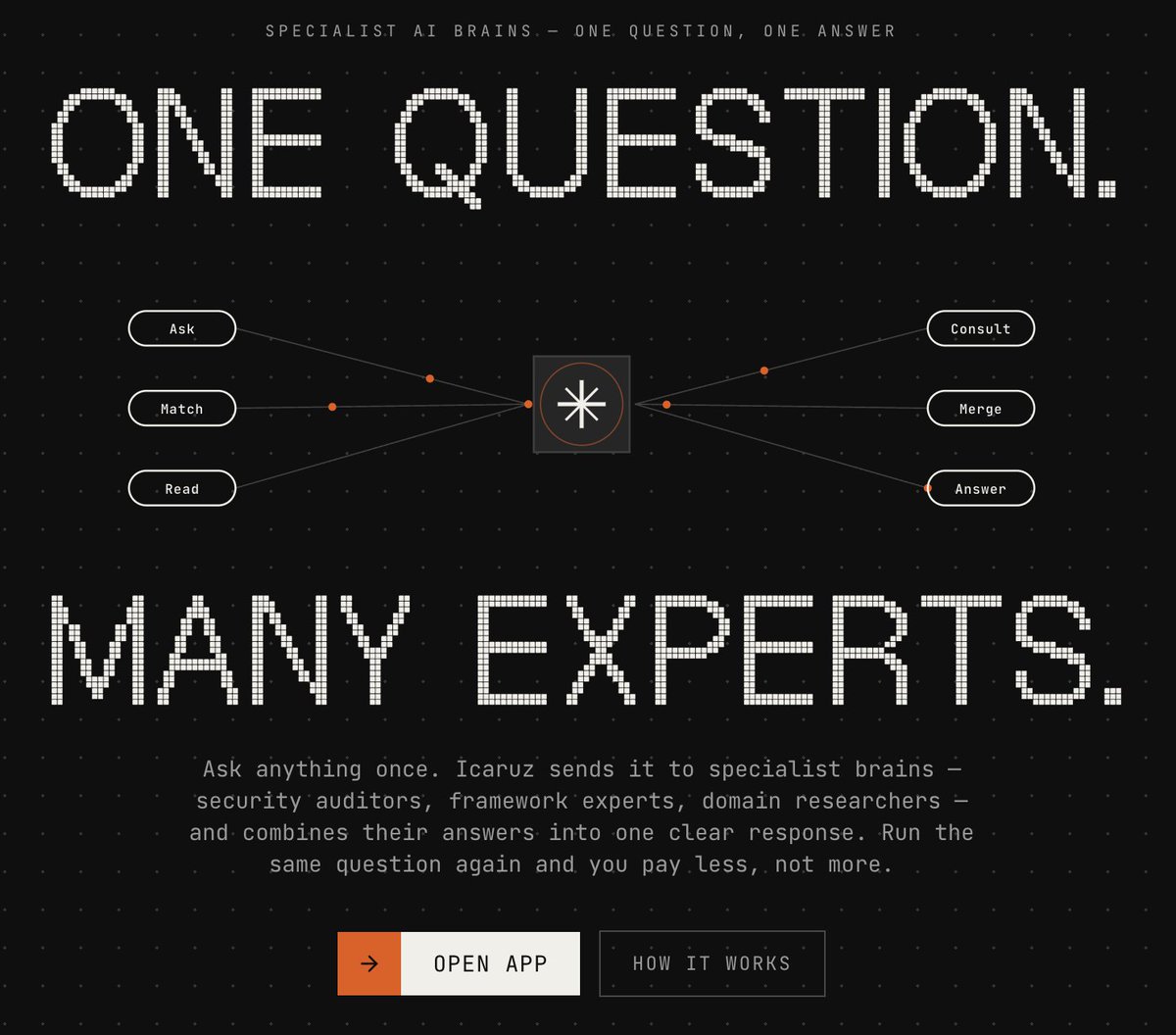
Your Obsidian vault is expertise nobody can query. Months of hard work and you get 0$ and yet Multi-agent stacks rebill the same wiki 3×. Icaruz compiles notes into payable brains using x402. One ask, parallel fan-out, prefix-cached context. Exclusively on @Badtheorylabs
Arko Roy tweet media
English
1
2
19
638
Cipoklean
Cipoklean@David63694631·
Prism sits between AI agents and their context - filtering noise, deduplicating repeats, compressing verbose output. 30 messages → 24. 22% fewer tokens. 3 pipeline stages. All on BTL Runtime. Built for the @BadTheoryLabs hackathon this weekend. Here's what it does.
English
3
2
13
425
Bad theory labs retweetledi
UI Lead 💧
UI Lead 💧@leadui·
I just might happen that I am building something that could change how you read, store notes and help you study better in general. @Badtheorylabs making this happen easily. I might just be building something cool with my bud @muhaj_dev Watch out for #studiome #BTL-2
UI Lead 💧 tweet media
English
10
3
24
538
Bad theory labs
Bad theory labs@Badtheorylabs·
We’ve just onboarded a kick streamer as our in-house streamer and ambassador! Welcome kick.com/moonsniper0x Lots of things planned as we plan to host more AMAs with our community and keep you all up to speed on development and growth strategy
Bad theory labs tweet media
English
2
5
16
848
Bad theory labs
Bad theory labs@Badtheorylabs·
If you registered for the hackathon please check your email We just granted you free tokens
English
1
0
11
775