Badasstrader 🏴‍☠️

18.7K posts

Badasstrader 🏴‍☠️ banner
Badasstrader 🏴‍☠️

Badasstrader 🏴‍☠️

@BadassTrader69

GME Elitist 🏴‍☠️ Ex-SuperStonk Mod 🛡️ DD Writer 🦍🤲💪 There can be ONLY 1 MOASS! 🚀 Views Are My Own - NFA - DD is NOT Done #GME $GME #Gamestop #Superstonk

Dublin City, Ireland Katılım Mart 2011
880 Takip Edilen6.3K Takipçiler
Sabitlenmiş Tweet
Badasstrader 🏴‍☠️
Badasstrader 🏴‍☠️@BadassTrader69·
The Strip Miners Private equity is the most elegant theft in the history of American capitalism. We have taken the Hollow Men of the boardroom and given them something far more dangerous than a corporate expense account. We have given them leverage—other people's money, other people's companies, and other people's jobs—and we have told them to extract as much value as they can before the music stops. By "Private Equity," I am not referring to the original concept—wealthy operators pooling capital to buy and build businesses. That model had integrity. I am referring to the modern financial engineering machine: an industry managing over $9 trillion in assets that buys companies with borrowed money, strips them for parts, and sells the wreckage back to the public markets at a markup. These are the strip miners of the American economy. They do not build. They do not invent. They do not compete. They acquire, leverage, and extract. And they have constructed the most lopsided compensation structure in the history of finance to do it. Let us start with the fee structure, because this is where the con begins. The standard Private Equity model is called "2 and 20." The fund charges a 2% annual management fee on total committed capital, plus 20% of all profits above a hurdle rate. Let's be brutally honest about what those numbers represent. A $10 billion fund collects $200 million per year in management fees before it makes a single investment. Over a typical ten-year fund life, that is $2 billion paid to the general partners simply for existing. This fee is not tied to performance. It is not refundable if the fund loses money. It is collected whether the partners are working eighteen-hour days or playing golf in the Hamptons. The management fee alone makes the partners rich. The "20" makes them obscene. The carried interest—that 20% profit share—is taxed not as income, but as capital gains. A billionaire fund manager who risks nothing of his own capital pays a lower tax rate than the factory workers in the companies he is dismembering. Congress has debated closing this loophole for twenty years. The loophole remains. The lobbying budget is larger than the tax revenue at stake. This is not capitalism. It is a toll booth on other people's risk. But the fees are just the appetizer. The real damage happens inside the portfolio companies. Here's the Private Equity playbook, stripped of its euphemisms: Step One: Buy a company using mostly borrowed money. A typical leveraged buyout uses 60-70% debt. The PE firm puts in $3 billion of equity and borrows $7 billion. But the critical detail that most people miss—the debt is placed on the company's balance sheet, not the fund's. The acquired company is forced to borrow billions to finance its own purchase. It is like buying a house, then forcing the house to take out the mortgage. Step Two: Immediately extract cash. Within months of closing the deal, many PE firms pay themselves a "special dividend"—funded by the company taking on even more debt. In some cases, the firm recovers its entire equity investment within two years, while the company struggles under a debt load it never asked for. This is called a "dividend recapitalization." A more honest term would be looting. Step Three: Cut everything that does not show up in next quarter's EBITDA. Fire experienced workers and replace them with cheaper labor. Slash R&D. Defer maintenance. Renegotiate supplier contracts by threatening to walk. Sell the real estate and lease it back. Every dollar cut from operations flows directly to EBITDA, which inflates the valuation multiple, which makes the fund's returns look better on paper. Step Four: Sell the hollowed shell to the next buyer—another PE firm, the public markets through an IPO, or a strategic acquirer—at a higher multiple than you paid. The new buyer inherits a company that is thinner, more fragile, and loaded with debt it cannot service in a downturn. If it works, the fund reports a 25% IRR and the partners collect hundreds of millions in carried interest. If it fails—and PE-backed companies now account for over half of all large U.S. bankruptcies, reaching 70% in the first quarter of 2025—the partners keep every dollar of management fees they already collected. They keep the dividend recaps. They keep the monitoring fees and the transaction fees and the advisory fees they charged the company for the privilege of being gutted. (And OF COURSE they have become experts at extracting maximum value from the Bankruptcy itself) Moody's found that PE-backed companies default at twice the rate of non-PE-backed companies. In 2024 alone, PE-related bankruptcies resulted in at least 65,850 layoffs across the country. Heads, the fund wins. Tails, the company dies... AND the fund wins anyway. The human cost of this machine is staggering, and we have been trained not to see it. When a PE firm buys a hospital chain and cuts nursing staff to hit margin targets, patients die in understaffed wards. Studies have found that PE ownership of nursing homes is associated with a 10% increase in mortality among Medicare patients—a finding confirmed by every systematic review through 2025. No peer-reviewed study has ever found that PE ownership improves healthcare quality, efficiency, costs, or access. These are not statistics. They are grandmothers. When a PE firm buys a retail chain and loads it with $5 billion in debt to fund a dividend recap, the chain cannot invest in e-commerce, cannot renovate stores, cannot compete. It enters a death spiral. Toys "R" Us. Payless ShoeSource. Party City. Joann. Claire's. Forever 21. The obituary list grows longer every quarter—Joann filed for bankruptcy twice in ten months, the second time liquidating and laying off 19,000 workers. Each name represents thousands of workers who lost their jobs not because the business was unviable, but because it was suffocated by debt it was forced to carry so that the fund could extract its fees early. When a PE firm buys a software company and triples the price while halving the support team, every customer pays more for less. When they buy a veterinary clinic chain and pressure veterinarians to upsell unnecessary procedures, your dog pays too. This is not creative destruction. This is extractive destruction. The companies do not fail because the market has moved on. They fail because they have been bled dry from the inside by owners who were never owners at all—just temporary custodians with a financial incentive to take everything that is not bolted down. And here's perhaps the most perverse element of the entire system: the people supplying the money are the ones being hurt the most. The largest investors in private equity funds are public pension systems. The California teachers' retirement fund. The New York firefighters' pension. State employee funds across all fifty states. These institutions—managing the retirement savings of nurses, teachers, police officers, and civil servants—hand hundreds of billions to PE firms, which use that capital to buy companies and fire workers who belong to the same economic class as the pension beneficiaries. A teacher in Ohio is funding, through her own pension, the leveraged buyout of a company that will lay off a thousand workers in her state. Her pension manager approved this allocation because the PE firm's marketing materials promised "superior risk-adjusted returns." But do they deliver? After you subtract the management fees, the carried interest, the transaction fees, the monitoring fees, and the fund expenses—after you account for the leverage that artificially inflates returns—a growing body of research shows that median PE fund returns have converged with public equity markets. Bain & Company's 2025 report found that U.S. buyout 10-year returns have fallen three percentage points in North America, with the S&P 500's 23% surge in 2024 further compressing the gap. The typical pension fund, paying premium fees for illiquid investments, would have done just as well buying an index fund and going home. The PE firm captured the alpha. The pension captured the risk. The defenders of Private Equity will tell you that these firms are disciplined operators. That they impose accountability. That they force bloated companies to become lean. This is the mythology, and it is collapsing. The "operational improvement" story was plausible in the 1980s, when PE firms were small, deals were few, and genuine turnaround expertise was rare. Today, the industry manages over $9 trillion in assets across more than 18,000 funds, with another $1.2 trillion in dry powder waiting to be deployed. PE-owned firms employ over 12 million U.S. workers and account for 6.5% of U.S. GDP. The industry has scaled far beyond the supply of operational talent. The average partner at a major firm sits on a half-dozen boards, just like the Hollow Men of the corporate world. They are not operating these companies. They are financially engineering them. The primary "value creation" lever is not better management—it is leverage, multiple expansions, and cost cutting. Research from MSCI found that sector tilts and replicable market exposures explain nearly half of PE's outperformance over public markets—not operational improvement. Strip away the leverage and the rising tide, and you are left with an industry that charges premium fees for index-like returns—while imposing illiquidity, opacity, and catastrophic downside risk on the companies it touches. We must also address the revolving door that protects this machine from accountability. Former SEC officials join PE firms as partners. Former PE executives join the SEC as regulators. Congressional staffers who write financial regulation leave Capitol Hill for PE lobbying shops paying five times their government salary. In the 2024 election cycle, eleven private equity billionaires alone poured $223 million into political spending — more than double what 147 PE firms spent in the entire 2016 cycle. Twenty-six members of Congress have over $150 million collectively invested in PE funds—the same funds they are supposed to regulate. (That we know about). The carried interest loophole survives not because it is defensible on merits but because the people who could close it are either paid by the industry or hoping to be. The Congressional Budget Office estimates closing the loophole would raise $14 billion over ten years. The industry spends a fraction of that to keep it open. This is regulatory capture, perfected. And when a PE-backed company fails spectacularly—when workers lose their jobs, when creditors take pennies on the dollar, when communities lose their anchor employers—no one at the fund faces any consequence whatsoever. The general partners are shielded by the fund structure. The limited partners bear the investment loss. The company's employees bear the human loss. The fund raises the next vehicle, larger than the last, because institutional investors have short memories and long allocation mandates. There is no accountability because there was never any liability. The original sin of Private Equity is the same as the original sin of the Hollow Men: the separation of authority from consequence. The PE partner who decides to load a company with debt does not lose his house if the company goes bankrupt. The PE partner who decides to cut the maintenance budget at a nursing home does not sleep in that nursing home. The PE partner who decides to fire three thousand workers to hit an EBITDA target does not stand in the unemployment line. They are playing a game where all the upside flows to them and all the downside flows to everyone else. The management fees guarantee wealth. The carried interest guarantees obscene wealth. The fund structure guarantees that failure is always someone else's problem. In a functioning economy, if you borrow $7 billion to buy a company and the company fails, you should face ruin. That fear of ruin is what separates an investor from a speculator, an owner from a strip miner. The time for polite institutional allocations is over. If we want to stop the slow hollowing of the American economy, we must demand three things: First, tax carried interest as ordinary income. If a fund manager's "profit share" walks like a paycheck and talks like a paycheck, tax it like a paycheck. End the fiction that a billionaire who risks none of his own capital deserves a lower tax rate than his secretary. Second, require meaningful GP co-investment. If the general partners will not put at least 10-20% of their own net worth into every deal, they should not be making the deal. Skin in the game is the only honest regulator. Third, hold PE sponsors liable for the debt they impose. If a fund loads a company with unsustainable leverage to fund a dividend recap, and that company subsequently fails, the fund should be on the hook for the damage—not just the equity it invested, but the pensions that were raided, the workers who were fired, and the communities that were gutted. We need to end the era of the Strip Miner. We need investors who buy companies to build them, not bleed them. We need capital that creates, not capital that extracts. Because an economy that rewards extraction over creation is an economy that is eating itself. And we have been feeding the machine for forty years. It is time to turn it off. #GME #Gamestop Sources: NBER Working Paper 28474 — Gupta, Howell, Yannelis, Gupta — 10% mortality increase at PE-owned nursing homes, 20,150 excess deaths nber.org/digest/202104/… Private Equity Stakeholder Project — Bankruptcy Tracker (October 2025) — 56% of large bankruptcies PE-backed, 65,850 layoffs, Moody's 2x default rate pestakeholder.org/reports/privat… Bain & Company — Global Private Equity Report 2025 — 10-year returns fell 3 points in North America, convergence with public markets bain.com/insights/outlo… MSCI — "Tracking Private Equity: Closing the Performance Gap" — Sector tilts and replicable exposures explain nearly half of PE outperformance msci.com/research-and-i… Jacobin / Common Dreams / OpenSecrets data — $223M in 2024 political spending from just 11 PE billionaires, 26 members of Congress with $150M+ invested in PE funds commondreams.org/opinion/privat… jacobin.com/2024/10/lawmak…
Ryan Cohen@ryancohen

The Hollow Men American capitalism is rotting from the head down. We have replaced the "Owner-Operator"—the risk-taker-with a new, parasitic class of corporate bureaucrat: The Risk-Free Insider. By "Insider," I am not referring to a specific title. I am referring to the entire administrative state that has captured the modern corporation. This includes the Directors who exist solely to collect fees, the Executives who exist solely to collect bonuses, and the Managers who exist solely to hire consultants. These are the hollow men of the boardroom. They are masters of PowerPoint. They wear the right suits. They say the right buzzwords about "governance" and "ESG." But they are mercenaries fighting a war with someone else’s ammunition. In a functioning economy, authority is tied to liability. If you make a bad decision, you lose your own money. That fear of loss is the only thing that keeps a business honest. It forces you to cut waste, obsess over the customer, and stay late to fix what is broken. Today, we have severed that link. We have rigged the game so that heads, the Insider wins; tails, the shareholder loses. If the stock goes up, the Insider collects a massive performance bonus. If the stock crashes due to their own incompetence, they are fired with a "Golden Parachute" worth tens of millions. They are gambling with the house’s money, and they never leave the table poorer than they arrived. This looting starts in the boardroom. We have normalized a "Country Club" culture where directors are selected based on social profiling rather than their ability to build a business. The modern board member is often a professional tourist—paid an average of $350,000 a year. Let’s be brutally honest about what that number represents. The average director is paid nearly five times the GDP per capita of the United States. They earn more for attending four quarterly lunches than the vast majority of Americans earn in five years of hard labor. And for what? Most of these directors are "over-boarded," sitting on three or four boards simultaneously. They treat directorships as a gig economy for the elite. They fly in, rubber-stamp a compensation package they didn't read, and fly out. They collect checks from companies they do not understand, do not use, and certainly do not love. They are not there to ask hard questions. They are there to be collegial. They are there to protect the other Insiders. And what happens when these boards hire executives who also have no personal capital at risk? We get the Delegation Economy. When a Risk-Free Insider faces a crisis—bloated expenses, a broken supply chain, or a stale product—they do not roll up their sleeves. They hire a consultant. They pay a strategy firm millions of shareholder dollars to produce a 100-page deck telling them what they already know. This is not management. It is intellectual money laundering. They use shareholder capital to buy an insurance policy for their own careers. If the plan fails, they can blame the consultants. They delegate the work because they are terrified of the responsibility. They would rather preside over a slow, comfortable decline than risk a bold mistake. While American Insiders are busy optimizing their severance packages, our global competitors are optimizing their products. They are not slowed down by bureaucracy. They are not waiting for a slide deck. They are outworking us. If we continue to fill our C-suites with administrators instead of operators, we will lose our edge. We will see iconic American franchises hollowed out by fees, managed for the benefit of the Insiders, while the true owners—the shareholders—are left holding the bag. The time for polite governance is over. If we want to save the American economy from mediocrity, we must demand a return to the "Owner’s Mentality." We need leaders who treat shareholder capital with the same reverence they treat their own savings. The era of the Risk-Free Insider must end.


English
1
4
34
1.5K
Science girl
Science girl@sciencegirl·
Millions of years of evolution into a perfect predator undone by a shovel.
English
183
368
4.4K
196.5K
Badasstrader 🏴‍☠️
Badasstrader 🏴‍☠️@BadassTrader69·
If everyone could just cop the fuck on and stop starting wars and killing each other...
GIF
English
1
0
13
333
Badasstrader 🏴‍☠️
Badasstrader 🏴‍☠️@BadassTrader69·
@michaeljburry You think they'd trust a probabilistic semantic layer in a Nuclear Missle silo? Or is it ok to just accept mistakes in Enterprise software? lol
English
0
0
0
106
GameStop
GameStop@gamestop·
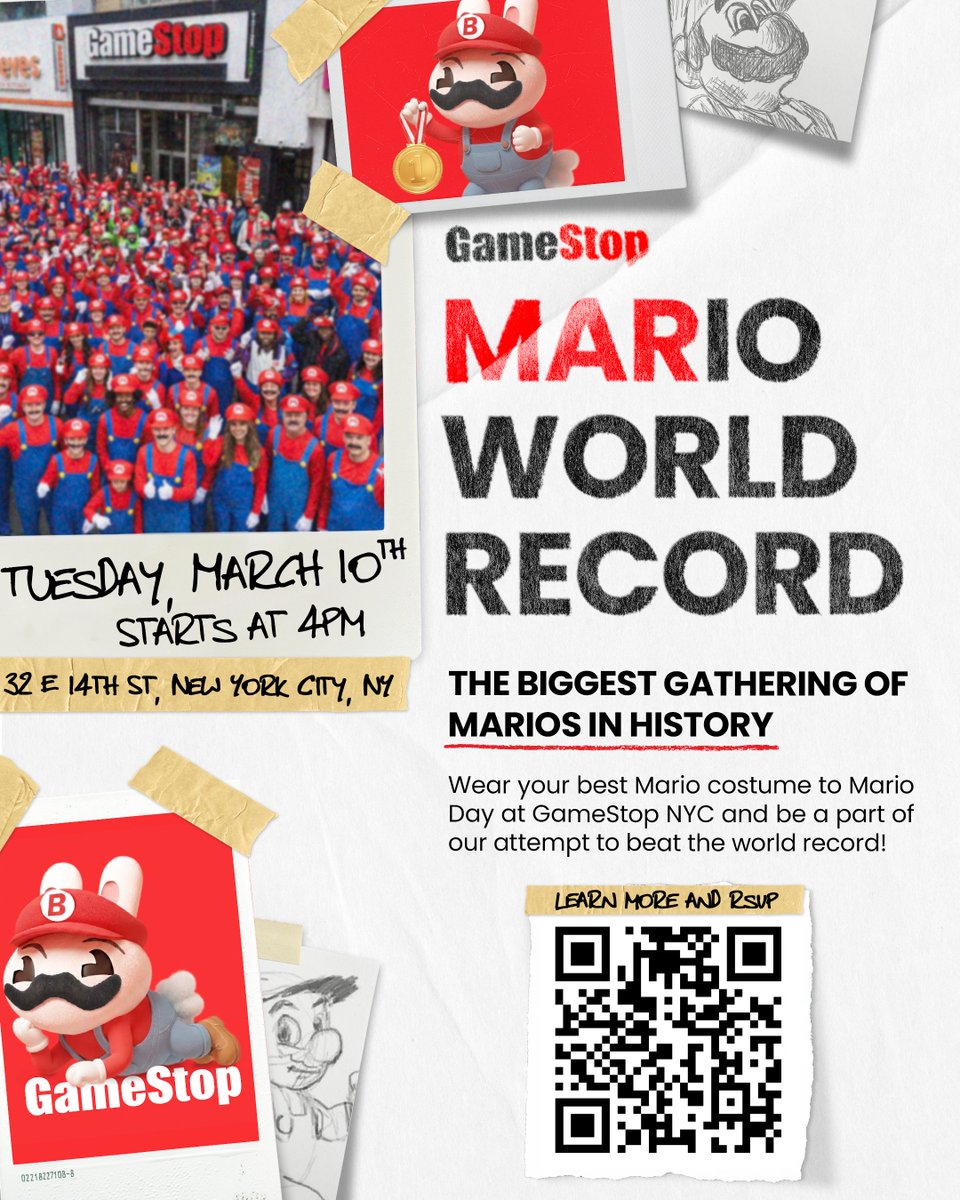
It’s-a time to make history. NYC. March 10. 4PM. Be there.
GameStop tweet media
English
206
471
3.4K
269.2K
Badasstrader 🏴‍☠️
Badasstrader 🏴‍☠️@BadassTrader69·
@Benjamino69420 No, but we can narrow it down. It's not going to be Butterfly. It's not going to be AMC. And there's a good chance the goal is to buy EBITDA
English
1
0
8
475
Atobitt
Atobitt@AustinTobitt·
@ButtFarm69 Bro just throw some doritos in and you're golden.
English
3
1
16
630
ButtFarm69
ButtFarm69@ButtFarm69·
Thanks for the shout out Ato! I want to take this time to clarify some things: 1: My method is not TA. It would be a disservice to Technical Analysts to call myself a Technical Analyst because I simply haven't put in enough time and education to learn proper TA. My method is a mix of a lot of different things and tbh, half of it comes from interpreting RK and RC memes. I'm retarded. If you want TA, I personally enjoy learning from @Comedyorwat (@Jackieletits on youtube) and also @DragonTraderZ (whenever he graces us with a chart). Those two dudes are really smart when it comes to TA and their analyses hold a lot of weight in my book and I try my best to take their theories into account when creating my own theories. 2: My method aims to pinpoint these $GME movements with exact precision, down to the trading day. I want to trade how RK trades. There is some kind of method to his madness and I've experimented with many different cycle theories over the years trying to hone in on a repeatable pattern and process. Every past cycle has been met with mixed success. Some parts I was right. Some parts I was wrong. I try my best to troubleshoot the process for the next cycles and I document the journey so that others can learn from both my successes and my mistakes. 3) I firmly believe RK's Emoji Timeline refers to a T+35 cycle. I've had a lot of success during this cycle, since RC's 1 million share buy. This entire movement since January 20 has been charted within ±$1 and ±2 trading days. Will my success continue? I sure fucking hope so! But again, every past cycle has been met with mixed success. So trade at your own discretion. 3: Regarding Ato's and my differing perspectives on $BBBY, people don't have to agree on everything to recognize the value in what we DO agree on. I have a great respect for Ato as an OG and as an intellectual in this $GME saga and while we disagree on BBBY, that doesn't and shouldn't invalidate our theories on other stuff. I've grown quite tired of the tribalistic squabbles and that's why I usually try to stay out of those battles. There's some more nuance to the situation, but I don't feel like getting into the minutia. 4: Lastly, to all the new people on my page today: a) i'm insane and retarded b) i'm trying to solve the $GME puzzle 🧩 we are very close c) i've been wrong before. many times d) you are accountable for your own trades e) if you bring bad vibes, i'm blocking your ass cuz idgaf f) watch my youtube streams for more in depth predictions for the remainder of this T+35 cycle @ButtFarm69" target="_blank" rel="nofollow noopener">youtube.com/@ButtFarm69
Atobitt@AustinTobitt

I didn't want to believe it.. but some of the best TA we have comes from a dude named @ButtFarm69 If this climbs back to $25, then we have to give credit where it's due.. he's been calling a very similar trend for weeks. Much love, brother. #GME #GameStop $GME 💎👐🚀

English
6
2
152
12.4K
Badasstrader 🏴‍☠️
Badasstrader 🏴‍☠️@BadassTrader69·
2 Hours to read this DD... Debunked in the first 2 paragraphs. @ryancohen has been buying GME shares on the open market as CEO. If he's sitting on a plan to merge #GameStop with a $880M tax shield entity that would simultaneously trigger "the largest short squeeze in market history" and catapult the company toward $100B market cap... then every single #GME purchase he's made while planning this, is insider trading. Full stop.
Sanders Parker@FamousVariety

The biggest due-diligence of my life is now live at bbbwhy.com. It covers the $BBBYQ bankruptcy strategy, my theory on who $GME's target acquisition is, how @ryancohen exactly is going to build the next Berkshire, as well as WHEN I think this is all going to happen and MUCH MORE. Peace out, I'm going to go rest my brain. Enjoy. Share. The best is yet to come. 💛

English
15
3
51
10.2K
MarketWatch Sucks Donkey Dong
@BadassTrader69 The fact that sort of misinfo’s being spread against about BBBY all this time later & it’s getting so much engagement, makes me think Wall St knows something is up anyway, or they’re nervous about the $ RC has. Even if it’s just the fact it’d make $GME look good in a market crash
English
1
1
3
142
Badasstrader 🏴‍☠️
Badasstrader 🏴‍☠️@BadassTrader69·
A summary of the counterarguments to this being debunked: "RC's clearly working on something big, so he has a well thought solution for insider trading" - The solution is not having a specific deal yet. Which kills the DD. "GameStop isn't involved until the deal is done, RC/others are working on BBBY comeback separately" - Doesn't matter. If RC is personally engineering an acquisition for GameStop, he knows it's a GameStop transaction. Every GME share he buys while knowing that is insider trading. "GME, RC, and RK have all invested 5% in IEP secretly" - Any 5%+ stake requires a public 13D/13G filing. GameStop's investments are reported in their quarterly filings. None of this exists. "His buys could be proven in good faith" - Good faith isn't a statutory defense. The test is objective: did you possess MNPI at the time of the trade? "Just pay the $2M fine like Wall Street does" - CEO systematically buying his own stock while engineering a multi-billion dollar merger is criminal prosecution territory (DOJ, not just SEC). Every comparable case at scale went criminal. "DK Butterfly isn't publicly traded" - The insider trading problem is on the GME side, not the target side. "RC hasn't bid yet" - Then the DD is wrong. And if he's been planning to bid, knowing the specific target is itself material even without final terms. "RC doesn't know what he's able to acquire" - According to the DD, he still knows the specific target is DK Butterfly's NOLs. Knowing the target is itself material even if the final value is uncertain. "An acquisition doesn't necessarily mean share price goes up" - The DD claims it triggers the largest short squeeze in history and catapults GME to $100B. "Pre-set plan safe harbor" - His Form 4s show discretionary open market buys, not 10b5-1 trades. "Sixth Street is the owner, they file, not RC" - Irrelevant. The problem is RC buying GME shares while knowing what GME is about to acquire. "NDAs are common in M&A" - NDAs create MNPI. That's literally the "non-public" part. "Business judgment rule protects him" - That's corporate governance law protecting board decisions, not securities law. Has nothing to do with insider trading. "RC already owns the shell through Sixth Street, so no insider trading" - Makes it worse. Buying GME while possessing MNPI about merging an entity he secretly controls is still insider trading. Hiding ownership behind a financial partner is concealment is an aggravating factor, not a loophole. "Taking a position in the market isn't insider trading" - Nobody said it was. Taking a position while possessing MNPI about that security is. To be clear... There is no way for @ryancohen to have #Gamestop be part of a merger with Butterfly without RC being guilty of Insider trading. Full Stop.
Badasstrader 🏴‍☠️@BadassTrader69

2 Hours to read this DD... Debunked in the first 2 paragraphs. @ryancohen has been buying GME shares on the open market as CEO. If he's sitting on a plan to merge #GameStop with a $880M tax shield entity that would simultaneously trigger "the largest short squeeze in market history" and catapult the company toward $100B market cap... then every single #GME purchase he's made while planning this, is insider trading. Full stop.

English
5
2
22
2K
DK going to BK
DK going to BK@rkansas·
@BadassTrader69 RC is a billionaire and has access to the some of best lawyers in the corporate world? Why would you ever assume that he's made some simple mistake?
English
1
0
0
31
Badasstrader 🏴‍☠️
Badasstrader 🏴‍☠️@BadassTrader69·
That's worse. If the deal was already done when he bought GME shares, he's sitting on the most concrete MNPI possible, a completed acquisition, not a plan. The question isn't when the deal happened. It's whether it was public. If it wasn't, every purchase after that point is insider trading with even more certainty about the outcome.
English
1
0
1
77
DK going to BK
DK going to BK@rkansas·
@BadassTrader69 "GME share he buys while knowing that is insider trading" Probably makes more sense that he made the deal before the purchases.
English
1
0
0
93