Sabitlenmiş Tweet
Parth Bakare
4.2K posts

Parth Bakare
@BakareParth
Quant Strategist 🥩 IIT Guwahati'22 🍳 I make a fool of myself everyday =)
Gurgaon, India Katılım Ekim 2018
643 Takip Edilen1.2K Takipçiler

@AanchalXIV I do GHD single leg version right after seated leg curl, truly humbling for me 🙏
English
Parth Bakare retweetledi

i do this once a week on pull days [ using small wala barbell , gym doesnt have this machine ]
but it gives crazy fatigue to lower back, i havent felt more muscle mind connection ever lol
Dean Turner@DeanTTraining
10 years from now, this machine will be in EVERY GYM in the ENTIRE WORLD Lower Back pain will be completely eradicated as a result Future generations will wonder how we ever managed without this incredible piece of kit EXCITING TIMES AHEAD
English

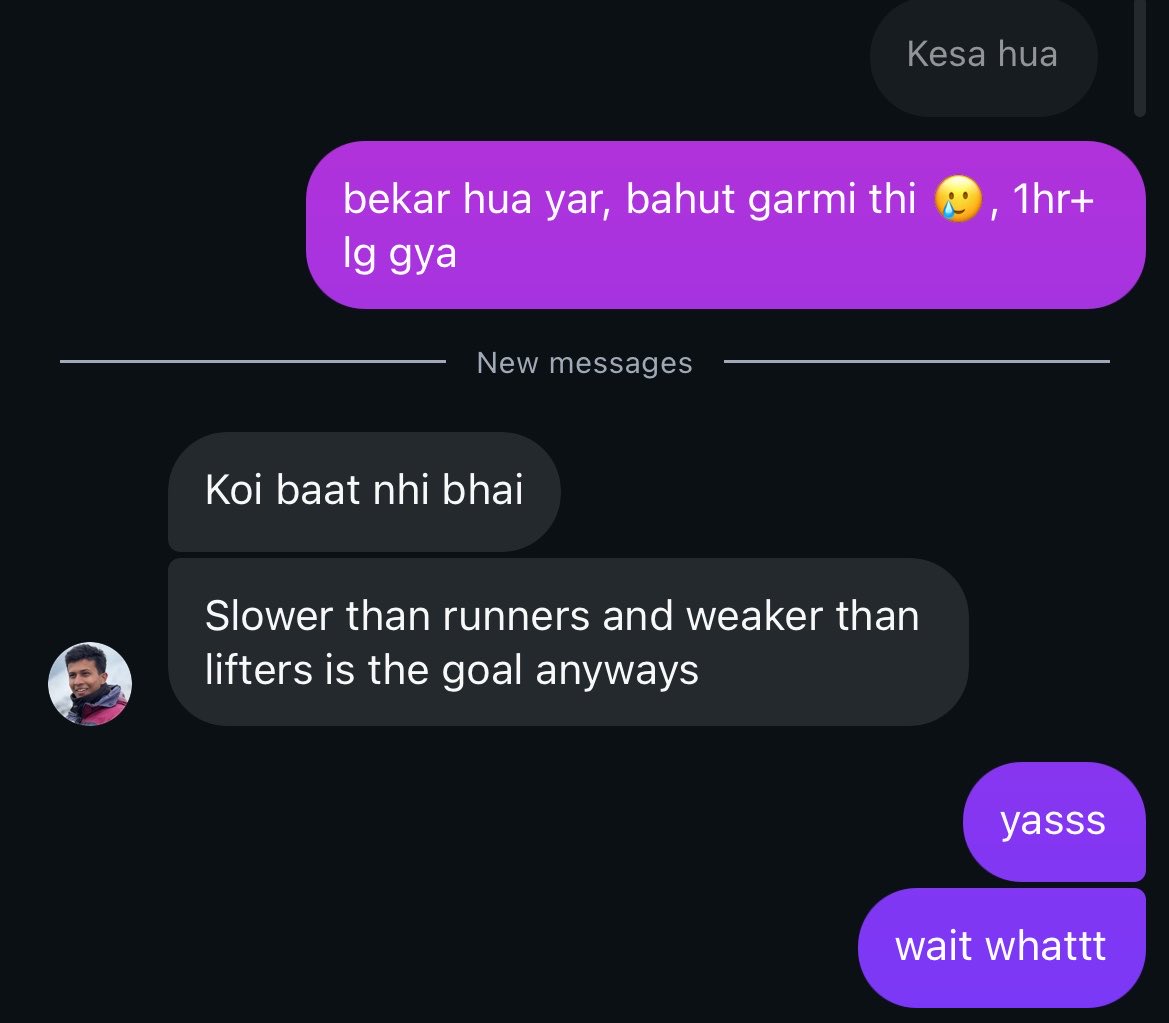
@BakareParth Also none of your queries were silly, you are always free to question buddy.
English

Calculated Bradman peaks for the top 20 scorers (and Sir Don Bradman), in 80 consecutive test innings, which were the number of innings Sir Don Bradman, batted in his career. We then compare the average of the batsman, to the top 7 batsmen (position wise and both teams) in those games.
The top 7 Avg doesn't include the batsmen's average here.

English

@BakareParth Maybe I will try, just with the respective sides, like not including the top 7 of the other side, and see what results I get.
English

No not silly at all, in fact it's a good query, but someone's peak corresponds to maybe a better batting era. That's why I take both in consideration. Take Lara's example, his peak had a fair amount of high scoring games, though the players he batted alongside weren't that great, but that peak basically corresponds to an era, where the pitches were batting friendly.
English

Why won't we get a measure of the matches (if we use same team top 7)?
If we consider same team top 7, we ensure the same set of opposition bowlers , and also ensure the same set of conditions. Like day 1 vs day 3 conditions can be different and other team batters may find it easier/harder to score.
I'm new to understanding advanced stats, sorry if this sounds silly 😅
English

@BakareParth Then you won't exactly get a measure of the matches. Also Ponting's average in his 80 innings peak is actually higher than that of his contemporaries. Had he had an average in the late 60s or 60s, his ratio would have been a bit lower.
English

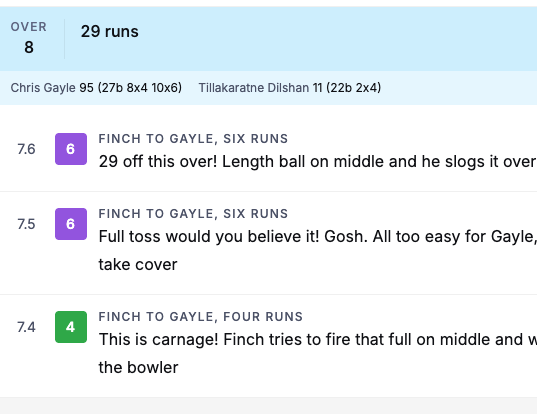
@BakareParth Raina was 87(25) , Gayle was 83(25) , then hit 2 sixes to reach 95 (27)
Still intact 😂😂

English

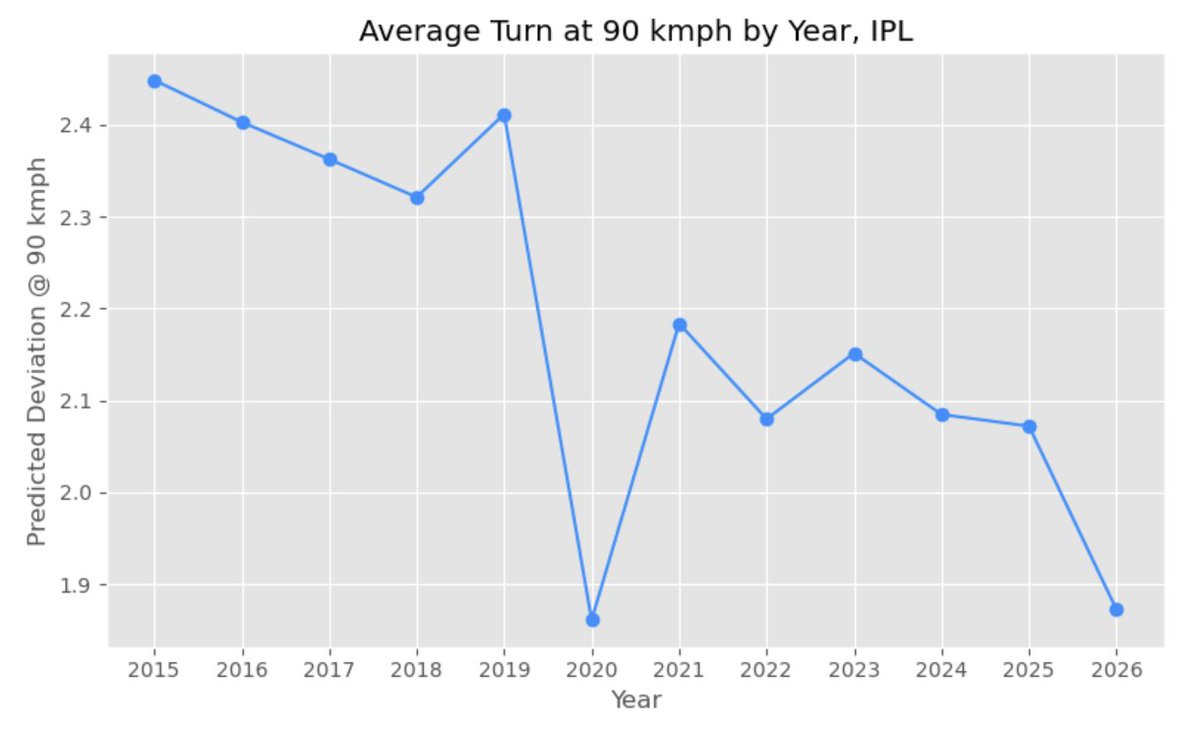
@himganj153 Is 2020 an outlier coz all matches were in UAE? Surprised, I remember Sharjah pitch was so dry and slow.
English

@BakareParth @a_hahahahad aapki galti toh maine hi dhund di uncle 😆😆😆
Indonesia
Parth Bakare retweetledi

Understood, thanks!
This aligns with what I heard recently on one of @ajarrodkimber's podcasts
In the last few years, Kohli has been starting off quickly in the powerplay and then slows down a bit in the middle overs
Like in the recent MI vs RCB match, he was 20* off 11 balls but reached his 50 in 37 balls
English

Lets break this down.
Here's a chart of "strike rate" at "different numbers of balls faced" for Kohli and Rohit after 2023.
Rohit doesn't "achieve Kohli's strike rate" in fewer balls.
Rohit is actually much slower during the start of his innings.
When is Rohit faster than Kohli? -- When Rohit lasts > 22 balls. But Rohit has only survived 22 balls in less than 40% of the matches since impact rule started. This number is more than 60% for Kohli.
The start in the OP's tweet says "Rohit reaches Kohli's strike rate in 13 fewer balls" can be misleading, because the "total strike rate" is skewed by innings when Rohit played much more balls.
When Rohit actually plays his average number of balls, he is not faster than Kohli.

English

@AmanHasNoName_2 Just looking at the graph, it seems unlikely that final strike rate (146-147) will be similar for both the players, given how ahead Kohli is till the 10 balls mark 🤔
English

Not trying to contest what you conclude, just want to understand the plot better
x axis = no. of balls faced in an innings
y axis 1 = mean strike rate after facing x balls in an innings
y axis 2 = percentage of no. of innings where batter lasts >= x balls
Is this correct?
There's a stark difference between the batters around x = 0
Does that mean Kohli usually starts with boundaries and Rohit mostly plays dots during the first few balls?
English