4 historic vessels & a Lighthouse show life at sea from mid-19th century to mid-1980s offering “hands-on” activities, educational programs, overnights & rentals
The wedges are quoins (pronounced like "coins"), and they are the tool used to change the elevation of a gun when positioning it for firing. Using handspikes for leverage, the gun crew would lift the breech (back of the gun) up, allowing the quoin to be moved in or out.
On board a ship, even simple-looking objects can serve important purposes! Today's object is a tool used with the guns on #USSConstellation. When visiting the gun deck, you may notice wedge-shaped pieces of wood seeming to support the barrels of the ship's guns.
#MuseumAlphabet
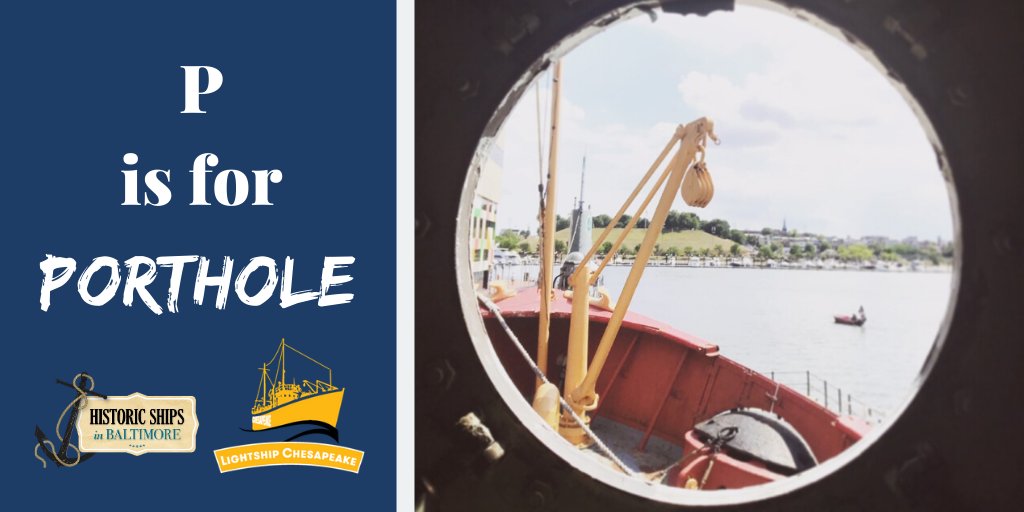
Those aren't windows on a ship! A round opening designed to let in light or air is called a porthole. Portholes can be opened in fair weather to allow fresh air to enter the ship, or in emergency situations to bring hoses or pumps into compartments.
#MuseumAlphabet
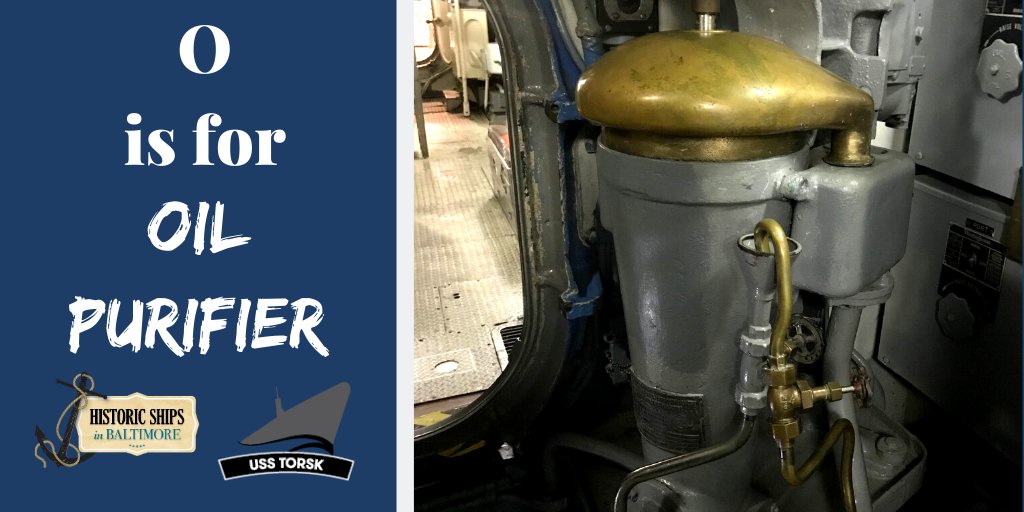
from materials (and critters!) in the sea water. In order to remove contamination, oil was put through the oil purifier before entering the engines. The purifier operates as a centrifuge, spinning out anything that has worked its way into the oil.
#MuseumFromHome
Torsk did this by taking in or releasing seawater from its ballast tanks.
The ballast tanks also contained the fuel oil that helped power Torsk's engines. Since oil and water do not mix, siphoning off the oil was not a problem - but the oil could still experience contamination:
You will find today's object - an engine oil purifier - in the engine room of #USSTorsk.
Why did oil need to be purified?
When a submarine like Torsk is submerged, it must maintain neutral buoyancy (neither floating nor sinking) in order to control its dive.
#MuseumAlphabet
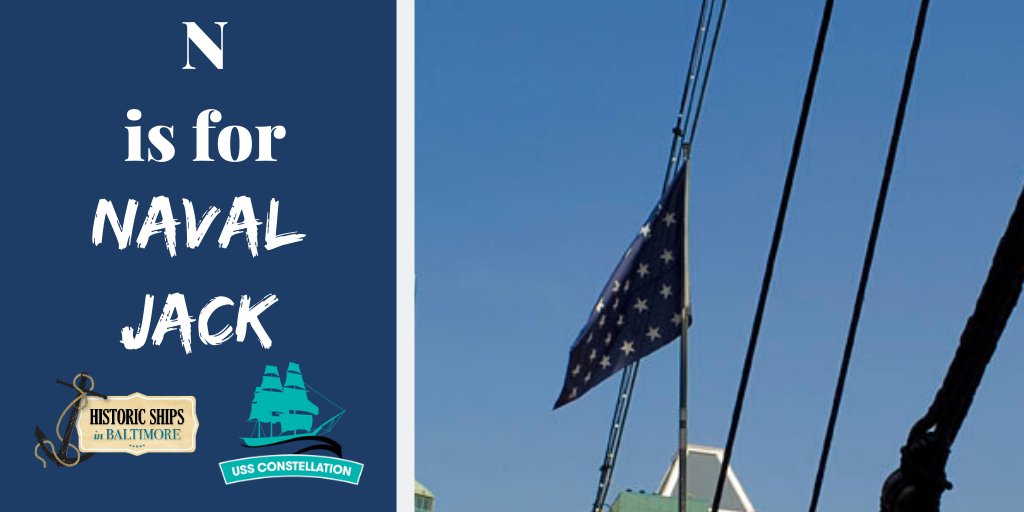
*Due to the hazardous nature of climbing out on the bowsprit, and maintenance work being conducted at the head of the ship, we do not always fly the jack on #USSConstellation. However, you can see Constellation's jack in this photo.
#HistoricShipsBmore#MyBmore#MuseumFromHome
When you visit our fleet, you will see a blue flag with white stars at the bow of each of our vessels.*
This flag is the U.S. Naval Jack, which is flown by US Navy, Coast Guard, and other vessels while in port. The jack has one star for every state in the Union.
#MuseumAlphabet
The letter "A" may have been for anchor, but so is M! Today's object is the mushroom anchor used on #LightshipChesapeake. This special type of anchor was suited to a lightship's mission; its unique shape helped the anchor to be buried deep in the sea- or river-bed.#MuseumAlphabet
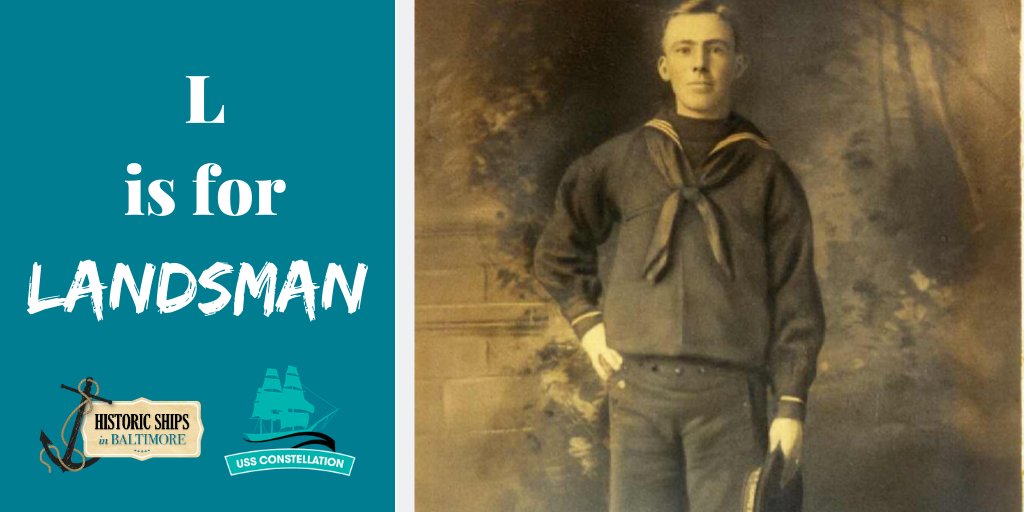
But after about three years experience they could expect to have gained the skills necessary to earn the rating of "ordinary seaman." The highest rating for a sailor, "able seaman," was given to highly-skilled men, generally with at least six to ten years of experience at sea.
During the Civil War, #USSConstellation's 320-man complement included 255 sailors (the crew also included marines, officers and petty officers, and the captain).
When signing on to a ship, sailors were "rated" based on their level of experience.
#museumalphabet
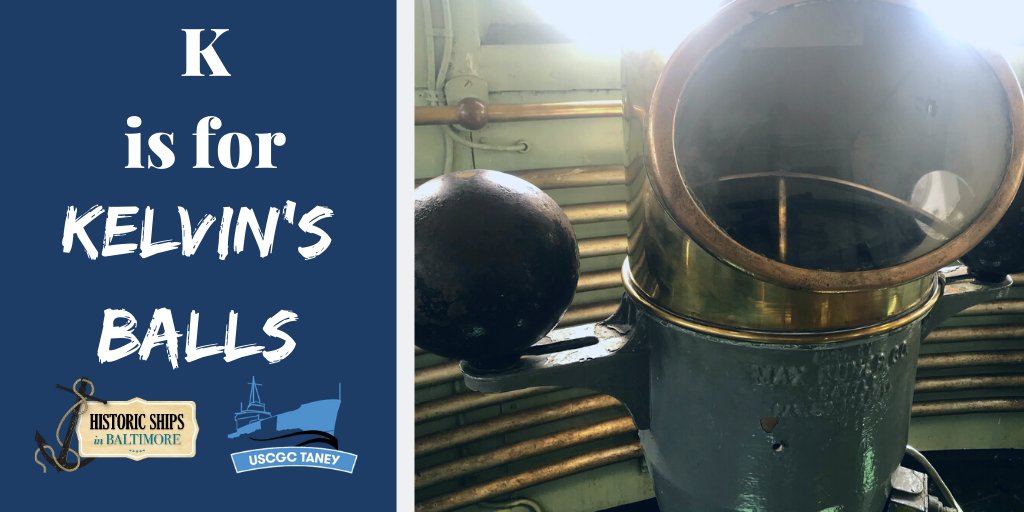
The position of these spheres on either side of the binnacle help balance out interference from the ship's hull, and allow the compass to point correctly to magnetic north.
You may see correction spheres today painted red and green, to signify the port and starboard side.
They are properly called correction spheres, but are often known as "Kelvin's balls," referring to William Thomson, Lord Kelvin who patented them in the 1880s.
Have you ever seen a ship's binnacle, and wondered what those spheres on either side are for?
It's all about magnetism! The compass in a binnacle is a magnetic compass, and is designed to point to the magnetic north pole.
#MuseumAlphabet#HistoricShipsBmore
Here is something that you won't see now on #USSConstellation, but something that has been present for much of her history. The jib-boom is spar that extends from the bow of the ship (attached to the bowsprit), and would support a triangular sail called a jib. #MuseumAlphabet