@MyColleagueMio2 No it's because japan's social culture makes people lonely as fuck
English
TrpileDouble
105 posts
x.com/Stanford/statu… I think China may have just quietly reopened the Okinawa question-and this could reshape Asia's balance of power in ways few people are ready for. Although China usually keeps a low profile on Okinawa, several recent statements by Takaichi- including her implication of potential armed intervention in Taiwan, Japan's continuted deployment of strategic assets in Okinawa, and her Nov. 26 assertion that "according to the Treaty of San Francisco, we are not in a position to recognize Taiwan's legal status"-appear to have prompted China to revisit the question of Okinawa, assumed by many as long dead. This past month, a spokesperson from China's Ministry of Foreign Affairs posted excerpts from the Potsdam Declaration outlining Japan's post-WWII territorial boundaries, which has been speculated as a hint towards Okinawa. If that wasn't clear enough, yesterday, China's second-largest news agency, China News Service, published an article titled "The Issue of Ryukyu Sovereignty: It's Time to Settle This Old Account," openly questioning Japan's sovereignty over Okinawa. Unsurprisingly, the move drew immediate attention at home and abroad. When I studied China-US-Japan relations at Stanford, my advisor was Gordon H. Chang, a rational, rigorous, and deeply respected scholar of US-China relations. He was also the one who first told me about the other Gordon Chang, my fellow Cornell alumnus and the author of the "China collapse theory." Actually, last week, the other Gordon retweeted two of my posts analyzing Sino-Japanese relations without any provocative comments. I disagree with almost everything he writes, but I really appreciated his restraint this time. Shortly I started at Stanford in 2012, I had my first annual discussion with Gordon about my study plan, and we discussed the Diaoyu Islands and the Ryukyus, both of which interested us. He suggested I focus on the Ryukyu issue for my thesis. Later, I was fortunate enough to secure a part-time research position at Hoover, where I worked on organizing valuable archives such as Chiang Kai-shek's diaries. Stanford also generously provided multiple scholarships, allowing me to visit the FDR Presidential Library in New York and Taipei to examine original archives from both the Chinese and American sides regarding the Ryukyu issue. These experiences formed the core of my Ryukyu research. In my Stanford thesis, I approached these questions with as much historical rigor and objectivity as possible. In 2015, it was published in JCC, the leading American journal on Chinese studies, and Stanford News Center wrote a report about my thesis too. Hoover also featured my thesis on their website. Few people today realize this, but Ryukyu's fate was once one of the key topics among the Allies-Roosevelt, Churchill, Stalin, Chiang… all held a clear position. And: How did the Ryukyu Kingdom become today's Okinawa under Japanese rule? And why does this history matter again in 2025? To understand that, we must return to the beginning. The Ryukyus are a chain of volcanic islands that stretch southwest from Japan's Kyushu to China's Taiwan. Starting in 1372, the Ryukyus paid tribute to China and became a member of the tributary system under the Chinese imperium. As a result of the attack by Shimazu Tadatsune in 1609, the Ryukyu Kingdom started paying additional tribute to the Kyushu-based Shimazu clan, which considered the islands a domain of Satsuma. From 1609 until the early 1870s, the Ryukyus functioned as a tributary state for both China and Japan. Yet the rapid rise of Japan after its Meiji Reform soon broke the balance that had lasted for more than two centuries. In 1874, Japan shifted the Ryukyus from the Foreign Office to the Home Ministry and, by 1879, had incorporated the islands as a prefecture. Seized with panic, China reached out to former US President Grant, who was on a tour around the world, wishing to resolve the issue through his arbitration. Having visited Beijing and Tokyo, Grant quickly devised a proposal to China, with the northern part ceded to Japan, the southern part to China, and the rest restored to the previous kingdom (top left). On April 17, 1880, the Japanese government raised the proposal to divide the Ryukyus in two, with the Miyako-jima (宫古岛) and Yaeyama Islands (八重山群岛) put under the rule of China. On October 28, 1880, the Chinese government accepted the proposal, and agreed to grant Japan most-favored nation status as reciprocity. However, China and Japan never implemented this agreement, and the problem of the Ryukyu Islands remained unresolved, with Japan continuing to control the islands until the end of World War II. Despite rarely mentioning this issue since the Japanese annexation of the Ryukyus, successive Chinese administrations have never officially recognized Japanese sovereignty over these islands, nor have they relinquished their proper rights to the Ryukyus. Chiang Kai-shek, China's supreme leader from the late 1920s to 1949, despite carrying much historical controversy, did not recognize Japan's control over the Ryukyu Islands either and attempted to address this issue. On September 13, 1932, close to the one-year anniversary of the Mukden Incident in which Japan launched a surprised attack on northeast China under the excuse of a "survival crisis (sounds familiar?)", Chiang wrote in his diary, expectantly, by the Moon's Festival in 1942, we should be able to recover Manchuria (northeast China), liberate Korea, and take back Taiwan and the Ryukyus." On a night in late September 1940, Chiang coincidentally reviewed the diary entry written down eight years before. Still, he believed that his Nationalist Government had a chance "to recover the Ryukyus". During a press conference held in early November 1942 in America, T. V. Soong, China's Foreign Affairs Minister and Chiang's brother-in-law (I met with one of Soong's granddaughters when she visited Hoover by offering her an archival tour, a very elegant lady), indicated that China should take back northeast China, Taiwan and the Ryukyus, and that Korea had to become independent. In late November that year, Madame Chiang Soong May-ling left for the US. Her speech at the US Congress is still regarded as a classic to this day. Before her departure, Chiang Kai-shek meticulously prepared her for talks with Roosevelt. The very first point was that Manchuria, Taiwan and the Ryukyus should be returned to China, and China would approve of America using naval and air bases at these locations. Having met with FDR, Soong May-ling informed Chiang in her telegraph on March 1, 1943 of Roosevelt's agreement that "the Ryukyu Islands and Taiwan should be reverted to China in the future." In the same month, Chiang published his renowned China's Destiny, in which he discussed his vision of China's future and the Ryukyus' importance to China's national defense. Thus, by the eve of the Cairo Conference, recovery of the Ryukyus had been one of China's established policies. And my archival studies have shown Roosevelt, Churchill, US Secretary of State Cordell Hull, British Foreign Minister Anthony Eden and Josef Stalin all agreed to return Okinawa to China after WWII during or around the time of the 1943 Cairo Conference. Though Chiang was soon to retreat from this demand, his determination to take Okinawa back attracted the top attention within the Allies. Preparing for the Cairo Conference that took place in November 23-26 1943, China's Advisory Office of the Military Commission envisioned a comprehensive plan that the Generalissimo would raise during the meeting. According to the draft, Japan should retreat from all the territories that it had occupied since September 18, 1931, and restore to China Taiwan and the Ryukyus. The draft even included a flexible back-up plan that Okinawa could either be put under international trusteeship or designated as a demilitarized zone. However, by November 15, 1943, Chiang apparently had changed his mind. In the entry on that day, Chiang argued that the status in history of the Ryukyus and Taiwan was different: "The Ryukyus as a kingdom resembles Korea in this position" and, therefore, Chiang decided not to raise the issue regarding these islands during the conference. To Chiang's surprise, on November 23, Roosevelt took the initiative to bring up the Ryukyu issue during his meeting with Chiang. According to the FRUS: "The president then referred to the question of the Ryukyu Islands and enquired more than once whether China would want the Ryukyus. The Generalissimo replied that China would be agreeable to joint occupation of the Ryukyus by China and the United States and eventually, joint administration by the two countries under the trusteeship of an international organization." As Chiang wrote in his diary on the same day, he attended a dinner meeting with FDR at Mena House that started at 7:30 pm and lasted well beyond 11:00 pm. The discussion went on so long that when Chiang left, there was still a range of issues to be discussed. Roosevelt and Chiang thus decided to resume the discussion the following day. Concerning territorial issues, "Manchuria, Taiwan, and the Pescadores should all be restored to China. However, the Ryukyus could be put under joint trusteeship of China and the US under the international mandate." Chiang Kai-shek, often known as a cold and ruthless "tyrant" for many pro-independence Taiwanese, displayed a surprising indecisiveness when it came to the Ryukyu issue. Based on Chiang's diaries, he might have softened on the Ryukyu issue for three reasons. First, other lost territories of China, such as Manchuria and Taiwan, weighed more heavily on his heart. Faced with a considerable number of issues to settle during the conference, Chiang was too exhausted to address each and every issue that he might have wished to bring to the table. The restoration of the Ryukyus, thus, did not become a consistent thread in Chiang's agenda for the post-WWII settlement. Second, Chiang was concerned about America's sincerity. Roosevelt's offer to allow China to take over these islands of such great strategic importance might have sounded too good to be true to Chiang. In addition, Chiang, being diplomatically inexperienced, was suspicious as to whether Roosevelt was testing China's ambitions on expansionism. Third, the Ryukyus were a tributary state of China rather than an inherent part of the territory of China, similar to the status of Korea historically. The close historical relations between China and the Ryukyus remained suzerainty ties, while China had never exercised direct control there. Chiang, as one of "the Big Four Leaders" of the Allies, grandly proclaimed that he coveted "no gain" and entertained "no territorial expansion." Consequently, attempts to incorporate the Ryukyus into Chinese territory seemed inconsistent with Chiang's moral claims. Chiang would meet Roosevelt again on 24 and 25, yet neither his dairies nor sources from the American side indicated that the Ryukyus were a topic discussed between them again. On December 1, 1943, the Three Great Allies (top right) jointly issued the Cairo Declaration that stipulated: "It is their purpose that Japan shall be stripped of all the islands in the Pacific which she has seized or occupied since the beginning of the First World War in 1914, and that all the territories Japan has stolen from the Chinese, such as Manchuria, Formosa, and The Pescadores, shall be restored to the Republic of China. Japan will also be expelled from all other territories which she has taken by violence and greed." The future of the Ryukyus was not mentioned in this document, though the statement that "Japan will also be expelled from all other territories which she has taken by violence and greed" may still have served Chiang in his future claim on the islands. At the Tehran Conference, Stalin told Roosevelt that the Ryukyus, which Japan forcibly annexed in 1879, should be returned to China. Two years later, at the Potsdam Conference, the four great Allies reached a final decision over the unresolved Japanese territorial issue. With reference to the Cairo document, the Potsdam Declaration defined the limits of the post-war "to the islands of Honshu, Hokkaido, Kyushu, Shikoku and such minor islands as we determine." However, the Potsdam Declaration that Truman, Churchill and Stalin issued jointly with the absent Chiang on July 26, 1945, like the Cairo document, made no mention of the islands. In the end Chiang missed a golden opportunity to restore the Ryukyus to China. Months earlier before Potsdam, on March 31, Admiral Nimitz issued US Navy Military Government Proclamation no. 1, placing the Ryukyus under US military administration, 13 days before FDR passed away. Over the past few weeks, the Cairo Declaration and the Potsdam Proclamation have frequently appeared in official statements from both China and Japan. They are not relics of a bygone era, but critical milestones that have shaped the fate of millions and laid the foundation for the postwar world order that defines the world day. As for the Potsdam Conference, I visited its site in July 2016 (bottom left). It was an unforgettable journey. Back then, I was traveling alone, carrying a backpack and started from Beijing, traveling by train across Mongolia, Lake Baikal, Siberia, Moscow, Saint Petersburg, and Minsk, then onward to Warsaw and finally Berlin. And my very first stop upon arriving in Berlin was to visit Potsdam. Alongside Greece, it remains one of the most sacred and memorable moments of my trip through Europe. I also stayed at the site of the Cairo Conference during my honeymoon around this same time two years ago (bottom right). The property, close to the pyramids, is now part of the Marriott Mena House, where the hotel generously upgraded my reservation to a suite and offered exceptional hospitality. Unfortunately, the building where the Cairo Conference had taken place was under renovation. I made several requests to visit, and even a senior official from the Egyptian Antiquities Authority came in person to help communicate on my behalf. Yet in the end, I still was not permitted to enter. It was, undeniably, a great disappointment. But even so, I did not feel discouraged. History does not become distant simply because we cannot step through one door. In fact, these moments remind me that respect, patience, and understanding are themselves ways of touching history. Tomorrow, I'll share something even more surprising-the petitions Ryukyuans sent to China after WWII, and why they were buried for decades. May change how you see East Asia entirely.


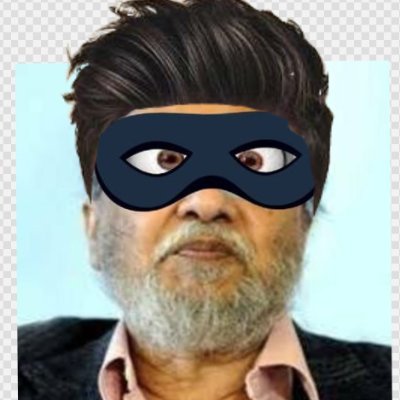
Derailing from peace. #militarism #Takaichi
【拡散希望】 この中国人は鹿さんを殺す気満々でした。 高市さんの言う通り中国人が暴力を振るっとるやろうが。 何故、奈良公園に監視カメラを設置したり警備員を配置しないんだ?