Barkai Lab

402 posts

Barkai Lab banner
Barkai Lab

Barkai Lab

@BarkaiLab

Systems Biology Lab @ 🔬Weizmann Institute of Science. # Understanding design principles of biological circuits.

Israel Katılım Eylül 2017
895 Takip Edilen2.5K Takipçiler
Barkai Lab
Barkai Lab@BarkaiLab·
(7/7) This is the lab’s first mammalian study, extending principles of IDR-directed genome targeting from yeast to mammalian transcription factors while introducing a mammalian ChEC-seq platform for high-resolution mapping of protein-DNA interactions. genome.cshlp.org/content/early/…
English
0
0
12
526
Barkai Lab
Barkai Lab@BarkaiLab·
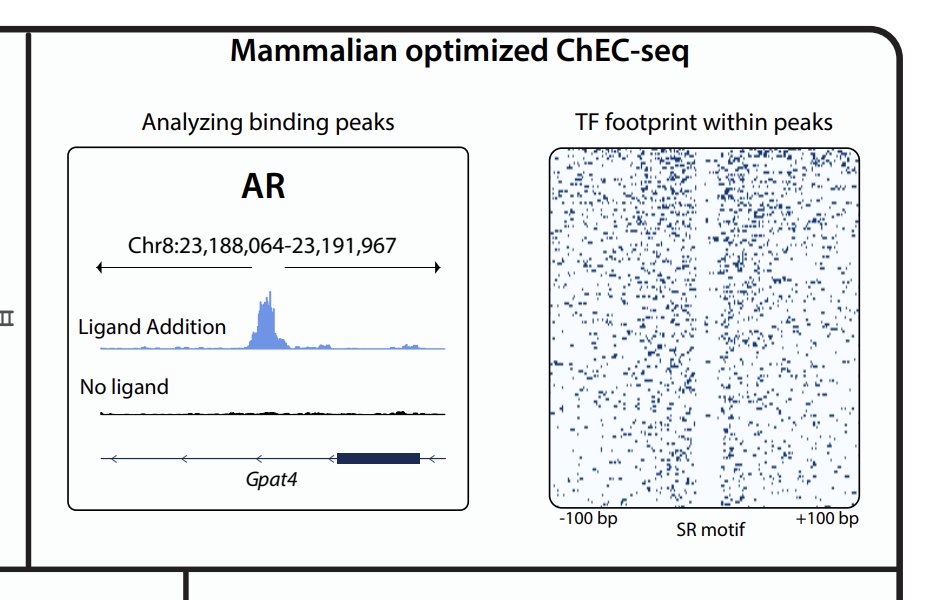
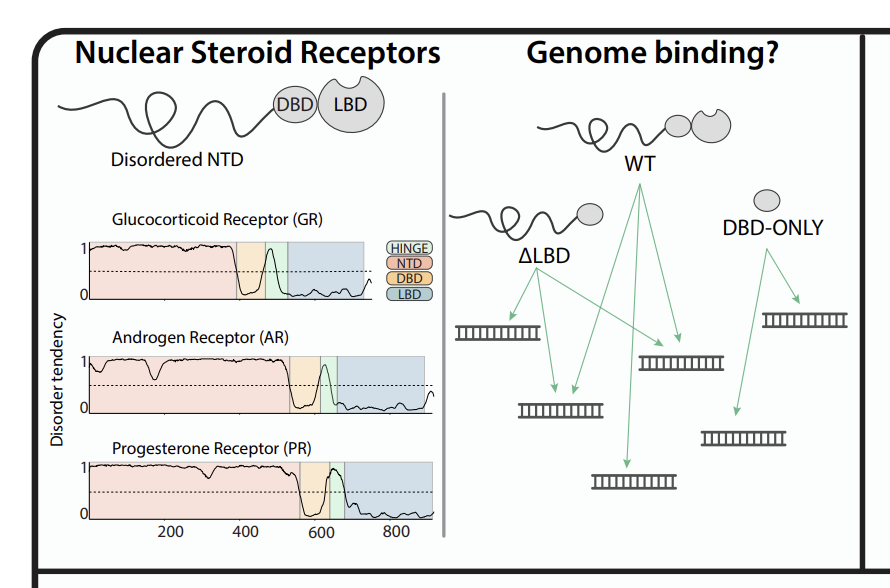
(1/7) How do steroid receptors identify their target sites within the mammalian genome, despite the abundance of similar DNA motifs? We tackled this question by adapting ChEC-seq for mammalian tissue culture, enabling footprint-resolution mapping of transcription factor binding.
Barkai Lab tweet media
English
9
19
82
8.1K
Barkai Lab
Barkai Lab@BarkaiLab·
(6/7) The NTDs also direct genome targeting to distinct SR motifs, but not to other Transcription factor’s motifs in budding yeast, where mammalian cofactors are absent.
Barkai Lab tweet media
English
0
0
3
354
Barkai Lab
Barkai Lab@BarkaiLab·
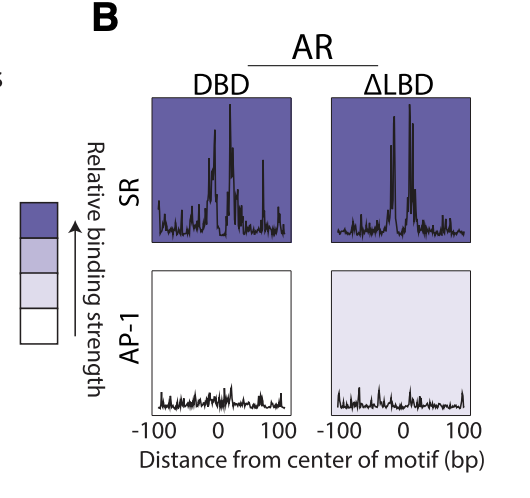
(5/7) Footprint analysis uncovered an unexpected role for AP-1. Rather than simply recruiting steroid receptors, AP-1 strongly shapes binding when the NTD is absent. The NTD relieves this AP-1 bias, enabling receptors to efficiently bind canonical steroid response elements.
Barkai Lab tweet media
English
0
0
4
326
Barkai Lab
Barkai Lab@BarkaiLab·
(4/7) Progressive NTD truncations reveal that this targeting is encoded by many weak determinants spread throughout the disordered sequence.
Barkai Lab tweet media
English
0
0
6
344
Barkai Lab
Barkai Lab@BarkaiLab·
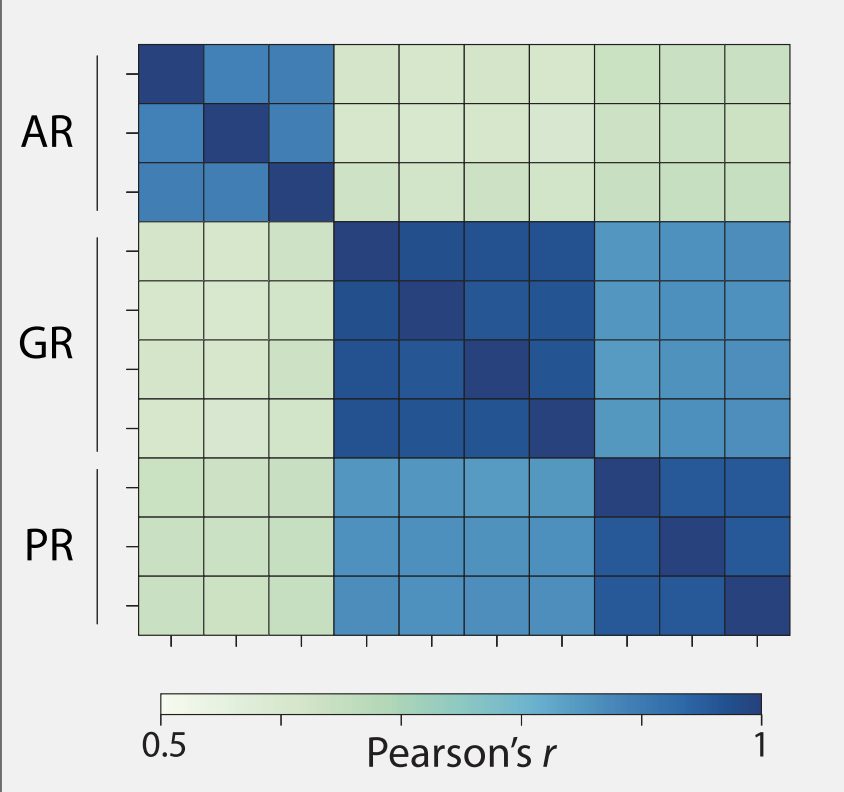
(3/7) Although androgen, glucocorticoid, and progesterone receptors recognize the same DNA motif through similar DNA-binding domains, their intrinsically disordered N-terminal domains (NTDs) direct them to distinct genomic targets.
Barkai Lab tweet media
English
0
0
4
369
Barkai Lab
Barkai Lab@BarkaiLab·
(2/7) Our mammalian ChEC-seq workflow generates reproducible, high-resolution maps of steroid receptor binding. Beyond identifying binding peaks, it resolves footprints at individual DNA motifs.
Barkai Lab tweet media
English
0
0
3
381
Barkai Lab
Barkai Lab@BarkaiLab·
We propose a model in which Med15 recruitment is affected by weak ABD-TF interactions and C-terminal interactions with Med2/3, leading to Med15’s UAS specificity.
Barkai Lab tweet media
English
0
0
0
159
Barkai Lab
Barkai Lab@BarkaiLab·
Analysis of a strain deleted of 12 recruiting TFs showed that a subset of Med15 UAS specificity does not depend on recruiting TFs.
Barkai Lab tweet media
English
1
0
0
177
Barkai Lab
Barkai Lab@BarkaiLab·
The paradigm says that coactivators are passively recruited to targets by transcription factors (TFs). But is that the whole story? We explore the Mediator subunit Med15 to ask: Do its activator-binding domains (ABDs) alone drive UAS targeting? biorxiv.org/content/10.648…
English
1
5
33
4.1K
Barkai Lab
Barkai Lab@BarkaiLab·
How do transcription factors (TFs) that recognize the same DNA motif end up binding different places in the genome? 🧬 We're excited to show you how we tackle this question in our new bioRxiv pre-print! doi.org/10.64898/2026.…
English
3
45
234
15.8K
Barkai Lab
Barkai Lab@BarkaiLab·
Our work suggests that TF specificity isn’t just encoded in DNA motifs or chromatin state... Intrinsic TF features—especially disordered non-DBD regions—play a central role in determining where it binds, highlighting mechanisms beyond motif or chromatin-based models.
Barkai Lab tweet media
English
2
2
13
1.2K
Barkai Lab
Barkai Lab@BarkaiLab·
So what’s driving this genomic selectivity? Our data point to disordered regions outside the DNA-binding domain as major determinants of binding strength and genomic preference, even in the absence of specific cofactors.
Barkai Lab tweet media
English
1
1
6
709