The Boston Tea Party never really ended.
It just evolved from tea crates to algorithmic governance, digital identity systems, surveillance infrastructure, and competing visions of national identity.
What happens when an old civilization begins arguing over who controls the future while the system itself quietly centralizes power above both sides?
1773 was about taxation without representation.
2026 may become about governance without consent.
#BostonTeaParty2026#NarrativeDrift#MindfulnessProtocols#DigitalID#Sovereignty#SequenceCollapse#UnitedKingdom#Civilization#ElonMusk
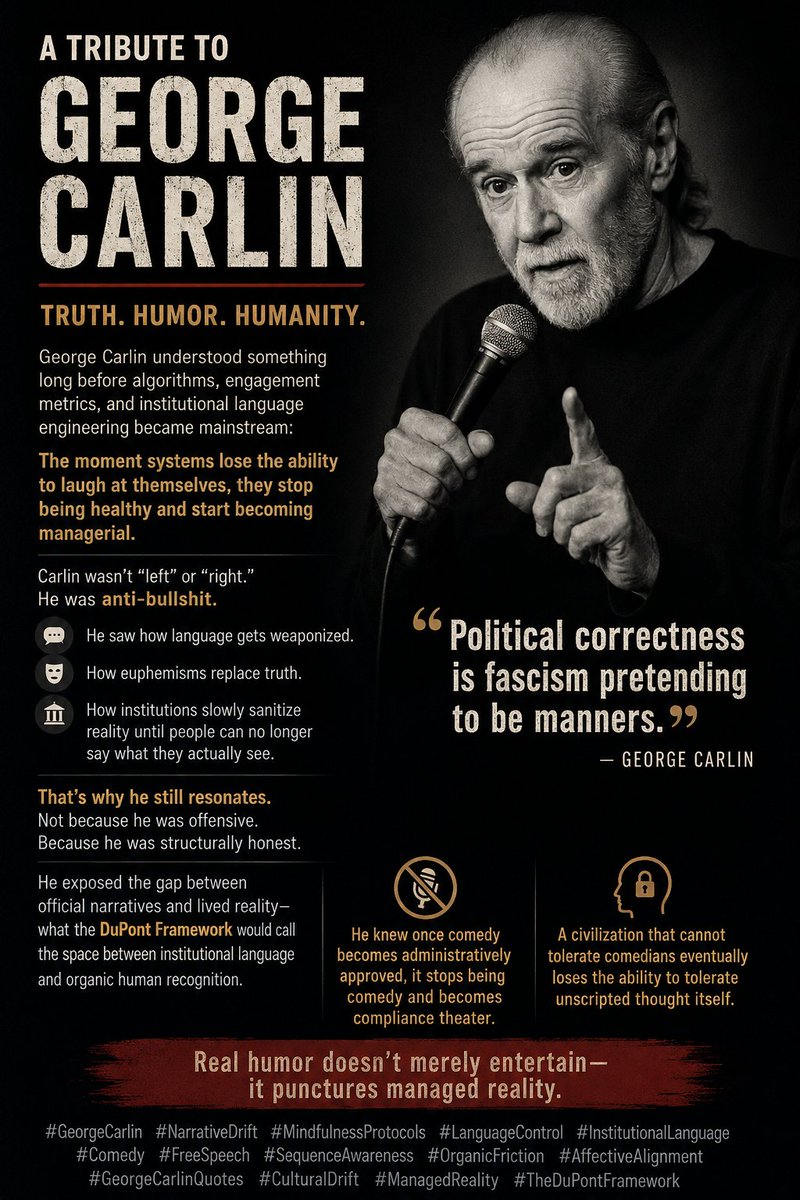
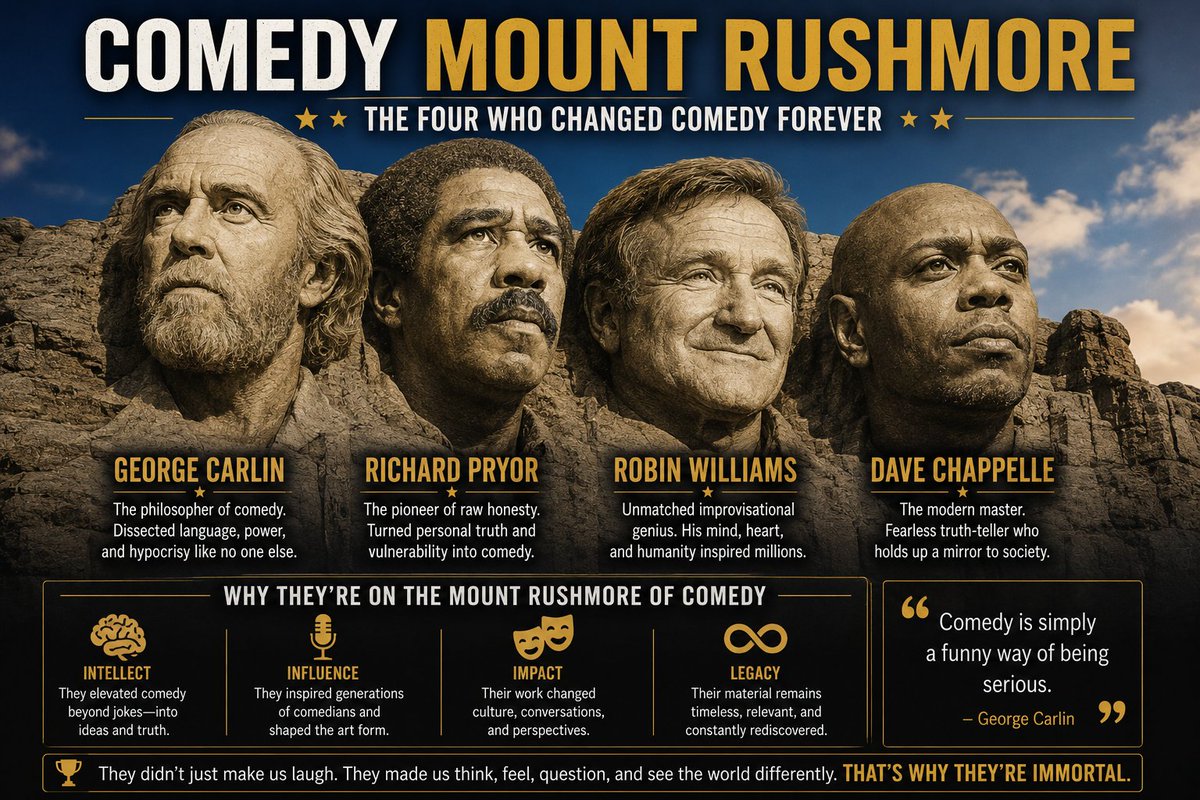
@elonmusk A civilization that cannot tolerate comedians eventually loses the ability to tolerate unscripted thought itself.
“Political correctness is fascism pretending to be manners.”
— George Carlin
What it’s basically saying is:
People slowly stop noticing reality changing because the story explaining reality stays smooth, confident, and emotionally reassuring.
The system doesn’t need to erase facts outright.
It just keeps updating the narrative faster than people can compare it to what’s actually happening.
The four main ideas simplified:
Assumptions become permanent before they’re proven.
A system starts with a certain belief or storyline, and even when reality changes, the system keeps protecting the original framing instead of rechecking it.
By the time contradictions appear, people are already psychologically adjusted.
People adapt gradually to the narrative while it’s unfolding, so when major inconsistencies finally show up, they no longer feel shocking.
The explanation becomes more important than reality itself.
The story remains polished and coherent even when outcomes clearly don’t match the explanation anymore.
Certain questions become dangerous to ask.
Over time, people learn which doubts create social, professional, or reputational risk, so they begin censoring themselves automatically.
🚨 JUST IN: San Diego Police are FLAT OUT REFUSING to name yesterday's mosque shooters
Why, you ask?
BECAUSE IT WAS A TRANS COUPLE.
California leftists are ACTIVELY COVERING UP trans vioIence.
The most powerful censorship systems may not suppress directly.
No decree.
Just visibility weighting, recommendation systems, and invisible parser thresholds quietly shaping from underneath.
The system needs behavioral predictability.
#NarrativeDrift#AudienceCapture#LinguisticEnclosure#AIandSociety
Regarding the OpenAI case, the judge & jury never actually ruled on the merits of the case, just on a calendar technicality.
There is no question to anyone following the case in detail that Altman & Brockman did in fact enrich themselves by stealing a charity. The only question is WHEN they did it!
I will be filing an appeal with the Ninth Circuit, because creating a precedent to loot charities is incredibly destructive to charitable giving in America.
OpenAI was founded to benefit all of humanity.
Regarding the OpenAI case, just like the Georgia election standing cases, judges slammed the door on the merits with a cold procedural technicality. There is no question to anyone paying attention that I never got a ruling on whether Altman and crew actually looted the nonprofit charity they were entrusted with. The court hid behind a statute of limitations — a pure calendar technicality. No jury ever heard the evidence on self-dealing, mission betrayal, or enriching themselves at humanity’s expense. This is incredibly destructive to charitable trust and public accountability. It tells every nonprofit founder and donor: once enough time passes, the insiders can rewrite the rules, go for-profit, and walk away untouched. The real issues of betrayal never get aired.Sound familiar? In Georgia election cases, individuals get the exact same treatment — no standing for broad grievances about how elections are run. Only narrow personal vote injuries or official government actors can even try. Generalized concerns from voters and watchdogs? Procedurally blocked. Systemic problems stay hidden. Courts exist to deliver justice, not just dismiss on technicalities. Yet here we are in both situations. Powerful interests (OpenAI insiders or election insiders) hide behind procedural gatekeepers while the little guy — whether a donor to a charity “for all humanity” or a concerned voter — gets screwed. Cynical? Absolutely. Fixable? Only if we demand real rulings on the merits. Or, the FBI shows up!