Alexander Baunov

5.6K posts

Alexander Baunov

Alexander Baunov

@baunov

Berlin, Germany Katılım Mayıs 2012
1.5K Takip Edilen14K Takipçiler
Alexander Baunov
Alexander Baunov@baunov·
Nine years ago I wrote in the @ForeignPolicy about the political dimension of the Bolshoi premiere of Nureyev. The ballet has just been revived at Deutsche Oper Berlin — see my earlier post. Here is my Foreign Policy piece on the Moscow premiere foreignpolicy.com/2017/07/27/who…, and a few photos from Berlin.
Alexander Baunov tweet mediaAlexander Baunov tweet mediaAlexander Baunov tweet mediaAlexander Baunov tweet media
English
0
0
4
908
Alexander Baunov
Alexander Baunov@baunov·
At Deutsche Oper (@deutsche_oper ) Berlin, a week ago, I witnessed something like a resurrection. Director Kirill #Serebrennikov, composer Ilya Demutsky, and choreographer Yuri Possokhov brought back the ballet #Nureyev, which, it seems, only recently shook Moscow both artistically and politically. Yet nine years have passed since that “recently.” In those nine years, the old Moscow has ended, and the director of the production followed the fate of his hero — making a leap from Russia to freedom. Just in time: looking now at the Berković case — a Russian theatre director imprisoned on politically motivated charges — it’s clear he might not have been allowed to leave anymore. Even the Moscow premiere was already a premiere in an unfree country, followed by controversy, cancellation, and eventual disappearance. Seen from Berlin, this leap was also a move from the “temple of Russian culture” — the imperial Bolshoi — to Deutsche Oper: a theater unburdened by ceremony and self-importance. Absent, too, was what often accompanied Moscow performances — a sense of social display and hierarchy. Here, there was no pomp, just a hall stripped of ritual but rich in sound. There was also none of the constant struggle over what could or could not be shown on stage, nor the need to prove cultural parity with the outside world. Now the production — like its hero and creators — exists in a free theater, in a free country. Without the removed image of a nude Nureyev, without the compromises that once replaced intended openness with concealment — a distinctly old-Moscow reflex. This does not mean the production brought nothing new to Berlin. From the very first appearance — even before the dancers — the audience rose into a prolonged standing ovation. Demutsky’s music, blending jazz, Soviet song, and classical forms, remains original and theatrical; Possokhov’s choreography is equally precise and eclectic; Serebrennikov’s direction combines drama and opera in a way familiar from his Berlin work. What has changed is the scale of meaning. A story that in Moscow still felt partly local has become universal. The search for and acceptance of one’s otherness is a Western constant; the struggle for personal freedom in an unfree environment is a recurring Russian theme. In Nureyev, they intersect. Russian audiences — now far more present in European halls — may see something of themselves on stage. For European viewers, it becomes part of a broader conversation about migration: the story of one immigrant telling that of another who chose and conquered the Western stage, despite the familiar claim that “it’s all the same everywhere” — a way of denying an obvious difference. The creators have the knowledge, experience, and artistic authority to remind us of that difference. And it seems Berlin was glad to be reminded.
English
0
3
11
2.1K
Alexander Baunov
Alexander Baunov@baunov·
#Russia constantly accuses others of double standards while openly doing the very things it condemns. Sergei #Shoigu said strikes on power plants and critical infrastructure in the Middle East are “unacceptable,” even as Russia itself targets such facilities. “Using vital infrastructure as a tool of military pressure is absolutely unacceptable,” he said — after Russia spent the winter bombing Ukraine’s power plants, leaving millions without electricity and heating in subzero temperatures.
English
0
2
11
903
Alexander Baunov retweetledi
Carnegie Politika
Carnegie Politika@CEIP_Politika·
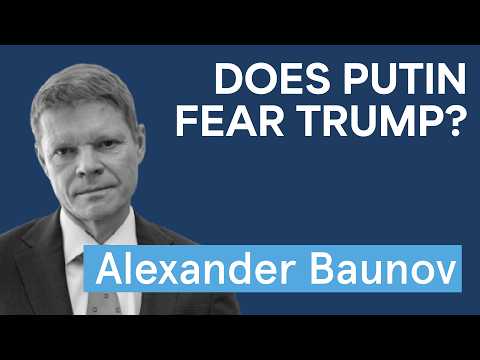
How should you interpret Putin’s reaction to Khamenei’s killing? Does Putin really fear Trump? And what’s the state of Russia-Ukraine negotiations? Find the answers in a new video interview with @Baunov: youtube.com/watch?v=EQPaUA…
YouTube video
YouTube
English
1
1
8
1.1K
Alexander Baunov
Alexander Baunov@baunov·
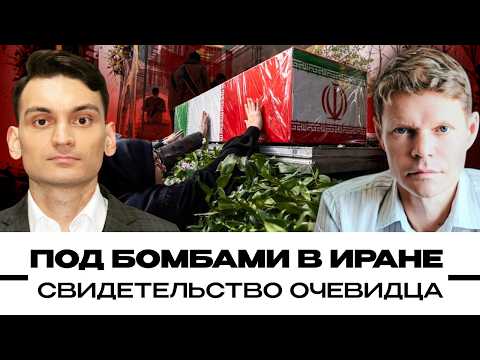
What Iran looks like from the inside right now, and what people there are saying. Ruslan @R_V_Suleymanov Suleymanov returned from Iran yesterday. IN RUSSIAN youtu.be/QKgGstM4WRc 00:00 Beginning 00:32 Ruslan Suleimanov returns from Iran 01:30 Visa and border: how to enter Iran 04:20 Why filming is prohibited 05:30 How the Iranian dictatorship works 07:50 IRGC, checks, and detention 12:20 Basij and total control 14:10 Life under wartime conditions 17:00 Destruction and fear in the cities 20:50 Pro-government rallies and propaganda 27:30 Actions of the opposition 36:40 Who comes after Khamenei 41:40 Attitudes toward Russia and the world 01:01:40 Internet, censorship, and isolation 01:08:20 Leaving Iran and interrogations
YouTube video
YouTube
English
1
1
8
3.3K
Alexander Baunov retweetledi
Eilish Hart
Eilish Hart@EilishHart·
Is Trump’s unpredictability making Putin nervous? How is Russia reacting to the war in the Middle East? And what does this have to do with the Kremlin’s latest Internet restrictions? For @CEIP_Politika, I asked Alexander @baunov. youtu.be/EQPaUA4hBUg?si…
YouTube video
YouTube
English
1
4
8
2.4K
Alexander Baunov retweetledi
Carnegie Politika
Carnegie Politika@CEIP_Politika·
"It’s disingenuous to criticize a film for simplifying Russia’s complexities when Russia is waging a brutally simple war of aggression against its neighbor," @baunov answers the critics of the Oscar-winning film “Mr. Nobody Against Putin”. carnegieendowment.org/russia-eurasia…
English
0
2
4
784
Alexander Baunov
Alexander Baunov@baunov·
In the early 2000s, most intellectuals complained that Russia shouldn’t be reduced to Putin, the KGB, corruption, or state-owned energy giant Gazprom. Russia, they said, was more complicated, diverse, and subtle than any such easily exportable narrative. That was true—and still is. Yet this complexity didn’t prevent Russia from embarking on a brutally simple war. Which is why both external and internal observers are sometimes justified in ignoring that very same “complexity.” carnegieendowment.org/russia-eurasia… Of course, simplification is not the best approach when it comes to policymaking—nuance matters there. But it’s odd to demand that every pronouncement about Russia account for all of the country’s many facets. Russia has simplified itself far more effectively than Talankin’s camera ever could. If anything, his work is a painful record of that process of simplification This is part of my reflections on Mr. Nobody Against Putin. It’s closer to the Russian-language debate around the film, with another piece to follow that will speak more directly to a Western audience.
English
0
2
17
2.6K
Alexander Baunov
Alexander Baunov@baunov·
Alexander Baunov, an international policy expert, said he liked the film, adding he wished he had been part of such a project when he himself was a schoolboy in the Soviet Union. For many children featured in #Talankin's film their participation in the project, he said, "will remain among the most important events of their lives, if not the most important". france24.com/en/live-news/2…
English
0
1
23
1.3K
Alexander Baunov
Alexander Baunov@baunov·
In the early 2000s, much of Russia’s thinking public told the world the country couldn’t be reduced to Putin, the KGB, corruption, or Gazprom. Russia was more complex, diverse, and subtle than any exportable narrative. That was true—and still is. Yet this complexity didn’t prevent a brutally simple war, launched over and against it. Which is why both external and internal observers are sometimes justified in ignoring that complexity. This may not always be rational for policymaking—nuance matters there. But it’s odd to demand that every statement about Russia account for all its complexity. Russia has simplified itself far more than Talankin ever could. His work, if anything, painfully records that simplification. I wrote this in RUSSIAN about the #Oscarto the Pavel #Talankin’s #MrNobody Against Putin — not in an aesthetic, but in a quasi analytical, political frame (with some personal notes). I strongly disagree that the film is for a Western audience. What I discovered instead is that one has to write about it separately for Russian and for international readers. carnegieendowment.org/ru/russia-eura… storage.googleapis.com/crng/mr-nobody…
English
1
7
25
3.6K
Alexander Baunov
Alexander Baunov@baunov·
I sincerely congratulate Pavel #Talankin on the documentary #Oscar for #MrNobody Against Putin. I’m probably among those who liked the film immediately — perhaps because I myself went to a provincial but decent school very much like the one in the film during the late Soviet years of Andropov and Chernenko, an era of heavy propaganda and the deepest unfreedom before the present one (and not necessarily milder than today’s). Instinctively I put myself not in the filmmaker’s place but in that of the students. And I immediately understood how exciting it would have felt. As a provincial schoolboy, I would absolutely have wanted to be a character in a film shown in France or America, and I wouldn’t have cared at all whether my parents had signed a permission form (they rarely asked back then anyway — and not always now). In the small-event universe of a regional school student — especially from a town the world has never heard of — to appear in a film seen by the wider world and then win an Oscar with it is almost like proving that your life was not lived in vain. And doing so at the very beginning of it. For many of those kids this will remain one of the defining events of their lives. Maybe the defining one. Right now, it almost certainly is. Talankin on the documentary Oscar. I’m probably among those who liked the film immediately — perhaps because I myself went to a provincial but decent school very much like the one in the film during the late Soviet years of Andropov and Chernenko, an era of heavy propaganda and the deepest unfreedom before the present one (and not necessarily milder than today’s). Instinctively I put myself not in the filmmaker’s place but in that of the students. And I immediately understood how exciting it would have felt. As a provincial schoolboy, I would absolutely have wanted to be a character in a film shown in France or America, and I wouldn’t have cared at all whether my parents had signed a permission form (they rarely asked back then anyway). In the small-event universe of a regional school student — especially from a town the world has never heard of — to appear in a film seen abroad and then win an Oscar with it is almost like proving that your life was not lived in vain. And doing so at the very beginning of it. For many of those kids this will remain one of the defining events of their lives. Maybe the defining one. Right now, it almost certainly is.
English
2
2
21
2.2K
Alexander Baunov
Alexander Baunov@baunov·
In my native #Yaroslavl, security forces raided a metal concert at the Territory club on March 14 — the event was called “Funeral of Winter.” According to eyewitnesses, about 30 officers burst in, forced people to lie face-down on the floor, cut their hair, made them undress, and suggested they sign contracts to go fight in the war. One officer even climbed onto the stage with an automatic rifle, stopped the music and ordered the band to lie down. Phones and passports were confiscated, visitors were checked for “forbidden” tattoos, and some “suspicious” attendees had marks drawn on their hands with a marker. Witnesses say the men were held for about five hours while a military enlistment officer urged them to sign contracts to go to the war. The number of detainees is still unknown.
English
1
21
37
6.5K
Alexander Baunov
Alexander Baunov@baunov·
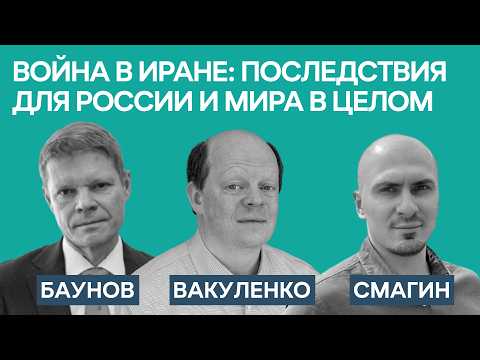
Tomorrow (March 9) there will be a Carnegie stream IN RUSSIAN about the first week of the war in Iran and what it means for Russia and the world as a whole, with Sergey Vakulenko and @NikitaSmagin . We’ll discuss what is happening in Iran, Putin’s reaction to the war, and what may happen to oil prices: youtube.com/watch?v=1ZXEFs… March 9, 19:00 Moscow time (17:00 CET). Like the video and turn on notifications now so you don’t miss the start. At the end of the stream there will be time to answer viewers’ questions. You can ask them during the broadcast or in advance by sending a question in a private message to our channel @carnegiepolitika.
YouTube video
YouTube
English
0
3
11
8.1K
Alexander Baunov retweetledi
Andrew S. Weiss
Andrew S. Weiss@andrewsweiss·
"Putin may flaunt his strength and play the role of a strongman who does what he likes, but in reality, he cannot even afford to verbally attack a U.S. president even as that president is destroying Putin’s allies." @baunov
Foreign Policy@ForeignPolicy

For the Kremlin, showing too much support for Iran would be to openly side with Trump’s enemies, thereby risking incurring his wrath and becoming a party in a conflict against the United States, writes @baunov. foreignpolicy.com/2026/03/04/put…

English
2
3
10
2.8K
Alexander Baunov
Alexander Baunov@baunov·
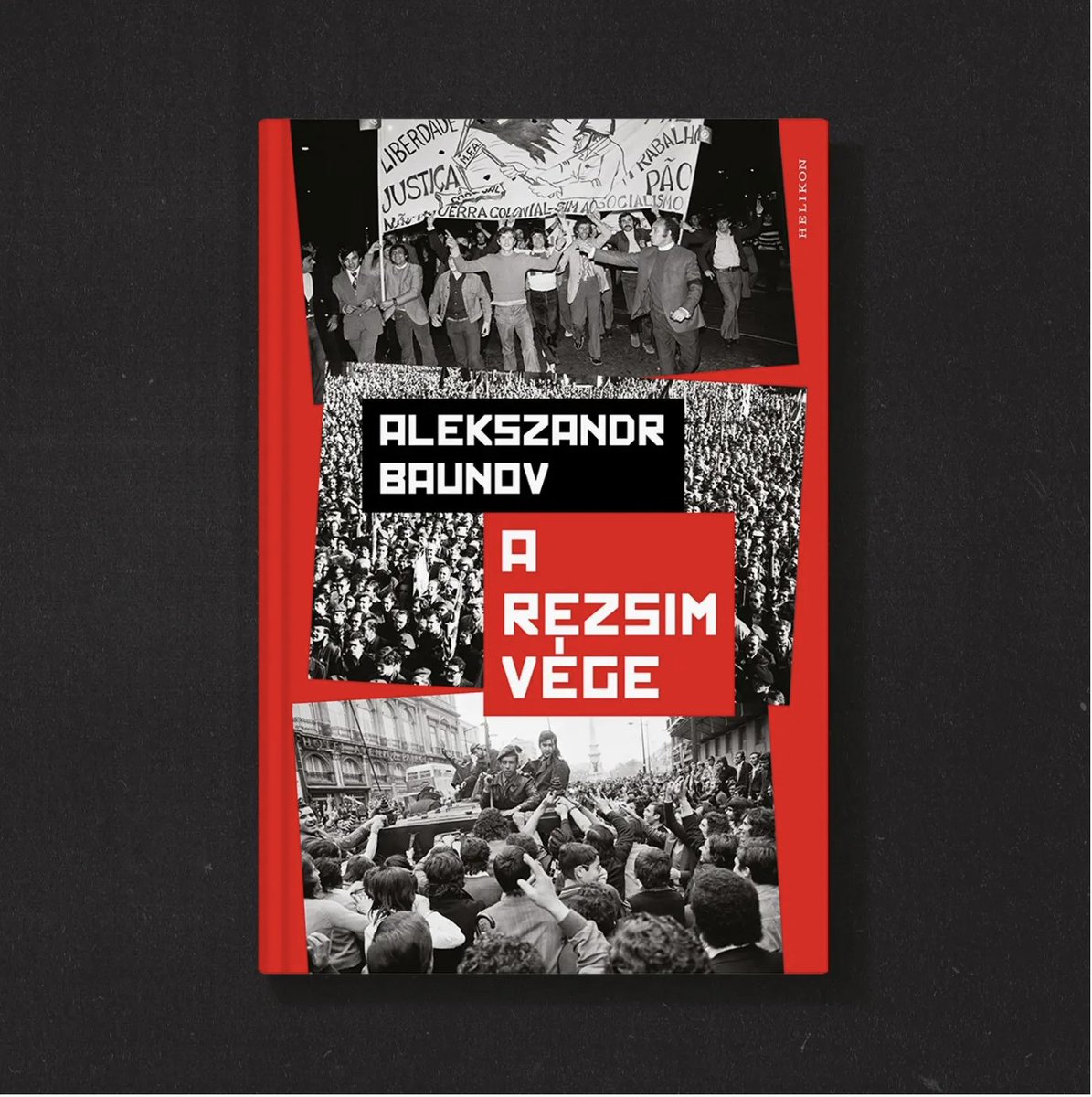
“The book explores how autocracy works and what mobilizes society. A common feature is the appeal to national traditions and the emphasis on a country’s supposed uniqueness. The system promises to protect society and the individual from moral decay. It claims that even if it lacks technological or economic superiority, it possesses moral superiority over a decadent outside world. This is now the official, dominant idea in Russia—but the idea itself is not new. It can also be found in the far-right dictatorships of the past.” “The book also reminds us that a system cannot be understood by focusing solely on the dictator’s personality,” Baunov said. Even under dictatorship, there are no purely monolithic blocs. Even if the leader has subordinated various groups, he still has to balance between them. “This does not mean one should lobby for any particular faction—misjudging the balance of power is easy—but at the very least one needs to understand the more detailed picture. That would also be important in the case of Russia,” he said. According to Baunov, another lesson is that “the opposition always appears weak—but that is misleading.” If one looks only at resources, the balance of forces always seems to confirm that impression. “The person who was nobody yesterday can become everything tomorrow. The end of a regime is always dynamic.” Alexander Baunov’s book The End of the Regime, translated by Lajos Marosi, will be published by Helikon on February 25. A long interview with the Hungarian outlet @Telexhu about current affairs and the publication of the Hungarian edition of The End of the Regime: telex.hu/kulfold/2026/0…
Alexander Baunov tweet mediaAlexander Baunov tweet media
English
0
0
6
966
Alexander Baunov retweetledi
Foreign Policy
Foreign Policy@ForeignPolicy·
For the Kremlin, showing too much support for Iran would be to openly side with Trump’s enemies, thereby risking incurring his wrath and becoming a party in a conflict against the United States, writes @baunov. foreignpolicy.com/2026/03/04/put…
English
8
9
22
11.7K
Alexander Baunov
Alexander Baunov@baunov·
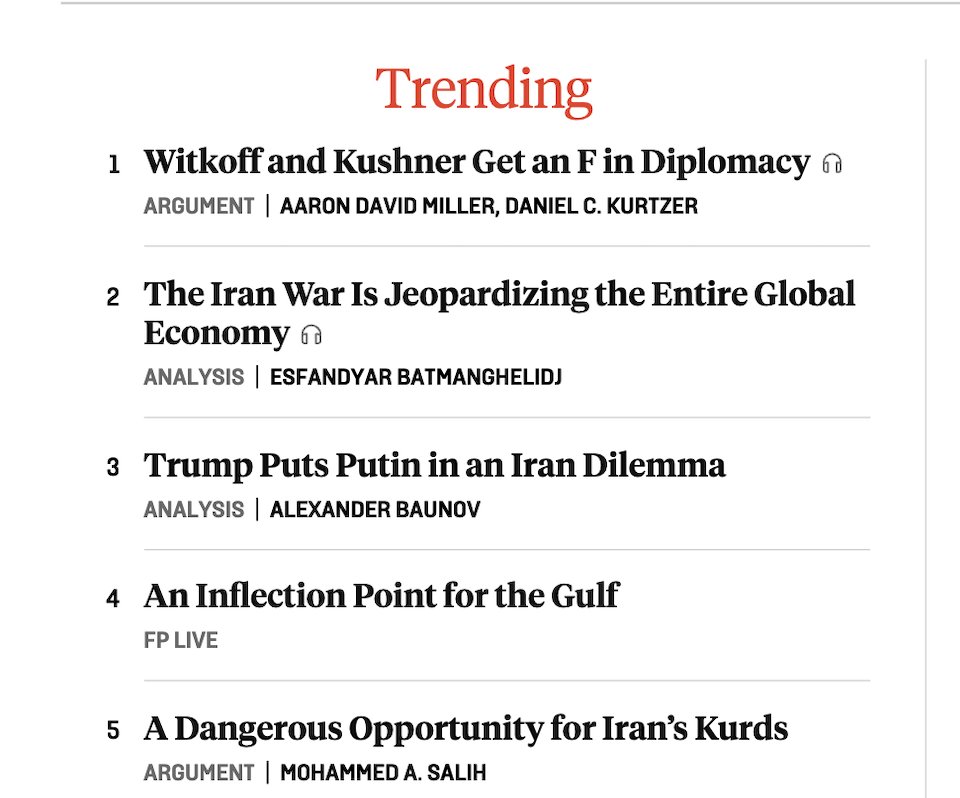
Paradoxically, one of the cornerstones of the global institutional order remains—despite and in some sense because of Trump’s actions. Although he insists that his goal is not to export democracy but to benefit U.S. security and eliminate threats, it is authoritarian regimes that are coming under fire. Although the Trump administration squeezes friend and foe alike, it is the internal fragility and lack of legitimacy that makes autocracies faster to crumble. Trump’s talk about annexing Greenland aside, there is no institutional capacity or conceptual framework for using force against democracies even under Trump. My piece on Trump, Putin, and Iran climbed to #3 among the most popular trending stories on @ForeignPolicy this week.
Alexander Baunov tweet media
English
0
1
9
1K