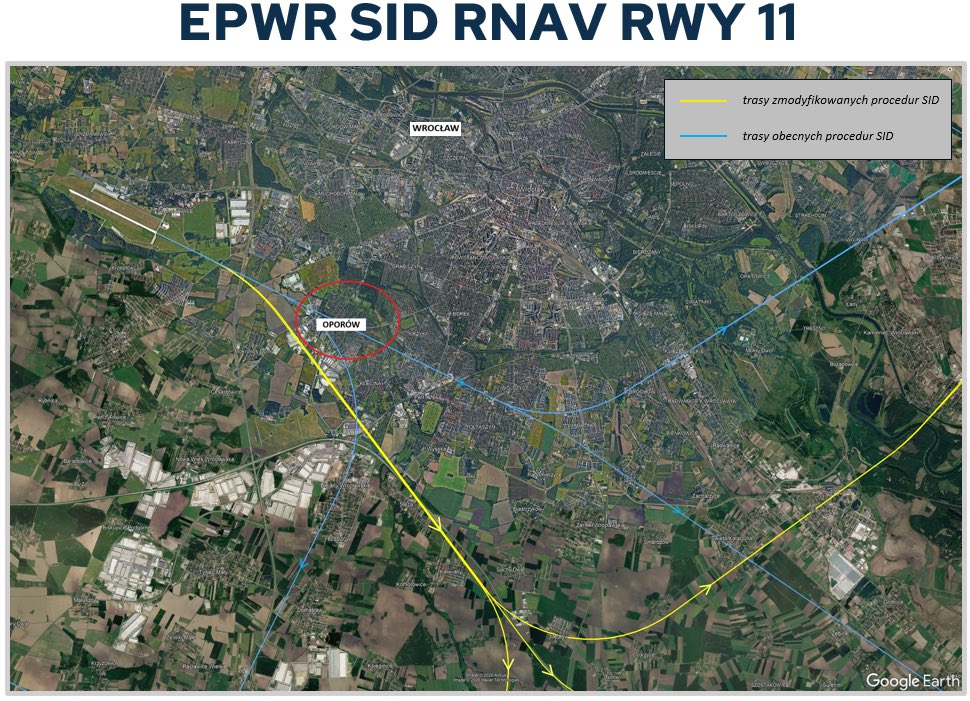
@PBondaryk Pełna profeska. A wystarczyłoby zaprosić i ugościć 10 dobrych spoterow w zamian za prawo do publikacji zdjęć. Byłaby uczta dla oczu.
Polski
Bdin
5K posts
Historia dzieje się na naszych oczach - pierwsze polskie F-35 lądują w bazie Sił Powietrznych w Łasku! #F35PL


Panie Doktorze, polscy naukowcy liczą także na Pana wsparcie w informowaniu społeczeństwa o fatalnej sytuacji nauki i szkolnictwa wyższego w kraju. Wydatki na ten cel spadły do ok. 1% PKB. To najgorszy rok od początku XXI wieku. Wkrótce protest naukowców przed sejmem ⚠️#3procentnanauke ⚠️@3procentnanauke



Niemiec płakał jak polaczkom sprzedawał 🤣🤣🤣 Tak by musiał płacić za utylizację a tak jeszcze zarobił 🥹



I've been itching to dig into LTE physical-layer stuff for a while, and Starlink DTC turned out to be the perfect excuse to go end-to-end. So I threw together a little SDR pipeline from scratch on a Mac and pointed it at the Band 25 downlink to see if I could pull anything sensible out of the air. Setup was a USRP B210, a conical antenna, GPSDO for clock reference, and a window with a decent slice of sky. Record IQ at 7.68 MS/s around 1992.5 MHz, then a Swift app (with some coding help from Claude) that walks the samples through the usual LTE steps. The first goals were pretty straightforward: find which cells (and thus which satellites) are visible right now via their Physical Cell IDs, measure signal strength, estimate the leftover carrier-frequency offset after Starlink's Doppler pre-compensation, and match each detection back to a specific satellite using SGP4 against fresh Celestrak TLEs. The ladder from raw IQ to PCI is short but every step has its quirks: PSS, the Primary Synchronization Signal. Three possible Zadoff-Chu roots (25, 29, 34) on 62 subcarriers around DC. Matched filter against each and the strongest peak gives you timing plus N_ID(2). SSS right before it. Two interleaved m-sequences scrambled by N_ID(2). Correlate across the 336 possibilities to get N_ID(1) and the half-frame. PCI = 3 * N_ID(1) + N_ID(2). Done. One number from 0 to 503. With PCI known you can place the Cell-specific Reference Signals for RSRP, pull a coarse CFO from the PSS, and so on. Daniel Estévez's LTE write-ups (destevez.net, April and May 2022) were pure gold here and are worth reading for anyone doing similar work. Then the fun part: group detections by PCI, fit the observed frequency offsets against the predicted line-of-sight Doppler from every candidate satellite using SGP4 + least squares. Best match wins, and the residual tells you how clean the pre-compensation actually is. Early results (taken with a big grain of salt): the pipeline reliably picks up multiple satellites per minute, often several different PCIs from the same bird during one pass. The trajectory fits look solid even with TLEs aged a day or two. On beam-center cells the residual Doppler is small enough that the linear trend is basically flat across the whole pass, instead of the tens of kHz you'd see from raw orbital motion. Off-center cells show bigger swings, which makes sense if each PCI is tied to a different spot beam. Beyond DTC itself, a coherent ground station at 2 GHz that can see every visible Starlink also opens doors to ionosphere phase work, bistatic passive radar with Starlink as illuminator, and time-transfer experiments. None of which I've tried yet, but the same pipeline opens the door to all of them. This is very much a side project and still a work in progress. The fun is in the building.

🚨 NEW: An Air India flight from Delhi to Bengaluru suffered a tail-strike incident during landing at Bengaluru airport on Thursday, the airline said. Flight AI2651, an Airbus A321-251NX, operating from Delhi to Bengaluru on May 21, experienced the incident while landing. Air India said the aircraft landed safely and all passengers and crew disembarked normally. The aircraft has been grounded for detailed inspection.