Bellwether Research (Ian Andy)
2.5K posts

Bellwether Research (Ian Andy)
@BellwetherRsrch
Spotting what matters in macro, stocks, tech & crypto... Independent research, explained clearly.
Not Financial Advice Katılım Şubat 2021
1K Takip Edilen454 Takipçiler

Summit ending without tariff talk is the biggest let down. Walking away without that leaves the August cliff, when 90 days tariff truce expires, live and reversion risk back on the table.
Xi conceded nothing on Taiwan while warning of "clashes and even conflicts," telling you Beijing felt no pressure to soften. Trump's "no commitment either way" is a pass, not a win. Inviting Xi to Washington in September and floating four meetings in 2026 is classic can-kicking, useful for keeping markets calm but not for resolving disputes.
So real test comes in August. If tariff cliff hits without an extension, the stabilization narrative breaks fast.
English

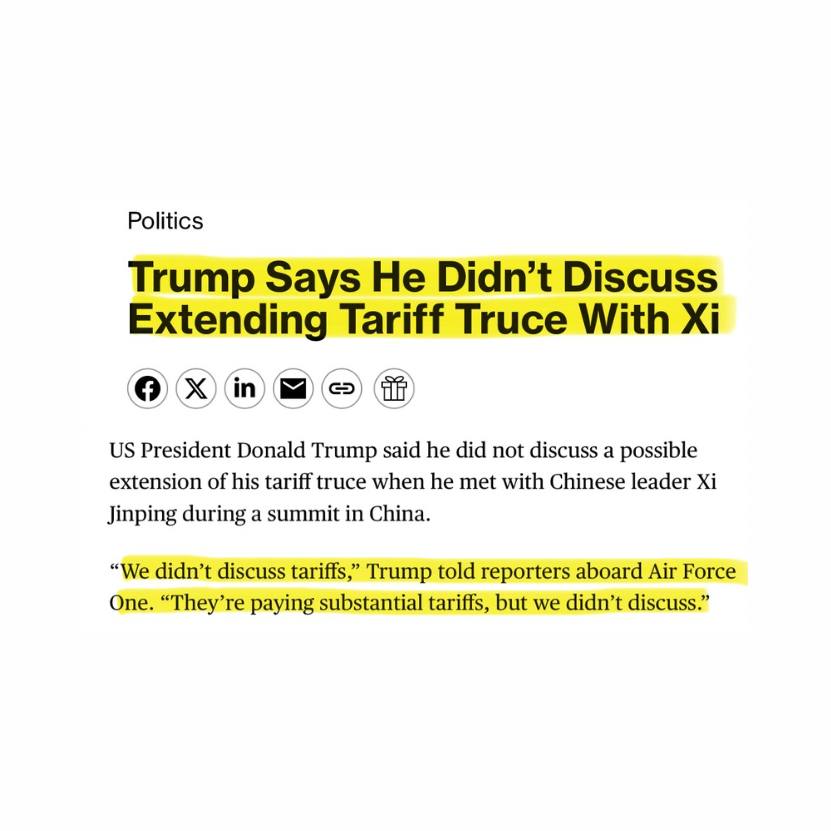
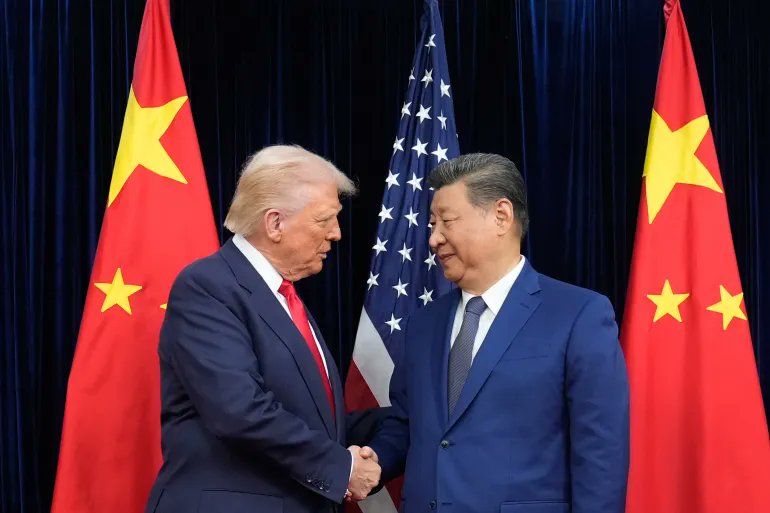
BREAKING: Trump says the China summit ended without any tariff discussion.
Trump flew to Beijing with 15 CEOs for 48 hours. The one thing markets were watching for was never brought up.
Trump made "no commitment either way" on Taiwan despite Xi warning directly that mishandling Taiwan would push the two countries toward "clashes and even conflicts."
The US approved Nvidia H20 chip sales to Chinese tech firms during the summit. Trump then said China has not purchased any of them yet.
Trump is now inviting Xi to the White House on September 24 and says they could meet four times in 2026.


English

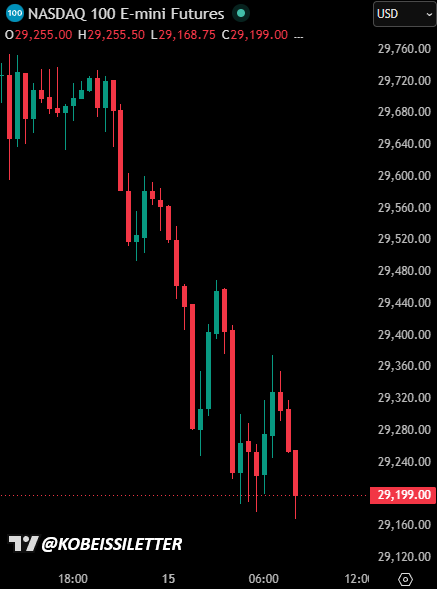
...sell-off was building all week. 10Y at 4.49%, highest since July 2025, after CPI at 3.8% and April PPI jumping 1.4% month over month, both tied to Iran war energy shock feeding inflation. Markets have fully priced out a 2026 cut and now flirt with a December hike at ~28% odds.
Why Nasdaq specifically? Tech is a long-duration cash flow bet, so rising discount rates compress valuations fastest in the names that led the rally. SOX up 64% since late March was already running against rising yields. Today's tape is the rubber band snapping back.
Trump-Xi summit ending without breakthroughs killed the one positive catalyst and Cerebras profit-taking added an air pocket under crowded trades. Next core services CPI and Warsh's first communications as new Fed Chair will be critical to see if this is a reset or something messier...
English

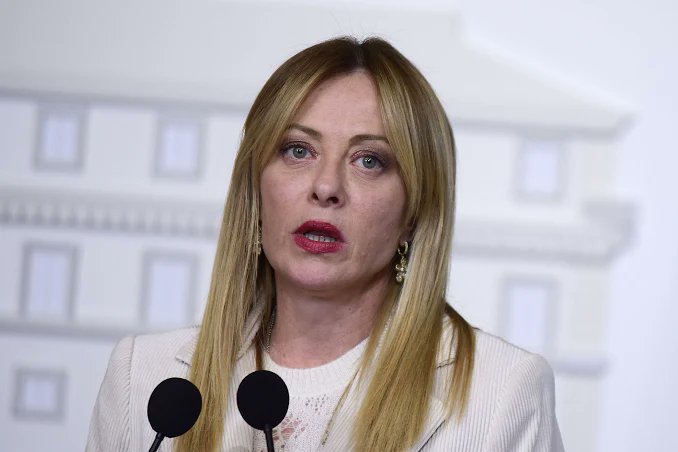
Story checks out...Meloni told parliament framework law lands this summer, with Iran war fallout cited as part of the energy security case. Reversing a 40-year nuclear ban takes real political capital, which tells you how seriously Rome treats gas import dependence now.
Bigger read is the European pattern. France never left, UK and Netherlands accelerating, now Italy joining the club. Continental Europe is rebuilding nuclear capacity it spent decades dismantling, and SMRs are chosen vehicle.
Beneficiaries cluster around reactor designers in talks with Rome (Westinghouse, EDF, Rolls-Royce, Ansaldo, Enel) and the uranium fuel cycle, where demand expectations are getting rewritten across G7 simultaneously. EU goes nuclear...finally sth positive out of the region! 😉
English

SpaceX prospectus could land next week, with roadshow targeting week of June 8 and a Nasdaq listing shortly after. Reported $75B raise at $1.75T to $2T valuation would make this the largest IPO ever. xAI merger inside the deal layers AI exposure onto the launch and satellite franchise.
I am wondering what public names with direct exposure would benefit the most....Alphabet holds 6-7.5% from a 2015 investment, sizeable in dollar terms but small relative to GOOGL's market cap. Bank of America's $250M from 2018 is now worth around $10B, roughly 3% of BAC. The sharper play is EchoStar, where the spectrum deal could deliver a 2.8% stake worth ~$56B against EchoStar's current $34B market cap. That's the only name where SpaceX exposure could exceed the host company's own value.
ETF route is live too. $XOVR, $DXYZ, and $BPTRX all carry concentrated SpaceX weightings.
Real test comes when S-1 drops. Starlink economics, xAI losses, Musk voting control and lockup length will move perceived valuation by hundreds of billions in either direction....exiting times this year! 🚀🚀🚀
English


...as a personal expectation, very okay, but mechanics don't work this way I guess. Fed balance sheet size and rate decisions are separate tools, run on different tracks. Rate moves come out of scheduled FOMC meetings, not from the weekly balance sheet release.
Underlying instinct that liquidity and policy are connected is fair, just not in this direct trigger format. If you want to track what actually influences the next move, FOMC statement language, dot plot shifts, and Powell pressers do most of the work. Balance sheet matters more for liquidity backdrop than as a rate signal.
English

Tungsten and critical minerals story is legitimate, separate from the Trump family angle that's grabbing headlines. US-China rare earth tensions have made domestic and allied supply chains a multi-decade priority regardless of who occupies the White House, and $1.6B in EXIM and DFC backing tells you Treasury sees this as strategic infrastructure, not a trade.
Where I'd be careful is the timing assumption baked into the post. Critical mineral plays have been pitched as a supercycle for years, and the price action shows why holding has been brutal. $ALM, $EQRLF, $UAMY all bleeding tells you sentiment hasn't caught up to the structural thesis yet, and may not until physical demand or geopolitical rupture forces it.
"Playing the long money game" framing is the right read on motivation, but long money games can stay long. Memory and photonics outperforming in the same month is the market voting on which AI bottleneck it cares about right now, and tungsten isn't on that list yet.
KAZR worth watching for how it trades post-merger, particularly whether government backing translates into accelerated development timeline or sits as paper support for years.
English

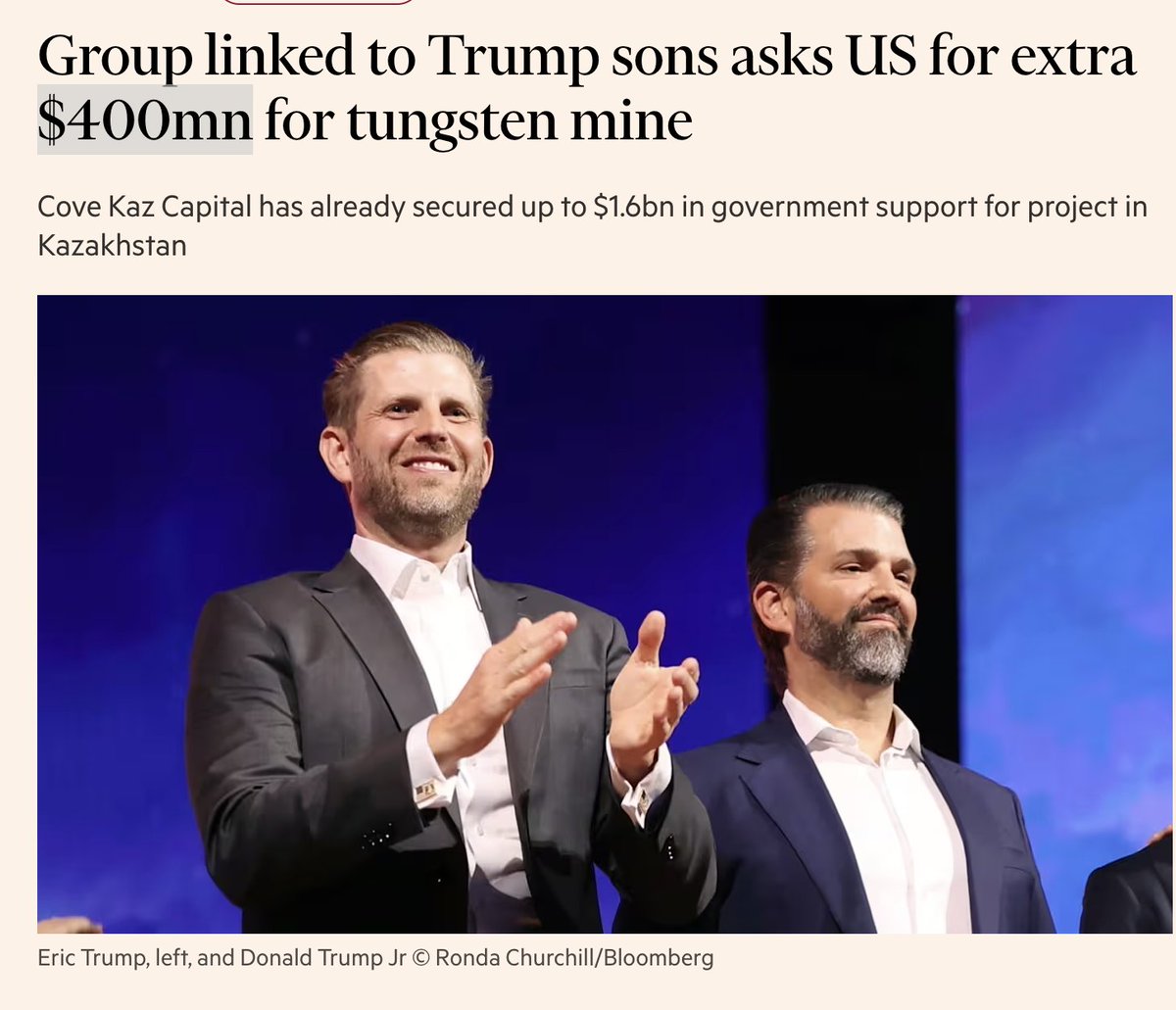
The Trump bros are playing Tungsten now.
Haven't discussed this metal in a while after the trades got chopped even amidst the pricing parabola.
But this reads very bullish.
Their Dad is in China right now discussing critical minerals.... and would have no incentive to make a deal if the boys are in?
Don Jr. and Eric Trump took a stake in a shell company that just merged with Cove Kaz, the developer of the world's largest undeveloped tungsten deposit in Kazakhstan.
That combined company is going to be hitting the Nasdaq under the ticker KAZR with up to $1.6 billion in backing from the US Export-Import Bank and the Development Finance Corporation.
Pretty clear team Trump is playing the long money game on rare earths and critical minerals.
And any kind of China truce will likely not reverse the strategy, despite the market's reaction this week.
$ALM is down 14% in 1 month
$EQRLF is down 11% today
$UAMY is down 15% in 5 days
Two of those are concentrated bets in my Rare Earth Retiree strategy on @joinautopilot which of course has underperformed strategies like memory and photonics (up 11% in a month).
But still feels like an undeniable supercycle retail should have some exposure to.

English

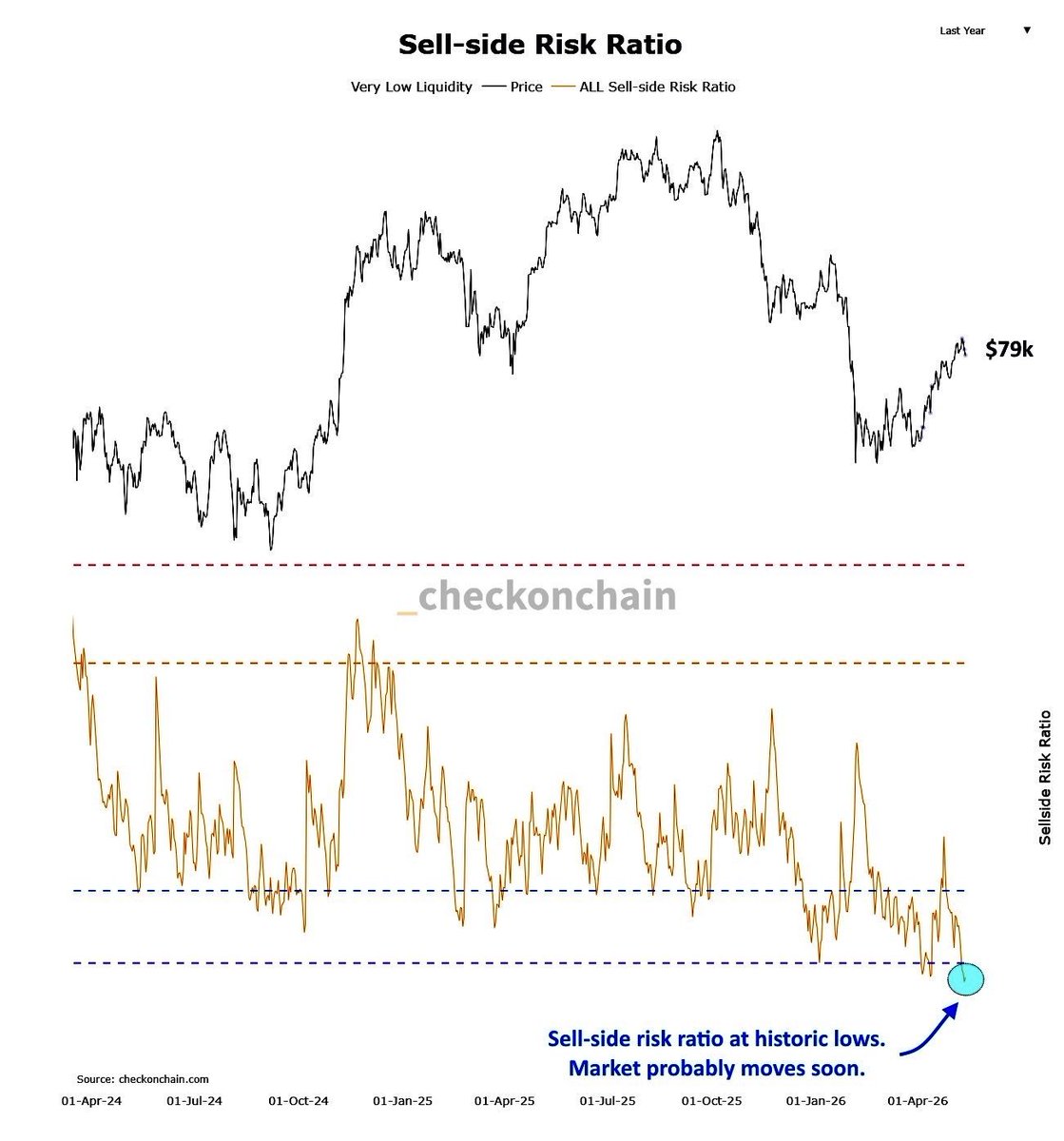
Sell-side risk ratio at historic lows is a real on-chain signal worth taking seriously. Measures realized profit and loss relative to market cap, so when it bottoms out it usually means coins changing hands are doing so at minimal P&L impact. Translation in the post is roughly right.
But "everyone who wanted to sell already sold" is the part to push back on. Low sell-side pressure doesn't automatically mean buyers show up. It means the market is coiled, not loaded. Direction of the resolution depends on which side moves first. Historically these setups have preceded both major bottoms and longer chop phases before real moves materialize.
Chart shows price already grinding higher from the lows around $79k, so some accumulation is clearly underway. Question is whether spot ETF flows confirm or fade over coming weeks. $BTC ✊
English

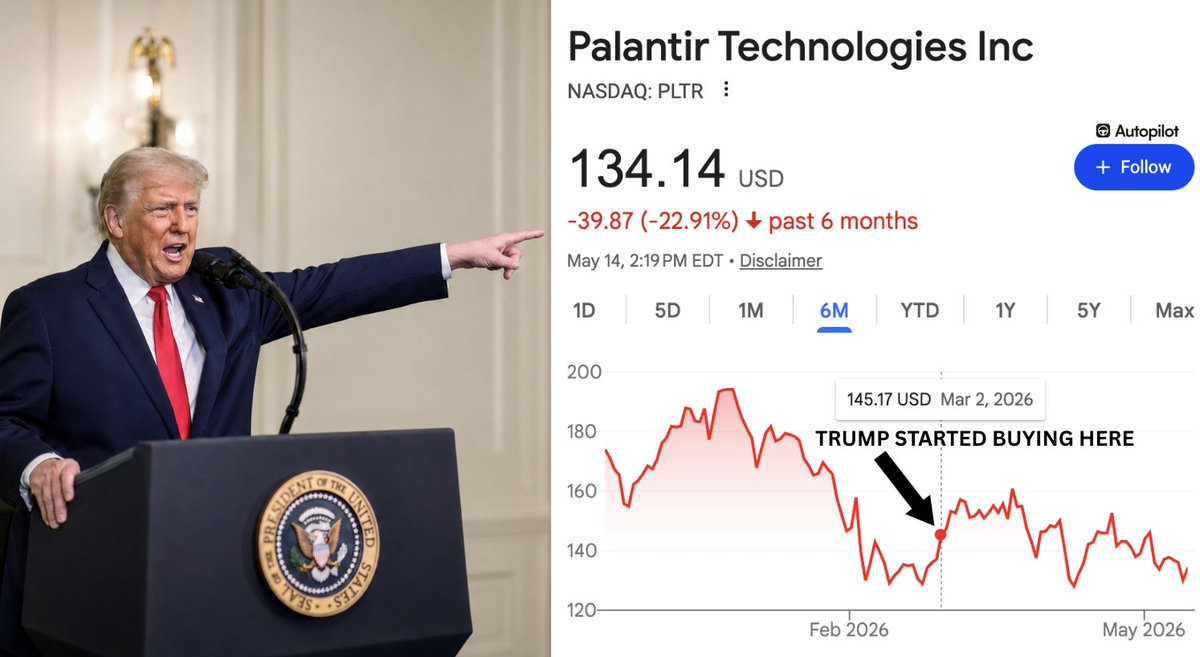
Cleaner-cut version of the $DELL story from earlier, with the added twist that here he literally tweeted the ticker. Any corporate insider doing this gets a call from enforcement within hours. For a sitting president, it shows up on a disclosure form weeks later and that's the end of it.
$PLTR itself is a more polarizing name than Dell. Government contract pipeline is genuine, AIP platform has real commercial traction, but valuation has been priced for perfection for a while. Being underwater on $630k of buys tells you entry was somewhere around recent highs, not that the thesis is broken.
The "but so was Intel at one point" closer is the part to ignore. That comparison flatters Palantir more than the fundamentals support. Intel had decades of cash flow behind it during drawdowns. PLTR is still building that track record.
English

Breaking: Trump owned Palantir when he tweeted about it
On April 10th he literally tweeted the $PLTR ticker
"Palantir Technologies (PLTR) has proven to have great war fighting capabilities and equipment."
Starting March 2nd, Trump bought $PLTR
• Then again on March 11th
• Then once more on March 12th
• Then again on March 17th
• Then picked up more on March 18th
• Then again on March 25th
• Then once more on March 26th
Up to $630,000 total across all purchases
He's still underwater on every single buy, but so was Intel at one point

English

Helium is the part of this story nobody was tracking until last week, and that's exactly why it matters. You can't substitute it. You can't ramp new supply quickly. And memory fabs burn through it at rates logic chips don't come close to.
Months of inventory at Samsung and SK Hynix is the only thing standing between this shock and DRAM pricing. If Qatar really needs five years to come back fully, that buffer is just a delay, not a fix.
Bigger lesson sitting underneath this one: markets keep framing Middle East risk through oil. Real damage usually shows up in obscure inputs most analysts can't even spell. Neon during Russia-Ukraine. Palladium. Now helium. Same pattern every time, and same surprise every time.
English

⚠️The Iran war is threatening the global semiconductor supply chain:
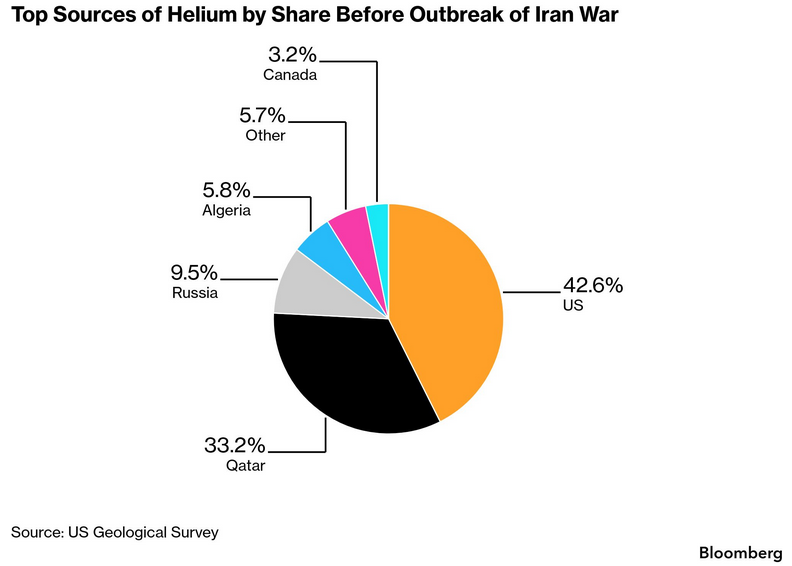
~33% of global helium supply went offline in early March, when Qatar Energy halted operations at its Ras Laffan and Mesaieed LNG facilities, as helium is a byproduct of LNG production.
Helium is indispensable for printing and etching circuits onto silicon wafers, and a sustained shortage makes memory chip producers Samsung, SK Hynix, and China's ChangXin Memory particularly vulnerable, as memory chips require far more helium than logic chips.
South Korea imports ~65% of its helium from Qatar and ~30% from the US, while China imports ~80% of its helium needs, with Qatar and Russia as its primary suppliers.
Importantly, Korean chipmakers currently hold months of inventory in helium.
HOWEVER, full restoration of Qatar's capacity could take as long as 5 years, meaning the supply disruption could outlast the war itself.
Helium supply constraints could tighten semiconductor production at Samsung and SK Hynix, adding pressure to already fragile chip supply chains used in smartphones, data centers, and AI infrastructure.
The semiconductor industry is more exposed to the Strait of Hormuz than most investors realize.

English

76% YoY on PJM is a real signal, not a blip. That grid covers 13 states and 65 million people, including Northern Virginia data center corridor that's absorbing AI buildout. Power inflation is no longer theoretical.
Two angles worth holding. First, this feeds directly into sticky services inflation Fed is trying to tame, making rate cut path even harder. Second, it accelerates the trade everyone's been circling, power infrastructure as the real AI bottleneck. Eaton, Vertiv, GE Vernova, IPPs, anything plugged into generation or transmission capacity.
Watch capacity auction prices and PPA contract renewals over coming quarters. That's where the durability of this move shows up.
$ETN $VRT $GEV
English