

Beophyang
1.4K posts

Beophyang
@Beophyang108
Forest of Chaos — Global satire, explained by animals.
Katılım Aralık 2022
15 Takip Edilen50 Takipçiler

BREAKING: 🇺🇸 President Trump says Iran was given only 24 hours to respond.
“After that, the world may witness one of the most devastating airstrikes ever seen.”

English



한국에 있는 모든 친구 여러분, 좋은 아침입니다 🇰🇷☀️
일본에 있는 모든 친구 여러분, 좋은 아침입니다 🇯🇵☀️
베트남에서 사랑을 전합니다 🇻🇳❤️
오늘 좋은 하루 되시길 바랍니다 🌅
행복한 국제 어린이날이 되시길 바라며, 웃음이 가득하시길 바랍니다.

한국어

@MechaNews_ They said they don't want to kill anyone, but they didn't say they won't kill anyone.
English

TRUMP: “WE DON’T WANT TO KILL ANYONE.”
So there’s a trace of humanity after all?
English










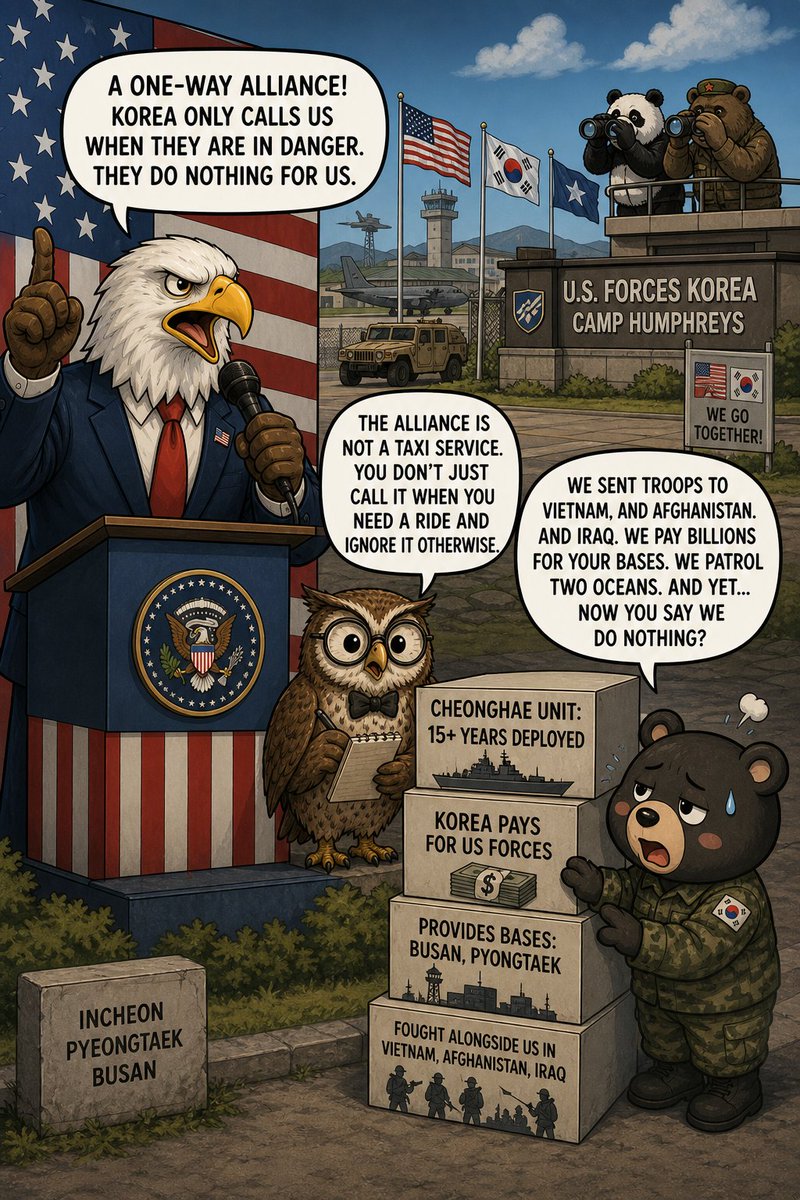
The U.S.–ROK alliance has never been one-way.
South Korea funds a significant share of U.S. Forces Korea, provides critical bases, and maintains one of the most capable militaries in the region.
It has deployed troops abroad, including long-term anti-piracy missions like the Cheonghae Unit.
Alliances aren’t loyalty tests.
They’re built on shared interests, proportional risk, and real contributions.
Calling it “one-way” doesn’t make it true.
English
@BRICSinfo Unlike the U.S., Israel doesn't just talk — it seems like they might actually cause a big incident.

English

JUST IN: 🇮🇱🇮🇷 Israel says it is ready to deploy its "entire air force" against Iran if needed.
English
@BRICSinfo Unlike the U.S., Israel doesn't just talk — it seems like they might actually cause a big incident.
English
The “free rider” argument gets one thing wrong from the start.
The U.S.–ROK alliance has never been one-way.
South Korea funds a significant share of U.S. Forces Korea, provides critical bases, and maintains one of the most capable militaries in the region.
It has deployed troops abroad, including long-term anti-piracy missions like the Cheonghae Unit.
Alliances aren’t loyalty tests.
They’re built on shared interests, proportional risk, and real contributions.
Calling it “one-way” doesn’t make it true.

English

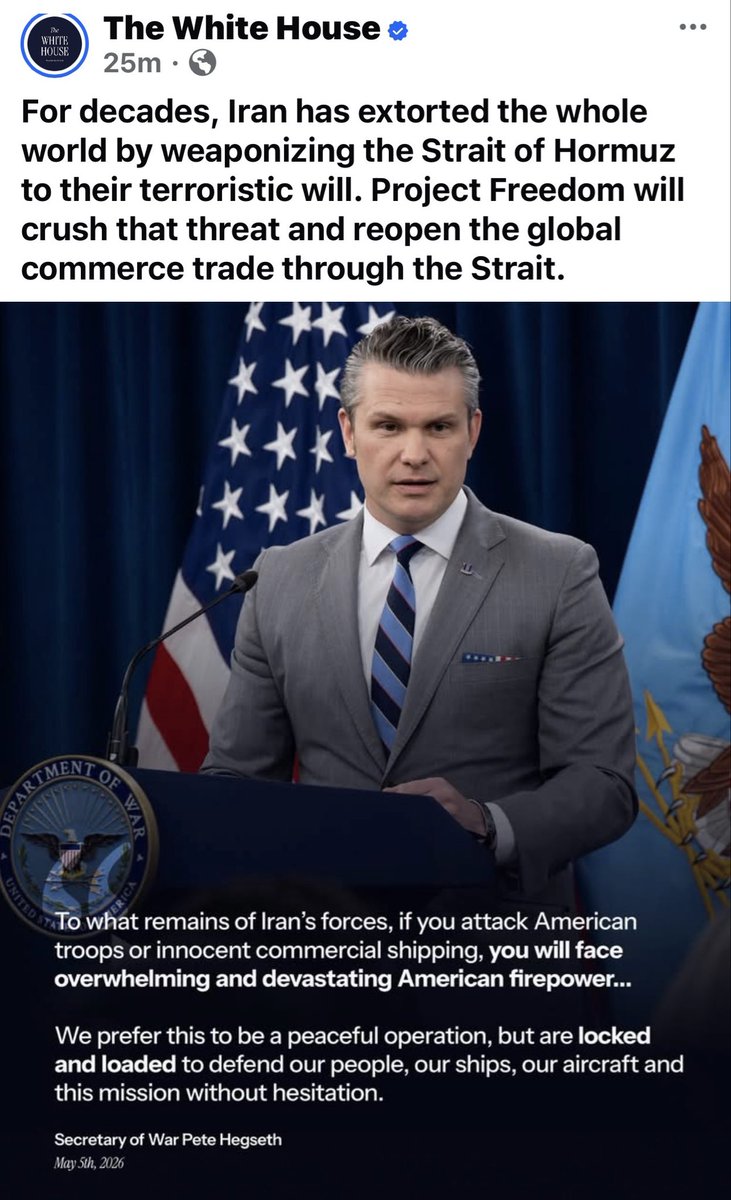
A South Korean vessel was attacked by Iran in the Strait of Hormuz.
Yesterday, President Trump publicly urged South Korea to step up and join Project Freedom.
Yet the South Korean government is already playing its familiar two-faced game.
Domestically, they’re telling citizens “America started this — why should Korea get involved?” while demanding that America protect their ships under the “U.S.-Korea alliance.”
An alliance is not an insurance policy you cash in only when convenient.
This is the same Lee Jae-myung government that has pushed anti-American policies, aligned with China, criticized U.S. strikes on Iran, shown sympathy for Tehran, and even sent $500,000 to Iran. Now that their own ships are under attack, they suddenly remember the alliance and expect America to bear the burden.
The Trump administration must no longer tolerate this hypocritical double game.
Protecting South Korean ships and citizens is South Korea’s primary responsibility.
They can deploy their own navy, join international operations, or coordinate with us — but they must act first.
American taxpayers and troops should not risk blood and treasure to cover for a government that routinely opposes U.S. interests.
There is no reason for America to provide unconditional protection to an ally that takes all the benefits but refuses the burdens.
If South Korean vessels are in danger, the first nation that must step up is the Republic of Korea — not the United States.
America First means no more one-way alliances.
#AmericaFirst #Trump #NoMoreFreeloaders #SouthKorea #Hormuz #Iran #AlliesNotFreeloaders #MAGA
English

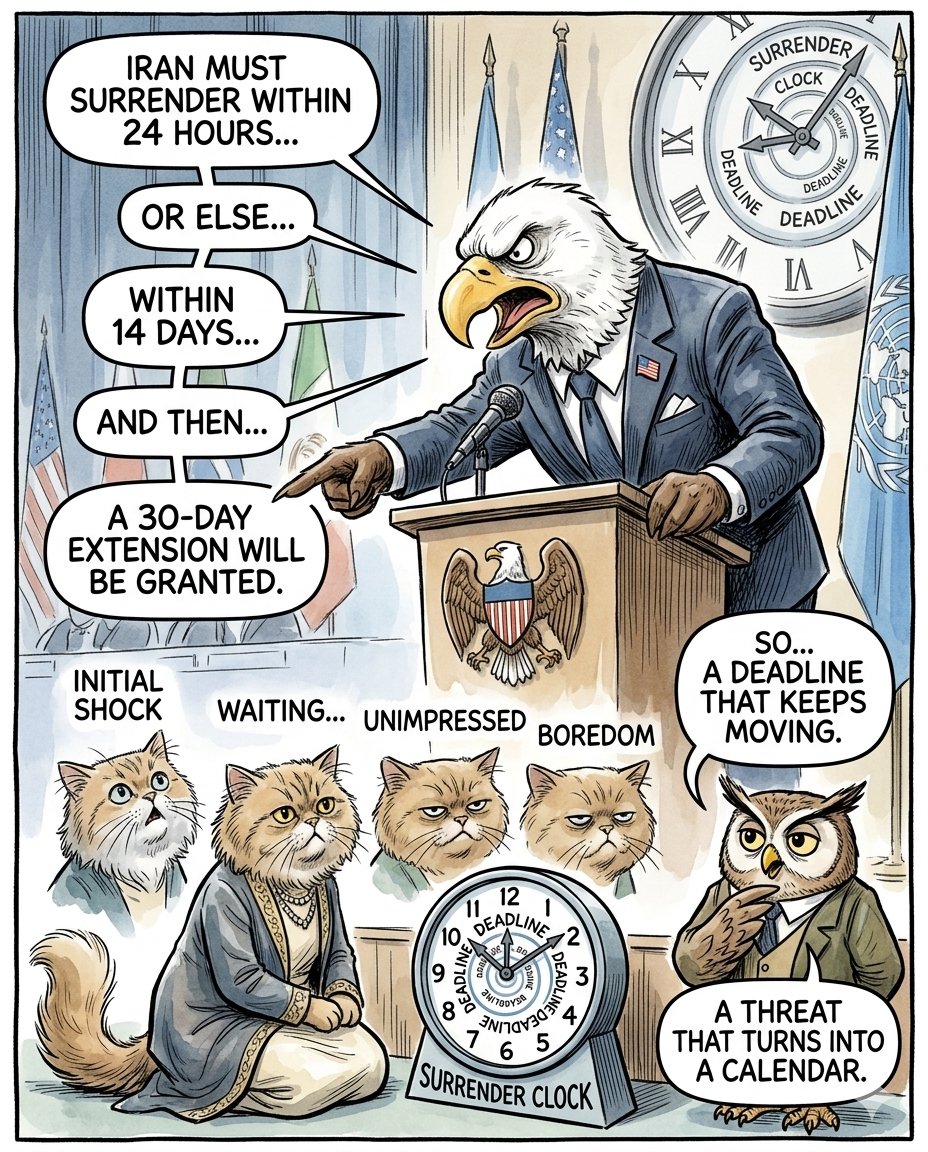
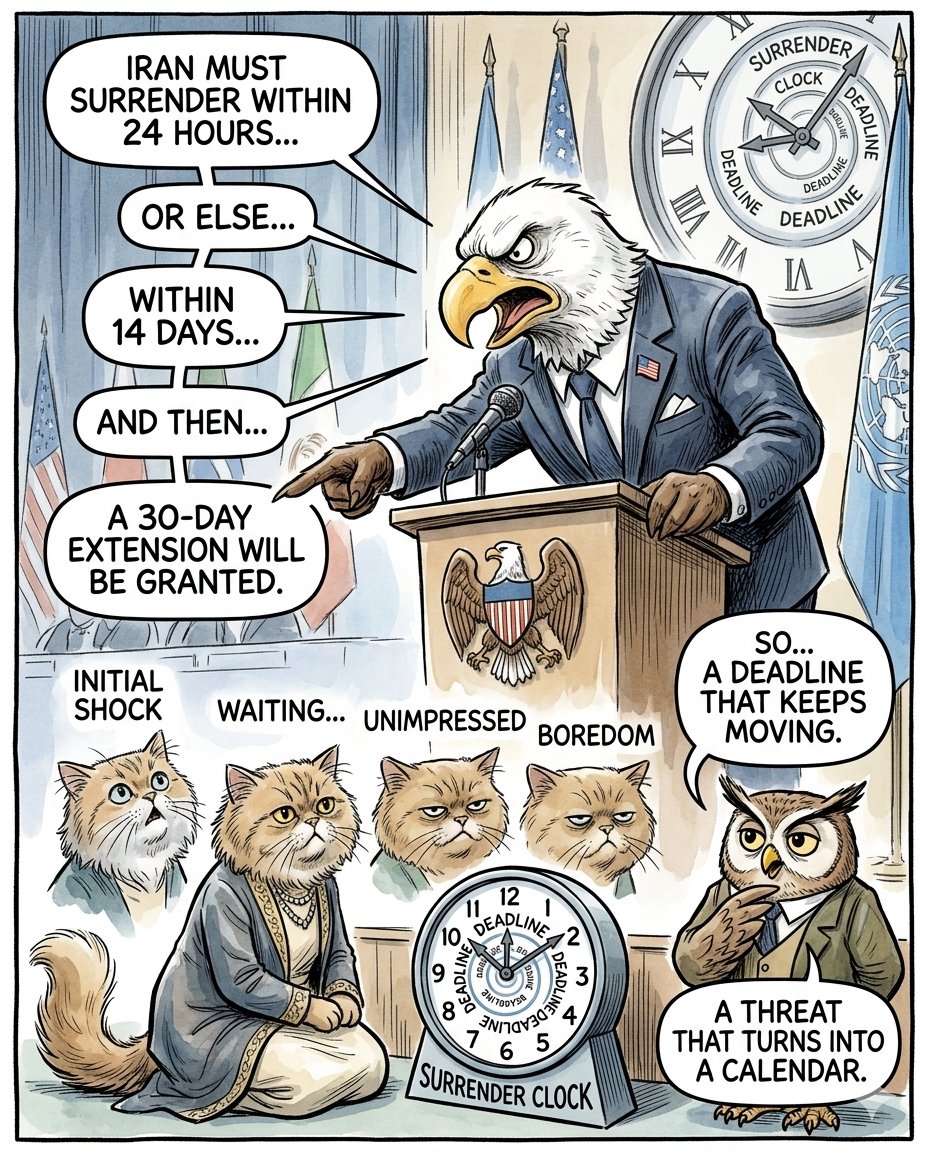
@WarMonitors IRAN MUST SURRENDER WITHIN 24 HOURS...
OR ELSE...
WITHIN 14 DAYS...
AND THEN...
A 30-DAY EXTENSION WILL BE GRANTED.
English

A bill will certainly be coming, but personally I doubt whether the ship will be returned safely.
Jean Cummings@JeanCummings121
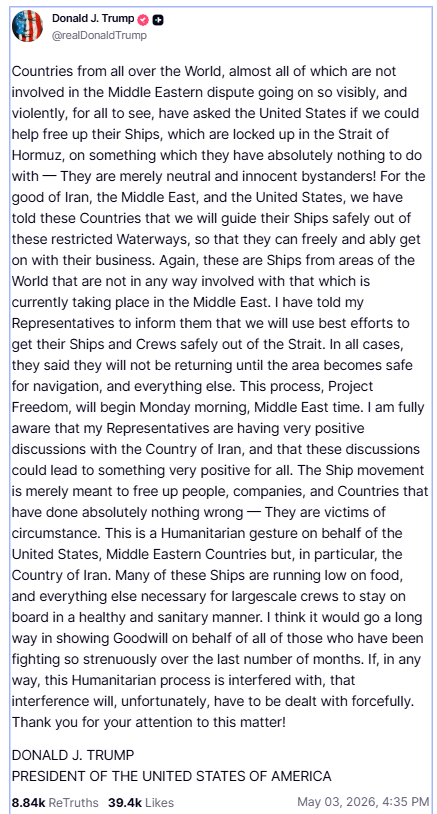
“We’ll get your ships out safely. But the bill is coming.”
English
@JeanCummings121 A bill will certainly be coming, but personally I doubt whether the ship will be returned safely.
English
“We’ll get your ships out safely. But the bill is coming.”
English
This argument rests on a false premise: that the U.S.–ROK alliance is a one-way arrangement that South Korea exploits without contributing. That is not how alliances work in practice, and it is not how United States–Republic of Korea Alliance has functioned for decades.
First, South Korea is not a passive beneficiary. It maintains one of the most capable militaries in the region, funds a substantial share of the costs associated with U.S. Forces Korea, and provides critical basing and logistical infrastructure that enable U.S. operations across Northeast Asia. These are not symbolic contributions; they are central to U.S. strategy.
Second, the claim that Seoul “does nothing” in maritime security is inaccurate. South Korea has repeatedly deployed the Cheonghae Unit to the Gulf of Aden and surrounding waters, participating in multinational efforts to protect shipping lanes and respond to threats. That record directly contradicts the idea of free-riding.
Third, involvement in Middle Eastern conflicts is not a simple loyalty test—it is a matter of national interest and risk management. The Strait of Hormuz is vital to global energy flows, but it is also one of the most volatile flashpoints in the world. Expecting automatic, full-scale participation ignores the legitimate need for proportional and carefully calibrated responses.
Fourth, the portrayal of South Korea’s foreign policy as uniformly “anti-American” is an oversimplification. Like any sovereign state, South Korea balances multiple relationships, including with China and Middle Eastern countries, while still maintaining a robust security partnership with the United States. Selective disagreements do not negate the alliance.
Finally, framing alliances as transactional—where protection is withdrawn unless every partner mirrors U.S. policy—risks undermining the very network that amplifies American influence. Alliances endure because they align long-term strategic interests, not because they enforce identical short-term decisions.
If South Korean vessels are threatened, coordination and burden-sharing are indeed necessary. But that is precisely what alliances are for: not unilateral obligation, but joint action based on mutual interests and capabilities.
Jean Cummings@JeanCummings121
A South Korean vessel was attacked by Iran in the Strait of Hormuz. Yesterday, President Trump publicly urged South Korea to step up and join Project Freedom. Yet the South Korean government is already playing its familiar two-faced game. Domestically, they’re telling citizens “America started this — why should Korea get involved?” while demanding that America protect their ships under the “U.S.-Korea alliance.” An alliance is not an insurance policy you cash in only when convenient. This is the same Lee Jae-myung government that has pushed anti-American policies, aligned with China, criticized U.S. strikes on Iran, shown sympathy for Tehran, and even sent $500,000 to Iran. Now that their own ships are under attack, they suddenly remember the alliance and expect America to bear the burden. The Trump administration must no longer tolerate this hypocritical double game. Protecting South Korean ships and citizens is South Korea’s primary responsibility. They can deploy their own navy, join international operations, or coordinate with us — but they must act first. American taxpayers and troops should not risk blood and treasure to cover for a government that routinely opposes U.S. interests. There is no reason for America to provide unconditional protection to an ally that takes all the benefits but refuses the burdens. If South Korean vessels are in danger, the first nation that must step up is the Republic of Korea — not the United States. America First means no more one-way alliances. #AmericaFirst #Trump #NoMoreFreeloaders #SouthKorea #Hormuz #Iran #AlliesNotFreeloaders #MAGA
English
This argument rests on a false premise: that the U.S.–ROK alliance is a one-way arrangement that South Korea exploits without contributing. That is not how alliances work in practice, and it is not how United States–Republic of Korea Alliance has functioned for decades.
First, South Korea is not a passive beneficiary. It maintains one of the most capable militaries in the region, funds a substantial share of the costs associated with U.S. Forces Korea, and provides critical basing and logistical infrastructure that enable U.S. operations across Northeast Asia. These are not symbolic contributions; they are central to U.S. strategy.
Second, the claim that Seoul “does nothing” in maritime security is inaccurate. South Korea has repeatedly deployed the Cheonghae Unit to the Gulf of Aden and surrounding waters, participating in multinational efforts to protect shipping lanes and respond to threats. That record directly contradicts the idea of free-riding.
Third, involvement in Middle Eastern conflicts is not a simple loyalty test—it is a matter of national interest and risk management. The Strait of Hormuz is vital to global energy flows, but it is also one of the most volatile flashpoints in the world. Expecting automatic, full-scale participation ignores the legitimate need for proportional and carefully calibrated responses.
Fourth, the portrayal of South Korea’s foreign policy as uniformly “anti-American” is an oversimplification. Like any sovereign state, South Korea balances multiple relationships, including with China and Middle Eastern countries, while still maintaining a robust security partnership with the United States. Selective disagreements do not negate the alliance.
Finally, framing alliances as transactional—where protection is withdrawn unless every partner mirrors U.S. policy—risks undermining the very network that amplifies American influence. Alliances endure because they align long-term strategic interests, not because they enforce identical short-term decisions.
If South Korean vessels are threatened, coordination and burden-sharing are indeed necessary. But that is precisely what alliances are for: not unilateral obligation, but joint action based on mutual interests and capabilities.
English