Berean Blueprint

147 posts

Berean Blueprint banner
Berean Blueprint

Berean Blueprint

@BereanBlueprint

Exhaustive research in biblical scholarship.

Michigan, USA Katılım Aralık 2025
32 Takip Edilen8 Takipçiler
Sabitlenmiş Tweet
Berean Blueprint
Berean Blueprint@BereanBlueprint·
Many people appeal to the phrase “according to biblical scholarship” to strengthen their arguments. And yet, there are many debated issues that contain unresolved questions: Gospel authorship & dating, historical context, textual development, and even foundational doctrines like the deity of Christ and the Trinity. Here, scholarship work and early manuscript data will be examined when exploring these areas.
English
1
0
0
38
Berean Blueprint
Berean Blueprint@BereanBlueprint·
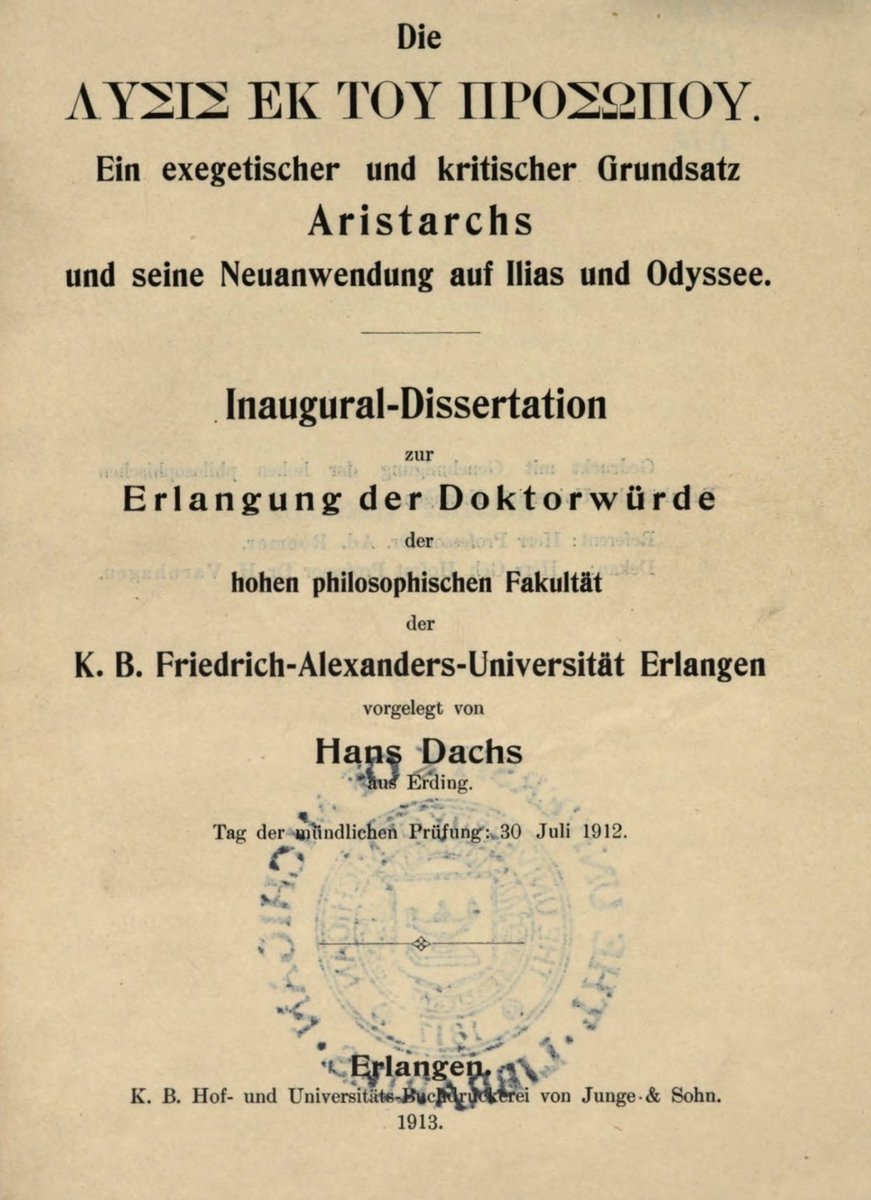
𝐷𝑖𝑒 ΛΥΣΙΣ ΕΚ ΤΟΥ ΠΡΟΣΩΠΟΥ. 𝐸𝑖𝑛 𝑒𝑥𝑒𝑔𝑒𝑡𝑖𝑠𝑐ℎ𝑒𝑟 𝑢𝑛𝑑 𝑘𝑟𝑖𝑡𝑖𝑠𝑐ℎ𝑒𝑟 𝐺𝑟𝑢𝑛𝑑𝑠𝑎𝑡𝑧 𝐴𝑟𝑖𝑠𝑡𝑎𝑟𝑐ℎ𝑠 𝑢𝑛𝑑 𝑠𝑒𝑖𝑛𝑒 𝑁𝑒𝑢𝑎𝑛𝑤𝑒𝑛𝑑𝑢𝑛𝑔 𝑎𝑢𝑓 𝐼𝑙𝑖𝑎𝑠 𝑢𝑛𝑑 𝑂𝑑𝑦𝑠𝑠𝑒𝑒 is a 1913 scholarly monograph by Hans Dachs. In it, Dachs investigates Aristarchus of Samothrace’s important exegetical and critical principle known as lysis ek tou prosopou (solution from the character/speaker). Aristarchus employed this method to resolve apparent contradictions, inconsistencies, or objectionable statements in the Iliad and Odyssey by attributing them not to the poet himself, but to the specific viewpoint, situation, character traits, or rhetorical purpose of the speaker in the epic. The work explores the principle’s roots in Alexandrian philology, its use in the Homeric scholia, and advocates for its renewed application (“Neuanwendung”) as a valuable tool for modern Homeric interpretation—encouraging readers to consider dramatic context and characterization rather than demanding strict authorial or factual consistency throughout the poems.
Berean Blueprint tweet media
0
0
1
40
Berean Blueprint
Berean Blueprint@BereanBlueprint·
Gregory of Nyssa’s 𝐴𝑑 𝐴𝑏𝑙𝑎𝑏𝑖𝑢𝑚 𝑞𝑢𝑜𝑑 𝑛𝑜𝑛 𝑠𝑖𝑛𝑡 𝑡𝑟𝑒𝑠 𝑑𝑒𝑖 (“On Not Three Gods,” to Ablabius), written around 380–383 (some scholars suggest closer to 390), is a concise but philosophically rich defense of Nicene Trinitarianism. Responding to Ablabius’s query about why Christians confess three divine Persons (Father, Son, and Holy Spirit) yet insist there is only one God—rather than three Gods like Peter, James, and John are three men sharing one human nature—Gregory argues that the term “Godhead” (θεότης) primarily signifies a common operation or activity (surveying, beholding, providence, and bestowing life), not the divine essence itself. In God, unlike in humans (where individuals act separately), the divine operations are inseparable and unified: every act originates from the Father, proceeds through the Son, and is perfected in the Holy Spirit, forming a single, indivisible motion of the divine will. He further emphasizes the divine nature’s infinity and unnameability (making plural enumeration inappropriate), distinguishes the Persons by relations of origin (the Father as uncaused Cause, the Son as directly from the Father, the Spirit through the Son), and maintains the unity of essence while preserving real distinctions. The work rejects both tritheism and any subordination that would deny full divinity to the Son or Spirit.
Berean Blueprint tweet media
English
0
0
1
59
Berean Blueprint retweetledi
CSNTM
CSNTM@CSNTM·
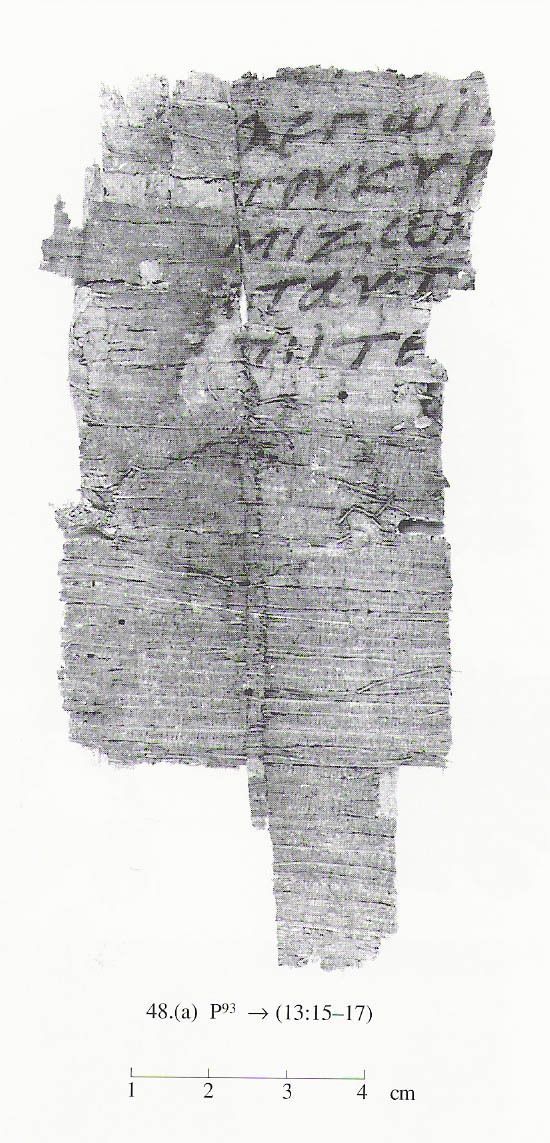
#ManuscriptMonday Papyrus 93 is a single-fragment manuscript housed at the Instituto Papirologico in Florence, Italy. Dating to the 5th century, it preserves portions of John 13:15–17. View the image in our Digital Manuscript Collection: buff.ly/JJkfTRI
CSNTM tweet media
English
2
13
67
6.6K
Berean Blueprint
Berean Blueprint@BereanBlueprint·
Gregory of Nyssa’s 𝐴𝑑 𝐺𝑟𝑎𝑒𝑐𝑜𝑠 (𝐸𝑥 𝑐𝑜𝑚𝑚𝑢𝑛𝑖𝑏𝑢𝑠 𝑛𝑜𝑡𝑖𝑜𝑛𝑖𝑏𝑢𝑠) written shortly after the Second Ecumenical Council of Constantinople in 381 AD (most likely late 381), addresses the question: “How is it that we say there are three Persons in the Divinity but do not say there are three Gods?” In this treatise, Gregory explains that the term “God” refers to the single, indivisible divine essence (ousia), which is common to the Father, Son, and Holy Spirit, rather than to the individual Persons (prosopa). Just as Peter, Paul, and Barnabas are three distinct human persons sharing one humanity (calling them “three men” is a customary misuse of language, not strict logic), the three divine Persons share one eternal essence, so we rightly confess one God. He contrasts the mutable, temporally separated, and multiply caused nature of human persons with the eternal, unchanging, relationally distinct yet inseparable divine Persons, who share one Cause (the Father) without addition or diminution. Through careful philosophical analysis of terms such as essence, hypostasis, person, and individual, Gregory defends Nicene Trinitarian doctrine against Eunomian and other objections, emphasizing the relational and psychological character of the divine Persons while upholding the unity of the Godhead.
Berean Blueprint tweet media
English
0
0
1
11
Berean Blueprint
Berean Blueprint@BereanBlueprint·
𝑇ℎ𝑒 𝐻𝑎𝑛𝑑𝑏𝑜𝑜𝑘 𝑜𝑓 𝑃𝑎𝑡𝑟𝑖𝑠𝑡𝑖𝑐 𝐸𝑥𝑒𝑔𝑒𝑠𝑖𝑠: 𝑇ℎ𝑒 𝐵𝑖𝑏𝑙𝑒 𝑖𝑛 𝐴𝑛𝑐𝑖𝑒𝑛𝑡 𝐶ℎ𝑟𝑖𝑠𝑡𝑖𝑎𝑛𝑖𝑡𝑦 (edited by Charles Kannengiesser, published in 2004 by Brill) is a monumental two-volume reference work that surveys the reception, transmission, and interpretation of the Bible in the early Church from the first through the fifth centuries. It provides essential context on the historical, cultural, and theological presuppositions that shaped patristic biblical interpretation, explores key exegetical methods (such as literal, typological, allegorical, and spiritual readings), profiles major Church Fathers and their approaches, and offers detailed overviews of patristic commentary on individual books of Scripture. Designed as an accessible yet comprehensive resource, it helps readers understand how Scripture stood at the center of early Christian life, doctrine, and thought, making it an invaluable starting point for research into the foundations of Christian biblical interpretation.
Berean Blueprint tweet media
English
0
1
1
21
Berean Blueprint retweetledi
C.H. Spurgeon's Sword & Trowel Magazine
For the first time ever, Spurgeon's monthly issues of the inaugural 1865 Sword & Trowel magazine are now available in their entirety, published individually and also available as a full set. The hardback complete annual volume is expected to head our way by the end of the month.
C.H. Spurgeon's Sword & Trowel Magazine tweet media
English
2
2
24
1.9K
Berean Blueprint
Berean Blueprint@BereanBlueprint·
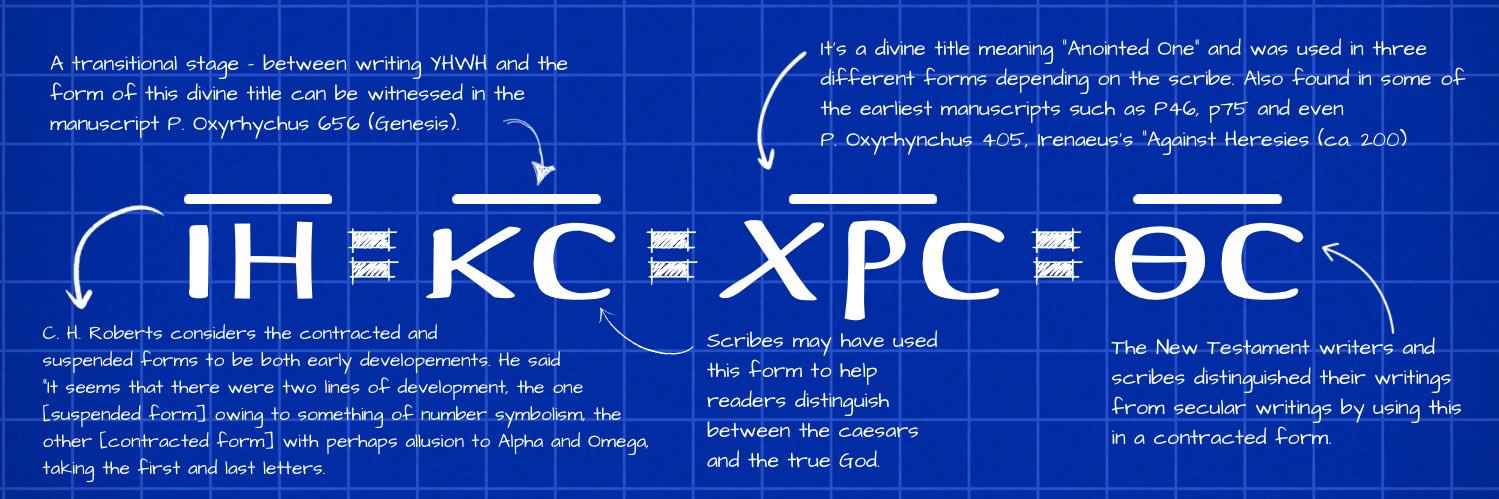
📜 Romans 9:5 found in Codex Sinaiticus. This verse has been highly debated among scholars due to its syntax and Greek grammar. In our English Bible translations, depending on punctuation, either turns the verse into a declaration of Christ’s deity, or a doxology to God the Father. We can see the nomina sacra for Christ and God (blue boxes). #BiblicalScholarship #nominasacra
Berean Blueprint tweet media
Greg Lanier@Lanier_Greg

Kicking off the week with a short about the 'weird'/non-standard nomina sacra youtube.com/shorts/AjiDdYv…

English
0
1
1
42
Berean Blueprint retweetledi
CSNTM
CSNTM@CSNTM·
#ManuscriptMonday Lectionary 1957 is a Gospels lectionary written in majuscule script from the 10th century. CSNTM photographed this codex at the Chester Beatty in Dublin in 2013. See images in the Digital Manuscript Collection: collections.csntm.org/manuscripts/MN…
CSNTM tweet media
English
0
10
36
6.7K
Berean Blueprint
Berean Blueprint@BereanBlueprint·
📢Larry Hurtado (1943–2019) helped launch what scholars playfully call the ‘Early High Christology Club.’ His groundbreaking work showed that explosive devotion to Jesus as divine — including worship, erupted almost immediately after the crucifixion, not centuries later. Richard Bauckham, N.T. Wright, Martin Hengel & others joined the conversation. A paradigm shift in how we understand the earliest Christians. 📜
English
0
1
1
12
Berean Blueprint retweetledi
Rob Plummer
Rob Plummer@dailygreek·
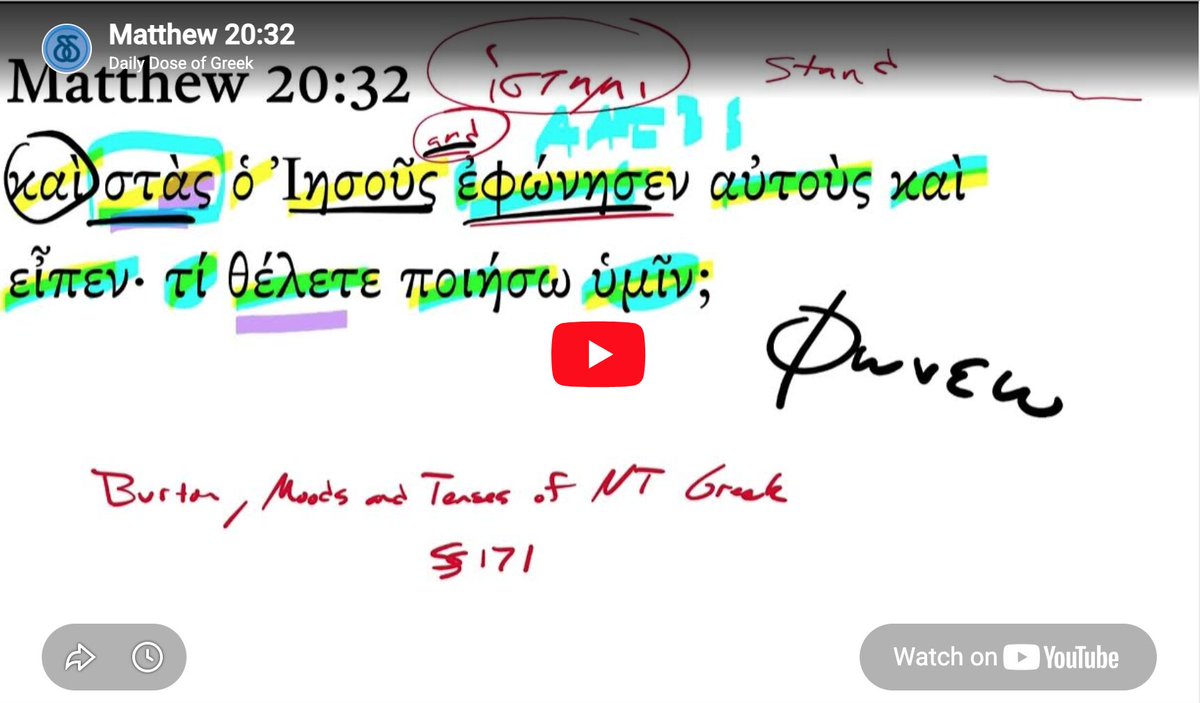
Today's Daily Dose of Greek Video Matthew 20:32 ow.ly/xxKx106yiOr
Rob Plummer tweet media
English
0
2
15
398
Berean Blueprint retweetledi
Josh Barzon
Josh Barzon@JoshuaBarzon·
Everyone has been shaped by Protestantism in some way. Even the Catholics.
Josh Barzon tweet media
English
26
23
157
8.2K
Berean Blueprint retweetledi
Wes Huff
Wes Huff@WesleyLHuff·
Recently I announced a partnership with an organization that helped me turn my manuscript facsimiles into museum-quality replicas. I went live with this announcement launching a run of Papyrus 52 fragments that you could own. Today I am excited to reveal that you can now go to manuscriptshop.com/weshuff and get your very own reproduction facsimile of the 3rd century Papyrus 1 (P.Oxy. 2) -- the very first manuscript discovered in January 1897 by Grenfell and Hunt in the now famous manuscript cache of Oxyrhynhcus, Egypt.
English
32
59
919
60.7K
Berean Blueprint retweetledi
Banner of Truth
Banner of Truth@banneroftruth·
John Bunyan is one of the most well-known Christian authors with his famous allegory 'The Pilgrim's Progress' being one of the most widely read Christian books besides the Bible. Bunyan is chiefly remembered for how Bible saturated He was. Charles Spurgeon said of him that 'this man is a living Bible'. Learn more about this man of God! Link to short bio: ow.ly/Ja1U50YWhUT #BannerOfTruth #ThePilgrimsProgress #JohnBunyan #BibleSaturated #CharlesSpurgeon
Banner of Truth tweet media
English
1
11
38
1.8K
Berean Blueprint retweetledi
Text & Canon Institute
Text & Canon Institute@TextandCanon·
On May 16, we're looking forward to speaking in Lake Stevens, WA on how we got the Bible! We'll be at Calvary Chapel, and the conference is free and even includes lunch. For details and to register, see the link👇.
Text & Canon Institute tweet media
English
1
2
4
1.9K
Berean Blueprint
Berean Blueprint@BereanBlueprint·
Very interesting. Scholars using multispectral imaging to detect offset ink traces, researchers recovered 42 lost pages from the sixth-century Codex H, a key manuscript of Paul’s epistles. ewtnnews.com/world/europe/a…
English
0
0
0
21
Berean Blueprint retweetledi
Wes Huff
Wes Huff@WesleyLHuff·
In my episode with @joerogan last year I mentioned the Coherence Base Genealogical Method (CGBM), and how it's changing the way we understand the relationship between manuscripts. If you've ever heard of "Text Types" (Alexandrian; Western; Byzantine; Cesarean) discussed concerning the history of the New Testament text, then you should probably know that those categories are now almost completely abandoned in modern text criticism. Though serving a useful purpose, the idea of Text Types ended up flattening out the complexity they aimed to neatly categorize. Manuscript traditions are less like individual rivers (picture an Alexandrian River, a Western river, and a Byzantine river flowing beside but distinct to one another), and are more analogous to a marsh with main tributaries. With the textual waters of each main type bleed into one another. The liquid of manuscript agreements of one watercourse of witnesses in one set of readings spilling over via the middle marshy wetland into another waterway elsewhere. To better understand the subject here is a great article on what CBGM is and isn't by Greg Paulson, the co-editor of the Editio Critica Maior and sub-editor of the NA29 edition of the Greek New Testament. criticaltexts.com/the-one-with-t…
English
11
15
121
118.3K