
Better Science Project retweetledi

I love the idea of British AI for science missions.
But can they work? Are they even real? Could they be?
me and @ersatzben ponder

English
Better Science Project
140 posts


@BetterScienceUK
UK project focusing on alternative models for funding, structuring, and sharing scientific research. @lyan82 @adjajadikerta https://t.co/Yye4fiaiH9

ICYMI an essay competition specifically for active researchers: 1st prize $30K, 2nd $10K, 3rd $5K. Public submissions only: astera.org/essay-competit… 🧵

Frederick Sanger: 2 Nobel Prizes, 3 papers in 20 years. Today he'd be fired for low productivity. The academic system now demands papers every 6 months. Everything must show positive results. Take safe projects. Never fail publicly. Peter Higgs couldn't discover the Higgs boson today. Sydney Brenner's smartest colleagues? Left academia. Not because they failed—because the system is fundamentally broken. James Phillips and Laura Ryan's solution: Lovelace Labs. 15-year funding. No grant applications. No publish-or-perish. Just ambitious science. Full episode out now.

Frederick Sanger: 2 Nobel Prizes, 3 papers in 20 years. Today he'd be fired for low productivity. The academic system now demands papers every 6 months. Everything must show positive results. Take safe projects. Never fail publicly. Peter Higgs couldn't discover the Higgs boson today. Sydney Brenner's smartest colleagues? Left academia. Not because they failed—because the system is fundamentally broken. James Phillips and Laura Ryan's solution: Lovelace Labs. 15-year funding. No grant applications. No publish-or-perish. Just ambitious science. Full episode out now.

NSF is launching one of the most ambitious experiments in federal science funding in 75 years. The program is called Tech Labs, and the goal is to invest ~$1 billion to seed new institutions of science and technology for the 21st century. Instead of funding projects, the NSF will fund teams. I’m in the @WSJ today with a piece on why this matters (gift link): wsj.com/opinion/scienc… Here’s the basic case: 1) Most federal science funding takes the form of small, incremental, project-based grants to individual scientists at universities. 2) The typical NSF grant is ~$250k/year to a professor with a couple of grad students and modest equipment over a few years. This is a perfectly reasonable way to fund some science, but it's not the only way. 3) A healthy portfolio needs more than one instrument. Project-based grants are like bonds: low-risk, steady, safe. But no one trying to maximize long-run returns would put 70% of their portfolio in bonds. 4) Yet that's basically what our civilian science funding portfolio looks like. Around 3/4ths of NSF and NIH grant funding is project-based. 5) Tech Labs is NSF's attempt to diversify that portfolio. The Tech Labs program is aiming for: - $10-50 million/year awards per team - 5+ year commitments - Measuring impact through advancement up the Tech Readiness Level scale rather than papers published - Up to ~$1 billion for the program - Supporting research orgs outside traditional university structures 6) Scientific production looks very different than it did when the NSF launched 75 years ago. The lone genius at the chalkboard can only do so much. Frontier science + tech today is increasingly team-based, interdisciplinary, and infrastructure-intensive. 7) The team behind AlphaFold just won the Nobel Prize in Chemistry. It came from DeepMind, an AI lab with sustained institutional funding and full-time research teams. It would be near-impossible to fund this kind of work on a 3-year academic grant. 8) Same pattern at the @arcinstitute (8-year appointments, cross-cutting technical support teams) and @HHMIJanelia (massive infrastructure investments to map the complete fly brain). Ambitious science increasingly needs core institutional support, not a series of project grants stapled together. 9) Similarly, Focused Research Organizations (@Convergent_FROs) have showcased a new model supporting teams with concrete missions and predefined milestones to unlock new funding. 10) There’s a whole ecosystem of philanthropically-supported centers doing amazing research, like the Institute for Protein Design, the Allen Institute, the Flatiron Institute, the Whitehead Institute, the Wyss Institute, the Broad — the list goes on. 11) But philanthropy can’t reshape American science alone. The federal government spends close to $200 billion each year on research and development, an order of magnitude more than even the largest foundations. 12) If we want to change how science gets done at scale, federal funding has to evolve. And the NSF and NIH don’t have dedicated funding mechanisms to support or seed these sorts of organizations. 13) Earlier this year, I started working on a related framework called “X-Labs” that built on all this exciting institutional experimentation that’s been happening within the private and philanthropic sectors. It’s time for the federal government to step into the arena: rebuilding.tech/posts/launchin… 14) Traditional university grants are still important for training the next generation of scientists and for certain kinds of curiosity-driven work. But after 75 years of putting nearly everything into one model, we should try something different. 15) And key program details are still being developed! You can reply to the Request for Information with suggestions or feedback on how to design this program here: nsf.gov/news/nsf-annou… 16) Science is supposed to be about experimentation. Science funding should be too.
NSF is launching one of the most ambitious experiments in federal science funding in 75 years. The program is called Tech Labs, and the goal is to invest ~$1 billion to seed new institutions of science and technology for the 21st century. Instead of funding projects, the NSF will fund teams. I’m in the @WSJ today with a piece on why this matters (gift link): wsj.com/opinion/scienc… Here’s the basic case: 1) Most federal science funding takes the form of small, incremental, project-based grants to individual scientists at universities. 2) The typical NSF grant is ~$250k/year to a professor with a couple of grad students and modest equipment over a few years. This is a perfectly reasonable way to fund some science, but it's not the only way. 3) A healthy portfolio needs more than one instrument. Project-based grants are like bonds: low-risk, steady, safe. But no one trying to maximize long-run returns would put 70% of their portfolio in bonds. 4) Yet that's basically what our civilian science funding portfolio looks like. Around 3/4ths of NSF and NIH grant funding is project-based. 5) Tech Labs is NSF's attempt to diversify that portfolio. The Tech Labs program is aiming for: - $10-50 million/year awards per team - 5+ year commitments - Measuring impact through advancement up the Tech Readiness Level scale rather than papers published - Up to ~$1 billion for the program - Supporting research orgs outside traditional university structures 6) Scientific production looks very different than it did when the NSF launched 75 years ago. The lone genius at the chalkboard can only do so much. Frontier science + tech today is increasingly team-based, interdisciplinary, and infrastructure-intensive. 7) The team behind AlphaFold just won the Nobel Prize in Chemistry. It came from DeepMind, an AI lab with sustained institutional funding and full-time research teams. It would be near-impossible to fund this kind of work on a 3-year academic grant. 8) Same pattern at the @arcinstitute (8-year appointments, cross-cutting technical support teams) and @HHMIJanelia (massive infrastructure investments to map the complete fly brain). Ambitious science increasingly needs core institutional support, not a series of project grants stapled together. 9) Similarly, Focused Research Organizations (@Convergent_FROs) have showcased a new model supporting teams with concrete missions and predefined milestones to unlock new funding. 10) There’s a whole ecosystem of philanthropically-supported centers doing amazing research, like the Institute for Protein Design, the Allen Institute, the Flatiron Institute, the Whitehead Institute, the Wyss Institute, the Broad — the list goes on. 11) But philanthropy can’t reshape American science alone. The federal government spends close to $200 billion each year on research and development, an order of magnitude more than even the largest foundations. 12) If we want to change how science gets done at scale, federal funding has to evolve. And the NSF and NIH don’t have dedicated funding mechanisms to support or seed these sorts of organizations. 13) Earlier this year, I started working on a related framework called “X-Labs” that built on all this exciting institutional experimentation that’s been happening within the private and philanthropic sectors. It’s time for the federal government to step into the arena: rebuilding.tech/posts/launchin… 14) Traditional university grants are still important for training the next generation of scientists and for certain kinds of curiosity-driven work. But after 75 years of putting nearly everything into one model, we should try something different. 15) And key program details are still being developed! You can reply to the Request for Information with suggestions or feedback on how to design this program here: nsf.gov/news/nsf-annou… 16) Science is supposed to be about experimentation. Science funding should be too.

NSF is launching one of the most ambitious experiments in federal science funding in 75 years. The program is called Tech Labs, and the goal is to invest ~$1 billion to seed new institutions of science and technology for the 21st century. Instead of funding projects, the NSF will fund teams. I’m in the @WSJ today with a piece on why this matters (gift link): wsj.com/opinion/scienc… Here’s the basic case: 1) Most federal science funding takes the form of small, incremental, project-based grants to individual scientists at universities. 2) The typical NSF grant is ~$250k/year to a professor with a couple of grad students and modest equipment over a few years. This is a perfectly reasonable way to fund some science, but it's not the only way. 3) A healthy portfolio needs more than one instrument. Project-based grants are like bonds: low-risk, steady, safe. But no one trying to maximize long-run returns would put 70% of their portfolio in bonds. 4) Yet that's basically what our civilian science funding portfolio looks like. Around 3/4ths of NSF and NIH grant funding is project-based. 5) Tech Labs is NSF's attempt to diversify that portfolio. The Tech Labs program is aiming for: - $10-50 million/year awards per team - 5+ year commitments - Measuring impact through advancement up the Tech Readiness Level scale rather than papers published - Up to ~$1 billion for the program - Supporting research orgs outside traditional university structures 6) Scientific production looks very different than it did when the NSF launched 75 years ago. The lone genius at the chalkboard can only do so much. Frontier science + tech today is increasingly team-based, interdisciplinary, and infrastructure-intensive. 7) The team behind AlphaFold just won the Nobel Prize in Chemistry. It came from DeepMind, an AI lab with sustained institutional funding and full-time research teams. It would be near-impossible to fund this kind of work on a 3-year academic grant. 8) Same pattern at the @arcinstitute (8-year appointments, cross-cutting technical support teams) and @HHMIJanelia (massive infrastructure investments to map the complete fly brain). Ambitious science increasingly needs core institutional support, not a series of project grants stapled together. 9) Similarly, Focused Research Organizations (@Convergent_FROs) have showcased a new model supporting teams with concrete missions and predefined milestones to unlock new funding. 10) There’s a whole ecosystem of philanthropically-supported centers doing amazing research, like the Institute for Protein Design, the Allen Institute, the Flatiron Institute, the Whitehead Institute, the Wyss Institute, the Broad — the list goes on. 11) But philanthropy can’t reshape American science alone. The federal government spends close to $200 billion each year on research and development, an order of magnitude more than even the largest foundations. 12) If we want to change how science gets done at scale, federal funding has to evolve. And the NSF and NIH don’t have dedicated funding mechanisms to support or seed these sorts of organizations. 13) Earlier this year, I started working on a related framework called “X-Labs” that built on all this exciting institutional experimentation that’s been happening within the private and philanthropic sectors. It’s time for the federal government to step into the arena: rebuilding.tech/posts/launchin… 14) Traditional university grants are still important for training the next generation of scientists and for certain kinds of curiosity-driven work. But after 75 years of putting nearly everything into one model, we should try something different. 15) And key program details are still being developed! You can reply to the Request for Information with suggestions or feedback on how to design this program here: nsf.gov/news/nsf-annou… 16) Science is supposed to be about experimentation. Science funding should be too.

Energised from the Lovelace launch, but we can't make the vision reality without help. Fill in this form to get involved in the Lovelace community effort. Share with researcher networks, PhDs, funders, think-tankers, the more the merrier! ❄️ forms.gle/hNUeVQiEJTqfyS…
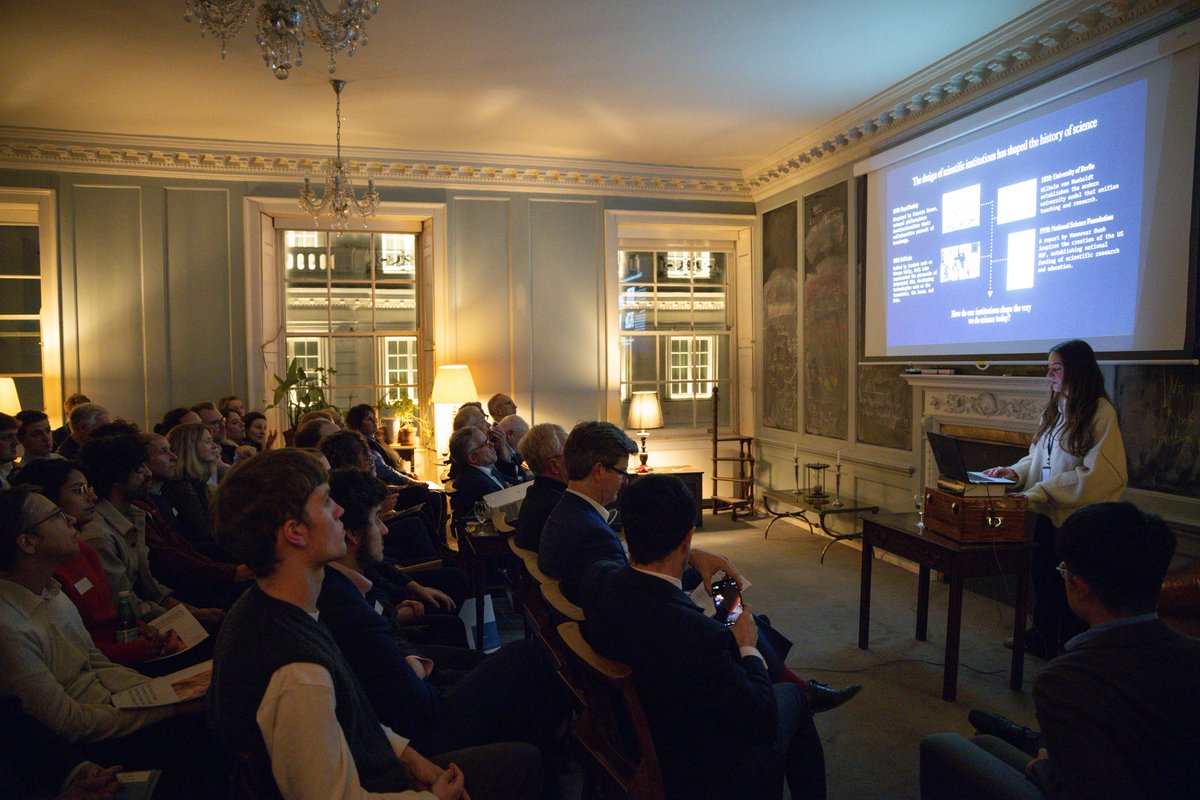
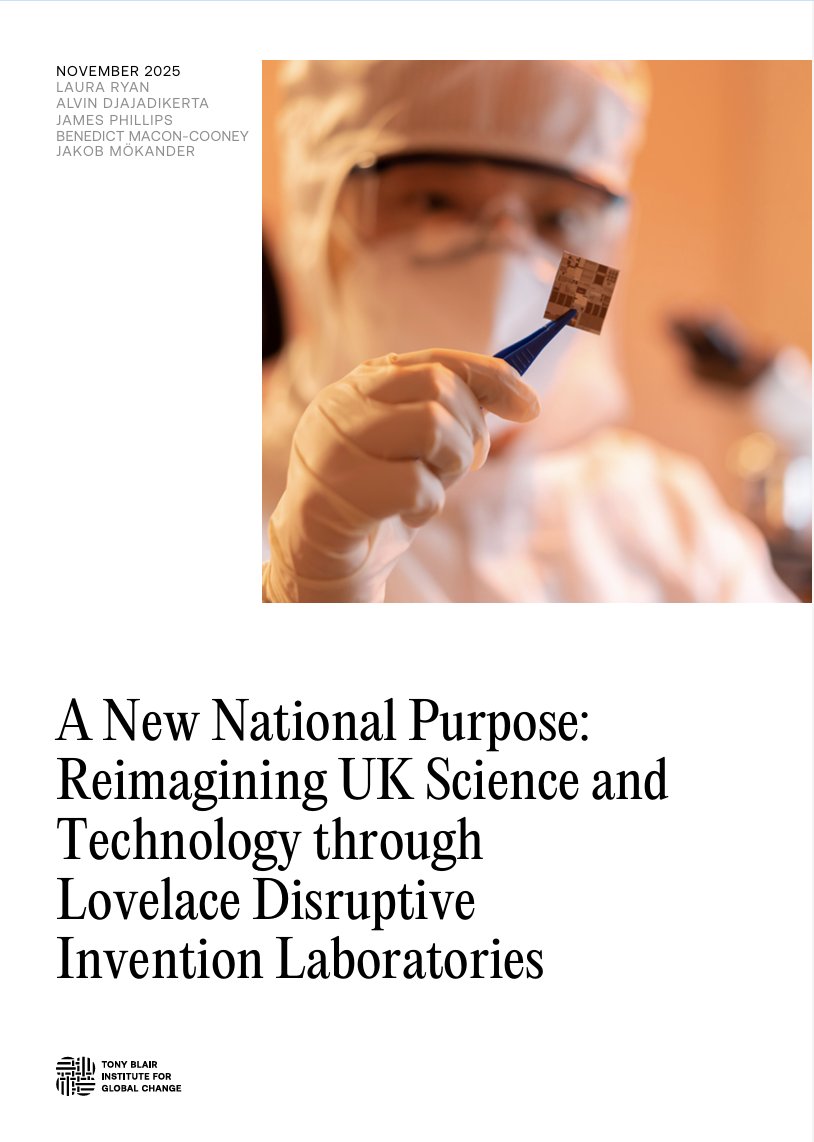
New from @instituteGC: a proposal for Lovelace Disruptive Invention Labs Is a better science possible, & how can we build it? 🏗️ Britain should pioneer a complementary model for research at the intersection of science & engineering – inverting core assumptions of modern public R&D

New from @instituteGC: a proposal for Lovelace Disruptive Invention Labs Is a better science possible, & how can we build it? 🏗️ Britain should pioneer a complementary model for research at the intersection of science & engineering – inverting core assumptions of modern public R&D

New from @instituteGC: a proposal for Lovelace Disruptive Invention Labs Is a better science possible, & how can we build it? 🏗️ Britain should pioneer a complementary model for research at the intersection of science & engineering – inverting core assumptions of modern public R&D

New from @instituteGC: a proposal for Lovelace Disruptive Invention Labs Is a better science possible, & how can we build it? 🏗️ Britain should pioneer a complementary model for research at the intersection of science & engineering – inverting core assumptions of modern public R&D
New from @instituteGC: a proposal for Lovelace Disruptive Invention Labs Is a better science possible, & how can we build it? 🏗️ Britain should pioneer a complementary model for research at the intersection of science & engineering – inverting core assumptions of modern public R&D
New from @instituteGC: a proposal for Lovelace Disruptive Invention Labs Is a better science possible, & how can we build it? 🏗️ Britain should pioneer a complementary model for research at the intersection of science & engineering – inverting core assumptions of modern public R&D
I wrote up a proposal for how to evaluate federally-funded science and build agency replication capacity at the same time: open.substack.com/pub/laurenpoli…