Bhuvan Bagga 把奥文

44.5K posts

Bhuvan Bagga 把奥文 banner
Bhuvan Bagga 把奥文

Bhuvan Bagga 把奥文

@Bhuvanbagga

Ideas' Mercenary. Maps. Bikes. India. China. (Geo)Politics. @AFP's South Asia Correspondent | IVLP Fellow | CAPSS | AFGG- Raisina Fellow | HRPA | #NotMyEmployer

India Katılım Haziran 2009
3.3K Takip Edilen7.6K Takipçiler
Bhuvan Bagga 把奥文 retweetledi
Rep. Mike Levin
Rep. Mike Levin@RepMikeLevin·
This should be on the front page of every newspaper in America. A Syrian billionaire needed U.S. sanctions lifted so he could cash in on $12 billion in reconstruction contracts. In an attempt to influence American foreign policy, he proposed a Trump-branded golf course, cut Jared Kushner & Ivanka Trump into a multibillion-dollar real estate deal for a resort in Albania, and had someone physically deliver a stone engraved with the Trump family crest to a Republican Member of Congress with instructions to take it to the White House to get the President's attention. Trump threw his weight behind repealing the sanctions. They were lifted. The contracts are moving, the Trump family’s deals are expanding, and not a single Washington Republican is willing to say a word about any of it. This is a corruption of everything the office of the presidency is supposed to stand for, and the American people deserve to know about it. nytimes.com/2026/04/19/us/…
English

861
19.1K
41K
1.7M
Bhuvan Bagga 把奥文 retweetledi
Scott Robertson
Scott Robertson@sarobertsonca·
PM Carney on the Americans calling the alcohol ban an irritant: "You know what's an irritant? 50% tariffs on steel. 50% tariffs on aluminum. 25% tariffs on automobiles. All the tariffs on forest products. Those are more than irritants, those are violations of our trade deal."
English
893
9.7K
46.4K
1.5M
Bhuvan Bagga 把奥文
Bhuvan Bagga 把奥文@Bhuvanbagga·
New Delhi finally responds to US President Trump’s hellhole comment for India. “The remarks are obviously uninformed, inappropriate and in poor taste”.
Bhuvan Bagga 把奥文 tweet media
English
0
0
0
89
Bhuvan Bagga 把奥文
Bhuvan Bagga 把奥文@Bhuvanbagga·
"India welcomes Japan’s Review of the Three Principles on Transfer of Defence Equipment and Technology. Defence and Security Cooperation forms an important pillar of the India-Japan Special Strategic and Global Partnership. As part of the Joint Declaration on Security Cooperation between India and Japan, both sides have committed to increase practical cooperation in the interest of their national security and continued economic dynamism. This includes promotion and facilitation of technological and industrial collaboration between the government entities and private sector stakeholders for resilience in sectors critical to national security." - India's foreign ministry @MEAIndia.
English
0
1
2
179
Bhuvan Bagga 把奥文 retweetledi
Christopher Luxon
Christopher Luxon@chrisluxonmp·
Our Free Trade Agreement with India will be signed next week, an agreement that gives NZ exporters access to 1.4 billion customers. It means more jobs on farms and orchards, more money coming into local communities, and more opportunities for Kiwis to get ahead.
English
685
301
2.1K
93.3K
Bhuvan Bagga 把奥文 retweetledi
Anish Moonka
Anish Moonka@anishmoonka·
A Chinese monk once walked from China to India. It took him eight years, crossing deserts and mountain ranges, just to attend a university. When he finally arrived, the gatekeepers rejected 7 out of every 10 people who showed up. His name was Xuanzang, and the university was Nalanda. He left China in 629 CE and reached the gate in 637. If he hadn't written the journey down in a book, we'd dismiss the story as a legend today. Nalanda had been operating for over 200 years by the time Xuanzang walked through the gate. An Indian king named Kumaragupta I founded it around 427 CE, back when most of Europe was still picking up the pieces after Rome fell. Oxford would not start teaching for another 669 years. Bologna, Europe's oldest university, would not open until 1088. At its peak, the campus held 10,000 students and 2,000 teachers. That works out to five students per teacher, a ratio most modern universities can't hit even today. Students came from China, Korea, Tibet, Japan, Persia, Turkey, and Indonesia. Tuition cost nothing. The king had assigned entire villages to Nalanda, and the produce and rent from those villages paid for everything. Students studied medicine (what we now call Ayurveda), math, astronomy, logic, grammar, metalworking, politics, and the art of war. This was a Buddhist monastery with a course on military strategy. Aryabhata, the mathematician who first proposed that the earth spins on its own axis around the year 499, may have led Nalanda in the 6th century. The library was its own complex of three separate buildings. One of them stood nine stories tall. Tibetan records estimate it held around 9 million manuscripts, every single one copied by hand. They had no printing press, no mass-produced paper, nothing but ink, dried palm leaves, and monks who copied texts for decades on end. The end came in 1193 CE. An invading army led by Bakhtiyar Khilji rode in, killed thousands of monks, and set the library on fire. The fires burned for three months. A Persian historian wrote that smoke hung over the hills like a dark cloud for days. Centuries of work in medicine, math, and astronomy went with it. Most of it was unique to Nalanda and gone forever. The ruins sat forgotten for 619 years. In 1812, a Scottish surveyor named Francis Buchanan-Hamilton came upon them while mapping the region. He had no idea what he'd stumbled onto. Another 50 years passed before anyone identified the site as Nalanda. UNESCO made it a World Heritage site in 2016. The new Nalanda University opened on nearby land in 2014, and its 485-acre net-zero campus was formally inaugurated in June 2024. The original Nalanda operated for 766 years before Khilji shut it down. Harvard, for scale, is 390 years old. If Nalanda had survived, it would be turning 1,600 next year.
Science girl@sciencegirl

Nalanda University in India, founded in the 5th century CE, as the world’s first residential university

English
71
2.1K
7.1K
357.3K
Bhuvan Bagga 把奥文 retweetledi
Gaurab Chakrabarti
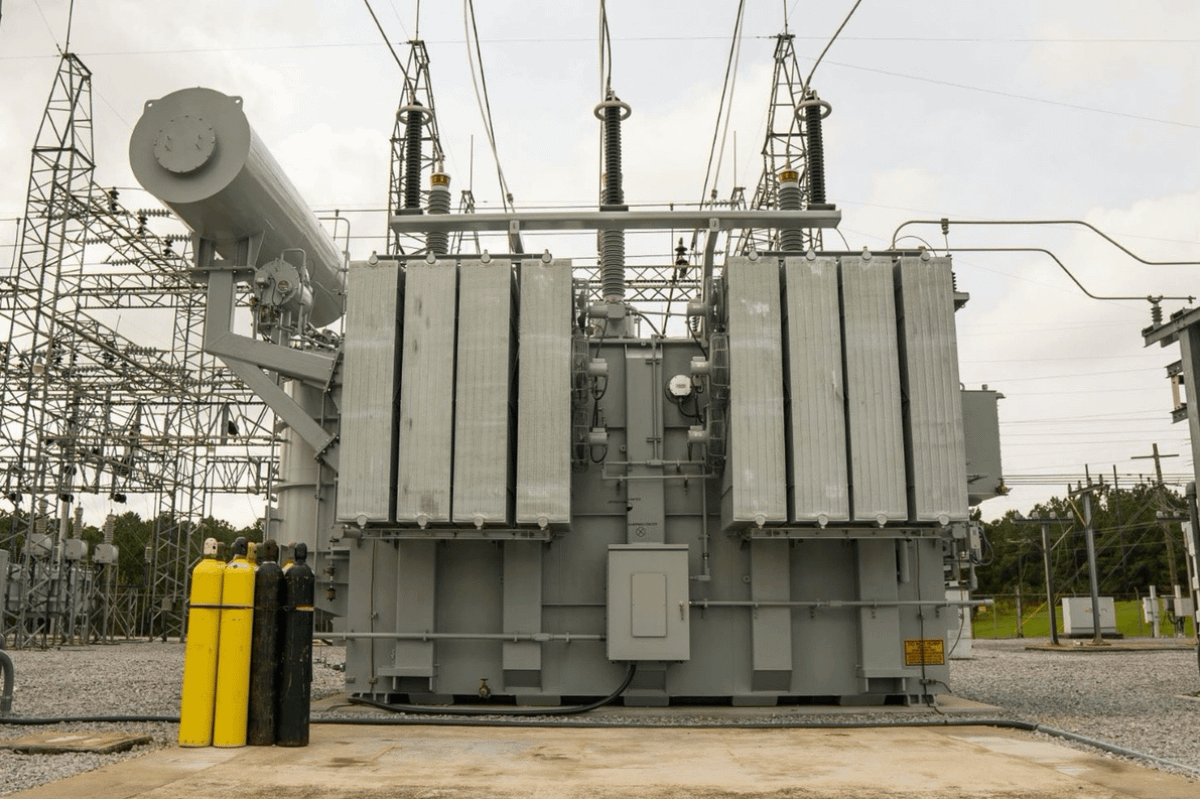
Half of America's AI data centers planned for 2026 are delayed or cancelled. They're waiting on transformers. I build chemical plants. Transformer prices have tripled in the last four years. Lead times are 2 to 4 years. Each new plant we build competes with AI data centers for the same grid equipment. Every large power transformer in America runs on grain-oriented electrical steel. It's made by rolling iron and silicon together until their crystals align in one direction. No other alloy works at utility scale and only one US company makes it: Cleveland-Cliffs. The average large power transformer on the grid is 38 years old. Service life is 40. Amazon, Google, Meta, and Microsoft committed $650 billion to AI infrastructure this year. Nvidia's most expensive GPU is useless without a transformer.
Gaurab Chakrabarti tweet media
English
339
2.1K
8K
752.6K
Bhuvan Bagga 把奥文 retweetledi
Narendra Modi
Narendra Modi@narendramodi·
Remembering the innocent lives lost in the gruesome Pahalgam terror attack on this day last year. They will never be forgotten. My thoughts are also with the bereaved families as they cope with this loss. As a nation, we stand united in grief and resolve. India will never bow to any form of terror. The heinous designs of terrorists will never succeed.
English
5.5K
16.2K
84.5K
34.7M
Bhuvan Bagga 把奥文 retweetledi
UAE Embassy US
UAE Embassy US@UAEEmbassyUS·
Any suggestion that the UAE requires external financial backing misreads the facts. The UAE is one of the world’s most financially resilient economies, underpinned by more than $2T in sovereign investment assets;… (2/5)
English
100
307
1.6K
449.6K
Bhuvan Bagga 把奥文 retweetledi
Anish Moonka
Anish Moonka@anishmoonka·
Went down the rabbit hole on this. There are bacteria in your gut right now with tiny electric motors built into them. Each motor is 45 nanometers wide, about 2,000 times thinner than a human hair. It spins faster than a Formula 1 engine. After 50 years, scientists just cracked how it works. The motor spins a corkscrew-shaped tail so the bacterium can swim. At that tiny scale, water feels as thick as tar. Moving anywhere takes serious power. A single E. coli cell (the kind in your gut) spins its motor at 18,000 RPM. That beats modern Formula 1 engines, which redline around 15,000. Some bacteria in the ocean run theirs at 42,000 RPM, nearly triple. And the motor barely wastes any energy as heat. Your car engine loses most of its fuel to heat. This thing loses almost none. Inside the motor, 5 proteins form a ring wrapped around 2 proteins in the middle. Five can't split evenly into 2. The resulting lopsidedness is what makes the whole thing work. Protons, which are tiny charged particles, get pulled from outside the cell through the motor. Each one grabs a center protein, then lets go. In letting go, it tugs the outer ring a fraction of a turn. Another proton does the same thing on the other side. Then another. It's like two feet alternating on bicycle pedals. Over 2,000 times per second. Switching directions is a whole other trick. When the bacterium senses food running out, it tags a small messenger protein with a phosphorus atom. That tagged messenger floats over and touches one protein on the outer ring. The touched protein flips into a new shape. That flip triggers the next protein, and the next, and the next, around the whole ring, like dominos falling. The ring reshapes in milliseconds. Rotation reverses. The bacterium turns and swims somewhere else. Mike Manson, a biophysicist at Texas A&M, has been studying this one motor since the 1970s. For five decades, most of its parts stayed a mystery. Starting in 2020, a new wave of imaging let scientists see the individual pieces. The last pieces clicked into place in a March 2026 paper from Aravinthan Samuel's lab at Harvard. Manson told Quanta Magazine his lifelong quest was fulfilled. A billion years of evolution built the most efficient rotary motor on the planet. Trillions of them are spinning inside you right now.
Natalie Wolchover@nattyover

Bacteria move around using a molecular machine called the flagellar motor that rotates faster than the flywheel of a race car engine and switches directions in an instant. After 50 yrs, scientists have finally figured out how it works. “My lifelong quest is now fulfilled.” Link⤵️

English
170
1.3K
8.7K
559.8K
Bhuvan Bagga 把奥文 retweetledi
William Yang
William Yang@WilliamYang120·
Breaking: #Taiwan President Lai Ching-te has cancelled his scheduled state visit to Eswatini after three countries, Seychelles, Mauritius, and Madagascar, cancelled approval for Lai's flight to fly through their airspaces due to pressure from China.
English
15
90
210
22.9K
Bhuvan Bagga 把奥文 retweetledi
The White House
The White House@WhiteHouse·
“Israel never talked me into the war with Iran, the results of Oct. 7th, added to my lifelong opinion that IRAN CAN NEVER HAVE A NUCLEAR WEAPON, did… the results in Iran will be amazing - And if Iran’s new leaders (Regime Change!) are smart, Iran can have a great and prosperous future!” - President Donald J. Trump 🇺🇸
The White House tweet media
English
10.7K
8.6K
39.2K
2.8M
Saikiran Kannan | 赛基兰坎南
Saikiran Kannan | 赛基兰坎南@saikirankannan·
1. Completely lacking in confidence = he was very confident 2. He was controlled by the US = We all must be a United India 3. He signed a deal with the US and sold India out = they are thinking of sending us out of India 4. He handed out our energy security = We are strong 5. He gave away our data = they have policies and information <<6. RaGa talks about Epstein and Adani = Nothing in the translation>> 7. That's why he wants to put the AIADMK in power = that is true power 8.
English
27
84
470
26.9K
Bhuvan Bagga 把奥文 retweetledi
Nistula Hebbar
Nistula Hebbar@nistula·
Breaking - PM @narendramodi will address the nation at 830pm tonight.
English
27
16
87
9.4K
Bhuvan Bagga 把奥文 retweetledi
Jayaprakash Narayan
Jayaprakash Narayan@JP_LOKSATTA·
Now that the 131st Amendment Bill failed, allocation of Lok Sabha seats will be based on 2026 census data. As per current estimates, seven States will likely lose 35 seats: AP (-5), Telangana (-3), TN (-10), Karnataka (-2), Kerala (-7), Odisha (-4), and WB (-4). Four States will likely gain 34 seats: UP (+12), Bihar (+10), MP (+5), and Rajasthan (+7). BJP is widely believed to be the potential beneficiary of redistribution of seats to States based on 2026 population. In a stunning act of self-denial, the NDA government came forward to freeze the current share of States based on the 1971 census data. There could be many reasons for BJP committing to such a freeze - putting the nation above the party, paving the way for expanding their footprint in the South, or avoiding a divisive issue when the nation has to focus on growth and prosperity in the face of global challenges. Whatever be the motivation of BJP, the seven States that lost share of population are offered an unexpected gift. You don't look a gift horse in the mouth! Surprisingly, the parties which have great stakes in the South and East have scored a spectacular self goal. This is a classic case of cutting the nose to spite the face. In 2001, as the freeze in seats was expiring, I was deeply involved in persuading the then Vajpayee government to continue the freeze in the number of seats allocated to States for another 25 years. An unwieldy coalition and the economic challenge posed by external sanctions after the Pokharan explosion demanded national unity, and the parties responded with the 84th Amendment. Now again a priceless opportunity arose, and the Opposition squandered it without any strategic thinking. If political animosity makes you oblivious of your own interest, or larger interests of fostering unity and focusing on growth and harmony, it is a sign of dysfunctional politics. I appeal to all parties to come together and find a harmonious solution to the thorny problem of seats allocation in the face of demographic imbalances. National unity and our quest for opportunity and prosperity for all demand a fair and swift resolution. In the long run migration will resolve the imbalances. Already millions of migrant workers are building and sustaining the economies of several States in the South, West and North. That is why, despite low fertility rate, Maharashtra's share of the population is increasing. In the US, dramatic internal migration changed the demography and representation over the years. People move freely to States where there is growth and jobs are created. In a century, Florida increased its representation in the US Congress from 4 to 28, California from 11 to 52, Texas from 18 to 38, and Washington from 5 to 10. Owing to outward migration, New York lost seats, from 43 to 26, Pennsylvania from 36 to 17, Illinois from 27 to 17, Ohio from 22 to 15, and Missouri from 16 to 8. We should make it easy for people to migrate to other States and recognize and respect their constitutional rights everywhere and make their life easier and safe. That will resolve our demographic challenges. Most states reached low fertility levels, and Bihar, UP, MP, Rajasthan and Jharkhand too are going to reach there in a few years. We need a reasoned and pragmatic approach to grow together and become strong. Let us persuade parties to shed inflammatory and divisive rhetoric and focus on quality education and skills and opportunities for all.
English
381
2K
5.9K
932.2K
Bhuvan Bagga 把奥文 retweetledi
Lokesh Nara
Lokesh Nara@naralokesh·
By blocking the Delimitation & Constitutional Amendment Bill, the Opposition parties have betrayed South India, the North-East, and smaller states. Under article 81 of the Constitution, the state-wise distribution was frozen up until now. However, in the absence of the proposed bills, post-2026 Census, representation will now be dictated purely by population - punishing states that performed and upheld national priorities. This is a direct assault on federal balance, enabled by the opposition parties.
N Chandrababu Naidu@ncbn

By defeating the Delimitation and Constitutional Amendment Bill, the opposition parties have done a great disservice to the Nation. With the freeze under Article 81 set to end after the first Census conducted post 2026, the forthcoming census exercise will reset seat distribution purely on population, potentially leading to a steep decline in representation for Southern, North-Eastern, and smaller states. The NDA’s proposal was a sincere effort to preserve federal balance, protect the voice of Southern, North-Eastern, and smaller states, and ensure 33% representation for women. It recognised that states which have performed well on key development indicators should not be penalised in the democratic structure. It is unfortunate that political agendas have prevailed over long term national interest. Those celebrating this outcome must introspect, we have lost an opportunity to secure a fair and constitutional safeguard for rightful representation. constitutionofindia.net/articles/artic…

English
422
1.1K
4.1K
154.2K
Bhuvan Bagga 把奥文 retweetledi
Rapid Response 47
Rapid Response 47@RapidResponse47·
Rapid Response 47 tweet media
ZXX
1.1K
3.8K
26.7K
1.1M