

Big W
1 posts


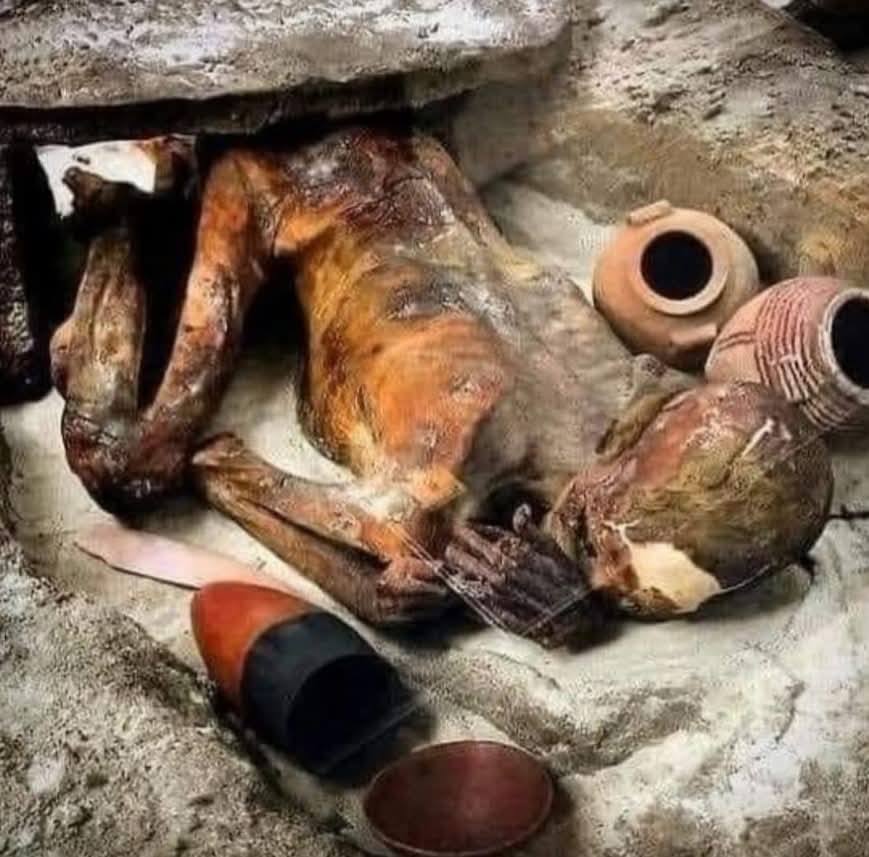
More than 5,000 years ago—long before the first pharaoh ever wore a crown—a man was laid to rest in the warm sands of southern Egypt. He wasn’t embalmed or wrapped in linen like the mummies we usually imagine. Instead, the desert itself preserved him, drying his body in a shallow grave near Gebelein, just south of ancient Thebes. When archaeologists uncovered him in 1900, they were struck by his remarkable condition—curled in a fetal position, skin intact, and hair still wavy and reddish-blond. He came to be known, affectionately, as “Ginger.”
Ginger likely belonged to the Naqada culture, a prehistoric group that lived along the Nile well before Egypt’s unification under one ruler. His features—light-toned skin and fair hair—were not unusual for people of that time and region. These early Egyptians had diverse appearances, and Ginger gives us a rare, tangible glimpse into what they may have looked like. Unlike later mummies, who were carefully treated and wrapped in layers of cloth, Ginger’s preservation was accidental but incredibly effective, thanks to the natural heat and dryness of the desert.
Today, Ginger lies behind glass at the British Museum in London, quietly offering a connection to a world that existed thousands of years before the pyramids rose from the sand. He reminds us that even the earliest humans of the Nile Valley had rituals, beliefs, and a deep respect for death. And in his stillness, he continues to teach—about life, time, and the enduring touch of nature’s own hand.
#archaeohistories
English