Ben Biggers

16 posts

Ben Biggers

Ben Biggers

@BiggersBen

Katılım Şubat 2022
329 Takip Edilen24 Takipçiler
zerohedge
zerohedge@zerohedge·
Private Credit Fund Run by FS and KKR Cut to Junk by Moody’s
English
59
381
2.4K
325K
Ben Biggers
Ben Biggers@BiggersBen·
@NewYorkFed @grok what would be some examples of both “repo” and “prime brokerage” companies the hedge funds would be borrowing from in the illustration above?
English
1
0
1
1.4K
New York Fed
New York Fed@NewYorkFed·
Hedge funds often augment their investment positions using leverage. The leverage sources can be divided into three categories: prime brokerage, repo, and other secured borrowing. Prime brokerage and repo borrowing have increased rapidly over the past few years, as shown in this chart. Learn more: nyfed.org/4o0scSm
New York Fed tweet media
English
45
290
1.2K
924.2K
Ben Biggers
Ben Biggers@BiggersBen·
@elonmusk @grok I know that most LLCs choose to incorporate in Delaware regardless of the where their physical footprint is. Is this the same for corporations like Coinbase?
English
1
0
1
56
Elon Musk
Elon Musk@elonmusk·
Delaware continues to bleed companies …
Paul Grewal@iampaulgrewal

Today @Coinbase is announcing our decision to leave Delaware and reincorporate in Texas. This decision was not made lightly, but we’ll always do what’s best for our customers, our employees, and our shareholders. 1/6

English
2K
9.5K
98.6K
19M
Ben Biggers
Ben Biggers@BiggersBen·
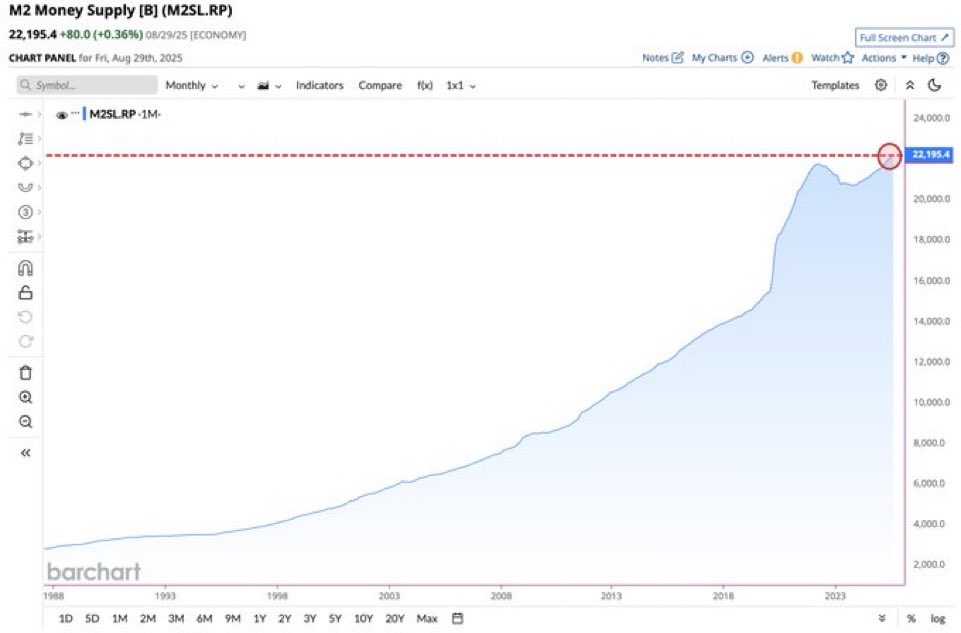
@Barchart @grok how can m2 be increasing while the fed is conducting quantitative tightening?
English
1
0
5
347
Barchart
Barchart@Barchart·
U.S. M2 Money Supply jumps to a new all-time high of $22.2 Trillion 🤑
Barchart tweet media
English
92
525
2.6K
248.6K
The Kobeissi Letter
The Kobeissi Letter@KobeissiLetter·
BREAKING: US M2 money supply surged another +4.8% YoY in August 2025 to a record $22.2 trillion. This marks the fastest pace since July 2022, in-line with a +4.8% YoY increase in the prior month. US money supply has now grown for 18 consecutive months. Furthermore, inflation-adjusted M2 rose +1.8% YoY in August, posting its 12th-straight monthly increase. The US Dollar’s bear market continues.
The Kobeissi Letter tweet media
English
128
390
2.3K
376.3K
Ben Biggers
Ben Biggers@BiggersBen·
@_Investinq Would add that Fannie and Freddie, while implicitly backed by the government, are self sustaining profit generating businesses that stand on their own and can likely absorb any losses from multifamily defaults. Their private sector mortgage originators also share in the downside.
English
0
0
3
295
StockMarket.News
StockMarket.News@_Investinq·
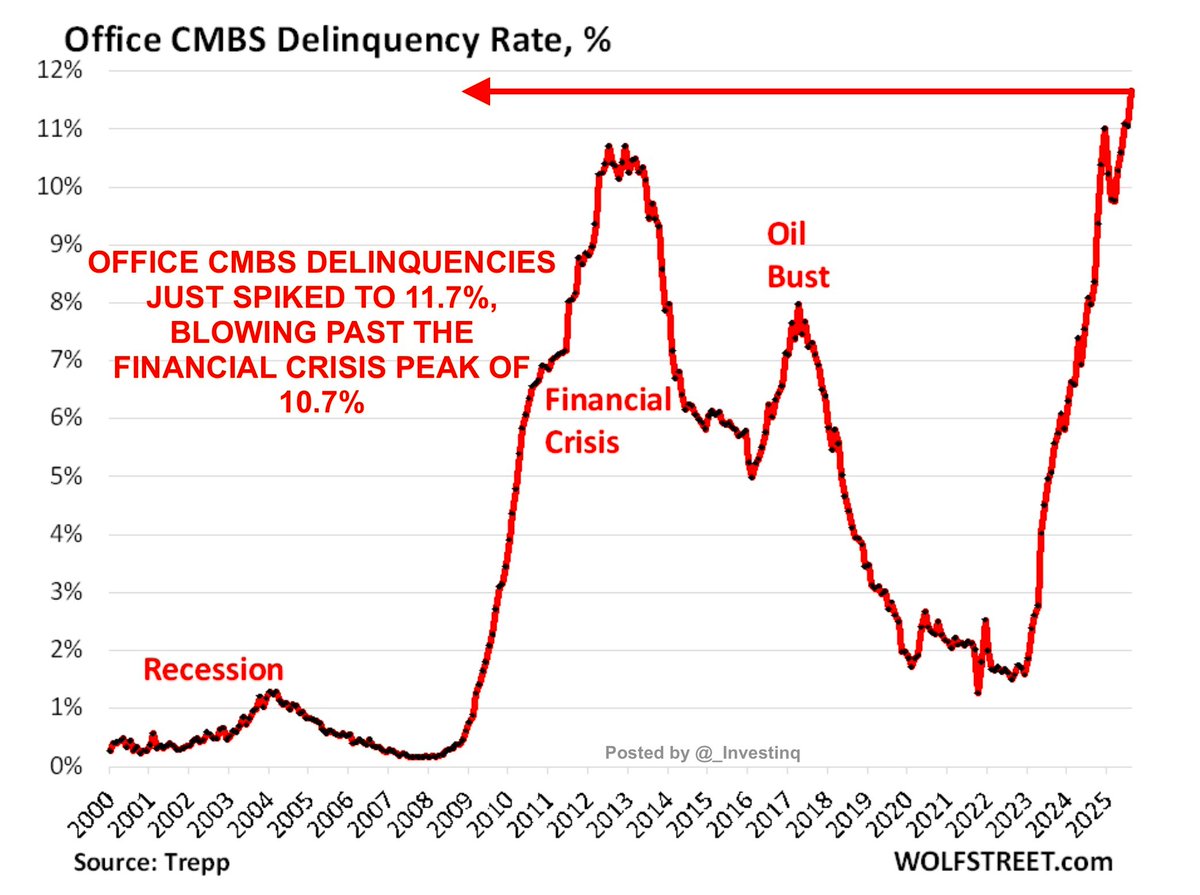
A slow-motion collapse is sweeping through commercial real estate. Office buildings are vacant, mortgages are defaulting, cities are broke. Taxpayers are quietly being lined up to take the fall. (a thread)
StockMarket.News tweet media
English
114
685
3.4K
301.2K
StockMarket.News
StockMarket.News@_Investinq·
Totally fair points. I’d just add that reserves have been steadily declining, so if banks are still expanding credit, they’re doing it from a thinner cushion. That might imply more leverage or a shift in how they’re managing liquidity. And on the deficit side yeah, if the private sector’s funding it, it’s more of a circular flow. But once the Fed steps in or deposits migrate to the banking system, that’s where you can start seeing real M2 effects.
English
1
0
0
24
StockMarket.News
StockMarket.News@_Investinq·
🚨 America’s money supply just broke a record. There’s now $22.1 trillion circulating in the U.S. economy. That’s more than at any point in history even during the peak of the COVID stimulus era. (a thread)
StockMarket.News tweet media
English
73
232
987
77K
Ben Biggers
Ben Biggers@BiggersBen·
@_Investinq I think the major factor holding up the money supply increase is fractional reserve banking. Banks can still create money out of thin air even if the fed isn’t easing.
English
1
0
0
21
Ben Biggers
Ben Biggers@BiggersBen·
@_Investinq @_Investinq I don’t think deficit spending on its own increases m2. The private sector has to purchase treasuries using back deposits to fund the deficit creating an offsetting affect. However this is usually paired with the fed making open market purchases of USTs.
English
2
0
3
61
John Roberts
John Roberts@johnrobertsFox·
I covered the White House for more than a decade, and never witnessed a meeting like this.
John Roberts tweet media
English
7K
22.6K
204.6K
22.5M
Ben Biggers
Ben Biggers@BiggersBen·
@_Investinq @grok is this above correct? Wouldn’t a stronger yen make importing Japanese goods more expensive for the US?
English
1
0
0
11
StockMarket.News
StockMarket.News@_Investinq·
There’s also the FX impact: If BoJ hikes rates and the yen strengthens, it changes the math for global investors. Stronger yen = cheaper imports for the U.S. (good for inflation) But it can hurt U.S. exporters (their goods become more expensive abroad).
English
3
0
12
700
StockMarket.News
StockMarket.News@_Investinq·
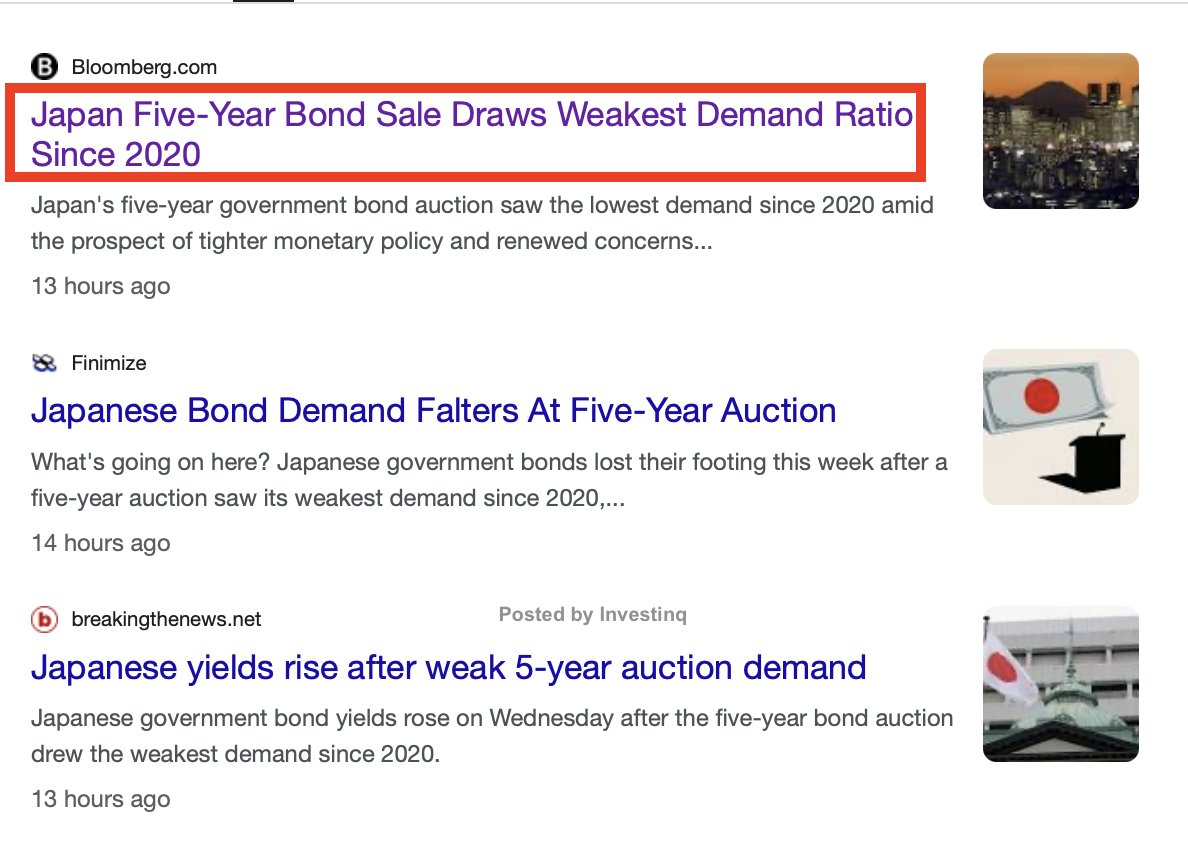
Japan’s 5Y auction just printed its weakest demand since 2020. Behind that number is a signal for money flows worldwide. Here’s the full story in simple terms. (a thread)
StockMarket.News tweet media
English
12
50
297
30.7K
World of Statistics
World of Statistics@stats_feed·
Average wealth per adult: 🇨🇭 Switzerland: $685,230 🇺🇸 US: $551,350 🇦🇺 Australia: $496,820 🇩🇰 Denmark: $409,950 🇳🇿 NZ: $388,760 🇳🇴 Norway: $385,340 🇸🇬 Singapore: $382,960 🇨🇦 Canada: $369,580 🇳🇱 Netherlands: $358,230 🇧🇪 Belgium: $352,810 🇫🇷 France: $312,230 🇬🇧 UK: $302,780 (UBS)
English
83
154
1.3K
170.1K
Ben Biggers
Ben Biggers@BiggersBen·
@ClarenceWongCRE I typically do see a land mark up. Although it may hurt the appearance of the GP’s return on cost, if they contribute their land at today’s market value they may be able to claim a higher ownership % in a JV negotiation which will ultimately affect their total profits.
English
1
0
1
29
Clarence Wong, CCIM
Clarence Wong, CCIM@ClarenceWongCRE·
@BiggersBen Usually just take land at actual cost basis. That’s been my experience working for a retail developer. Not sure if others mark-to-market land value if purchased years ago. Have you seen this, Ben? Curious about scenario & use case etc. Thx.
English
1
0
0
67
Clarence Wong, CCIM
Clarence Wong, CCIM@ClarenceWongCRE·
As a real estate developer, you typically want to build to a yield on cost (YOC) with a decent spread over a stabilized market cap that a buyer is willing to pay. Let’s dig in 👇. Keep in mind that YOC = stabilized NOI / all-in cost. All-in cost comprises of land as well as hard / soft costs, which incl. TI/LC, carry cost (RE taxes/insurance), interest reserve, etc. That spread could run from 150-200+ bps. In Daniel’s ex. below, if stabilized market exit cap is 6.9% & the developer is building to a 6.9% cap, that’s 0 spread, so break even. So you’d probably want to build to a 8.5% - 9% YOC or 160-210 bps over 6.9% in our example. Some developers like Tyler Alley build to an even higher spread, but tougher to pencil. Keep in mind “blended” market exit cap rates, e.g. some ground leases & quick-service retail build-to-suits at your project may command lower cap rates, bringing avg cap rate down. NOI / cap rate = price, so the lower the cap rate the higher the price. May feel counterintuitive. Buyer is willing to take less yield for better credit, lease term, stronger market/location etc.
Daniel Herrold@DanielHerrold

Where are the net lease REITs buying? Well, Realty Income (O) has perhaps the lowest cost of capital, so one can assume they can buy at the most aggressive cap rate. In the 1st Quarter, O only acquired $202M of volume in the 1st Quarter - at an average cap rate of 6.9%. To put in perspective, over the last 10 quarters, they have averaged about $880M per quarter. So that's a drop of 77%. Why such a drop? I think it's because the bid-ask is still too wide for them to find good opportunities to buy. For new build-to-suits built in 2023-2025, selling at a 6.9% likely means the developers are coming out break even or even cutting a check at the closing table. I would be nervous for any developer who is developing more aggressively than a 7.50% yield-on-cost in today's market. The 2021 market is not returning anytime soon.

English
5
1
29
8.2K