Biogeography Berlin

2.3K posts

Biogeography Berlin banner
Biogeography Berlin

Biogeography Berlin

@BiogeoBerlin

Leaving X due to rising hate speech & misinformation. Join us on https://t.co/woQi90K5Nt for updates and interactions. 🌱🔬

Humboldt University, Berlin Katılım Eylül 2013
480 Takip Edilen2.1K Takipçiler
Sabitlenmiş Tweet
Biogeography Berlin
Biogeography Berlin@BiogeoBerlin·
We have decided to leave X due to the increasing prevalence of hate speech and misinformation which we find unacceptable as a scientific community dedicated to truth and respectful discourse. We look forward to continuing our scientific journey with you on biogeoberlin.bsky.social
English
0
0
2
122
Biogeography Berlin
Biogeography Berlin@BiogeoBerlin·
The lack of effectiveness of protected areas is likely common in many regions worldwide, which highlights the need to incorporate degradation and nonforest ecosystems into effectiveness assessments.
English
0
0
3
123
Biogeography Berlin
Biogeography Berlin@BiogeoBerlin·
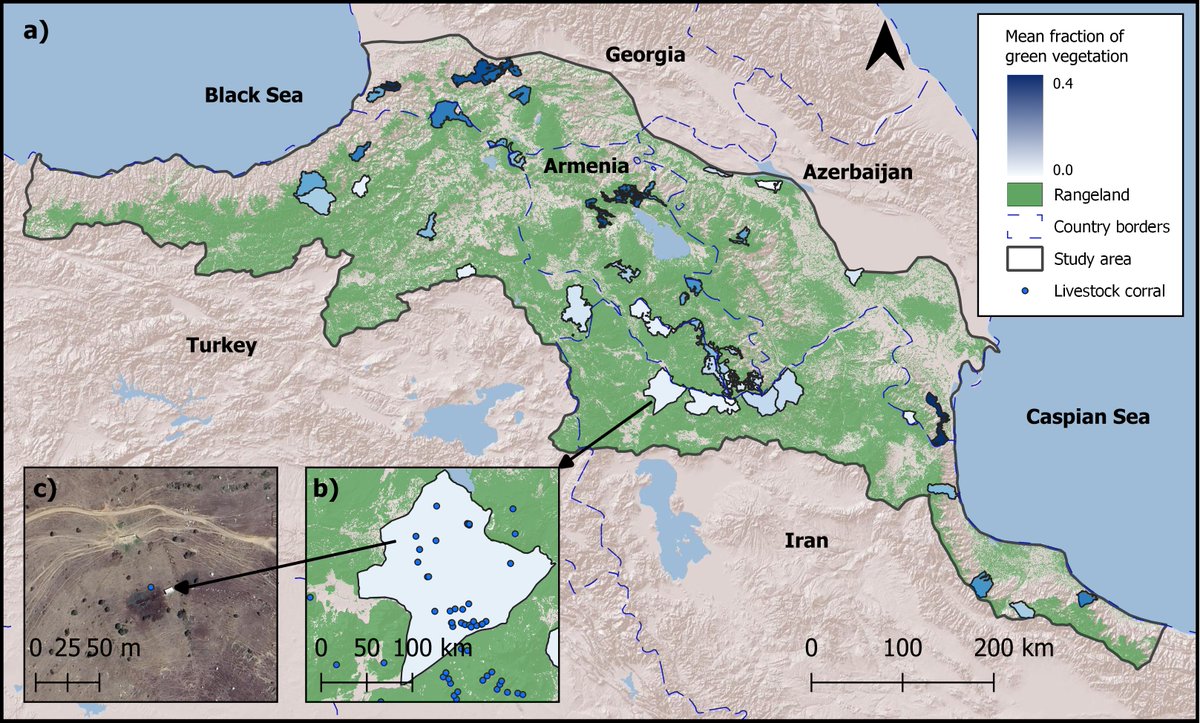
Finally, through mapping livestock corrals as an indicator of grazing pressure, we could link the observed green vegetation loss signals to livestock grazing inside protected areas, especially in Azerbaijan and Turkey. This suggests overgrazing is a main driver of ineffectiveness
English
0
0
2
79
Biogeography Berlin
Biogeography Berlin@BiogeoBerlin·
Protected areas in rangelands were largely ineffective in reducing green vegetation loss from. Moreover, the level of effectiveness of protected areas varied with contextual and management elements such as country differences or protected area management.
English
0
0
2
69
Biogeography Berlin
Biogeography Berlin@BiogeoBerlin·
Using satellite-based indicators of rangeland vegetation greenness from 1988 to 2019, we aimed to assess the effectiveness of 52 protected areas. We conducted our assessment across the southern Caucasus, a biodiversity hotspot extending over 5 countries
English
0
0
2
63
Biogeography Berlin
Biogeography Berlin@BiogeoBerlin·
Our results indicate that contemporary anthropogenic trends like land-use de-intensification and stronger conservation policies can counteract the impact of past, higher anthropogenic pressures and reverse historical defaunation.
English
0
0
1
117
Biogeography Berlin
Biogeography Berlin@BiogeoBerlin·
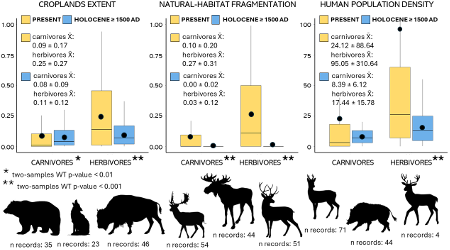
Yet, today megafauna appear to have a higher potential for coexisting with people compared to the past (e.g., herbivores inhabit areas with a mean human population density of 95 people/km2, compared to an average of 17 people/km2 in the period 1500–2000 AD).
Biogeography Berlin tweet media
English
0
0
1
66
Biogeography Berlin
Biogeography Berlin@BiogeoBerlin·
Maps showing a steady decline in potential megafauna species richness, with most habitat loss continent-wide after 1500 AD but appearing earlier in the Atlantic and Mediterranean, as early as the Roman Age (1000 BC–500 AD), due to rising hunting pressure.
Biogeography Berlin tweet media
English
0
0
2
56
Biogeography Berlin
Biogeography Berlin@BiogeoBerlin·
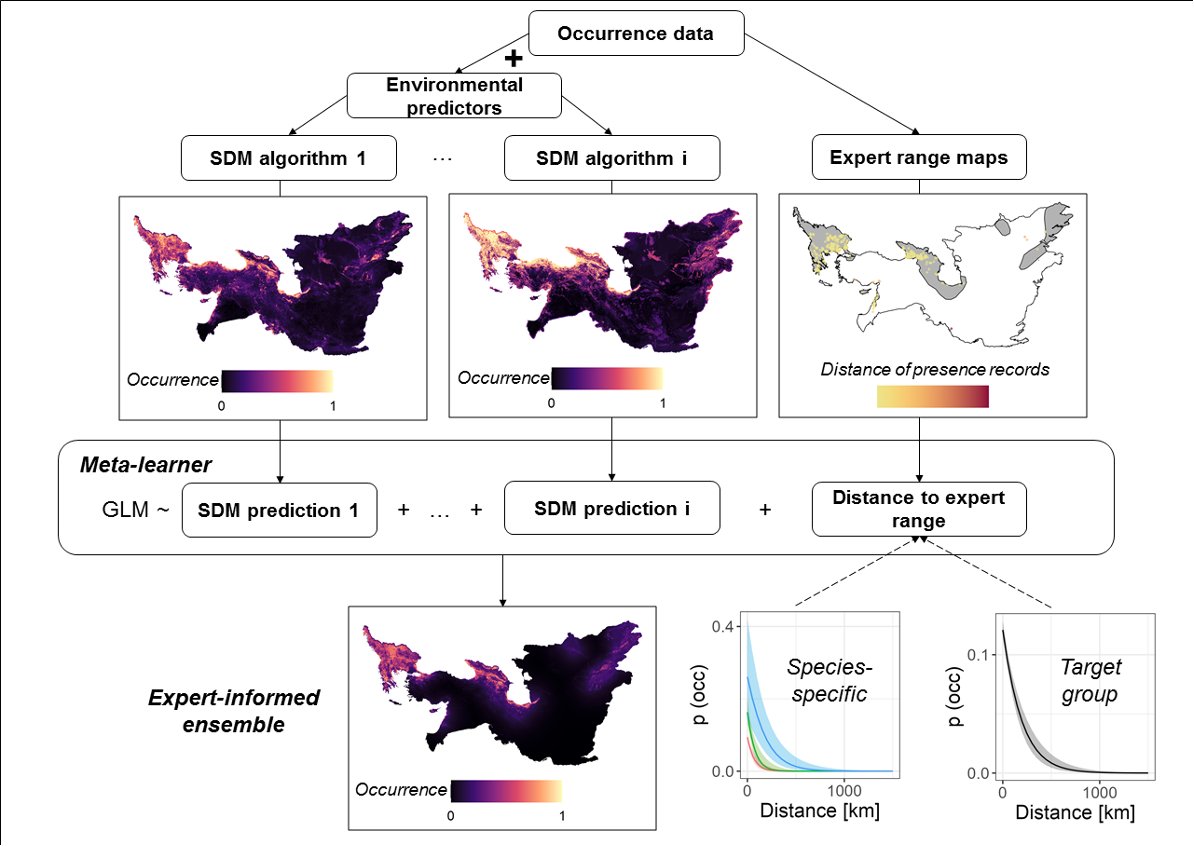
We used 17,000 zooarchaeological records of 20 species spanning 12,000 years to develop time-calibrated SDMs. We then discussed how the potential distribution of European wild megafauna has changed in association with changing anthropogenic pressures through the Holocene.
English
0
0
1
56
Biogeography Berlin
Biogeography Berlin@BiogeoBerlin·
This paper examines how forest-dependent people (Indigenous and Criollo peoples) in the Pilcomayo basin of the Gran Chaco have lost access to surface water (e.g., rivers, streams, ponds) over time due to the expansion of commodity agriculture.
English
0
0
0
105
Biogeography Berlin
Biogeography Berlin@BiogeoBerlin·
The three regions had remarkably similar forest structures, although partly driven by different social-ecological drivers, suggesting strong attractors of structure in temperate mountain forests.
English
0
0
2
192