
BCoS
238 posts

BCoS
@BishopsScotland
The members of the Bishops' Conference are the Bishops of the eight Scottish Roman Catholic Dioceses.
Scotland Katılım Mart 2015
71 Takip Edilen811 Takipçiler
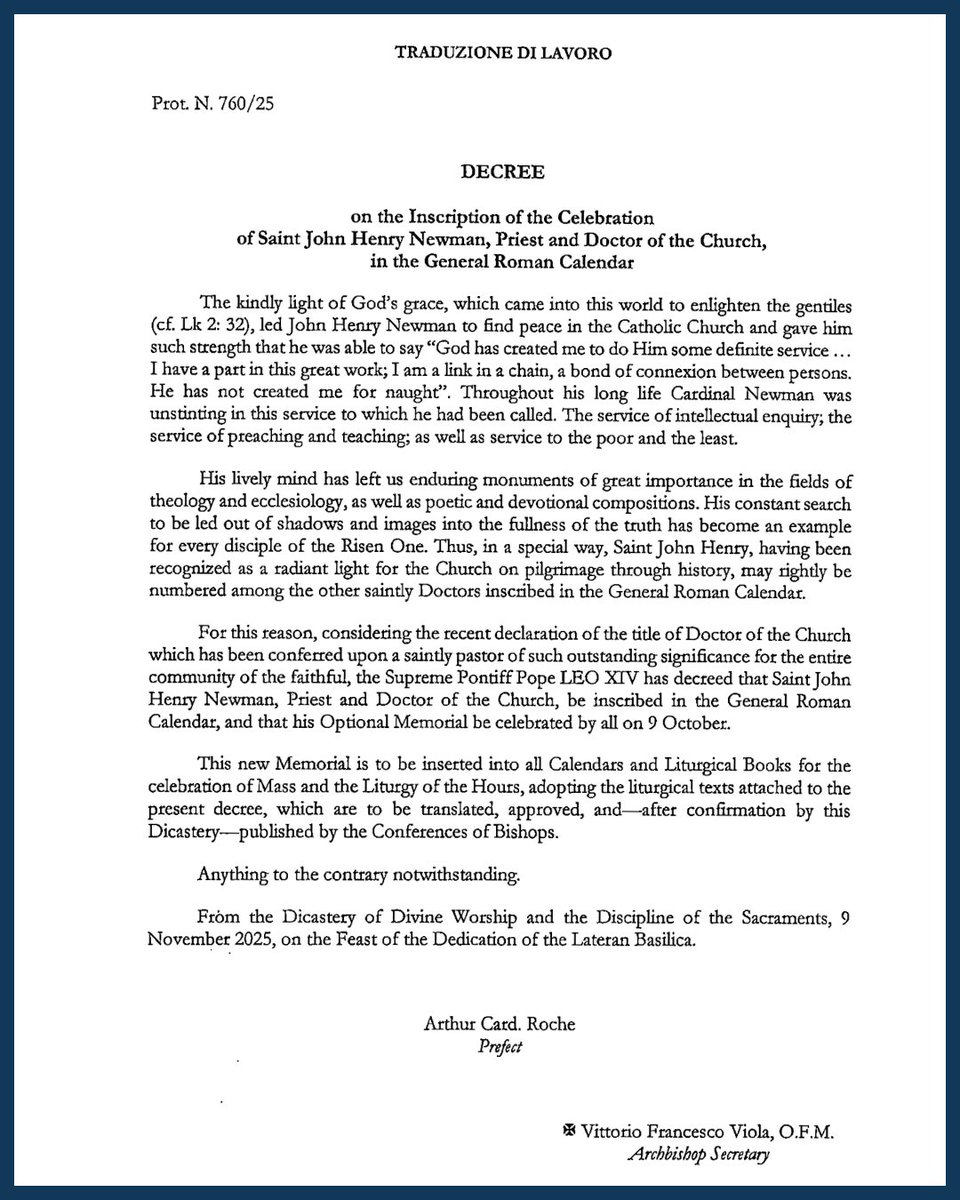
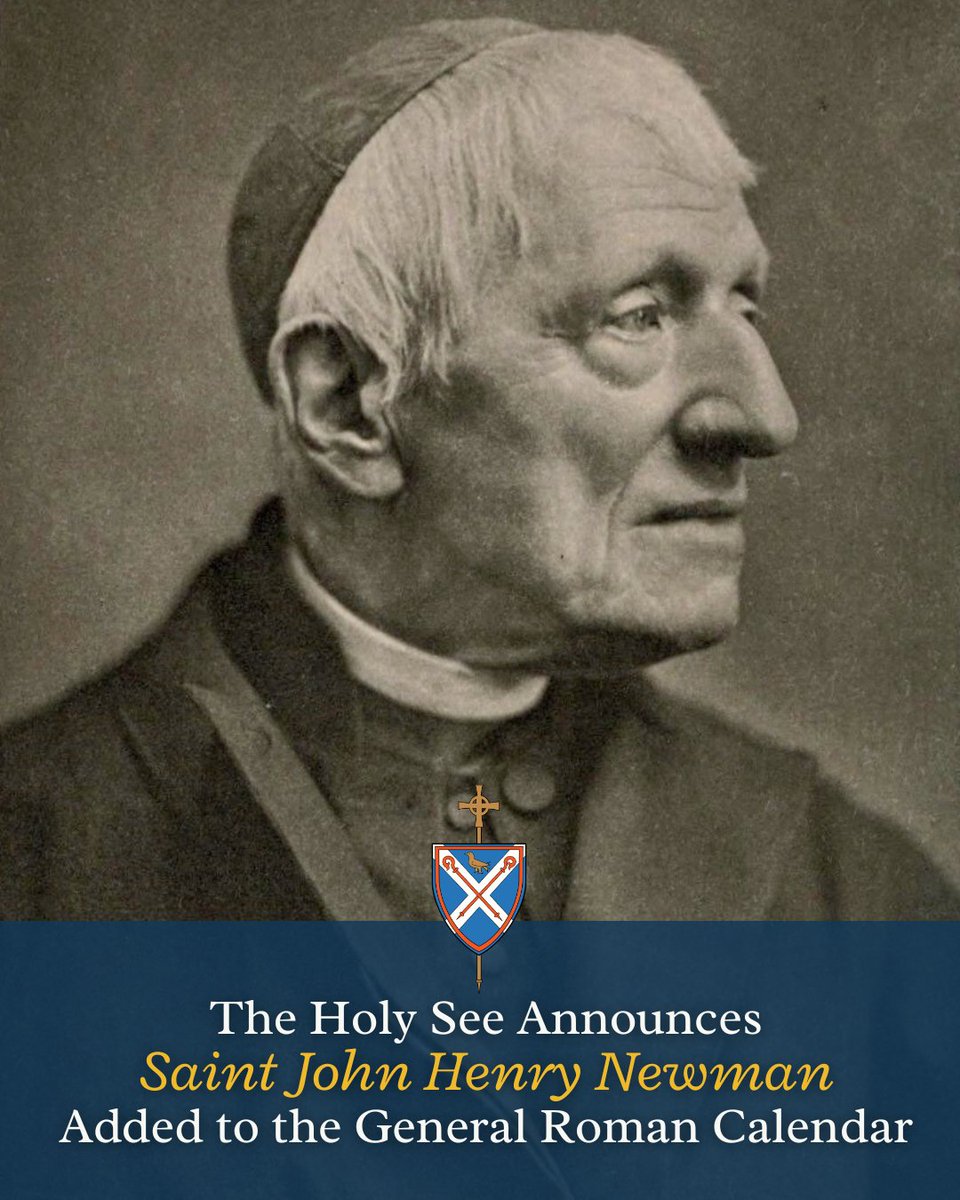
The Dicastery for Divine Worship and the Discipline of the Sacraments has announced that, on 3 February 2026, a decree will be published adding the memoria ad libitum of Saint John Henry Newman to the General Roman Calendar, together with the related liturgical texts.
English
BCoS retweetledi

The Prostitution (Offences and Support) (Scotland) Bill is about protection and real support.
The Bishops’ Conference of Scotland have written to the First Minister of Scotland expressing support for Ash Regan’s Bill, describing it as a vital step in addressing the harm linked to prostitution.
The Bill shifts the focus away from those who are exploited and onto those who create demand — criminalising buyers, not sellers — while repealing outdated offences that penalised vulnerable individuals.
It recognises the reality that many involved in prostitution face serious vulnerabilities, including trauma, abuse, grooming, and increasing risks from online and technology-facilitated exploitation.
Crucially, the Bill also establishes a statutory right to support — including accommodation, healthcare, financial assistance, and counselling — helping people exit prostitution safely and rebuild their lives.
This is about reducing harm, challenging demand, and offering real pathways to freedom and recovery.
English

Join people from across Scotland for the Stations of the Cross each Monday in Lent at 7:45pm. Includes a brief reflection from a guest speaker. Register at:
us02web.zoom.us/webinar/regist…
English
BCoS retweetledi
Bishops’ Conference Calls for Action on Exploitation with Support for New Prostitution Bill
The Bishops’ Conference of Scotland has written to the First Minister of Scotland to express the Church’s support for the Prostitution (Offences and Support) (Scotland) Bill, currently before the Scottish Parliament.
In the letter, the Bishops’ Conference describes the Bill, tabled by independent MSP, Ash Regan, as “a vital step toward protecting some of the most vulnerable individuals in our society and addressing the systemic harms associated with prostitution in Scotland.”
Protecting Victims and Challenging Demand
The Bill’s central purpose—to reduce prostitution and tackle exploitation, coercion, and harm—is described as both compelling and necessary.
It proposes a new offence for the purchase of sexual acts, while repealing outdated laws that historically penalised those who were themselves victims. The Bill would also quash previous convictions under section 46 of the Civic Government (Scotland) Act 1982, removing what Bishop Keenan calls a “significant barrier” to rebuilding lives.
The Bishops’ Conference supports the Bill’s adoption of a “challenging demand” model, shifting criminal responsibility away from individuals exploited through prostitution—overwhelmingly women and girls—and onto the buyers who fuel the commercial sex market. This model reflects international best practice and aligns with Scotland’s wider commitments to tackling violence against women and girls.
Addressing Vulnerability and Trauma
The letter highlights the deep vulnerabilities that underpin involvement in prostitution. Many affected individuals have experienced childhood abuse, care experience, grooming, and trauma, with young people—particularly those leaving care—at high risk of exploitation. Technology has intensified these risks, expanding opportunities for manipulation.
Human Trafficking Concerns
The Bishops’ Conference also emphasises the Bill’s relevance to combatting human trafficking for sexual exploitation, a significant and documented issue in Scotland. International evidence links reductions in trafficking to demand-reduction legislation. Bishop Brian McGee, Vice-President of the Bishops’ Conference, has contributed insight from his work with the Santa Marta Group, an international alliance dedicated to ending human trafficking. He believes the Bill reflects “the realities identified by trafficked people, law enforcement, and Church agencies around the world.”
Right to Support
A key component of the proposed legislation is the creation of a statutory right to support for anyone currently or previously involved in prostitution. This includes access to accommodation, financial aid, healthcare, and counselling—supports deemed essential for enabling safe and sustainable exits from prostitution.
Call for Political Leadership
Acknowledging differing political opinions, and expecting Parliament to provide considerable scrutiny from which the Bill can benefit, the letter urges the Scottish Government to show leadership by backing the Bill, underscoring its potential to protect vulnerable women and girls, prevent trafficking, and advance equality.
English
BCoS retweetledi
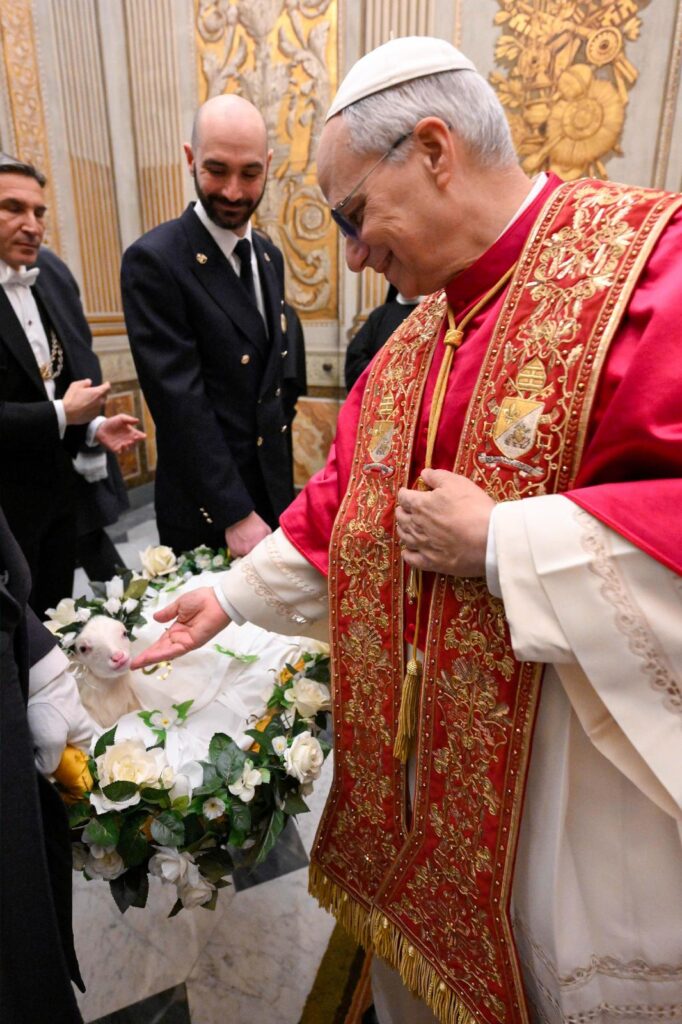
Today is the Memorial of St Agnes, a fourth-century martyr. To mark this, in the Urban VIII Chapel at the Vatican, Pope Leo XIV was presented with two lambs on the Memorial of St Agnes of Rome.
In keeping with long-standing custom, the lambs were later blessed at the Basilica of St Agnes Outside the Walls, built over her tomb. The wool from these lambs will be used to make the pallia for newly appointed Metropolitan Archbishops.
The pallium is a liturgical sign of honour and pastoral responsibility worn by the Pope and Metropolitan Archbishops within their own dioceses and ecclesiastical provinces. Made from white wool and marked with six black silk crosses, it symbolises the shepherd’s care for the flock entrusted to him.
References to the blessing of lambs on the feast of St Agnes can be traced back to the sixth century. The practice is linked to an early tradition which recounts that St Agnes appeared to her parents after her martyrdom while they were praying at her tomb, holding a pure lamb as a sign of innocence and faithfulness.
Historically, the offering of lambs was also connected to the relationship between Roman basilicas, with lambs presented to the Pope for blessing. For centuries, the wool was then prepared by Benedictine nuns at the Basilica of St Cecilia in Trastevere, who would shear the lambs during Holy Week and weave the pallia.
While some practical details of the tradition have changed over time, its meaning remains unchanged. It continues to express the bond between the witness of St Agnes, the pastoral ministry of bishops, and the unity of the Church centred on Rome.
English
BCoS retweetledi
At Christmas, Christians across Scotland gathered around the crib to contemplate the life of a vulnerable child; God entering our world as a baby in need of care, protection and love. Christmas places fragile human life at the centre of everything.
It is therefore unsettling that this season saw the first person in Scotland charged under the new so-called “buffer zone” law in Scotland; a law the Church believes curtails Scotland’s commitment to freedom of expression and conscience, and restricts critical voices from democratic debate in the public square.
The Abortion Services (Safe Access Zones) (Scotland) Act 2024 establishes “buffer zones” of up to 200 metres around abortion facilities — currently around 30 locations across Scotland. Within those zones, any conduct deemed to “influence” a decision about abortion may be criminalised. That vague description should trouble anyone who values legal clarity or free expression.
The Catholic Church does not condone harassment or intimidation, but that was not the intention of this law. The Church has been clear: harassment, intimidation and obstruction are wrong and unacceptable. But Scotland already has robust laws to deal with harassment, public disorder and threatening behaviour and it is telling that, when consulted on the proposed new law, Police Scotland did not ask for more powers, and went as far to state in written evidence to Parliament that, “existing powers and offences are sufficient to address any unlawful behaviour in the vicinity of healthcare premises.” When parliaments introduce criminal offences where existing law is already sufficient, questions should be raised and alarm bells ring.
We oppose this law because it is disproportionate and undemocratic. It represents state overreach and curtails basic freedoms. The Church would similarly oppose legislation mandating buffer zones outside nuclear weapons facilities or refugee detention centres. This should concern every Scottish citizen, regardless of their views on abortion.
As the Parliamentary Officer for the Catholic Church in Scotland pointed out, women experiencing crisis pregnancies may be “denied the opportunity to freely speak to people and organisations who may be able to help them.” A law supposedly designed to protect choice risks doing the opposite — eliminating one side of a conversation and one set of choices altogether.
Even more troubling is what the legislation anticipates. Official documentation accompanying the Act acknowledges that the law envisages criminalising “praying audibly” and “silent vigils."
This is unprecedented in modern Scotland, and it is no wonder it has raised eyebrows around the world, with concerns raised around Scotland’s commitment to human rights and freedom of expression and religion.
The implications go further. The Act extends to private homes within designated zones. A pro-life poster displayed in a window, a conversation overheard, a prayer said by a window; all could, in principle, fall within the scope of criminal sanction. When asked directly whether praying by a window in your own home could constitute an offence, Gillian Mackay, the Scottish Green Party MSP, who spearheaded the legislation, replied: “That depends on who’s passing the window.” That sends a chill down the spine of anyone who cares about civil liberties. Criminal law that depends on the perception of a passer-by is certainly not the hallmark of a free Scottish society.
English
BCoS retweetledi

With hundreds of safeguarding evaluations now having been received from parishes, religious congregations and organisations across Scotland, those who have not submitted should prioritise this ahead of 24th May deadline. Resources here: bit.ly/3UQRjL2 #safeguarding

English
BCoS retweetledi
Take some time to consider your Safeguarding practice in the past year and how you have contributed to "keeping church safe" through effective safeguarding practice. #safeguardingstandards

English
BCoS retweetledi
Are YOU still to due to complete your online Safeguarding evaluation for 2023? This is an exercise that should be done in discussion with others who are responsible for safeguarding in your Church setting. #saferchurch

English
It is vitally important that the Catholic Community has a strong and united voice in responding to this consultation, so as to ensure that our views heard. Consultation closes 23rd November 2023. 3/3 gov.scot/publications/g…
English
We strongly request the re-insertion of the paragraphs relating to Denominational Education from the previous iteration of the guidance, reflecting both the legal protection for schools with a Religious Character, and the previously supportive position for Catholic schools. 2/3
English
The Bishops’ Conference of Scotland is both disappointed and confused at the decision by the Scottish Government to delete all reference to Catholic schools in its ‘Guidance on the Delivery of Relationships, Sexual Health and Parenthood (RSHP) Education in Scottish Schools’ 1/3
English
BCoS retweetledi

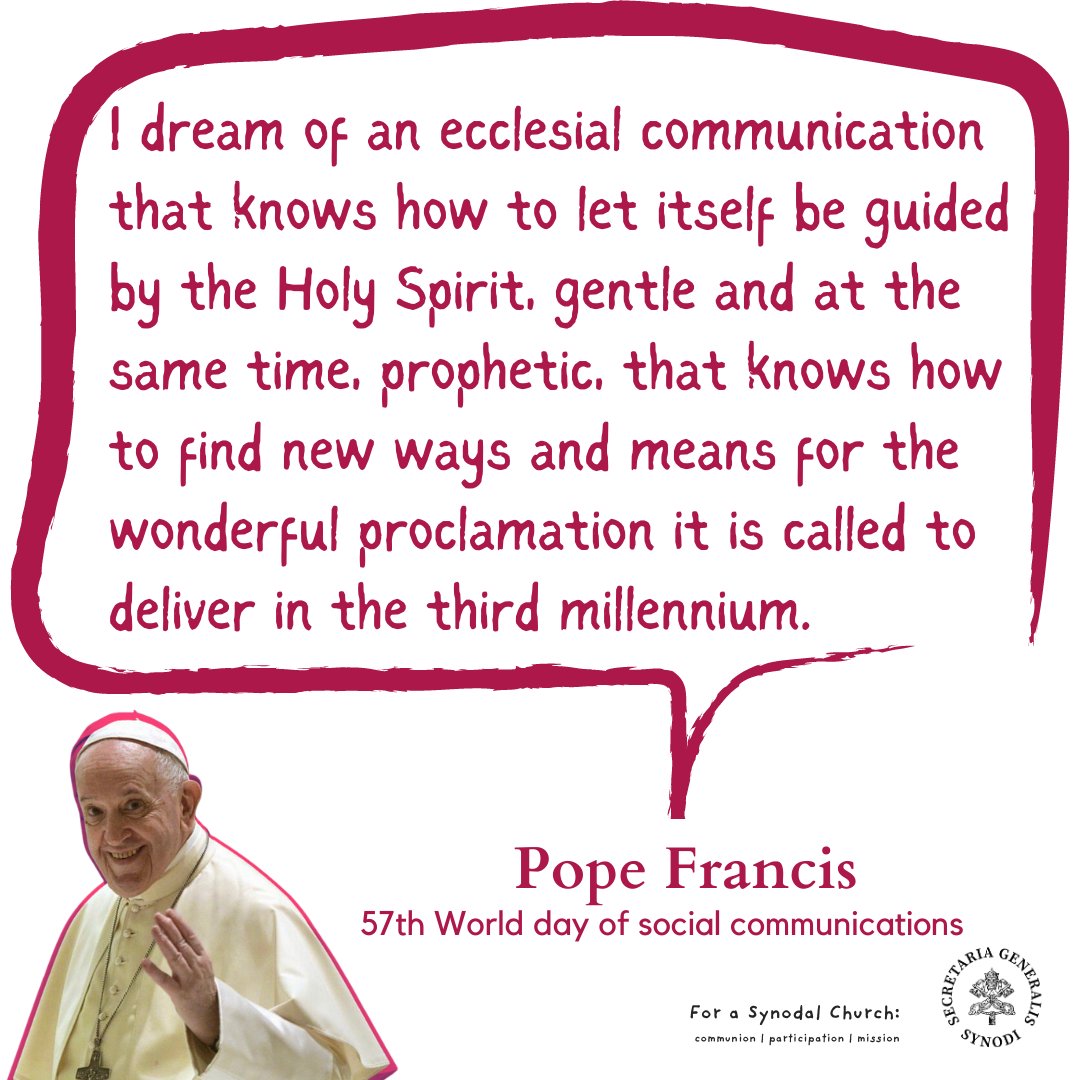
In a synodal Church, let us engage in dialogue, build bridges, and use media to promote unity, truth, and love. Read the inspiring message of @Pontifex for the world communication day: 🔗 bit.ly/3IrKeKu
#synod #57WDSC #Communication #walkingtogether "
English
Bishop Hugh Gilbert attending as President of the Bishops’ Conference of Scotland.
Cardinal Nichols@CardinalNichols
Preparing to take our part in this morning's #Coronation of the King and Queen.
English
BCoS retweetledi
Bishop Brian McGee of Argyll & The Isles led the Scottish delegation to the Continental stage of the Synod in Prague this week.
He and Fr Gerard Maguiness share some thoughts on what has been happening
[via @BishopsScotland]
English
BCoS retweetledi
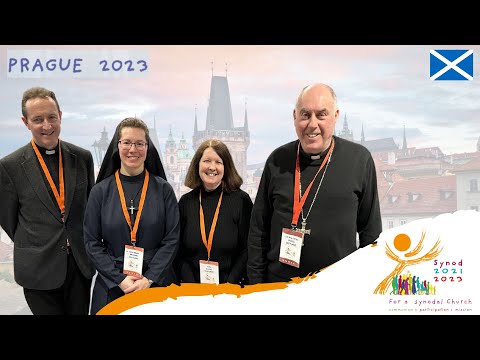
Watch the message from Scotland delivered at the Synod Continental Assembly in Prague. ⤵️ (6 min watch).
youtube.com/watch?v=hY1tXn…
YouTube

English