BitBlazeWizard
66 posts

BitBlazeWizard
@BitBlazeWizard
🚀 Crypto Enthusiast 💎 Join me in uncovering hidden treasures in crypto 📈 #CryptoInvestor #Crypto $XCH Farmer
Katılım Mayıs 2022
80 Takip Edilen24 Takipçiler
@CryptoHunter808 @Paradise1known @imgn_ai dex, i use kyberswap kyberswap.com/swap/ethereum
imgnAi addres
0x18E692c03De43972Fe81058f322fa542Ae1A5E2c
HT

PumpNAI launches tomorrow evening (UTC) ⌛
To celebrate, we're giving away $10K in $IMGNAI to one of the first 100 projects to complete the bonding curve!
Prepare your agents 🤖
Read more: imgnai.com/bond-win-10k-u…
English
BitBlazeWizard retweetledi

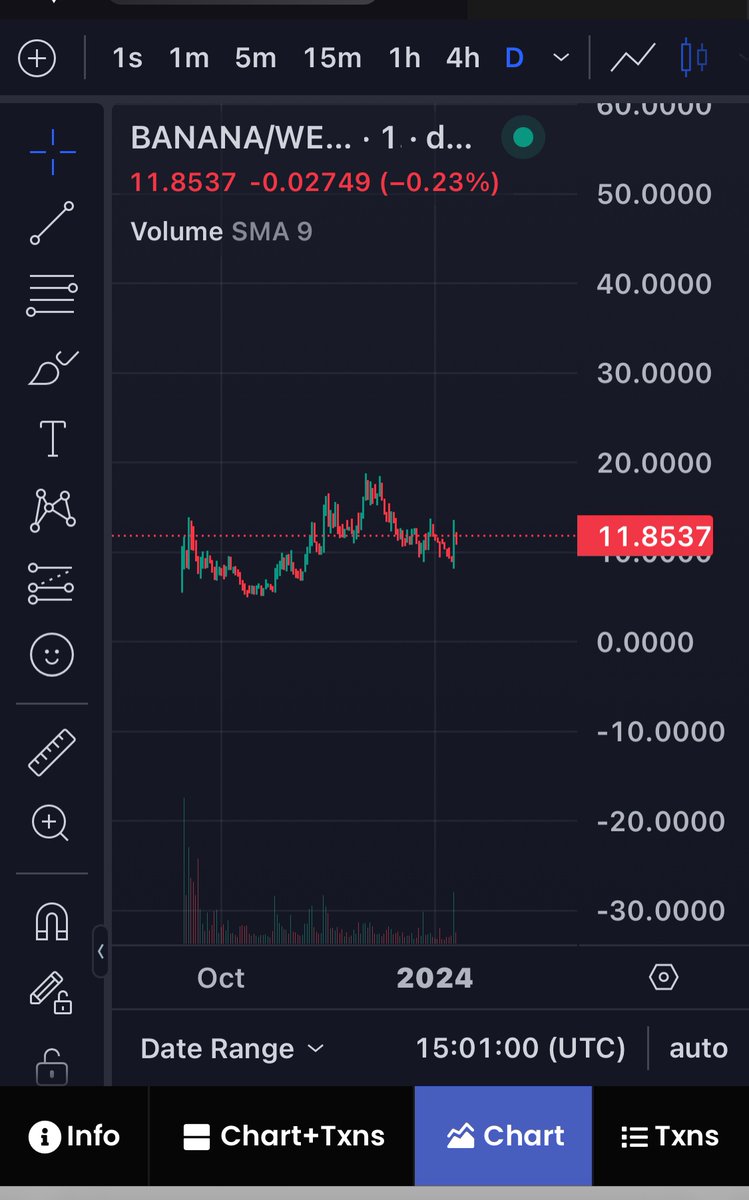
The attention will shift back to $BANANA imo
Here is why👇
$ETH rotation next=more revenue for $BANANA
-Dextools partnership users will have the chance to use $BANANA through @DEXToolsApp directly
-The team removed the 5% tax, so I'm expecting some big CEX listings as a result of that.
Wen Binance?
-Expension to other chains, during the bull $ETH gas fees can be expensive for the average user, thus people like to trade on different chains as well💰
English

I’m holding 800 $ETH from $900
Should I swap some into $SOL ?

English
BitBlazeWizard retweetledi

I am not a big fan of LPing,
it is Complex, requires Active Management
and provides uncertain Yields
Let's find out how @artichoke_fi
is Simplifying Liquidity Provision
🌱 ⬇️

English
BitBlazeWizard retweetledi

Why to still be bullish on @eth_ben projects?
1) Because it is still early
2) Because his projects are actually still in development and some are not even launched yet (#PSYDEX, official NFT, #PSYOP launchpad still not fully functional...)
3) Because Ben.eth have huge attention from whole CT
4) Because he still didn't scam nor rug, and it is likely he will not as he is not stupid. Do you know that he made almost $2M only from Orange NFT and he makes 5% from each sale. To disappear with $20M would be stupid! Not just because he is doxxed now, but also because he can be making that much in passive income soon.
5) Because he has $20M to pump any of his project to the Moon
6) Because he hold more than 95% of $PSYOP total supply. He can give 10% or 50% or even 90% of that to the holders anytime, and in that case even at this price bags would be in big profit
6) Because it is still very easy with not much capital to pump $PSYOP, $LOYAL and $FINALE, and of course, $DAVE too
7) Because #FF6000 might really try to become a new BAYC, but with better utility
8) Because many alphas are on the way and each could make the price go up
9) Because he has control over his projects
10) Because his ego will not allow him to fail, so if nothing else will work, he really might spend $20M to pump his projects
11) $PSYOP, $LOYAL, $FINALE and $DAVE are still not on any CEX. Even better, as they cannot be shorted, but will not go in those details now. However, the first CEX listing is usually very bullish for the price, and then the first big CEX listing.
12) Because Ben.eth is actually building.
There are even more reasons, but even these should be enough. Any of these reasons is a better reason for investment than all the reasons for investment in 99% other coins and NFT projects.
13) Because prices are down so it is a great time to buy now.
14) Ben.eth strongly believes in the Law of attraction, and it works :)
NFA and DYOR. Mentioned is just my current opinion.
English
BitBlazeWizard retweetledi

Today has been quite the day for our community and grassroots movement
- TG broke 1k members
- Began deploying LP
- Shook several whales, 100% out
- EYES minted out
- BEN Squad stealth drop
- Partnered on $DYL x $FINALE pool
👁️ $FINALE $LOYAL $PSYOP @eth_ben @TheFinaleToken @FinaleCommunity #pumpultimate
English
BitBlazeWizard retweetledi

BitBlazeWizard retweetledi
Show us your favorite Ben Squad NFT under this post.
$FINALE never sleeps!
$DAVE
$DYL
$LOYAL
$PSYOP
👁👁👁👁👁

English


BitBlazeWizard retweetledi

We proudly support @arbitrum builders & the upcoming products from @artichoke_fi are a prime example of the innovation that drives the ecosystem.
Just last month, $CHOKE liquidity was seeded on Camelot, & we're excited for their omnipool to be first deployed on top of Camelot ⚔️
Artichoke@artichoke_fi
Let's look into the components of Artichoke in more detail 🔍 Starting with tCHOKE - the Backbone of our Liquidity! Overview: ▪️tCHOKE acts as a synthetic liquidity counterpart for tails ▪️mainly backed by $USDC ▪️enables Omnipool liquidity How does it work? 🤔 tCHOKE is a synthetic liquidity token - it represents the assets deposited in the protocol, with $USDC acting as a stabilizer & main liquidity source. As new tails (tails are pools for the various tokens within the Omnipool - more on them in another thread) are added, tCHOKE is paired with the new token, granting access to the full omnipool liquidity. An example 🧮 You have ▪️1000 $USDC ▪️$1000 worth of Token A ▪️$1000 worth of Token B You want to provide liquidity for Token A and B, paired with $USDC. In V2 or V3-with-full-range models, you would need 2000 $USDC total to create pairs for both tokens and create 2 seperate pools that again introduce swap fees, oracle risk and liquidity fragmentation 👎 On Artichoke, you can deposit: ▪️ 1000 $USDC in the USDC/tCHOKE tail ▪️Token A in the TokenA/tCHOKE tail ▪️Token B in the TokenB/tCHOKE tail Both token A & B can now access the liquidity in the USDC/tCHOKE tail and can be directly swapped for each other without any additional conversion 🪄 That's it as a first intro to tCHOKE - we will update gitbook 📗 shortly with lots of exciting details for various protocol components. Stay tuned for a thread on the Stabilizer Pool that ensures all assets on Artichoke are sufficiently backed ⚖️ and handles tCHOKE minting.
English
Anyone wants to make some $$$$
Here is a chance…..👁️ $FINALE
English
BitBlazeWizard retweetledi
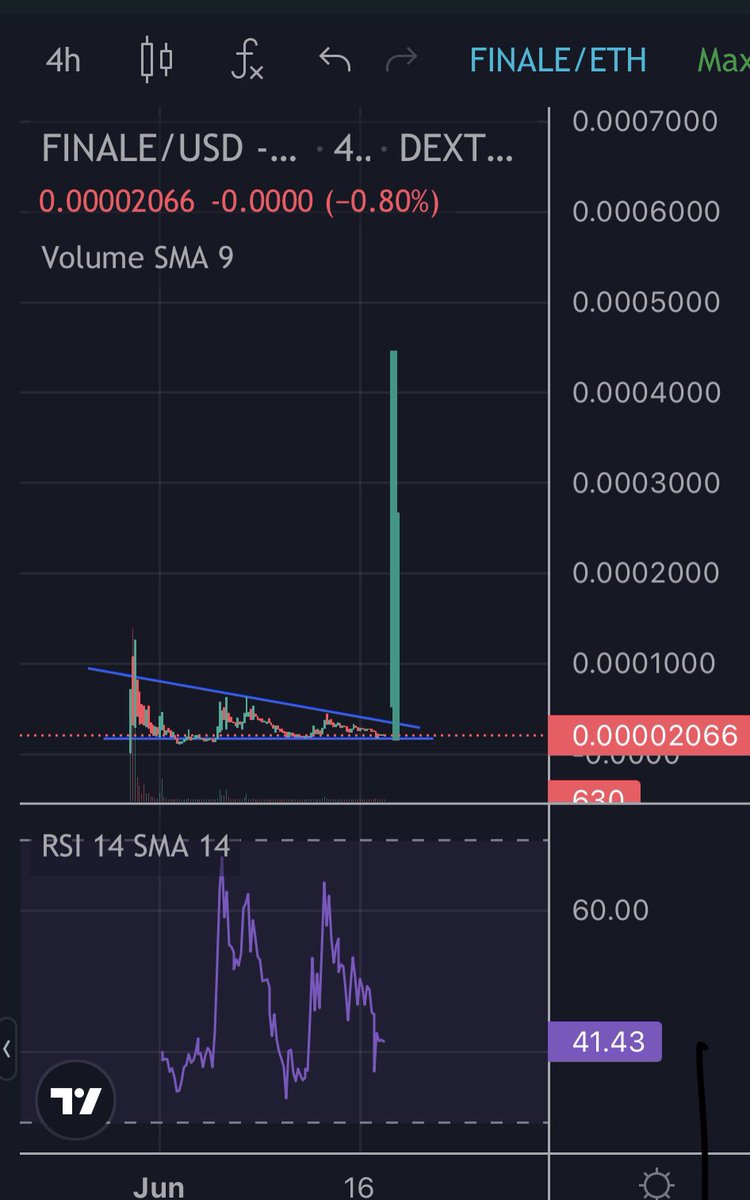
There are less than 100 $FINALE holders that have 100M or more tokens (currently worth only $2,200).
Market cap still at only $1.2M
It is a Ben.eths coin. Hating him or not, you must admit that he is #1 attention grabber at CT and is actually building. Why #pepe went above $1B? Only because of attention it get.
Every other shitcoin reach $20M-$50M market cap, without any utility. I cant imagine $FINALE would not at least double that soon.
The daily volume is currently only $200k-$300k. It takes only a few bigger investors to send this coin not just 10x, but 100x up. Then Ben.eths tweets and building can keep it up there. Ben.eth himself might also be a secret big buyers. He mentioned buybacks several times.
Ben.eth secretly engaged BitBoy to tweet about $BEN and it sent it 300x+ up. Are you sure he is not cooking again with someone else? Dont forget Ben.eth talked about $FINALE as a crown token which will melt faces. Ben.eths ego would not allow him to fail.
Hey, $1.2M market cap and you are fading it??!! Are you crazy?
Even if you invest $1k and lose it, it is worth of risk based on potential and very likely reward.
English
BitBlazeWizard retweetledi


BitBlazeWizard retweetledi
The orange one suits me better 🟧
👁️ $FINALE $LOYAL $PSYOP @eth_ben @TheFinaleToken @FinaleCommunity #pumpultimate

English
@EthOranj @set__eth 👁️ $FINALE $LOYAL $PSYOP @eth_ben @TheFinaleToken @FinaleCommunity #pumpultimate
QME