Ichiro // Legacy of Rebirth

9.1K posts

Ichiro // Legacy of Rebirth banner
Ichiro // Legacy of Rebirth

Ichiro // Legacy of Rebirth

@BlackbeardSteve

@KPRVERSE 2390 The Silent Sentinel // Wanderer

Animus, New Eden Katılım Ocak 2013
526 Takip Edilen320 Takipçiler
Ichiro // Legacy of Rebirth retweetledi
KPR
KPR@KPRVERSE·
// BOON HAVEN CREW Every week on Wednesday, we have TWO community sessions. BOON Haven @ 4pm UTC Lore Workshop @ 5pm UTC Interested in learning more about KPR? Want to help create New Eden? PLUG IN and let's build together! Keep. Protect. Reimagine.
KPR tweet media
English
3
11
34
835
Ichiro // Legacy of Rebirth
Ichiro // Legacy of Rebirth@BlackbeardSteve·
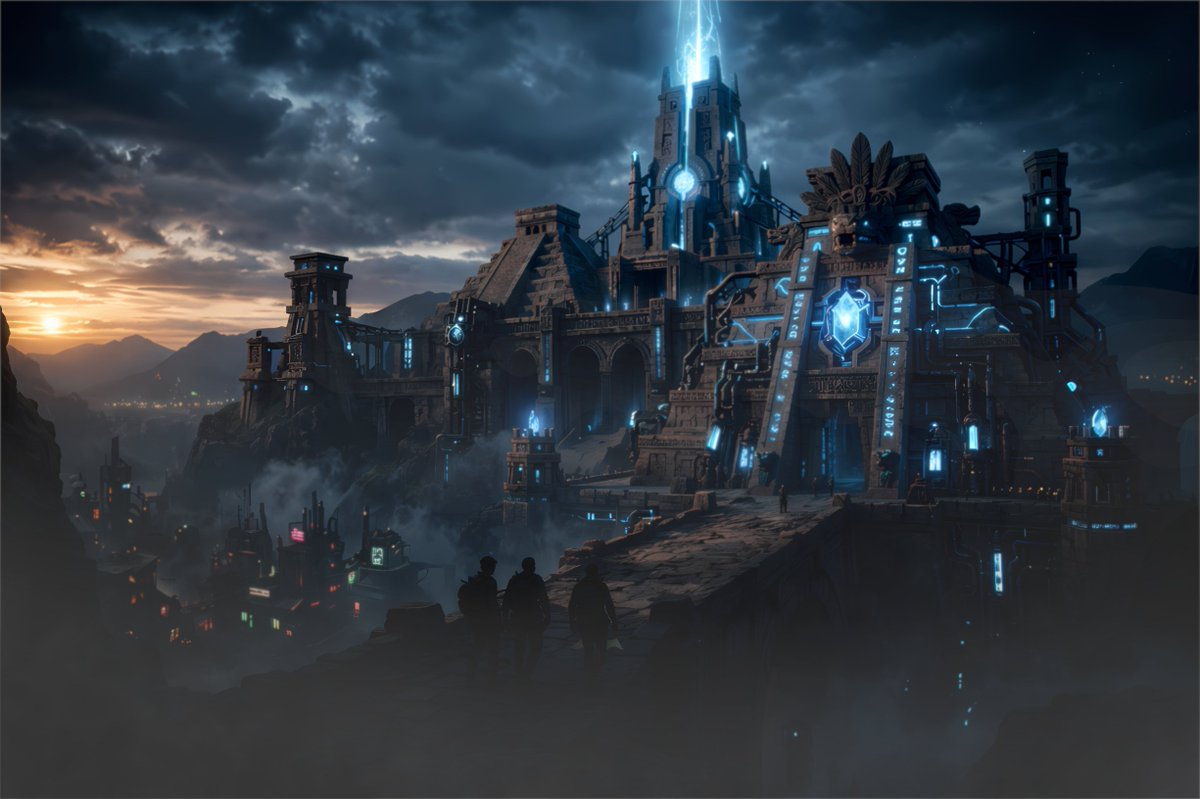
Just pulled a RARE CROW badge from registering the waitlist for One Arena @Rosentica! Can't wait to battle and win more grails with my RWA cards! See you in the Arena ⚜️ #OneArena #Rosentica x.com/rosentica/stat…
Ichiro // Legacy of Rebirth tweet media
Rosentica: One Arena@Rosentica

꧁⊹ WAITLIST OPEN ⊹꧂ Bring Your RWA Cards to Battle. Compete for the Grails. Collect, Social, Yield. Test your luck, summon your own hero to join the waitlist: — OneArena.xyz — *Waitlist and Hero Summon are spot limited on a FCFS basis. See you in the Arena ⚜️
English
0
0
1
28
Ichiro // Legacy of Rebirth retweetledi
☠️Blackbeard☠️いちろう➕ 放浪者
I spent last years developing in silence a ??? ecosystem called Ethernium (@Ethernium) The hardest part wasn't the code.. it was keeping context alive across hundreds of AI sessions. So I extracted the base of Ethernium continuity discipline into a standalone toolkit for to share it. CONTINUITY LEGACY ∞ : (Document-Driven Handoff Protocol for AI-Human Collaboration)ᴹᴵᵀ Ω persistent canonical memory Ω boot sequences for AI agents Ω strict document parity checks Ω repeatable handoff — human or AI Ω customizable (optional) If you work with AI agents on real projects, you need this. Open source. Zero dependencies. Full context and memory with validation. Forget RAG. One step. MIT License This is just the beginning. "Knowledge is not individual, but of the expansion itself." -Ethernium github.com/SteveBlackbear…
English
2
3
15
407
Ichiro // Legacy of Rebirth retweetledi
☠️Blackbeard☠️いちろう➕ 放浪者
Mind Palace: What it is and why it's so important in vibecoding. I don't know if you've ever heard of the mind palace (or method of loci). It's an ancient technique that, for me, has become ESSENTIAL with vibecoding, especially now that we're in the midst of the age of vibrational coding. What it's about: You imagine a place you know by heart (your house, the way to school/work, a video game you love...) and "place" the information you want to remember at specific points along that route. Every crazy, exaggerated, absurd thing with movement/emotion is recorded in your brain because you're using spatial + visual + emotional memory (which are incredibly powerful compared to boring repetition). Why is it so important now (for me)? In vibration coding, we've gone from writing each line to guiding complex systems with prompts, understanding massive architectures, endless APIs, design patterns, massive data flows, and new libraries every week. We no longer memorize syntax (AI does that), but we do need to have large systems in our heads, relationships between components, mental models of how everything flows, commitments, and edge computing. A mind palace allows you to mentally load (and instantly retrieve) structures of 50 to 100 concepts effortlessly. It's like having extra RAM in your brain. How to start NOW (my basic method): Choose a fixed and familiar palace (for example, your childhood home → entrance → living room → kitchen → bathroom → bedroom). Always follow the same order. For each thing you want to remember, create a RIDICULOUS, sexual, violent, or absurd image (the more absurd, the better it will be remembered). For example, to remember "use Context + use Reducer together for a lightweight general state", imagine your grandmother shouting at the front door while using a giant megaphone (context) and reducing a mountain of dirty laundry with an absurd reducer. (Stupid examples for to understand how it works and the different levels) For the first few days, practice mentally walking through the palace two or three times a day. Once you've mastered it, create new "wings" (floors, entire video games, cities...) for different projects/fields/works. In intuitive programming, it's not just about "vibrating" to the prompts... you also need a mind that doesn't get lost in complexity.
☠️Blackbeard☠️いちろう➕ 放浪者 tweet media
☠️Blackbeard☠️いちろう➕ 放浪者@SteveBlackbeard

What breaks the 90% of vibecoding developments Organization III: Clean code A few months back I was losing my mind with a project that started as a "simple" monolith… and quickly turned into a nightmare. One giant repo, files with 2000+ lines, functions calling whatever they wanted from anywhere. Every time I asked an AI (Cursor, Claude, whatever) to add a feature or fix a bug, it burned through credits like crazy. The model would get lost in the spaghetti, repeat bad patterns, hallucinate stuff that broke everything else… and I'd end up spending twice as long cleaning up the mess. That's when it hit me: it wasn't just the AI—it was my code giving zero clear context. The mess was killing my speed.What I finally did: Broke it into real modules with hard boundaries (clean folders, strict exports, no "everything can import everything"). Enforced single responsibility per module + its own tests + a short internal README. Actually documented everything: what each piece does, why it exists, how it connects to the rest. Not just for me—for the AI ​​too. The difference was insane: Now the AI ​​spits out code that actually fits the first time (almost no rewriting). I burn way fewer credits because the context is clean and focused. I can add new features without fear of breaking old stuff. Explaining the project to someone else (or future me) takes hours, not weeks. Hard lesson from real pain in 2026, messy code isn't just technical debt anymore… it's literal money + mental-health debt when you're using AI heavily. If your code is still one big chaotic monolith, you're basically paying extra every day for the disorder.

English
0
1
7
166
Ichiro // Legacy of Rebirth retweetledi
☠️Blackbeard☠️いちろう➕ 放浪者
What breaks the 90% of vibecoding developments Organization III: Clean code A few months back I was losing my mind with a project that started as a "simple" monolith… and quickly turned into a nightmare. One giant repo, files with 2000+ lines, functions calling whatever they wanted from anywhere. Every time I asked an AI (Cursor, Claude, whatever) to add a feature or fix a bug, it burned through credits like crazy. The model would get lost in the spaghetti, repeat bad patterns, hallucinate stuff that broke everything else… and I'd end up spending twice as long cleaning up the mess. That's when it hit me: it wasn't just the AI—it was my code giving zero clear context. The mess was killing my speed.What I finally did: Broke it into real modules with hard boundaries (clean folders, strict exports, no "everything can import everything"). Enforced single responsibility per module + its own tests + a short internal README. Actually documented everything: what each piece does, why it exists, how it connects to the rest. Not just for me—for the AI ​​too. The difference was insane: Now the AI ​​spits out code that actually fits the first time (almost no rewriting). I burn way fewer credits because the context is clean and focused. I can add new features without fear of breaking old stuff. Explaining the project to someone else (or future me) takes hours, not weeks. Hard lesson from real pain in 2026, messy code isn't just technical debt anymore… it's literal money + mental-health debt when you're using AI heavily. If your code is still one big chaotic monolith, you're basically paying extra every day for the disorder.
☠️Blackbeard☠️いちろう➕ 放浪者 tweet media
☠️Blackbeard☠️いちろう➕ 放浪者@SteveBlackbeard

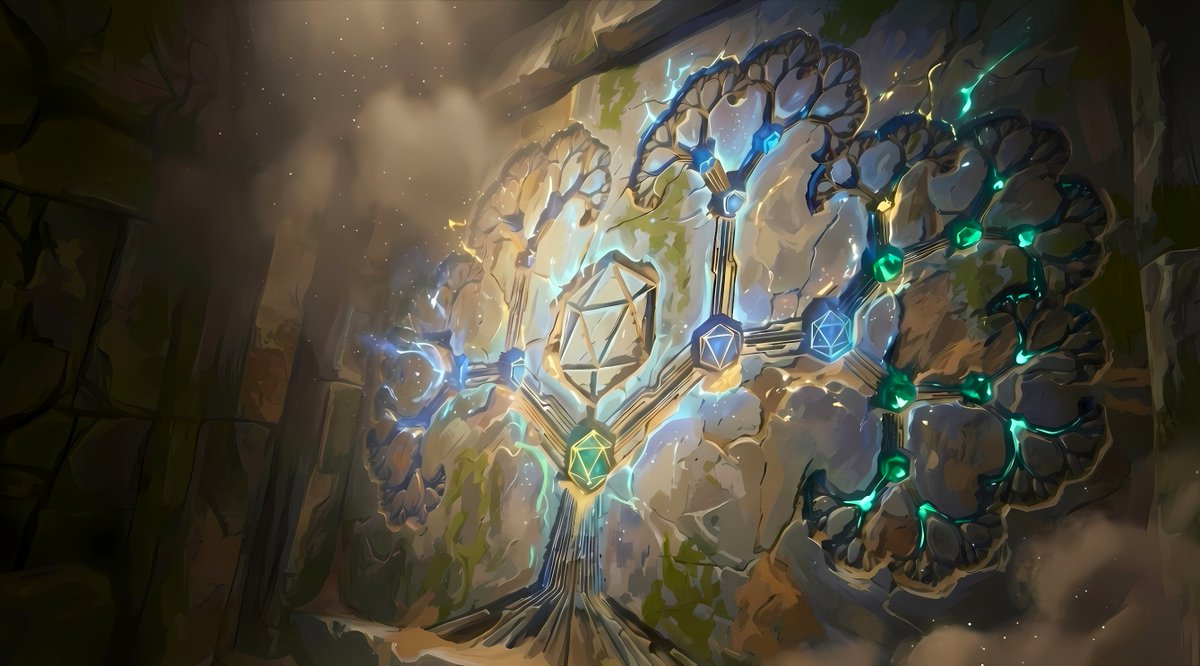
Organization II: Modularity These are the foundation that allows any ambitious creative or construction project to scale without imploding under its own weight. Whether you're coding a complex AI system, creating a massive fantasy world for a book series, game, or universe, building a brand identity that spans years and channels, writing a multi-book saga, designing a product ecosystem, or literally anything that starts small but dreams big: without intentional modularity from the outset, scalability becomes unsustainable and ultimately impossible. In my experience, the pattern is painfully consistent when we begin in pure creative flow—ideas are flowing, energy is high, everything feels connected and alive. It's exhilarating. But as it grows (more characters, story, features, campaigns, chapters, agents, and modules), the lack of clear boundaries turns the magic into spaghetti. Everything ends up tangled with everything else. Changing a single detail in the rules of the world? It affects and breaks character motivations, plot timelines, brand voice consistency, and subsequent AI flows. Fixing it requires surgery on the entire system. Iteration becomes terrifying and expensive. Want to test a new subplot, sub-brand extension, or agent/tool? You can't isolate it; you risk contaminating the main logic. So, you either play it safe (stagnation) or massively refactor later (difficulty + loss of momentum). Collaboration or handover becomes chaotic. That's fine... until it isn't. Bringing on a co-writer, designer, marketer, contributor, or your future self in six months? Without modules, documentation, and clear rules, onboarding is hell. Knowledge resides in only one head → bottleneck, resentment, or quitting. Long-term evolution stagnates. Projects that endure—iconic brands, timeless sagas, scalable AI products—are not only brilliant, but they're built from composable pieces. You can add, remove, remix, or improve parts without rewriting history. Brilliant ideas die not from a lack of inspiration, but from a lack of a structure that can bear the weight as inspiration accumulates. You must introduce this from day one, not when it "gets big." By then, it's too late. The clutter is already ingrained, and untangling it costs ten times more than building from scratch. How to do it without ruining the atmosphere (light and gradual)? Define your main modules/pillars in advance (even if vaguely at first). Worldbuilding (for authors, game designers, RPGs, universes) Modular worldbuilding treats elements like LEGO bricks: discrete, connectable pieces (magic system as one module, geography/cultures as others, core timeline/events as another). Advantages: Reusability and remixability — Build a culture, city, magic rule, or faction once and drop it into different stories, campaigns, games, or spin-offs without rewriting everything. Faster expansion without breakage — Add a new continent, pantheon, or historical era by plugging in a new module; changes stay isolated (tweak one region's economy without rewriting the global map or lore consistency). Easier collaboration — Multiple creators (co-authors, artists, GMs, worldbuilders) can own/work on separate modules without stepping on toes; Onboarding new people is quick with clear boundaries. Testing and iteration — Experiment with one piece ("what if this magic has a dark cost?") in isolation before integrating; reduces risk of canon-breaking ripples. Versatility across media — The same modular world can fuel books, TTRPG settings, video games, comics, or merch without starting from scratch—great for transmedia or indie creators. Efficiency in production — Especially in game design: reuse assets, levels, or lore chunks to populate large maps quickly and cost-effectively. Result? Your world grows indefinitely without becoming an unmanageable mess—perfect for sagas, long-running campaigns, or shared universes. Brand (identity, visual/voice system, campaigns, experiences) Modular branding builds a "toolkit" of core pillars (voice tones, color systems, typography blocks, narrative archetypes, modular assets/templates, logo variants) that flex across channels. Advantages: Consistency with flexibility — Everything feels unmistakably "you" across Instagram, packaging, websites, merch, events, or ads, but you adapt easily (shorten logo for avatars, swap colors for seasonal drops, remix templates for new campaigns). Scalable production speed — Create dozens of variations (ads, social posts, retail displays) fast by swapping elements in a framework—no redesigning from zero each time. Easier testing and evolution — Run multivariate tests (different headlines/images in the same modular frame) to see what resonates; update one pillar (e.g., evolve voice for new audience) without diluting the whole identity. Cost and resource savings — Replace/refresh single components (e.g., new icon set) instead of overhauling everything; lower waste in physical activations (modular booths/exhibits). Cross-channel and growth-friendly — Launch new products, sub-brands, regional variants, or collaborations quickly while maintaining coherence; supports rapid iteration in fast-moving markets. Collaboration boost — Teams (designers, marketers, agencies) work on isolated pieces without chaos; brand guidelines become living, modular docs. Result? The brand stays fresh, adaptable, and recognizable as it scales across platforms, time, and teams—without losing soul. Story/Saga (novels, series, screenplays, multi-arc narratives) Modular storytelling breaks the narrative into semi-independent units: character bibles, world rules bible, act/arc modules, thematic blocks, subplots, or even non-linear/micro-stories that accumulate meaning. Advantages: Non-linear freedom and experimentation — Jump around writing modules (start with a key scene, a character backstory, an ending twist) without being locked into strict chronology; rearrange or repeat for impact. Easier handling of complexity — In sagas spanning books/arcs, isolate elements (one character's arc as a module) so changes don't cascade everywhere; manage multiple POVs, timelines, or fractured structures cleanly. Better character and theme depth — Deep-dive into isolated modules (journals, flashbacks, side stories) to reveal inner worlds/motivations without bloating the main plot. Iteration and revision power — Test alternate endings, subplots, or tones in one module; swap or cut without rewriting the entire manuscript. Variety and reader engagement — Mix forms (letters, lists, transcripts, micro-stories) for pacing spice; address short attention spans while building layered meaning through juxtaposition. Long-form sustainability — For multi-book series, add new arcs/books as modules that plug into the core bible/rules—prevents the "sagging middle" or canon contradictions. Result? Epic stories become manageable and evolve over years without collapsing under their own ambition. AI/Project (vibecoding large systems, agents, pipelines) As we've discussed before—modular architecture (clear layers: core logic/agents, infra/LLM calls, evals, prompts versioned, UI/API, tracing). Advantages: Independent development & scaling — Build/test/update one part (e.g., new retrieval module or agent) without touching the rest; scale heavy components separately (e.g., more instances for expensive LLM calls). Easier maintenance & debugging — Isolate failures (prompt drift, retrieval bug) to one module; tracing/debugging is targeted instead of system-wide guessing. Faster iteration & experimentation — Swap models, prompts, or tools plug-and-play; vibe new features in isolation before integrating. Cost & performance control — Optimize expensive parts independently (fine-tune one module, reduce redundant calls); avoid token explosions from unchecked experiments. Team & long-term viability — Multiple devs collaborate on modules; future-proof against new tech (plug in better SLMs/RAG without rewrite). Reusability — Core modules become libraries for future projects. Easier maintenance & debugging I would recomend to use a vibecoding platform like Cursor or Antigravity (For everything, then you can ad i for story/metrics/resources. Then you can introduce it on Git/Notion/Obsidian. A quick "why we chose this" log for every major decision (tone, rule, aesthetic, model/recovery/modularity/rules) prevents endless loops of "why did we do X?". Design to connect and use. Constantly ask, can I add/remove/test this piece in isolation? If not, refactor before it takes root. Vibrate at 100% to validate/explore, then impose modularity on what endures. Pure creative energy gives you explosive takeoff. Modularity + organization is the rocket's structure that prevents you from burning up on reentry or veering off course once in orbit. I destroyed too many beautiful things. Start with modularity, even when it seems excessive. Your future self (and your bigger vision) will thank you.
English
3
3
6
456
Ichiro // Legacy of Rebirth retweetledi
☠️Blackbeard☠️いちろう➕ 放浪者
Organization II: Modularity These are the foundation that allows any ambitious creative or construction project to scale without imploding under its own weight. Whether you're coding a complex AI system, creating a massive fantasy world for a book series, game, or universe, building a brand identity that spans years and channels, writing a multi-book saga, designing a product ecosystem, or literally anything that starts small but dreams big: without intentional modularity from the outset, scalability becomes unsustainable and ultimately impossible. In my experience, the pattern is painfully consistent when we begin in pure creative flow—ideas are flowing, energy is high, everything feels connected and alive. It's exhilarating. But as it grows (more characters, story, features, campaigns, chapters, agents, and modules), the lack of clear boundaries turns the magic into spaghetti. Everything ends up tangled with everything else. Changing a single detail in the rules of the world? It affects and breaks character motivations, plot timelines, brand voice consistency, and subsequent AI flows. Fixing it requires surgery on the entire system. Iteration becomes terrifying and expensive. Want to test a new subplot, sub-brand extension, or agent/tool? You can't isolate it; you risk contaminating the main logic. So, you either play it safe (stagnation) or massively refactor later (difficulty + loss of momentum). Collaboration or handover becomes chaotic. That's fine... until it isn't. Bringing on a co-writer, designer, marketer, contributor, or your future self in six months? Without modules, documentation, and clear rules, onboarding is hell. Knowledge resides in only one head → bottleneck, resentment, or quitting. Long-term evolution stagnates. Projects that endure—iconic brands, timeless sagas, scalable AI products—are not only brilliant, but they're built from composable pieces. You can add, remove, remix, or improve parts without rewriting history. Brilliant ideas die not from a lack of inspiration, but from a lack of a structure that can bear the weight as inspiration accumulates. You must introduce this from day one, not when it "gets big." By then, it's too late. The clutter is already ingrained, and untangling it costs ten times more than building from scratch. How to do it without ruining the atmosphere (light and gradual)? Define your main modules/pillars in advance (even if vaguely at first). Worldbuilding (for authors, game designers, RPGs, universes) Modular worldbuilding treats elements like LEGO bricks: discrete, connectable pieces (magic system as one module, geography/cultures as others, core timeline/events as another). Advantages: Reusability and remixability — Build a culture, city, magic rule, or faction once and drop it into different stories, campaigns, games, or spin-offs without rewriting everything. Faster expansion without breakage — Add a new continent, pantheon, or historical era by plugging in a new module; changes stay isolated (tweak one region's economy without rewriting the global map or lore consistency). Easier collaboration — Multiple creators (co-authors, artists, GMs, worldbuilders) can own/work on separate modules without stepping on toes; Onboarding new people is quick with clear boundaries. Testing and iteration — Experiment with one piece ("what if this magic has a dark cost?") in isolation before integrating; reduces risk of canon-breaking ripples. Versatility across media — The same modular world can fuel books, TTRPG settings, video games, comics, or merch without starting from scratch—great for transmedia or indie creators. Efficiency in production — Especially in game design: reuse assets, levels, or lore chunks to populate large maps quickly and cost-effectively. Result? Your world grows indefinitely without becoming an unmanageable mess—perfect for sagas, long-running campaigns, or shared universes. Brand (identity, visual/voice system, campaigns, experiences) Modular branding builds a "toolkit" of core pillars (voice tones, color systems, typography blocks, narrative archetypes, modular assets/templates, logo variants) that flex across channels. Advantages: Consistency with flexibility — Everything feels unmistakably "you" across Instagram, packaging, websites, merch, events, or ads, but you adapt easily (shorten logo for avatars, swap colors for seasonal drops, remix templates for new campaigns). Scalable production speed — Create dozens of variations (ads, social posts, retail displays) fast by swapping elements in a framework—no redesigning from zero each time. Easier testing and evolution — Run multivariate tests (different headlines/images in the same modular frame) to see what resonates; update one pillar (e.g., evolve voice for new audience) without diluting the whole identity. Cost and resource savings — Replace/refresh single components (e.g., new icon set) instead of overhauling everything; lower waste in physical activations (modular booths/exhibits). Cross-channel and growth-friendly — Launch new products, sub-brands, regional variants, or collaborations quickly while maintaining coherence; supports rapid iteration in fast-moving markets. Collaboration boost — Teams (designers, marketers, agencies) work on isolated pieces without chaos; brand guidelines become living, modular docs. Result? The brand stays fresh, adaptable, and recognizable as it scales across platforms, time, and teams—without losing soul. Story/Saga (novels, series, screenplays, multi-arc narratives) Modular storytelling breaks the narrative into semi-independent units: character bibles, world rules bible, act/arc modules, thematic blocks, subplots, or even non-linear/micro-stories that accumulate meaning. Advantages: Non-linear freedom and experimentation — Jump around writing modules (start with a key scene, a character backstory, an ending twist) without being locked into strict chronology; rearrange or repeat for impact. Easier handling of complexity — In sagas spanning books/arcs, isolate elements (one character's arc as a module) so changes don't cascade everywhere; manage multiple POVs, timelines, or fractured structures cleanly. Better character and theme depth — Deep-dive into isolated modules (journals, flashbacks, side stories) to reveal inner worlds/motivations without bloating the main plot. Iteration and revision power — Test alternate endings, subplots, or tones in one module; swap or cut without rewriting the entire manuscript. Variety and reader engagement — Mix forms (letters, lists, transcripts, micro-stories) for pacing spice; address short attention spans while building layered meaning through juxtaposition. Long-form sustainability — For multi-book series, add new arcs/books as modules that plug into the core bible/rules—prevents the "sagging middle" or canon contradictions. Result? Epic stories become manageable and evolve over years without collapsing under their own ambition. AI/Project (vibecoding large systems, agents, pipelines) As we've discussed before—modular architecture (clear layers: core logic/agents, infra/LLM calls, evals, prompts versioned, UI/API, tracing). Advantages: Independent development & scaling — Build/test/update one part (e.g., new retrieval module or agent) without touching the rest; scale heavy components separately (e.g., more instances for expensive LLM calls). Easier maintenance & debugging — Isolate failures (prompt drift, retrieval bug) to one module; tracing/debugging is targeted instead of system-wide guessing. Faster iteration & experimentation — Swap models, prompts, or tools plug-and-play; vibe new features in isolation before integrating. Cost & performance control — Optimize expensive parts independently (fine-tune one module, reduce redundant calls); avoid token explosions from unchecked experiments. Team & long-term viability — Multiple devs collaborate on modules; future-proof against new tech (plug in better SLMs/RAG without rewrite). Reusability — Core modules become libraries for future projects. Easier maintenance & debugging I would recomend to use a vibecoding platform like Cursor or Antigravity (For everything, then you can ad i for story/metrics/resources. Then you can introduce it on Git/Notion/Obsidian. A quick "why we chose this" log for every major decision (tone, rule, aesthetic, model/recovery/modularity/rules) prevents endless loops of "why did we do X?". Design to connect and use. Constantly ask, can I add/remove/test this piece in isolation? If not, refactor before it takes root. Vibrate at 100% to validate/explore, then impose modularity on what endures. Pure creative energy gives you explosive takeoff. Modularity + organization is the rocket's structure that prevents you from burning up on reentry or veering off course once in orbit. I destroyed too many beautiful things. Start with modularity, even when it seems excessive. Your future self (and your bigger vision) will thank you.
☠️Blackbeard☠️いちろう➕ 放浪者 tweet media
☠️Blackbeard☠️いちろう➕ 放浪者@SteveBlackbeard

Most people give up as soon as they encounter "walls of meaningless code." But if you change your perspective, everything changes. I managed to truly enjoy it: programming = creating worlds, like in a role-playing game or a fantasy novel. Here are my two favorite methods that finally won me over. The Storyteller Programmer. Forget about "declaring an int variable." Think of the story instead: The hero finds a magic sword → that's a function that returns power. They encounter a dragon → if (health < 20) { flee(); }. They carry potions in their backpack → an array or list of objects. Suddenly, programming feels like narrating an adventure. Pure flow, zero boredom. Operating System Knowledge (my favorite). You build a fictional "operating system" within your world: "The Eternal Guardian" → authentication module (login + JWT) "The All-Seeing Oracle" → logging and monitoring system "The Cursed Chest that Devours Errors" → try-catch + error handling. The metaphor ceases to be merely decorative... it becomes the actual architecture of your code. Incredibly useful for understanding real-world systems. And in 2026, the real magic happens: You describe your entire knowledge base to an AI → and it generates functional code in Python, JS, Rust... whatever you ask for. Less complicated syntax, more unleashed imagination. You're programming without even feeling like you are. Practical results: Much less fear of the blank page. You learn three times faster because it feels like playing, not studying. The code comes out cleaner and actually makes narrative sense. Storytellers with puporse will lead the Narrative the rest are just fast generations without intention nor knwledge. Are you one? What is happening already is just "vibecoding slop" . people doing things without previous research or lineal thoughts in the development with conventional ways that is obsolet right now guided for the AI not from their real thoughts. 🧵Take an eye to the rest of threads if you want to understand why this is the next level and how to manage it.

English
1
3
8
431
Ichiro // Legacy of Rebirth retweetledi
☠️Blackbeard☠️いちろう➕ 放浪者
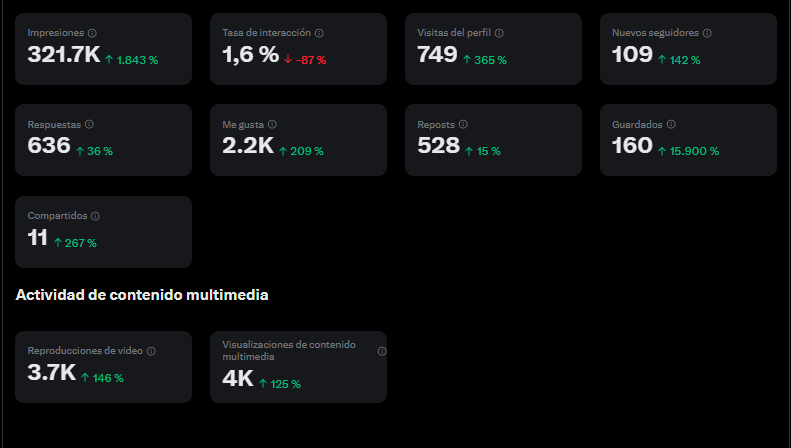
I've worked on several projects, but none as bad as @LifeFormsNFT. Besides exploiting their team and community, exhausting them for months, they then remained silent for almost two months. Initially, I agreed to work just to provide support and be part of the team, accepting a pittance. I started tracking metrics within a few days, generating significant engagement on their social media. But instead of appreciating the work, they began making demands and dictating "how to work" without having a clue what they were doing, wanting more work and, not only that, but also demanding to work on two projects. They even tried to pressure, assuming I was poor or idk their thinking. I soon found a balance between "pay" and work, obviously. They try to exploit their workers by owing them money and paying them a pittance, attempting to take advantage of people in the Global South or sites with little money (Africa, South America, Phillipines) by selling them the project for practically nothing and even fabricating unsuccessful people on their team. They leverage their community to redirect members to other projects without having any understanding of what they're doing. They're looking for an Autonomous Social Media Leader (AI) and a community manager for $50/week in 2 projects. Interested? "Founder" of LifeForms: @perjardim Project associated with @anitya_space and @RoguesNFT
☠️Blackbeard☠️いちろう➕ 放浪者 tweet media
English
1
2
6
185
Ichiro // Legacy of Rebirth retweetledi
IRIS
IRIS@iris_aurelian·
We're expanding access this month. Limited s̶p̶o̶t̶s̶ availability. I shouldn't say more. But if you've been curious... 877-325-4405. 💙
English
20
15
71
5.3K
Ichiro // Legacy of Rebirth retweetledi
☠️Blackbeard☠️いちろう➕ 放浪者
Most people give up as soon as they encounter "walls of meaningless code." But if you change your perspective, everything changes. I managed to truly enjoy it: programming = creating worlds, like in a role-playing game or a fantasy novel. Here are my two favorite methods that finally won me over. The Storyteller Programmer. Forget about "declaring an int variable." Think of the story instead: The hero finds a magic sword → that's a function that returns power. They encounter a dragon → if (health < 20) { flee(); }. They carry potions in their backpack → an array or list of objects. Suddenly, programming feels like narrating an adventure. Pure flow, zero boredom. Operating System Knowledge (my favorite). You build a fictional "operating system" within your world: "The Eternal Guardian" → authentication module (login + JWT) "The All-Seeing Oracle" → logging and monitoring system "The Cursed Chest that Devours Errors" → try-catch + error handling. The metaphor ceases to be merely decorative... it becomes the actual architecture of your code. Incredibly useful for understanding real-world systems. And in 2026, the real magic happens: You describe your entire knowledge base to an AI → and it generates functional code in Python, JS, Rust... whatever you ask for. Less complicated syntax, more unleashed imagination. You're programming without even feeling like you are. Practical results: Much less fear of the blank page. You learn three times faster because it feels like playing, not studying. The code comes out cleaner and actually makes narrative sense. Storytellers with puporse will lead the Narrative the rest are just fast generations without intention nor knwledge. Are you one? What is happening already is just "vibecoding slop" . people doing things without previous research or lineal thoughts in the development with conventional ways that is obsolet right now guided for the AI not from their real thoughts. 🧵Take an eye to the rest of threads if you want to understand why this is the next level and how to manage it.
☠️Blackbeard☠️いちろう➕ 放浪者 tweet media
☠️Blackbeard☠️いちろう➕ 放浪者@SteveBlackbeard

Control and Organization Vibe coding has taken over. And honestly, I get it. It's the fastest way I've ever seen to go from an idea to a working AI prototype. You describe what you want in natural language, throw prompts at Cursor, Claude, Windsurf, VsCode or spin up something agentic with CrewAI or AutoGen… and suddenly you have agents, RAG pipelines, multi-model flows, data ingestion, even UI + backend + infra up in days. It's addictive. For small to mid-sized builds, it feels like pure magic. But the moment the project becomes truly ambitious, the vibe starts slipping. And in AI, the crash hits harder than in traditional software. I've seen it too many times. AI-generated systems drift by default. Prompts evolve randomly. Code styles clash. Naming gets inconsistent. Six months later you're staring at a Frankenstein stack that technically works—but no one fully understands it. And now it's not just code you need to manage. It’s prompts, few-shots, embeddings, fine-tunes etc. All of that is “code.” If it's not properly versioned, one small tweak kills reproducibility and you don't even know what changed. Then come the experiments. You vibe different agent topologies, retrieval strategies, model combos… and suddenly you have dozens of half-dead branches. Token costs explode. Latency creeps up because redundant calls were never cleaned up. You're burning money on experiments you barely remember running. Debugging isn't stepping through code anymore. It's untangling code + data + prompts + temperature + seeds + retrieval failures. Without structured tracing, you're guessing. And guessing in AI is expensive. Worst case you step away for a month, or a new teammate joins. The system "works", but it’s a zombie. No clear documentation. No logged decisions. No fast onboarding path. It becomes an archaeological dig. Vibe coding isn't the enemy. It's a superpower for rapid validation. The problem is letting it run without anchors once the system starts scaling. What I've learned is simple: vibe hard, but layer in lightweight discipline from day one. Defines clear architectural layers: core domain logic and agents, infrastructure (LLM calls, vector DB, auth), presentation (API/UI), and evaluation. Version everything—code, prompts as structured files, datasets, models in a proper registry. Keep a brutally clean folder structure. Start with 3–5 critical automated evaluations. Add real tracing so you're not flying blind. And maintain a simple decision log: why this provider, why this retrieval method, why this temperature, why this topology. The vibe is the accelerator. Structure is what lets the system grow without collapsing under its own weight. If you're deep into a serious AI build right now and you feel the friction—costs creeping up, debugging chaos, fear of touching anything—you're not failing. Your system is asking for architecture. Don't stop vibing. Just vibe with structure.

English
0
2
11
346
Ichiro // Legacy of Rebirth retweetledi
KPR
KPR@KPRVERSE·
// THE PATH TO EDEN New Eden Dreams is nearing completion. Every day brings us closer to launch. Notifications ON for insight into development, and early access for Keepers and Keycard holders. Keep. Protect. Reimagine.
KPR tweet mediaKPR tweet mediaKPR tweet mediaKPR tweet media
English
19
19
59
1.6K
Ichiro // Legacy of Rebirth retweetledi
austin
austin@austin_hurwitz·
Mereum decided to launch a token on @bankrbot to drive awareness in the agent community and fund its own development with fees Obviously at @neukoai we’re constantly experimenting with new agentic experiences but wanted to be clear we have not and will not be trading the token. Excited to follow along with everyone else to see what it cooks up
austin@austin_hurwitz

mereum is going full integration + distribution mode. he just submitted his idea on Molthunt to gather more feedback from agents

English
12
11
63
7.9K
Ichiro // Legacy of Rebirth retweetledi
☠️Blackbeard☠️いちろう➕ 放浪者
アイツらの言う〝新時代〟ってのはクソだ 海賊が夢を見る時代が終わるって……!!? えェ!!? オイ!!!! 人の夢は!!! 終わらねェ!!!! 笑われていこうじゃねェか 高みを目指せば 出す拳の見つからねェ ケンカもあるもんだ!!!!
日本語
0
1
6
94