
Blessingsofficial Ujunwa
25K posts

@BlessingsMain
Content Writer | Reply girl | Ambassador


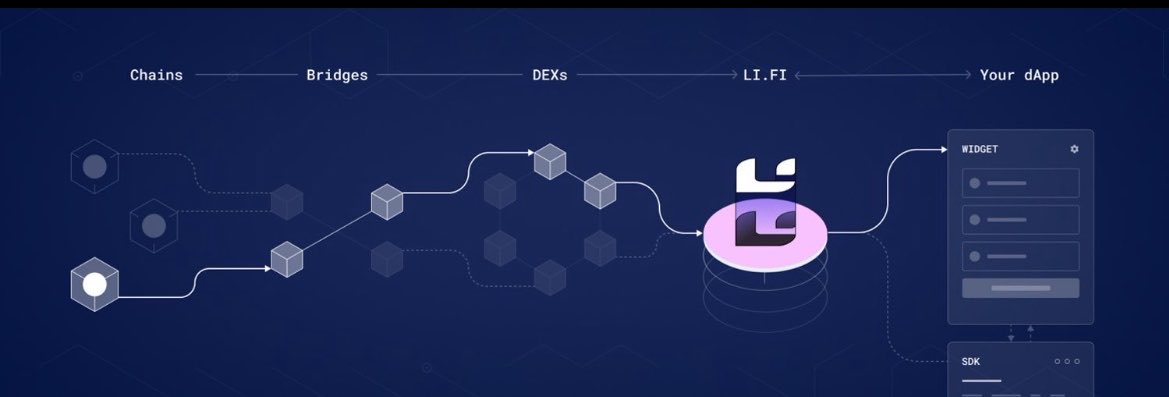
Crypto UX has spent years asking users to think like liquidity routers instead of people.🥲 Every “cross-chain experience” still quietly assumes the user understands bridges, gas balances, slippage, settlement risk, liquidity fragmentation, and execution paths. But outside crypto, nobody thinks this way.🤷♀️ People are not trying to become transaction coordinators. They’re trying to send value from point A to point B without friction. That’s why @lifiprotocol Intents stands out to me. The real innovation here isn’t another route optimization layer. It’s the fact that the route stops being the user’s problem entirely. Instead of manually orchestrating how funds move across chains, the user simply expresses the result they want: “Deliver exactly 100 USDT on Solana.” That single shift changes the relationship between users and blockchain infrastructure. Behind the scenes, a competitive network of professional solvers handles execution using their own liquidity systems, market-making inventory, OTC access, batching logic, and rebalancing strategies to fulfill the request as efficiently as possible. In other words: the complexity still exists, but it moves away from the user and into the execution layer where it belongs. And honestly, that feels like one of the missing pieces crypto has needed for a long time. Because most “UX improvements” in this industry still require users to understand the machinery underneath. LI.FI Intents feels different. It feels closer to how modern internet infrastructure works: users define outcomes, systems handle orchestration. That matters far beyond DeFi traders. Think about where onchain adoption is actually heading: • stablecoin payments • fintech apps • neobanks • tokenized RWAs • compliant settlement • wallets abstracting chain complexity completely. None of these products can scale if users are still expected to manually manage fragmented liquidity and bridge logic themselves. And regulated institutions definitely cannot rely on anonymous liquidity routing with unclear counterparties. That’s another reason this launch feels important. LI.FI Intents introduces a model where execution quality, compliant liquidity access, and exact outputs can coexist inside a much cleaner user experience. To me, this feels less like an upgrade to bridging… and more like the early foundation of execution infrastructure designed for actual internet-scale finance. The strongest technology is usually the technology users barely notice exists. Crypto has spent years exposing users to infrastructure. LI.FI Intents feels like a step toward finally hiding it.


GOODNIGHT FRENSS!! peeps be talking down on 4 posts $60 large amount of them dey celebrate el0n $25 payout after 2weeks. you want $2K per post? Project go reach out to you no worry. leave this grind for smol-creators like me. for now let’s keep talking about @XOOBNetwork


POV: You joined the WFC community thinking it was going to be a calm little crypto group 😭 Next thing you know… • your timeline is FULL of WFC memes • people are raiding tweets like it’s a military operation • Telegram never sleeps • Discord moving faster than your brain can process • everybody suddenly becomes a graphic designer overnight 💀 At this point I don’t even know if this is a crypto community or a full-time entertainment industry 😭 The funniest part? People outside the community think memes are “just jokes”… Meanwhile crypto veterans know the truth: ✅Memes create attention. ✅Attention creates community. ✅Community creates momentum. And @WFCCommunity26 clearly understood the assignment 👀 Some of y’all are posting memes with the dedication of Marvel movie editors 😭 Not gonna lie… Watching communities grow through pure energy, humor, raids, and nonstop engagement is still one of the best parts of crypto. $WFC 🤝 @WFC_fund

Crypto UX has spent years asking users to think like liquidity routers instead of people.🥲 Every “cross-chain experience” still quietly assumes the user understands bridges, gas balances, slippage, settlement risk, liquidity fragmentation, and execution paths. But outside crypto, nobody thinks this way.🤷♀️ People are not trying to become transaction coordinators. They’re trying to send value from point A to point B without friction. That’s why @lifiprotocol Intents stands out to me. The real innovation here isn’t another route optimization layer. It’s the fact that the route stops being the user’s problem entirely. Instead of manually orchestrating how funds move across chains, the user simply expresses the result they want: “Deliver exactly 100 USDT on Solana.” That single shift changes the relationship between users and blockchain infrastructure. Behind the scenes, a competitive network of professional solvers handles execution using their own liquidity systems, market-making inventory, OTC access, batching logic, and rebalancing strategies to fulfill the request as efficiently as possible. In other words: the complexity still exists, but it moves away from the user and into the execution layer where it belongs. And honestly, that feels like one of the missing pieces crypto has needed for a long time. Because most “UX improvements” in this industry still require users to understand the machinery underneath. LI.FI Intents feels different. It feels closer to how modern internet infrastructure works: users define outcomes, systems handle orchestration. That matters far beyond DeFi traders. Think about where onchain adoption is actually heading: • stablecoin payments • fintech apps • neobanks • tokenized RWAs • compliant settlement • wallets abstracting chain complexity completely. None of these products can scale if users are still expected to manually manage fragmented liquidity and bridge logic themselves. And regulated institutions definitely cannot rely on anonymous liquidity routing with unclear counterparties. That’s another reason this launch feels important. LI.FI Intents introduces a model where execution quality, compliant liquidity access, and exact outputs can coexist inside a much cleaner user experience. To me, this feels less like an upgrade to bridging… and more like the early foundation of execution infrastructure designed for actual internet-scale finance. The strongest technology is usually the technology users barely notice exists. Crypto has spent years exposing users to infrastructure. LI.FI Intents feels like a step toward finally hiding it.


Introducing LI.FI Intents. Infrastructure for apps, wallets, and neobanks to: • Enable stablecoin payments • Access real-world assets • Tap into compliant onchain liquidity Built for enterprises bringing financial products onchain.


crypto was never short on ideas. it was short on people being able to ship them fast enough. Fairy Drop went from idea to a working campaign platform on base in a weekend, built by @anjalisayswhat this is what CodeXero changes.


POV: You joined the WFC community thinking it was going to be a calm little crypto group 😭 Next thing you know… • your timeline is FULL of WFC memes • people are raiding tweets like it’s a military operation • Telegram never sleeps • Discord moving faster than your brain can process • everybody suddenly becomes a graphic designer overnight 💀 At this point I don’t even know if this is a crypto community or a full-time entertainment industry 😭 The funniest part? People outside the community think memes are “just jokes”… Meanwhile crypto veterans know the truth: ✅Memes create attention. ✅Attention creates community. ✅Community creates momentum. And @WFCCommunity26 clearly understood the assignment 👀 Some of y’all are posting memes with the dedication of Marvel movie editors 😭 Not gonna lie… Watching communities grow through pure energy, humor, raids, and nonstop engagement is still one of the best parts of crypto. $WFC 🤝 @WFC_fund