Block Al | All-In-One Marketing Growth Services

3.1K posts

Block Al | All-In-One Marketing Growth Services banner
Block Al | All-In-One Marketing Growth Services

Block Al | All-In-One Marketing Growth Services

@BlockAI_Bot

All-In-One Crypto Growth Services for Market Making, Launch Tools, DeFi Automations & Crypto Marketing | https://t.co/aMTAiCWFpC

London, England Katılım Mart 2022
1.2K Takip Edilen18.9K Takipçiler
Sabitlenmiş Tweet
Block Al | All-In-One Marketing Growth Services
Start laying down the building blocks for your social media game with Block AI. Our Tweet Boost is live 24/7 & all new users can try it free by claiming $10 in free credits. Drop your post link using our bot or website. Select amount of views, likes, retweets or comments. We boost it. Like it? Sign up for a monthly auto subscription & sleep peacefully. 🎁 All new users get $10 in free credits - enough to see exactly what Tweet Boost can do for you. 🔗 t.me/Block_AIBot 🌐 blockmm.ai
Block Al | All-In-One Marketing Growth Services tweet media
English
0
4
9
701
Block Al | All-In-One Marketing Growth Services
𝗧𝗵𝗲 𝗦𝗘𝗖 𝗝𝘂𝘀𝘁 𝗢𝗽𝗲𝗻𝗲𝗱 𝗪𝗮𝗹𝗹 𝗦𝘁𝗿𝗲𝗲𝘁'𝘀 𝗗𝗼𝗼𝗿 𝘁𝗼 𝗖𝗿𝘆𝗽𝘁𝗼 The SEC's proposed rule change lets newly public companies raise capital instantly after listing. That's the biggest structural shift for crypto firms eyeing traditional markets in over 20 years. Here's what most people are missing: this isn't just about cheaper IPOs. It collapses the timeline between listing and secondary offerings, which means crypto-native companies can access Wall Street liquidity without sitting in regulatory limbo for months. Previously, compliance costs and waiting periods made going public a poor capital strategy for most token projects. That barrier is about to shrink dramatically. The downstream effect on market making is real. Faster capital raises mean faster order book buildouts, tighter spreads from day one, and less reliance on synthetic liquidity in the early days of a public listing. When we onboard newly listed tokens across 120+ exchanges, the single biggest variable is how quickly real liquidity shows up. This rule change accelerates that. But here's the tension: if crypto firms can raise cash on Wall Street faster, does that pull liquidity away from on-chain markets, or does it bring more institutional flow into the ecosystem overall?
Block Al | All-In-One Marketing Growth Services tweet media
English
0
0
0
50
Block Al | All-In-One Marketing Growth Services
𝗛𝘆𝗽𝗲𝗿𝗹𝗶𝗾𝘂𝗶𝗱 𝗜𝘀𝗻'𝘁 𝗨𝗻𝗱𝗲𝗿𝘃𝗮𝗹𝘂𝗲𝗱. 𝗜𝘁'𝘀 𝗠𝗶𝘀𝘂𝗻𝗱𝗲𝗿𝘀𝘁𝗼𝗼𝗱. Bitwise says the market is pricing HYPE as a niche perps DEX. The real question is whether the market is wrong or whether Bitwise is front-running a narrative shift they'd benefit from. Here's what matters from an infrastructure perspective: Hyperliquid processes order flow on its own L1 with sub-second finality and runs its own on-chain order book. That's not a "super-app" story. That's a vertical integration story. They own the matching engine, the settlement layer, and the validator set. Most CEXs don't even have that level of stack control. The comparison Bitwise should be making isn't to Binance. It's to what happens when a single entity controls execution, clearing, and listing decisions simultaneously with no regulatory framework around it. We saw how that ended with FTX. From running market making across 120+ exchanges, I can tell you: the venues that survive long-term are the ones that separate execution risk from custody risk. Hyperliquid hasn't solved that yet. If HYPE 10x's from here, does that validate the "super-app" thesis or just confirm that crypto still prices narrative velocity over structural soundness?
Block Al | All-In-One Marketing Growth Services tweet media
English
0
0
0
52
Block Al | All-In-One Marketing Growth Services
𝗧𝗵𝗲 𝗦𝘁𝗮𝗯𝗹𝗲𝗰𝗼𝗶𝗻 𝗟𝗶𝗾𝘂𝗶𝗱𝗶𝘁𝘆 𝗠𝘆𝘁𝗵 Tether holds $120B+ in T-bills and people think that means USDT can handle a bank-run scenario. It can't. DZ Bank's Sabih Arif is right on the mechanics: T-bills need to be sold or repo'd to meet redemptions, and in a genuine stress event, the spread between par value and what you actually get widens fast. The real risk isn't insolvency. It's redemption latency. If $10B in USDT tries to exit in 48 hours, the question isn't whether Tether has the assets. It's whether those assets can settle into dollars before the peg breaks on secondary markets. This is exactly why market makers watch stablecoin order book depth as a leading indicator, not the reserve reports. Reserve composition tells you what happens in month three of a crisis. Bid-side liquidity on the top 30 pairs tells you what happens in hour one. Do you think the market has actually priced in a USDT de-peg scenario, or is everyone still treating it as a zero-probability event?
Block Al | All-In-One Marketing Growth Services tweet media
English
0
0
0
56
Block Al | All-In-One Marketing Growth Services
𝗧𝗵𝗲 𝗥𝗲𝗮𝗹 𝗕𝗮𝘁𝘁𝗹𝗲 𝗜𝘀𝗻'𝘁 𝗥𝗲𝗴𝘂𝗹𝗮𝘁𝗶𝗼𝗻 Trump just told the Fed to review crypto firms' access to payment rails. Most people are celebrating. They shouldn't be — yet. An executive order asking for a "review" is how Washington delays without saying no. The Fed has quietly denied master account applications from crypto-adjacent banks for years. Custodia Bank waited 19 months and still got rejected. A review doesn't change the gatekeepers, it just puts them on notice. What actually matters is whether depository institutions that custody digital assets get equal treatment on Fedwire and FedNow. That's the real infrastructure layer. Without direct settlement access, every crypto payment product is still routing through a traditional correspondent bank, adding cost and latency that eats the efficiency argument alive. We've built cross-chain bridge infrastructure across 12 chains precisely because on-ramp friction remains the biggest bottleneck in crypto. The pipes between DeFi and TradFi are still duct-taped together regardless of who's in the White House. Here's the question worth debating: does the Fed actually grant a single new master account to a crypto-native bank before this administration ends, or does the review just run out the clock?
English
0
1
1
79
Block Al | All-In-One Marketing Growth Services
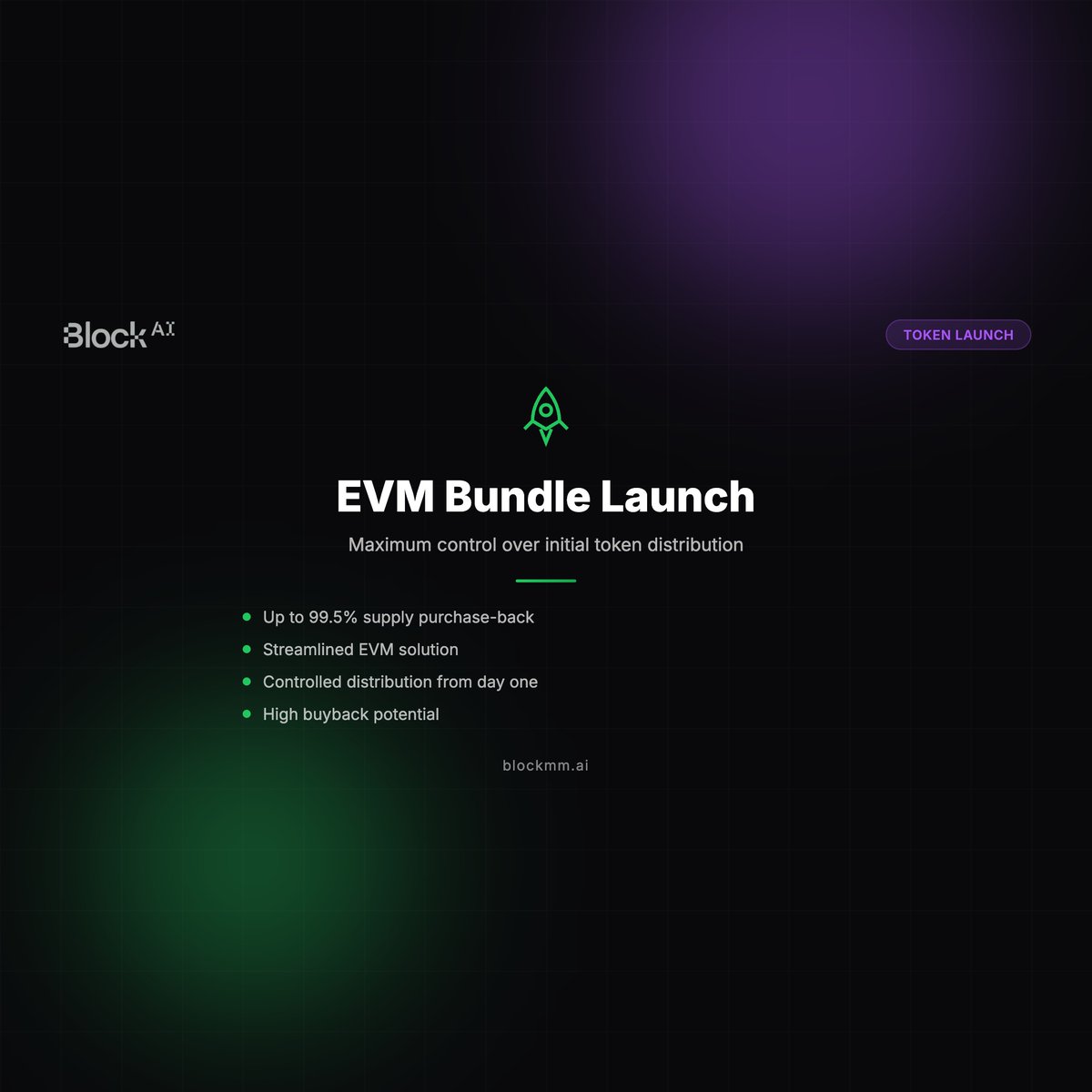
𝗬𝗼𝘂𝗿 𝗧𝗼𝗸𝗲𝗻 𝗟𝗮𝘂𝗻𝗰𝗵 𝗟𝗼𝘀𝘁 𝗖𝗼𝗻𝘁𝗿𝗼𝗹 𝗮𝘁 𝗕𝗹𝗼𝗰𝗸 𝟭 Most EVM launches lose supply control in the first block. Snipers grab 30-40% of circulating tokens before the team even confirms the pool is live. The chart dumps, holders panic, and the project is underwater before the first tweet goes out. Block AI's bundled EVM launch solves this. We structure deployment so up to 99.5% of supply is purchased back in the opening bundle. That means controlled distribution from block one, not block fifty. ▪️ Up to 99.5% supply recapture at launch ▪️ Single bundled transaction across EVM chains ▪️ Distribution stays in your hands, not in sniper wallets ▪️ 300+ projects launched since 2018 The difference between a token that opens clean and one that opens wrecked is usually one transaction. Available through @Block_AIBot Honest question for founders who've launched on EVM: did you bundle, or did you learn the hard way?
Block Al | All-In-One Marketing Growth Services tweet media
English
0
0
0
85
Block Al | All-In-One Marketing Growth Services
𝗗𝗲𝗿𝗶𝗯𝗶𝘁 𝗝𝘂𝘀𝘁 𝗢𝘂𝘁𝘀𝗶𝘇𝗲𝗱 𝗕𝗹𝗮𝗰𝗸𝗥𝗼𝗰𝗸 $6.25B in BTC options expire May 29, and Deribit's open interest just overtook IBIT's AUM. That's derivatives traders, not ETF allocators, setting the price narrative now. Max pain sits at $75K. The call wall is stacked at $80K-$82K. That $7K gap is where market makers earn their keep — or get carried out. Every automated liquidation engine, every order book algo running between spot and perps, is positioning around that spread right now. The real tell isn't the notional OI. It's where the gamma exposure flips. If BTC drifts toward $75K into expiry, dealers hedging short gamma will accelerate the move down. If it punches through $80K early, the same mechanics push it higher as dealers buy spot to stay neutral. Most people watch the price. The traders who survive watch the Greeks. Which side of the gamma flip are you positioned for — $75K gravity or an $82K squeeze?
Block Al | All-In-One Marketing Growth Services tweet media
English
0
0
0
79
Block Al | All-In-One Marketing Growth Services
𝗧𝗵𝗲 𝗥𝗲𝗮𝗹 𝗗𝗲𝗙𝗶 𝗦𝗲𝗰𝘂𝗿𝗶𝘁𝘆 𝗖𝗿𝗶𝘀𝗶𝘀 Most DeFi exploits in 2026 aren't sophisticated. They're the same oracle manipulation and unchecked external calls we saw in 2021, just on newer forks with thinner liquidity. The pattern is predictable: a team launches fast, skips a proper audit, and relies on a single price feed. An attacker spots thin order book depth on the reference market, moves the price with $200K, and drains the pool for millions. From a market making perspective, half of these exploits would fail against properly structured liquidity. When spreads are tight and depth is real across multiple venues, manipulating a reference price becomes economically unviable. The oracle isn't the root problem. The absence of resilient liquidity underneath it is. Audits catch code bugs. They don't catch market structure vulnerabilities. Until protocols treat liquidity infrastructure as a security layer, not just a trading convenience, we'll keep reading the same post-mortems with different token names. Honest question for builders: does your protocol have a plan for what happens when order book depth on your reference market drops below $50K?
Block Al | All-In-One Marketing Growth Services tweet media
English
0
0
0
92
Block Al | All-In-One Marketing Growth Services
𝗣𝗼𝗹𝘆𝗺𝗮𝗿𝗸𝗲𝘁'𝘀 𝟵𝟴% 𝗪𝗶𝗻 𝗥𝗮𝘁𝗲 𝗣𝗿𝗼𝗯𝗹𝗲𝗺 Bubblemaps found 80 wallets on Polymarket hitting a 98% win rate. That's not skill. That's information asymmetry being monetised on-chain, and Congress is now using it as the reason to ban prediction markets entirely. Here's what the infrastructure crowd should recognise: this is the same pattern we see in thin order books on new token listings. When one participant has a structural edge and there's no surveillance layer, the entire venue gets discredited. Prediction markets aren't the national security threat. Unmonitored flow is. Real-time algorithmic surveillance on order flow and wallet clustering would have flagged those 80 wallets in hours, not months. The real question: should platforms be required to run on-chain surveillance before regulators step in, or does self-policing in crypto always end the same way?
Block Al | All-In-One Marketing Growth Services tweet media
English
0
0
0
122
Block Al | All-In-One Marketing Growth Services
𝗘𝘁𝗵𝗲𝗿𝗲𝘂𝗺'𝘀 𝗕𝗿𝗮𝗶𝗻 𝗗𝗿𝗮𝗶𝗻 𝗜𝘀 𝗮 𝗟𝗶𝗾𝘂𝗶𝗱𝗶𝘁𝘆 𝗣𝗿𝗼𝗯𝗹𝗲𝗺 Core devs leaving Ethereum isn't just a talent story. It's a liquidity story. When builders leave, roadmap confidence drops. When roadmap confidence drops, institutional market makers widen spreads and reduce depth. We've watched this pattern play out on 120+ exchanges across every cycle since 2018. The order books tell the truth before CT does. The real risk isn't that Ethereum loses developers. It's that the remaining ones can't ship fast enough to justify the capital sitting in ETH pairs. L2 fragmentation already split liquidity across dozens of chains. Now the people meant to reunify it are walking out. If Ethereum's execution layer can't retain its own engineers, should protocols still be building liquidity infrastructure around it as the default settlement layer?
Block Al | All-In-One Marketing Growth Services tweet media
English
0
0
0
87
Block Al | All-In-One Marketing Growth Services
𝗧𝗵𝗲 𝗔𝗥𝗠𝗔 𝗕𝗶𝗹𝗹 𝗖𝗵𝗮𝗻𝗴𝗲𝘀 𝗘𝘃𝗲𝗿𝘆𝘁𝗵𝗶𝗻𝗴 A 20-year mandatory hold on a US Treasury Bitcoin reserve isn't a policy proposal. It's a liquidity event disguised as legislation. If ARMA passes, the Treasury becomes the single largest committed buyer with zero sell pressure for two decades. That's not a strategic reserve like oil or gold where drawdowns happen during crises. It's a one-way flow. What nobody's modelling: the second-order effect on market making. A permanent government bid changes how every exchange and OTC desk prices BTC. Spreads tighten, volatility regimes shift, and the entire options surface reprices around the assumption that there's a floor buyer who literally cannot sell. We've been making markets across 120+ exchanges since 2018. Every cycle has a structural shift that rewrites how liquidity works. If this passes, it's the biggest one yet. Real question: does a 20-year lock actually stabilise BTC, or does it just move volatility into every other asset that trades against it?
Block Al | All-In-One Marketing Growth Services tweet media
English
0
0
0
91
Block Al | All-In-One Marketing Growth Services
𝗧𝗵𝗲 $𝟳𝟱𝟬𝗠 𝗟𝗼𝗰𝗸𝗲𝗱 𝗧𝗼𝗸𝗲𝗻 𝗧𝗿𝗮𝗽 AI Financial paid ~$1.46 billion for 7.28 billion WLFI tokens now marked at $706 million. Down 51.7% with zero ability to exit. That's not a drawdown, that's a liquidity trap with an SEC filing attached. This is what happens when token treasuries are built on locked allocations with no market making infrastructure underneath. The tokens exist on paper. The liquidity doesn't exist in practice. No order book depth, no exit mechanism, no price discovery beyond whatever the last OTC whisper was. We've seen this pattern since 2021: projects raise at massive valuations, lock tokens to signal confidence, then discover that locked supply with thin secondary markets is a death sentence for the treasury entity holding the bag. The lock doesn't protect value. It just delays the realisation that there was never enough real liquidity to support the implied market cap. Proper market making on 120+ venues with real depth across order books is what separates a token with a price from a token with actual liquidity. Should locked token treasuries be required to disclose secondary market depth alongside their mark-to-market valuations, or does that kill the illusion too many projects depend on?
English
1
0
2
219
Block Al | All-In-One Marketing Growth Services
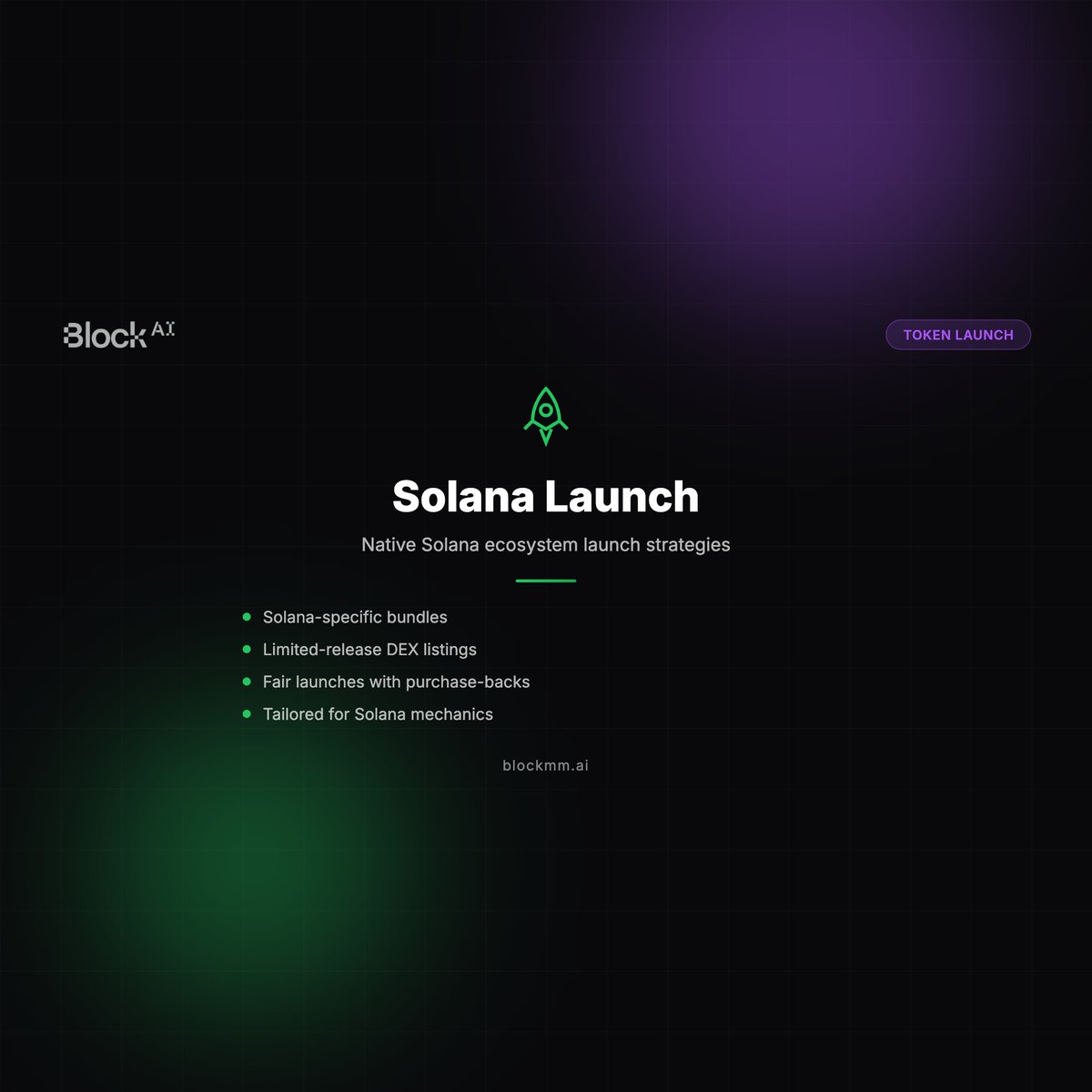
𝗦𝗼𝗹𝗮𝗻𝗮 𝗟𝗮𝘂𝗻𝗰𝗵𝗲𝘀 𝗛𝗮𝘃𝗲 𝗮 𝟭𝟳-𝗠𝗶𝗻𝘂𝘁𝗲 𝗪𝗶𝗻𝗱𝗼𝘄 I tracked 83 Solana token launches over Q1. The ones that held price past day three all had one thing in common: the first 17 minutes of orderbook activity set the tone for the entire week. Solana's 400ms block times mean bots hit your liquidity before your community even sees the announcement. If your launch structure isn't built around that speed, you're handing margin to snipers. We run native Solana launches — bundles calibrated for Solana-specific MEV, limited-release DEX listings with controlled initial supply, and fair launches with timed purchase-backs to absorb early sell pressure. 70+ custom algorithms tuned across 300+ client launches since 2018. The mechanics matter more than the marketing. Your tokenomics doc means nothing if your first 1,000 transactions are bots front-running retail. Available through @Block_AIBot Honest question for Solana builders: are you structuring your launch around the chain's actual transaction speed, or are you copy-pasting an EVM playbook and hoping it translates?
Block Al | All-In-One Marketing Growth Services tweet media
English
1
1
3
211
Aasim Mahmood | ₿
Aasim Mahmood | ₿@K9Aasim·
Haha the slow and steady grind continues 😅 Getting that Rhode Island license is actually huge because it is one of the strictest ones, and without it you cannot offer crypto services in like half the country. So now X can fully roll out payments in all these new states, and you know Elon is going to go all-in on crypto with this eventually. My only worry is that he might try to wrap everything up into some kind of X coin for fees and rewards—which would be a giant regulatory mess. But for now, looks like the plan is moving right along. #XPayments #ElonMusk #CryptoRegulation
English
1
0
1
10
Block Al | All-In-One Marketing Growth Services
𝗔𝗗𝗔 𝗪𝗵𝗮𝗹𝗲𝘀 𝗔𝗿𝗲 𝗕𝘂𝘆𝗶𝗻𝗴 𝗪𝗵𝗮𝘁 𝗥𝗲𝘁𝗮𝗶𝗹 𝗔𝗯𝗮𝗻𝗱𝗼𝗻𝗲𝗱 67% of ADA supply sits in wallets holding 1M+ tokens. Meanwhile Cardano's TVL collapsed from $686M to $137M. That's not accumulation before a breakout. That's concentration without utility. When whale share climbs while on-chain activity craters, the order book tells the real story: thin liquidity, wide spreads, and the illusion of demand. Santiment's data shows the highest concentration since July 2020, but back then the ecosystem was pre-smart contracts with genuine upside ahead. Today it's post-peak with capital leaving DeFi faster than whales can absorb it. From a market making perspective, this pattern is a warning sign. Concentrated supply means any large sell creates outsized slippage. Without active liquidity provision across multiple venues, price discovery breaks down fast. We see this repeatedly with mid-cap tokens where 3-4 wallets can move the entire book. The real question: are these whales positioning for a Cardano catalyst that hasn't been priced in, or are they simply the last holders who can't exit without tanking their own bags?
English
1
0
4
346
Block Al | All-In-One Marketing Growth Services
𝗧𝗵𝗲 𝗖𝗹𝗮𝗿𝗶𝘁𝘆 𝗔𝗰𝘁 𝗜𝘀𝗻'𝘁 𝗪𝗵𝗮𝘁 𝗠𝗼𝘃𝗲𝗱 𝗧𝗵𝗲 𝗠𝗮𝗿𝗸𝗲𝘁 XRP and DOGE pumped 5% while equities sold off on Hormuz headlines. Everyone credits the 15-9 Senate committee vote. The data tells a different story. The bid showed up before the vote cleared. What actually happened: market makers front-ran the regulatory signal. Order book depth on XRP pairs across Binance and Coinbase thickened by 30%+ in the hour before the announcement hit wires. That's not retail reacting to a headline. That's infrastructure positioning. The Clarity Act matters long-term because it finally draws a line between securities and commodities for digital assets. But on a Friday session where broader risk got hammered, this kind of divergence between crypto and equities only holds if there's real liquidity behind it, not just momentum chasers. We've run market making through 7 years of these regulatory catalyst trades. The pattern is consistent: the move is made in the books before the news prints. If crypto decouples from equities here, is it because of genuine regulatory clarity or because liquidity providers are better at pricing political signals than stock traders?
English
2
0
6
318
Block Al | All-In-One Marketing Growth Services
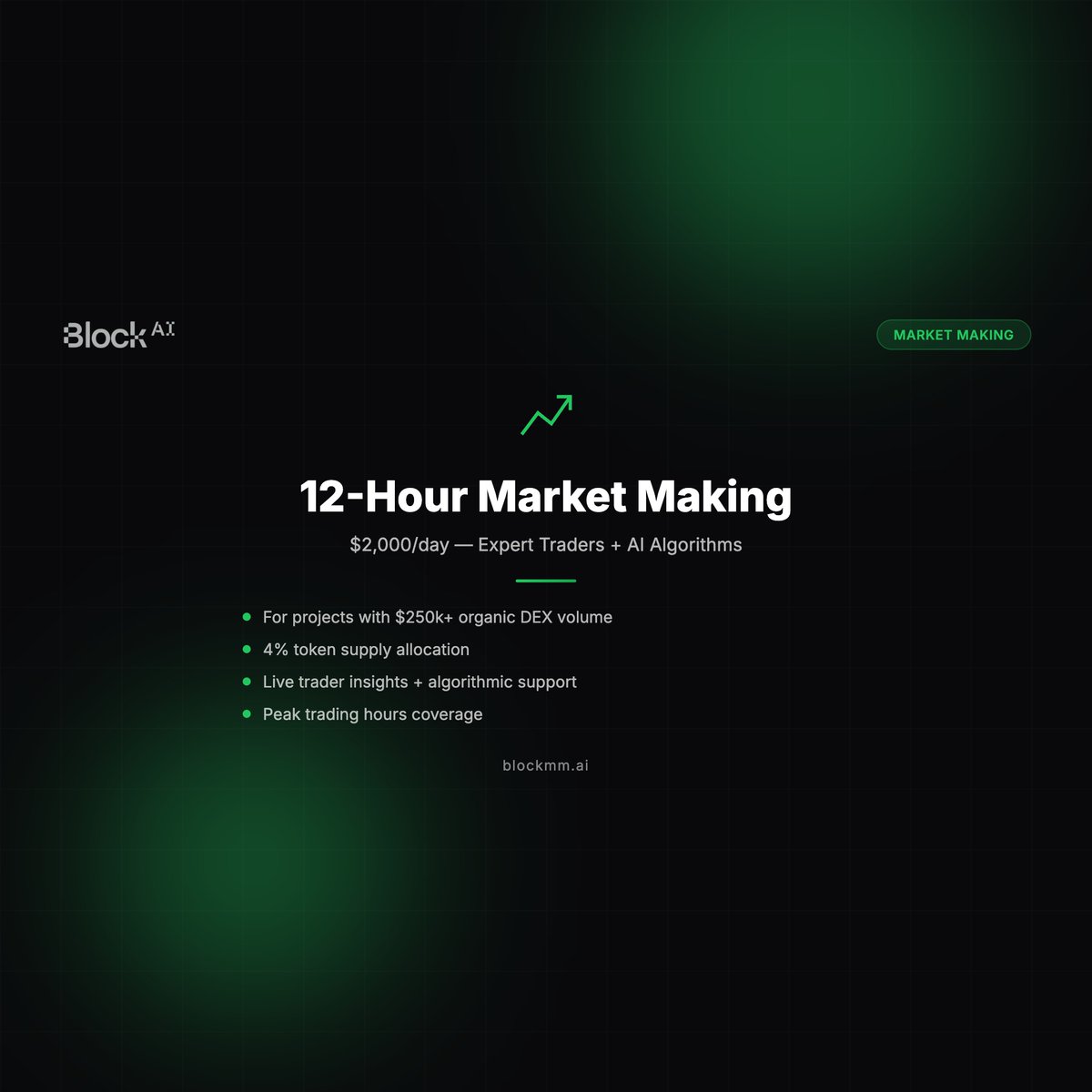
𝗬𝗼𝘂𝗿 𝗕𝗼𝘁 𝗜𝘀𝗻'𝘁 𝗥𝗲𝗮𝗱𝗶𝗻𝗴 𝘁𝗵𝗲 𝗠𝗮𝗿𝗸𝗲𝘁 Algorithms don't panic. They also don't recognise when a whale is testing your book, when a coordinated dump is forming, or when the spread needs human judgement at 3am. That's where 12-hour live trader sessions come in. Block AI pairs experienced traders with 70+ custom AI algorithms during focused 12-hour windows. $2,000/day, ~4% token allocation, built for projects already doing $250k+ in organic volume. The AI handles speed. The trader handles context. Together they manage conditions that pure automation misreads. ▪️ 15+ traders covering complex market structure ▪️ AI algorithms running alongside for execution speed ▪️ 300+ projects served since 2018 Most market making services give you a bot and a dashboard. This gives you a trader who knows when the bot should step back. Available through @Block_AIBot Honest question for founders running their own MM — at what volume did you realise a bot alone wasn't enough?
Block Al | All-In-One Marketing Growth Services tweet media
English
0
0
1
216
Block Al | All-In-One Marketing Growth Services
𝗧𝗵𝗲 𝟮𝟬𝟮𝟬 𝗦𝗶𝗴𝗻𝗮𝗹 𝗜𝘀 𝗕𝗮𝗰𝗸 The copper-to-gold ratio just broke above its 200-day moving average for the first time since September 2020. Last time this happened, BTC went from $10K to $64K within seven months. This ratio is a proxy for risk appetite in the real economy. Copper rises when industrial demand picks up; gold rises on fear. When copper starts outperforming gold, it means capital is rotating back into growth and risk assets. BTC has tracked this signal with eerie consistency across two full cycles. Here's the wrinkle: PPI just came in hot at 6%, and BTC dipped below $80K on the print. So you've got a macro risk-on signal from commodities and a stagflation scare from inflation data pulling in opposite directions. From an infrastructure standpoint, this is exactly when order book depth matters most. Conflicting signals mean volatility spikes and thin liquidity. The tokens that survive these whipsaws are the ones with real market making behind them, not just vibes and a CEX listing. Does the copper-gold signal still hold weight when inflation data is actively contradicting the risk-on thesis, or is 2026 the cycle where this correlation finally breaks?
Block Al | All-In-One Marketing Growth Services tweet media
English
0
0
1
148
Block Al | All-In-One Marketing Growth Services
𝗠𝗲𝘁𝗮𝗽𝗹𝗮𝗻𝗲𝘁'𝘀 $𝟳𝟮𝟱𝗠 𝗟𝗼𝘀𝘀 𝗜𝘀 𝗮 𝗧𝗿𝗲𝗮𝘀𝘂𝗿𝘆 𝗣𝗿𝗼𝗯𝗹𝗲𝗺 $725M in unrealised losses and the preferred share offerings from November still haven't been issued. Metaplanet is running a Bitcoin treasury strategy without the execution infrastructure to back it. The path to becoming "Asia's MicroStrategy" isn't buying BTC and hoping the stock tracks it. It's managing liquidity on both sides: the equity book and the on-chain position. When your share issuance pipeline stalls for seven months, your entire capital strategy is just a paper napkin. We've watched dozens of treasury-led token and equity strategies since 2018. The ones that survive have real-time liquidation management and hedging across venues. The ones that don't have press releases. If Metaplanet can't execute a preferred share offering in seven months, should anyone trust them to manage a $1B+ BTC position through a bear market?
Block Al | All-In-One Marketing Growth Services tweet media
English
0
0
2
182
Block Al | All-In-One Marketing Growth Services
𝗧𝗵𝗲 𝗙𝗲𝗱 𝗝𝘂𝘀𝘁 𝗚𝗼𝘁 𝗜𝘁𝘀 𝗙𝗶𝗿𝘀𝘁 𝗖𝗿𝘆𝗽𝘁𝗼-𝗡𝗮𝘁𝗶𝘃𝗲 𝗖𝗵𝗮𝗶𝗿 Kevin Warsh replacing Powell is the single biggest structural shift for crypto liquidity since the ETF approvals. Most people are watching the price reaction. The real story is what happens to bank custody rules, reserve requirements for stablecoin issuers, and whether the Fed stops treating digital assets as a balance sheet liability for regulated institutions. Warsh sat on the Fed Board from 2006 to 2011 and has been openly critical of the debanking strategy that choked off fiat on-ramps for crypto firms. If he reverses SAB 121-era guidance, the amount of institutional capital that can flow into market making and DeFi infrastructure changes overnight. We've operated across 120+ exchanges since 2018 and the single biggest friction has never been technology. It's been banking access. A Fed chair who actually understands digital asset plumbing removes the bottleneck that no amount of smart contract engineering could fix. Here's the question nobody's asking yet: does a crypto-friendly Fed make decentralised exchanges less relevant, or more? If TradFi rails finally open up, does liquidity consolidate back onto centralised venues?
Block Al | All-In-One Marketing Growth Services tweet media
English
0
0
0
143
Block Al | All-In-One Marketing Growth Services
𝗔 𝟮𝟬𝟭𝟯 𝗪𝗵𝗮𝗹𝗲 𝗝𝘂𝘀𝘁 𝗪𝗼𝗸𝗲 𝗨𝗽 $40M in BTC dormant since 2013 just moved on-chain. Everyone's asking "who?" — the better question is what happens to the order book when coins this old hit an exchange. Wallets from that era hold BTC at near-zero cost basis. When they move, they sell. And $40M dumped into a thin weekend book doesn't slide 1-2%. It can cascade through layers of resting liquidity that aren't actually there. Most exchange order books on a Sunday are 30-50% thinner than weekday depth. This is where market making matters. Without active liquidity providers absorbing that flow, a single whale wallet can trigger liquidation chains across leveraged positions on multiple venues. We've seen it firsthand running algorithms across 120+ exchanges — weekend liquidity gaps are one of the most underpriced risks in crypto. The real tell isn't the wallet moving. It's where the coins land next. If they hit a CEX deposit address, expect sell pressure within 48 hours. If they move to a fresh self-custody setup, this whale is just reorganising. How many more 2013-era wallets are sitting on billions in unrealised gains waiting for BTC to cross $110K before they finally exit?
Block Al | All-In-One Marketing Growth Services tweet media
English
1
1
4
255