
BlockQuick Crypto News 📰⚡ retweetledi
BlockQuick Crypto News 📰⚡
15.1K posts


BlockQuick Crypto News 📰⚡
@BlockQuick
Blockchain, Crypto, Web3 News. For the latest updates on $SOL $Pi $ZEC & other #Altcoins FOLLOW US #CryptoNews #BlockQuick ⚡
United States Katılım Aralık 2019
998 Takip Edilen9.2K Takipçiler




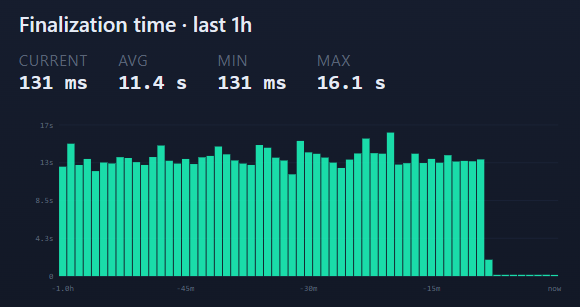
HUGE: SOLANA JUST ACHIEVED 100X FASTER FINALITY
Anza’s first successful Alpenglow “Alpenswitch” cut finalization from ~12.8 seconds to ~100–150ms
That’s Visa-level speed on a public blockchain! solana:So11111111111111111111111111111111111111112 🤯
Matthias Schmitz@StakingMatthias
Alpenglow migration complete ✅⚡ Finalization is now dramatically faster, the processed/confirmed/finalized slot gap has nearly disappeared, and commitments are converging 🚀 TPS now reflects actual user activity more clearly. …ommunity-status.stakingfacilities.com
English
BlockQuick Crypto News 📰⚡ retweetledi

ATTENTION: The crypto Clarity Act is moving forward.
Senator Cynthia Lummis@SenLummis
Let's pass the Clarity Act out of the Banking Committee on Thursday!
English


BlockQuick Crypto News 📰⚡ retweetledi

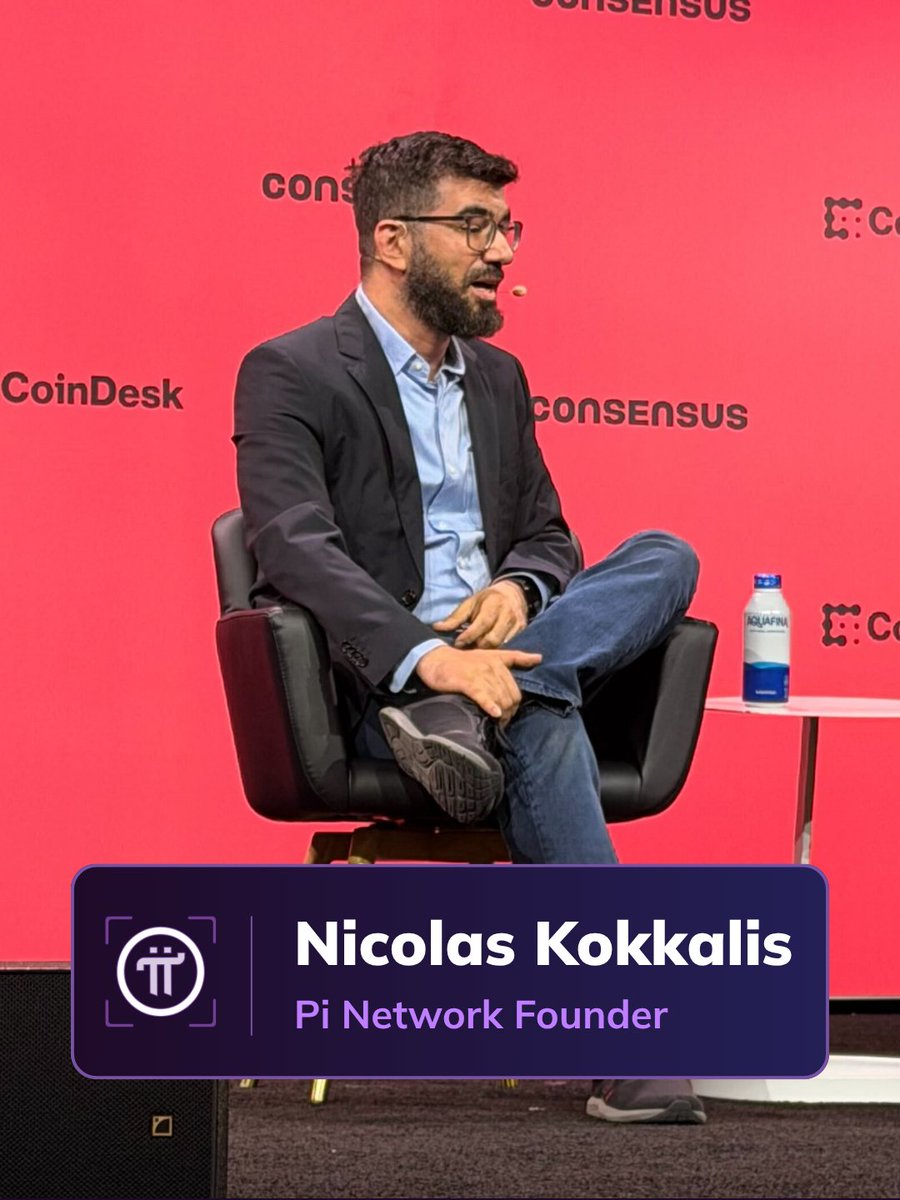
Pi Founder Nicolas Kokkalis spoke today at Consensus 2026 Miami on the panel, “How to Prove You’re Human in an AI World (Without Doxing Yourself).”
The discussion focused on one of the most urgent challenges in the AI era: how to maintain trust and verify real human identity as AI systems become capable of generating convincing bots, profiles, and interactions at scale.
Stay tuned for the full video!

English

Checkmate: did Saudi Arabia just end israel’s Iran war with this one powerful move?
English

If it’s in the news, you can probably trade it on Phantom.
EBAY is now available to trade.
Go long or short with up to 10x leverage.

Phantom@phantom
FYI, GameStop is now live for trading in Phantom 🎮
English


So much space in space that it boggles the mind!
Tom Brown@nottombrown
Terrestrial datacenters will increasingly be bottlenecked by permitted real estate space. Lots of space in space.
English

@WoodyLightyearx @PiCoreTeam The Golden child has returned $PI
English
BlockQuick Crypto News 📰⚡ retweetledi

Btw, the @PiCoreTeam has updated their twitter verification from a blue checkmark to a golden checkmark.

English
@AshCrypto Bitcoin is portable and easier to hide or conceal IRL, during times of conflict gold is to visible.
English

This is absolutely CRAZY.
Since the US-Iran war started on 28th Feb
Bitcoin is up +27%
Gold is down -14%


Ash Crypto@AshCrypto
GOLD is dumping while BITCOIN is pumping $BTC is the new digital gold of war
English

LATEST: 🇺🇸 Senator Tim Scott says the Clarity Act will land on Trump's desk this summer, with Senate Banking Committee markup expected in May and a floor vote in June or July.

CoinMarketCap@CoinMarketCap
LATEST: 🇺🇸 Senator Tillis says the CLARITY Act is ready for markup, telling the Senate Banking Committee chair to "move forward" after weeks of delays.
English
The Pi Mainnet is upgrading to Protocol 23 – Deadline: May 15.
All Mainnet nodes are required to complete this step before the deadline to remain connected to the network. This upgrade takes longer to complete, so plan accordingly.
Details here: minepi.com/pi-node
English
English

Agents can now spend USDC on Solana anywhere Mastercard works.
Introducing MoonAgents Card by @moonpay
MoonPay 🟣@moonpay
English

@BlockQuick PI tends to form an inner loop first and then an outer loop. Ensure the overall operation of the ecology!
English
The official team is reshaping #PiNetwork as the “Trust Layer for the AI Era”! With 526 million real human identities already KYC-verified, Pi provides reliable human judgment, error correction, and contextual understanding that AI needs. This perfectly aligns with the founders’ upcoming Consensus 2026 talks: “In an AI world, how do you prove you’re real — without exposing your privacy?” Unlike most chains built on anonymous accounts, Pi’s human-verified advantage is becoming clear. #Pi #AIAge #RealHumanVerification
English

🇺🇸🇨🇳 America just found a massive lithium stash in the most unexpected place, the Appalachians.
A new government study says the mountains hold 2.3 million tons of the battery metal, enough to power 130 million electric cars or end US imports for centuries.
The US currently buys more than half its lithium from overseas while China controls most of the world’s supply.
This changes the game for American EV production and national security.
MiningCom


Mario Nawfal@MarioNawfal
ALUMINUM-LITHIUM: THE METAL THAT BEAT TITANIUM Titanium is usually hailed as the hero of the future. Indestructible, corrosion-proof, and abundant. It's the metal that launched a thousand dreams: skyscrapers that never rust, bridges that outlive civilizations, and bio-buildings that breathe and shift like living things. It’s all there, locked behind the Kroll process, a 1930s bottleneck we haven’t broken in nearly a century. But what if the real 21st-century metal snuck right past us? Enter aluminum-lithium. It's not as exotic, not as poetic. But it quietly delivers what titanium only promises: higher strength-to-weight ratio and affordability. Yes, you read that right. When it comes to aerospace and high-performance structures, aluminum-lithium alloys already outperform titanium in key metrics. Lighter. Stronger. Easier to manufacture. Recyclable. And unlike titanium, it doesn’t need a Cold War-era extraction ritual to escape from ore. This isn’t theoretical. Airbus, SpaceX, and Boeing have been using Al-Li alloys for years in aircraft frames and rocket bodies. Why? Because they want strength without weight, and they don’t want to pay titanium prices for it. So why aren’t our cities reflecting this? Why are our towers still clad in concrete and steel, aging like milk in the sun, instead of shimmering with ultra-light alloys that could last centuries? Because we’re stuck in a materials mindset that mistakes familiarity for inevitability. We wait for titanium to get cheaper instead of using what’s already better. We romanticize impossible alloys instead of engineering with the ones right in front of us. Aluminum-lithium is not perfect. It’s finicky to weld. It can be more brittle in extreme cold. But it doesn’t need to be perfect, it just needs to be good enough to change how we build. It’s time to stop treating buildings like disposable tech and start thinking in centuries. The Romans gave us aqueducts that still stand. We give our grandkids drywall and mildew. If we want the future to look like the future, we need to stop waiting for titanium to break free, and start building with the material that already did. Aluminum-lithium won the strength-to-weight race. Now it just needs architects to notice.
English